Strong profanity, references to softcore film work, and disturbing verbal and physical abuse make this more appropriate for teens and older viewers.
Official ratingPG-13
Bottom Line
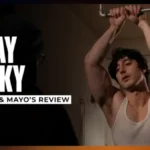
Anthony Ippolito’s convincing turn and lively behind-the-scenes comedy make this a rousing celebration of the making of Rocky. Its obvious nostalgia, sweetened history and scripted sentiment will not win everyone over.
Best for Rocky and Stallone fans, movie lovers curious about the inventive production, and viewers seeking a funny, inspiring underdog story in a lively theater.
Not for
Less suited to viewers looking for an unsentimental, fully accurate biography, radically original filmmaking, or an in-depth examination of Hollywood labor and history.
Verdict
I Play Rocky turns the unlikely creation of a boxing classic into a second underdog story: the fight to let an unknown Sylvester Stallone star in his own script. Anthony Ippolito’s extraordinary resemblance, voice and emotionally committed performance are the biggest reasons to watch. AnnaSophia Robb, Tracy Letts and the comic producing duo add energy and warmth, while the improvised solutions to a tiny budget provide engaging backstage detail. The film is especially satisfying in a lively theater or for anyone with fond memories of Rocky. Yet it is also a carefully polished Hollywood fable. The sentimental payoffs, broad antagonists and familiar scene recreations can feel calculated, and the biographical simplifications frustrate viewers hoping for a tougher, more revealing portrait. It is easier to admire as an entertaining celebration of perseverance than as an uncompromising piece of film history.
lead performance: 4.8, 43 reviews, moderate consensus
Anthony Ippolito’s uncanny physicality, vocal imitation and vulnerable underdog energy are the film’s biggest strengths. Even cooler responses generally concede the resemblance, though some find the portrayal too close to impersonation.
Ippolito’s low growl, slurred cadence and Stallone mannerisms are widely convincing, often making the imitation disappear into a real character. A few find the voice exaggerated or object to an overly broad supporting accent.
entertainment value: 4.4, 34 reviews, low consensus
A lively, often funny crowd-pleaser wins over many viewers even though its outcome is familiar. The minority who dislike the film find it an empty or recycled celebration.
Studio negotiations, impatient executives and on-set workarounds generate some of the biggest laughs. The humor mostly complements the inspirational tone, though occasional jokes are heavy-handed.
Stallone’s insistence on starring in his own screenplay makes for a naturally engaging underdog narrative. The biggest reservation is that the material is polished into a predictable Hollywood fable.
AnnaSophia Robb, Tracy Letts, P.J. Byrne, Toby Kebbell and Jay Duplass provide warmth and broad comic spark. Some parts are thinly sketched, but the performers often make them memorable.
The dramatization freely reshapes events and blends several executives into one antagonist. The recreation is often entertaining, but it is not treated as a definitive factual history.
Peter Gamble’s screenplay supplies sharp studio banter and a clear underdog spine, but critics are divided over shortcuts, scripted sentiment and familiar dramatic beats.
Its open-hearted optimism is a major draw, yet some of the scoring, family material and triumphal beats strike critics as syrupy or aggressively manipulative.
Many enjoy the victorious payoff and audience-cheering finish. Others think the closing moments arrive abruptly or fail to reach the emotional peak the film promises.
Sylvester Stallone fan viewing: 4.6, 15 reviews, low consensus
Rocky and Stallone admirers get a loving dramatization of key production stories and familiar movie moments. Those already steeped in the history may find little new.
Anthony Ippolito: 4.8, 41 reviews, moderate consensus
Ippolito is repeatedly singled out for his uncanny voice, mannerisms and resemblance to young Stallone. More importantly, he finds vulnerability and determination beneath the impersonation, though a few find it hollow or overdone.
Farrelly’s brisk, comic handling of negotiations and emotional payoffs wins many admirers. Other critics see too much safe sentiment and a slick, conventional approach.
Compared with other Movies, this product is above average in runtime, film-industry satire, romance quality, near average in Creative process insight, character screen time, below average in Cultural impact, message quality, faithfulness to source material.
Comparison summary
48 compared features
Above average0.4+ pts higher
22(46%)
Same as averagewithin 0.3 pts
7(15%)
Below average0.4+ pts lower
19(40%)
Largest category differences
Attribute
This product
Category average
Difference
Cultural impact
2.0
4.7
-2.7
message quality
1.0
3.6
-2.6
faithfulness to source material
1.0
3.6
-2.6
runtime
5.0
2.9
+2.1
score quality
2.0
4.1
-2.1
production value
2.0
4.0
-2.0
visual style
2.2
4.0
-1.8
film-industry satire
4.8
3.4
+1.4
Consider This Instead
If you want better message quality
Choose Dear You. It scores 4.7 vs 1.0 for message quality, with a 4.5 overall score.
Choose this inventive, unsettling documentary for fearless questioning, dark humor, and unpredictable storytelling. Skip it if you want a short, straightforward exposé with definitive answers.
Extraordinary performances and richly observed relationships make this a rewarding, emotionally forceful drama. Its nearly three-hour length and slow opening demand patience and undivided attention.
Best for a hypnotic, bookish mystery with tactile visuals and cerebral chills. Skip it if reading-heavy, attention-demanding storytelling sounds more exhausting than exciting.
Best for an intimate, searching documentary that rewards focused attention and invites discussion. Skip it when devastating grief, addiction footage, and unresolved family tensions would be too much.