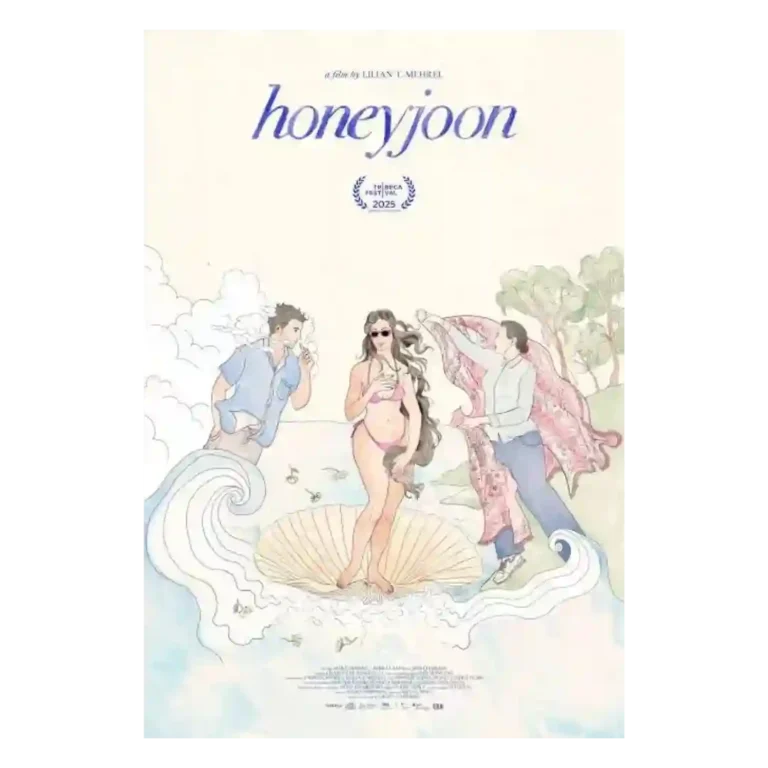
Honeyjoon

Honeyjoon Movie Review

Brand: Utopia
Released: June 10, 2026
Updated: 1 month ago
4.2
Overall review score
184
Review evidence points
32
Scored features
15
Expert reviews

Bottom Line

Choose it for intimate mother-daughter chemistry, tender grief, dry humor, and beautiful Azores imagery. Skip it if you need a fully developed political subplot, consistent tonal flow, or a more expansive story.

Best for

Best for viewers who enjoy intimate family dramedies, nuanced stories about grief, strong female performances, and visually expressive travel settings.

Not for

Less suited to viewers seeking a plot-heavy drama, a fully developed political narrative, broad comedy, or a consistently uplifting treatment of loss.

Verdict

Honeyjoon succeeds most when it stays close to June and Lela, letting Amira Casar and Ayden Mayeri turn awkward bickering, buried grief, and uneasy affection into a believable mother-daughter bond. Reviewers also consistently admire the painterly Azores cinematography, playful shifts between film and phone footage, and humor that keeps the sadness from becoming oppressive. The divide comes from the movie’s ambition: its Iranian diaspora and Woman, Life, Freedom material is meaningful to some critics but shoehorned, underbaked, or performative to others. The compact runtime keeps the film light and focused, yet it also limits character backstory and thematic development. Even with those constraints, the emotional honesty, strong performances, and humane view of grief make it a rewarding small-scale dramedy.

Feature Scorecards

Summary

32 reviewed features
  • Very positive 4.5-5.0
    15 (47%)
  • Positive 3.5-4.4
    15 (47%)
  • Neutral 2.5-3.4
    1 (3%)
  • Negative 1.5-2.4
    1 (3%)

Pros

  • 4.7
    9 reviews strong consensus
    message quality: 4.7, 9 reviews, strong consensus
    The film’s central message is compassionate: grief has no single path, joy can coexist with loss, and healing means moving forward while carrying the absent person with you. Its political message is more contested.
  • 4.8
    8 reviews strong consensus
    visual style: 4.8, 8 reviews, strong consensus
    The visual style combines island vistas, soft compositions, Super 8 texture, crisp digital images, and vertical phone footage. This varied approach is consistently identified as one of the film’s most attractive qualities.
  • 4.7
    9 reviews strong consensus
    cinematography: 4.7, 9 reviews, strong consensus
    The Azores are photographed with painterly beauty, striking wides, phone imagery, and textured film footage. Reviewers especially like how the landscapes reflect grief and emotional distance rather than functioning as scenery alone.
  • 4.5
    12 reviews moderate consensus
    emotional impact: 4.5, 12 reviews, moderate consensus
    The film frequently lands as moving, compassionate, and personally recognizable, especially for viewers familiar with parental loss. Some critics feel the heavier late moments or underdeveloped ideas blunt the intended impact.
  • 4.5
    10 reviews moderate consensus
    acting performance: 4.5, 10 reviews, moderate consensus
    The acting is the clearest consensus strength, with the central performances repeatedly called captivating, vulnerable, funny, and emotionally precise. A few dissenting reviews find the staging distancing or one performance somewhat one-note.
  • 4.4
    11 reviews moderate consensus
    humor: 4.4, 11 reviews, moderate consensus
    Humor is a major asset, ranging from dry awkwardness and deadpan side characters to bodily jokes and generational bickering. Most reviewers feel it relieves the grief without trivializing it, though one finds the comic structure weak.

Cons

  • 2.0
    1 review
    romance quality: 2.0, 1 review
    The romantic and sexual thread adds sensual energy, but one critic finds the cautious framing unable to generate enough excitement between June and João.
  • 2.7
    3 reviews strong consensus
    originality: 2.7, 3 reviews, strong consensus
    Reviewers see personal specificity in the film’s grief story and visual mix, but some consider the diaspora framework familiar or the overall result too plain to feel fully original.

Cast & Creators

  • Lela
    4.6
    10 reviews moderate consensus
    Amira Casar: 4.6, 10 reviews, moderate consensus
    Casar is widely praised for subtlety, impeccable timing, lived-in wisdom, and the ability to make Lela’s grief physically palpable. Even more critical reviews tend to identify her as a standout.
  • Cinematographer
    4.8
    7 reviews strong consensus
    Inés Gowland: 4.8, 7 reviews, strong consensus
    Gowland’s cinematography is a major strength, using painterly landscapes, texture, stillness, and unobtrusive framing to make the Azores reflect the characters’ emotional states.
  • June
    4.5
    9 reviews low consensus
    Ayden Mayeri: 4.5, 9 reviews, low consensus
    Mayeri is frequently called funny, vulnerable, charming, and revelatory, with several reviews describing the performance as career-best or star-making. A minority finds some larger moments unconvincing or the character too one-note.
  • Writer/Director
    4.1
    14 reviews low consensus
    Lilian T. Mehrel: 4.1, 14 reviews, low consensus
    Reviewers often praise Mehrel’s writing, actor direction, restraint, and ability to mix grief with humor. The main criticism is that her ambitious political and thematic strands can feel heavy-handed, cautious, or underdeveloped.
  • João
    4.8
    3 reviews strong consensus
    José Condessa: 4.8, 3 reviews, strong consensus
    Condessa’s João is praised as soulful, warm, gentle, and unusually layered for a supporting guide character. His philosophical presence helps connect the two leads.
  • DTF hotel concierge
    5.0
    1 review
    António Maria: 5.0, 1 review
    Maria’s small hotel-concierge role is remembered as a charismatic deadpan highlight.

Compared With Category Average

Compared with other Movies, this product is above average in sexual content level, realism, editing quality, near average in genre satisfaction, directing quality, below average in romance quality, originality.

Comparison summary

32 compared features
  • Above average 0.4+ pts higher
    24 (75%)
  • Same as average within 0.3 pts
    6 (19%)
  • Below average 0.4+ pts lower
    2 (6%)

Largest category differences

Attribute This product Category average Difference
sexual content level 5.0 2.9 +2.1
realism 5.0 3.3 +1.7
editing quality 5.0 3.3 +1.7
screenplay quality 4.4 2.9 +1.5
pacing 4.3 2.8 +1.5
romance quality 2.0 3.3 -1.3
ending satisfaction 4.8 3.5 +1.3
message quality 4.7 3.6 +1.1

Consider This Instead

If you want better romance quality

Choose Heartstopper Forever. It scores 4.7 vs 2.0 for romance quality, with a 4.1 overall score.

Compare

If you want better originality

Choose The Invite. It scores 5.0 vs 2.7 for originality, with a 4.5 overall score.

Compare

If you want better theme depth

Choose Romería. It scores 5.0 vs 3.7 for theme depth, with a 4.5 overall score.

Compare

If you want better emotional impact

Choose Maddie’s Secret. It scores 4.9 vs 4.5 for emotional impact, with a 4.1 overall score.

Compare

Compared in Reviews

Products reviewers directly compared with this model, grouped into quick takeaways.

Aftersun (2021)

  • Similar: digital, vertical phone, and Super 8 imagery The film is compared with Aftersun for alternating contemporary digital footage and nostalgic film textures.

Call Me By Your Name

  • Compared: Amira Casar performance and role depth Casar’s subtle earlier work is invoked to emphasize the greater depth and range of her role here.

FAQ

Is Honeyjoon mainly a sad grief drama?

Grief is central, but reviewers repeatedly describe the film as funny, sensual, awkward, and warm as well as melancholic. Its strongest moments let sorrow and pleasure coexist.

Are the performances good?

Yes. Amira Casar and Ayden Mayeri are the strongest point of consensus, praised for believable chemistry, emotional subtlety, humor, and vulnerability.

Does the Iranian political subplot work?

Opinions are divided. Some reviewers find it insightful and integral to the diaspora themes, while others consider it underbaked, shoehorned, or too performative.

Is the movie visually impressive?

Reviewers consistently praise the Azores landscapes, soft painterly compositions, Super 8 texture, and playful vertical phone footage.

Does the short runtime help or hurt?

Both. The roughly 75-minute length keeps the story compact and prevents it from overstaying, but several critics wanted more backstory and thematic development.

Sample Expert Reviews We Analyzed

These are a few of the reviews included in our analysis.

ukfilmreview.co.uk

Honeyjoon film review by UK film critic William Curzon. Starring Ayden Mayeri, Amira Casar, José Condessa directed by Lilian T. Mehrel.

Review score
4.8
battleroyalewithcheese.com

While it's hard for Honeyjoon to feel completely different in a saturated genre there’s just enough here to consider booking the trip.

Review score
3.3
nytimes.com

In this strange, sensual dramedy, a lusty 20-something and her grieving Persian-British mother travel to an island resort meant for honeymooners.
Review score
4.0

Top Movies to Consider

#1 Disneyland Handcrafted
4.8

Best for pristine archival footage, immersive sound, and a surprisingly tense look at Disneyland’s construction. Skip it if you want a comprehensive, deeply critical history; several reviewers found the 78–79-minute...

Pros: plot clarity, realism

Cons: plot originality, runtime

#2 Remake
4.8

Best for a profound, formally inventive meditation on grief, memory, and the ethics of filming family. Skip it if intensely personal addiction material, a 114-minute runtime, or occasional repetition will...

Pros: plot originality, ending satisfaction

Cons: runtime, pacing

#4 Mary Oliver: Saved by the Beauty of the World
4.7

Best for a tender, accessible portrait that lets Oliver’s poetry, friends, and archival voice carry the experience. Skip it if you want a brisk, deeply investigative biography; the calm rhythm...

Pros: romance quality, faithfulness to source material

Cons: none