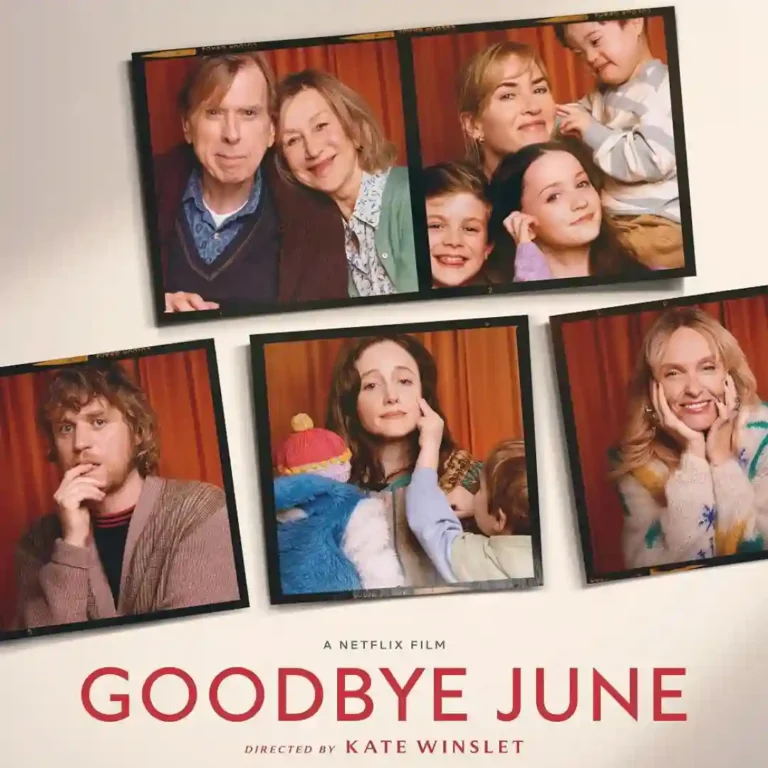
Choose Goodbye June for its exceptional ensemble, especially Helen Mirren, and its warm, thoughtful treatment of grief. Skip it if familiar dysfunctional-family plots, archetypal characters, or heavily signposted sentimentality quickly wear on you.
Best for
Viewers who want a performance-led family grief drama with humor, tenderness, and themes of presence, forgiveness, and reconciliation are the best fit.
Not for
Skip it if you want an original family-drama premise, deeply layered characterization, brisk pacing, or a light and uncomplicated Christmas watch.
Verdict
Goodbye June works best when its formidable cast is allowed to sit with the awkward, funny and painful details of a family preparing for loss. Reviewers consistently praise Helen Mirren, and many also admire Kate Winslet’s restrained, actor-focused direction, the sibling tension and the film’s humane ideas about presence and forgiveness. The dividing line is Joe Anders’ screenplay: supporters find it sincere and sharply observed, while detractors see stock characters, familiar plot beats and resolutions that are too tidy for the emotional weight involved. The nearly two-hour runtime and sentimental final stretch also test some viewers. Taken as a performance-led grief drama, it is often affecting; taken as a fresh or deeply layered family story, it is much less convincing.
The ensemble is the film’s clearest strength: reviewers repeatedly say the cast elevates thin or familiar writing, with several calling the performances excellent, stellar, or the main reason to watch.
lead performance: 5.0, 7 reviews, strong consensus
The central performances receive exceptional praise, especially Helen Mirren’s June, who is repeatedly described as magnificent, flawless, believable, and devastating.
The film earns strong marks for examining grief, mortality, family roles, forgiveness, and the value of limited time, even from reviewers who criticize its plotting.
Reviewers respond strongly to the film’s ideas about presence, forgiveness, family repair, and making use of the time that remains. Even some negative reviews acknowledge the sincerity of its intentions.
The humor is usually seen as a welcome strength, with tender, dark, and offbeat comic moments helping relieve the grief. A few jokes misfire, but the lighter beats often keep the film from becoming oppressively heavy.
Kate Winslet’s debut draws more praise than criticism for its actor-friendly restraint, intimate staging, and emotional control. Detractors find the approach prosaic, textbook, or insufficiently cinematic.
Critics who address the film’s overall originality find it heavily formulaic, built from familiar family-drama tropes rather than a distinctive new approach.
character development: 2.4, 20 reviews, low consensus
Characterization is one of the most repeated weaknesses. Many critics call the siblings archetypal, thin, or too neatly defined, though a few find real texture in the family roles and individual moments.
The screenplay is the main fault line in the critical response. Supporters call it sharp, raw, sincere, and even remarkable; detractors describe it as thin, formulaic, heavy-handed, amateurish, and too tidy.
The nearly two-hour length is a recurring drawback. Reviewers say it can feel demanding or like a chore, even when they understand why the grief process needs room to breathe.
The emotional subject limits repeat viewing: reviewers describe it as comforting when needed but also as the kind of film they may only watch once, especially not every Christmas.
Mirren is the strongest point of critical agreement: reviewers repeatedly call her magnificent, flawless, devastating, believable, and capable of grounding the entire film.
Andrea Riseborough: 4.6, 7 reviews, strong consensus
Riseborough is repeatedly praised for making Molly’s anger, resentment, humor, and emotional rawness vivid, with several critics calling her a standout or part of the film’s strongest sibling scenes.
Winslet earns strong overall notices for both performance and direction, especially her restraint and actor-centered approach. A substantial minority, however, finds the filmmaking too prosaic, textbook, or visually limited.
Spall is widely credited with adding humor, pain, and complexity to Bernie beyond the writing, though one critic finds the performance over-the-top and another dislikes the later sentimental turn.
Collette is generally praised for bringing comic energy and personality to Helen, with reviewers saying she elevates an underwritten or eccentric role and can be an inspired inclusion.
Compared with other Movies, this product is above average in plot clarity, message quality, acting performance, near average in emotional impact, story quality, below average in originality, plot originality, character development.
Comparison summary
32 compared features
Above average0.4+ pts higher
12(38%)
Same as averagewithin 0.3 pts
13(41%)
Below average0.4+ pts lower
7(22%)
Largest category differences
Attribute
This product
Category average
Difference
plot clarity
4.5
2.8
+1.7
originality
1.7
3.3
-1.6
plot originality
2.0
3.0
-0.9
message quality
4.6
3.7
+1.0
acting performance
4.6
4.0
+0.7
theme depth
4.6
3.6
+0.9
character development
2.4
3.1
-0.6
tonal consistency
4.1
3.2
+0.9
Consider This Instead
If you want better ending satisfaction
Choose Honeyjoon. It scores 4.8 vs 2.8 for ending satisfaction, with a 4.2 overall score.
Products reviewers directly compared with this model, grouped into quick takeaways.
The Family Stone
Compared: hospital-centered holiday dramaUnlike The Family Stone, Goodbye June places viewers directly in the hospital setting.
Similar: holiday family-drama toneIts mix of comfort and abrasiveness is placed in the same wounded-holiday tradition.
Anemone
Worse: nepotism-driven family projectThe reviewer considers Goodbye June less disastrous than the family-project comparison Anemone.
Blackbird
Similar: family-death premiseIts warring-siblings and dying-matriarch setup is criticized for strongly resembling Blackbird.
FAQ
Is Goodbye June mainly a Christmas movie?
It is set around Christmas, but reviewers treat the holiday mostly as a frame for a dying-parent family drama. Several caution that its grief-heavy mood is not ideal for cheerful Christmas viewing.
Are the performances good?
Yes. The ensemble is the clearest point of agreement, with Helen Mirren receiving especially strong praise and many reviewers saying the cast elevates weaker writing.
Is the story original?
Not especially. Critics repeatedly describe the dysfunctional-family and dying-parent plot as familiar, predictable, or formulaic, and several compare it with earlier films using similar setups.
Is Goodbye June very emotional?
For many reviewers, yes: some call it moving, consoling, devastating, or powerful enough to make them cry. Others find the sentimentality manipulative or too tidy, so the emotional impact varies sharply.
How is Kate Winslet’s directing debut?
The response is mostly positive but not unanimous. Supporters praise her restrained, actor-centered approach and intimacy, while detractors find the visual direction prosaic, textbook, or too television-like.
Does the movie balance sadness with humor?
Often, yes. Reviewers frequently praise tender, dark, or offbeat humor that lightens the grief, although a few comic beats are described as misplaced or ineffective.
Sample Expert Reviews We Analyzed
These are a few of the reviews included in our analysis.
Best for pristine archival footage, immersive sound, and a surprisingly tense look at Disneyland’s construction. Skip it if you want a comprehensive, deeply critical history; several reviewers found the 78–79-minute...
Best for an intimate, inventive archival portrait with strong emotional and cultural impact. Skip it if substantial nudity or an occasionally wandering biographical structure will frustrate you.
Pros: chemistry between characters, emotional impact
Best for an audacious, text-driven conspiracy thriller with gorgeous 16mm atmosphere and mounting dread. Skip it if long stretches of reading, deliberate repetition, and an intentionally austere narrative sound more...
Best for a profound, formally inventive meditation on grief, memory, and the ethics of filming family. Skip it if intensely personal addiction material, a 114-minute runtime, or occasional repetition will...