
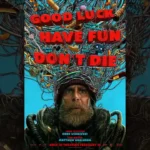
Good Luck, Have Fun, Don’t Die Feature Scores
Explore all 44 feature scores for Good Luck, Have Fun, Don’t Die, organized into pros and cons.
Scores by Feature
Summary
44 reviewed features-
Very positive 4.5-5.010 (23%)
-
Positive 3.5-4.422 (50%)
-
Neutral 2.5-3.49 (20%)
-
Negative 1.5-2.43 (7%)
Pros
Sort
-
The performances are widely seen as a major strength, with the ensemble committing fully to the movie’s eccentric mix of comedy, anxiety, and heart. A few critics think the shifting tone leaves some actors less grounded.
-
Sam Rockwell is the clearest consensus strength: charismatic, funny, manic, and emotionally frayed without turning the character into a one-note joke. Even mixed reviews often say he keeps the movie watchable.
-
Gore Verbinski’s direction is mostly praised for energy, visual invention, and control of the film’s chaos. Critics who are cooler on the movie still often credit his staging, even while calling the result overlong or indulgent.
-
Most reviewers find it energetic, funny, and highly entertaining, often calling it a blast or a wild ride. A smaller group finds the experience exhausting, disjointed, or simply not entertaining enough to justify the length.
-
The supporting cast is widely praised for fully committing to the film’s strange tone, with Haley Lu Richardson and Juno Temple receiving especially strong notices. A few roles are considered underused despite the talent involved.
-
Despite the manic premise, the film repeatedly finds real sadness and heart in grief, loneliness, and the desire for human connection. Susan and Ingrid’s material is most often cited as the emotional core.
-
The film’s camera work earns strong praise for inventive framing, movement, lighting, and a grubby blue-toned look that keeps the lower-budget production visually lively.
-
The comedy is frequently praised as sharp, dark, and laugh-out-loud funny, especially when it turns modern anxieties into absurd set pieces. Some reviewers find the gallows humor mean, obvious, or ineffective.
-
As a sci-fi dark comedy, it embraces time travel, horror, action, satire, and surrealism with unusual confidence. Fans of weird genre mashups tend to respond much more strongly than viewers wanting a conventional thriller.
-
The film has substantial ideas about grief, distraction, technology, authenticity, and choosing painful reality over comforting simulation. Reviewers disagree on how deeply those ideas are explored versus loudly stated.
-
Its oddball style has clear cult-movie potential and many reviewers recommend seeing it with a crowd. The same weirdness, blunt satire, and long runtime make it an acquired taste rather than a universal crowd-pleaser.
-
The film’s look is one of its most consistent strengths: grimy, blue-tinged, kinetic, surreal, and packed with odd imagery. Even mixed reviews often credit its visual personality.
-
Enthusiastic reviewers call it worth the ticket price and particularly suited to a theatrical crowd, while more mixed reactions stop short of urging an immediate cinema trip.
-
The score is praised for shifting between ominous electronic textures and bigger orchestral energy without losing the movie’s playful, anxious tone.
-
The movie is widely admired for taking familiar time-travel and AI ideas in a strange, personal direction. Critics who resist it point to heavy debts to The Matrix, Black Mirror, Groundhog Day, and other sci-fi touchstones.
-
The action is often praised for kinetic staging, readable movement, and oddball set pieces. Some reviewers find the later action less exciting or too dependent on chaotic spectacle.
-
Its sci-fi events are intentionally absurd, but the social behavior underneath them often feels uncomfortably plausible and recognizable. That near-future familiarity gives the satire much of its sting.
-
The production design turns modest locations into a vivid, grimy, surreal world, with the diner, future-tech props, AI room, and bizarre creatures giving the film a distinctive personality.
-
The core time-travel and rogue-AI setup is familiar, yet many reviewers think the film finds a fresh angle through its bizarre vignettes and satire. Others see the story as too indebted to earlier genre landmarks.
-
The UHD transfer is praised for razor-sharp detail, clean imagery, strong texture, and a cool-toned grade that suits the movie’s look.
-
The Atmos mix is described as bold and active, with deep bass, wide surrounds, directional effects, and strong action impact.
-
Character interplay is frequently enjoyable, with Sam Rockwell and Haley Lu Richardson singled out for strong chemistry and banter. Some relationships feel less developed than the performances themselves.
-
The costumes help sell the movie’s handmade, surreal personality, especially the Man from the Future’s improvised plastic-and-wires outfit and Ingrid’s battered princess look.
-
The practical effects blend nearly seamlessly with the visual effects, helping the movie’s handmade chaos feel cohesive.
-
Its dense ideas and details invite repeat viewing, with the appeal growing as the ending and themes are unpacked.
-
The music and end-credit material fit the film’s manic, darkly playful personality, with a few reviewers calling the soundtrack a strong tonal match.
-
The story wins praise for energy, ideas, and memorable character vignettes, but its central mission can feel thinner than the side stories. Reviewers most often disagree over whether the messy structure enriches or weakens the experience.
-
The strange anti-tech world is compelling enough to inspire interest in spending more time with the premise and its characters.
-
The effects are generally viewed as imaginative and resourceful for the scale, especially the surreal creatures and action imagery. Some late digital work looks deliberately or unintentionally rough, which splits opinion.
-
The dramatic material can land surprisingly hard beneath the absurd comedy, particularly around grief, isolation, and damaged relationships. Its tonal shifts make those beats powerful for some viewers and awkward for others.
-
The editing helps organize rapid shifts between action, flashbacks, and surreal imagery, though the stop-start structure and long detours make the overall flow feel uneven to some reviewers.
-
The sound design is singled out for how fully it reinforces the film’s heightened comic-sci-fi identity and recurring title motif.
Cons
Sort
-
The two-hour-plus runtime is the most repeated complaint. Even many positive reviewers say the film would be stronger with tighter trimming, especially around flashbacks and the extended finale.
-
The basic mission is easy enough to follow, but dream logic, shifting reality, and late reveals make the larger mechanics deliberately slippery. Some enjoy that uncertainty; others find the logic inconsistent or confusing.
-
The CG is divisive: some like the deliberately strange, AI-slop look of the creatures and finale, while others call parts of it rough or distracting.
-
The ending is one of the biggest points of disagreement. Some like its open, strange, thematic finish, while others find the final act drawn out, confusing, over-explained, or less satisfying than the setup.
-
The opening is commonly praised for immediate momentum, but the flashback structure often slows the central mission. Many reviewers say the movie regains energy in bursts rather than sustaining it cleanly for the full runtime.
-
The flashback chapters give several recruits memorable emotional context, especially Susan and Ingrid. Reviewers also note that some supporting characters remain thin and that the backstories can interrupt momentum.
-
The movie intentionally jumps between slapstick, grief, horror, action, and bleak satire. Many reviewers admire how boldly those tones coexist, while others find the shifts jarring, unstable, or exhausting.
-
The movie is more unsettling than traditionally frightening, using horror imagery, technology anxiety, and disturbing social ideas to create discomfort. Viewers wanting straightforward scares may find the tone too comic or surreal.
-
Verbinski can generate real tension inside the comedy, especially in escape scenes and uncertain reality shifts. Some reviewers think jokes or detours repeatedly deflate that tension before it can fully build.
-
The dialogue has sharp one-liners, comic rhythms, and memorable verbal bits, but several critics think the script becomes overly expositional or obvious in the final stretch.
-
The anti-AI and anti-distraction message feels timely, pointed, and emotionally relevant to many reviewers. Others find it repetitive, preachy, condescending, or less nuanced than its ambitious setup suggests.
-
The screenplay is admired for ambition, sharp satire, funny ideas, and inventive structure, but it is also the main target of criticism for repetition, overstuffing, exposition, and uneven late plotting.
Cast & Creators
-
Man From the FutureRockwell is the film’s most consistently praised performer, mixing manic comedy, charisma, exhaustion, and vulnerability into a lead who can sell even the wildest turns.
-
IngridRichardson is praised for making Ingrid emotionally grounded, funny, vulnerable, and unexpectedly central to the film’s human stakes.
-
SusanTemple earns strong notices for bringing grief and quiet emotional weight to Susan, with several reviewers calling her section one of the film’s most affecting.
-
DirectorVerbinski is widely praised for energetic staging, visual imagination, and a distinctive willingness to take big swings. The main criticism is that his maximalist approach also contributes to excess and overlength.
-
WriterRobinson’s writing earns praise for dark humor, ambition, and topical ideas, but critics are split on its structure, repetition, subtlety, and final-act exposition.
-
ComposerZanelli’s score is praised for matching the movie’s strange mix of menace, playfulness, and spectacle.
-
CinematographerWhitaker’s cinematography is praised for turning modest spaces into striking, kinetic images with expressive light, framing, and texture.
-
MarkPeña is generally liked for his comic timing and grounded work as Mark, though some reviewers wish the role gave him more to do.
-
TimTaylor’s role helps give Ingrid’s backstory its emotional and thematic stakes, with his performance receiving positive notices where singled out.