If you want better brightness
Choose Garmin Venu Sq 2. It scores 4.7 vs 2.4 for brightness, with a 3.7 overall score.

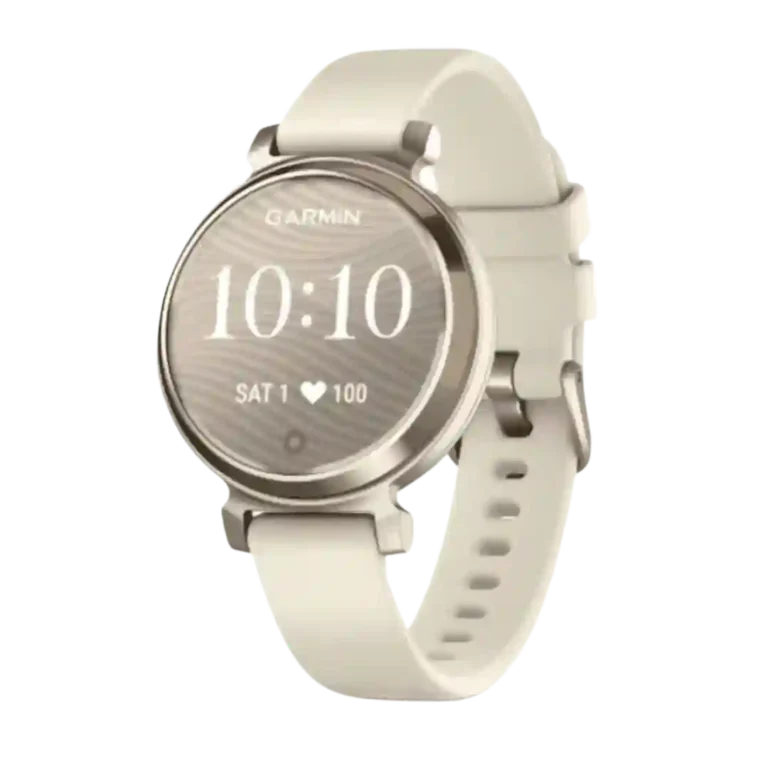
Choose Garmin Lily 2 if you want a discreet, comfortable wellness tracker with strong heart-rate, stress and Body Battery insights. Skip it if built-in GPS, fast charging, rich smartwatch apps or advanced training metrics matter most.
Best for casual exercisers and smaller-wrist users who want a stylish, discreet tracker with accurate heart-rate basics, strong stress tracking, Body Battery, safety tools, and multi-day battery life. It suits people who usually carry a phone during outdoor workouts.
Not for serious runners, advanced athletes, or buyers who want built-in GPS, onboard music, ECG, temperature tracking, fast charging, a bright color display, or deep smartwatch apps. iPhone users who rely on wrist replies should also be cautious.
Reviewers consistently frame the Garmin Lily 2 as a stylish, lightweight wellness watch that feels more like jewelry than a sports watch. It earns its strongest praise for comfort, design, heart-rate accuracy, Body Battery, stress tracking, safety tools, and multi-day battery life. The tradeoff is that Garmin keeps the device simple: connected GPS requires a phone, smartwatch features are lean, on-watch controls can feel clunky, and the monochrome hidden display draws repeated complaints for brightness and responsiveness. Sleep tracking divides reviewers, with some finding it aligned with experience and others seeing undercounted sleep versus Apple Watch or Fitbit. Overall, the Lily 2 works best as an elegant daily tracker for casual activity, not as a full training watch.
Compared with other Smartwatches, this product is above average in stress tracking, reliability, cross-platform compatibility, near average in contactless payments, menu navigation, below average in brightness, button controls, blood oxygen tracking.
| Attribute | This product | Category average | Difference |
|---|---|---|---|
| brightness | 2.4 | 4.2 | -1.8 |
| button controls | 2.2 | 3.9 | -1.7 |
| blood oxygen tracking | 1.8 | 3.5 | -1.7 |
| touchscreen responsiveness | 2.6 | 4.0 | -1.4 |
| body temperature tracking | 1.7 | 3.1 | -1.4 |
| Bluetooth connectivity | 2.2 | 3.7 | -1.5 |
| materials quality | 2.5 | 4.0 | -1.5 |
| watch face quality | 2.5 | 3.8 | -1.3 |
Choose Garmin Venu Sq 2. It scores 4.7 vs 2.4 for brightness, with a 3.7 overall score.
Choose Withings ScanWatch 2. It scores 5.0 vs 2.2 for Bluetooth connectivity, with a 3.5 overall score.
Choose Garmin Instinct 3. It scores 4.7 vs 3.2 for charging speed, with a 3.9 overall score.
Choose Samsung Galaxy Watch 6. It scores 4.9 vs 2.3 for mapping and navigation, with a 4.0 overall score.
Products reviewers directly compared with this model, grouped into quick takeaways.
No. Reviewers repeatedly note that it uses connected GPS from a paired phone, which can work accurately but requires carrying the phone for maps, distance, and route data.
Yes. Comfort is one of the strongest themes, with reviewers saying it is light, discreet, and easy to wear overnight.
Heart-rate accuracy is broadly praised. Multiple reviewers compared it with chest straps, Apple Watch, Polar, or Oura devices and found it reliable for most casual workouts, with some struggles during intense intervals.
Sleep tracking is mixed. Some reviewers found sleep times and scores aligned with their experience, while others said it undercounted sleep or lacked the detail they wanted.
Most reviewers got around four to five days, matching Garmin’s claim fairly well. Heavy use, high brightness, workouts, and Pulse Ox can reduce that.
Garmin Pay is praised as useful on Classic models, but several reviewers warn that bank support can be limited depending on region.
No reviewer positions it as a serious training watch. It is better for casual exercise and wellness because it lacks built-in GPS, recovery time, onboard music, and some advanced sport profiles.
These are a few of the reviews included in our analysis.




Best for long battery life, accurate GPS and useful offline maps at a strong price. Skip it if you need payments, richer apps, a built-in LED flashlight or polished smartwatch...
Pros: mapping and navigation, value for money
Cons: smartwatch features, contactless payments

Best for accurate run tracking, deep Garmin coaching and phone-free Spotify in a light package. Skip it if you need full maps, triathlon mode, Apple Music support or the strongest...
Pros: value for money, GPS accuracy
Cons: mapping and navigation, third-party app support

Good if you want premium running features, long battery life, and maps for under $200. Skip it if you need flawless heart-rate data, multiband GPS, LTE, or richer app support.
Pros: value for money, battery life
Cons: heart rate accuracy, third-party app support

Best for accurate running metrics, excellent coaching tools, a bright AMOLED display, and dependable battery life. Skip it if you need offline maps, music storage, contactless payments, multi-band GPS, or...
Pros: battery life, value for money
Cons: mapping and navigation, smartwatch features