
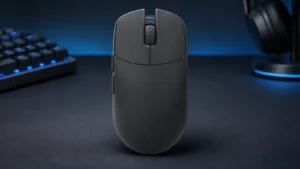
G-Wolves LYCAN Feature Scores
Overall Scorata score: 3.9/5
Based on 8 analyzed reviews · View source samples
Explore all 102 feature scores for G-Wolves LYCAN, organized into pros and cons.
Scores by Feature
Summary
102 reviewed features-
Very positive 4.5-5.027 (26%)
-
Positive 3.5-4.442 (41%)
-
Neutral 2.5-3.417 (17%)
-
Negative 1.5-2.415 (15%)
-
Very negative below 1.51 (1%)
Pros
Sort
-
At around 29 grams, this is unusually light for a full-sized mouse. Flicks take very little effort, although some players find the lack of inertia harder to control.
-
The optical sensor delivers accurate, responsive tracking; its forward position contributes noticeably to the fast feel.
-
The SPDT switches stand out for their crisp response and excellent latency.
-
The low front and rear hump work especially well for claw grips, although very large hands may feel cramped.
-
The generous bundle includes spare skates, grip tape, covers and a case, though not every accessory is equally useful.
-
The mouse reacts almost instantly to small movements and clicks, a strength that can also make it feel demanding.
-
The SPDT main switches deliver exceptionally low click latency, with further gains when their speed mode is enabled.
-
Snappy rebound and fast actuation make repeated clicks easy.
-
Up to 8,000 Hz polling is well implemented over both wired and wireless connections.
-
The solid upper shell and internal reinforcement keep flex surprisingly low. The open base is the main structural compromise.
-
Main switches feel crisp, fast and snappy, with little mushiness.
-
Main and side button travel is generally short and well controlled, with extra movement possible under firm edge pressure.
-
The main clicks are a standout, with controlled travel, quick rebound and a firm feel.
-
Several testers were delighted by the speed, solid shell and accessories, while one found the extreme sensitivity too demanding for daily gaming.
-
The rear hump and low nose create a compact, secure claw shape; comfort depends on hand size and grip preference.
-
Moderate, defined wheel resistance helps prevent accidental scrolling without feeling excessively stiff.
-
The forward sensor makes small movements feel direct and fast, though the effect varies with hand size and can feel overly sensitive.
-
Wireless testing was free of connection problems across multiple reviewers.
-
Low latency and minimal mass make this an excellent shooter mouse, particularly for quick flicks.
-
Sensor movement registers very quickly, with latency comfortably in competitive territory.
-
Fine adjustments and tracking can feel remarkably smooth, but one player found the sensitive shape harder to control consistently.
-
Speed and effortless flicks make gaming exciting, but the extreme build does not improve everyone's aim consistency.
-
The solid shell and claw hump make gripping comfortable for many, although shallow sides can compromise the fit.
-
Main buttons, side controls and wheel are generally well implemented and tactile.
-
Independent press and release debounce adjustment makes it easy to tune the controls for speed or double-click prevention.
-
SPDT switches and adjustable debounce help avoid unwanted double clicks; testers generally had no issues at their chosen settings.
-
Opinions differ on the stock PTFE skates: some enjoy their balanced glide, while others prefer better aftermarket options.
-
The included tape is exceptionally grippy and reusable, though its thick, nonmodular pieces can widen the shell.
-
It offers a full-sized body without bulk, rather than the tiny shell typical of many extreme lightweight mice.
-
Pronounced wheel detents make scrolling predictable and easy to control.
-
The rubberized wheel has distinct steps and controlled tension, making it pleasant to scroll.
-
Despite a slightly forward balance, the low weight keeps the mouse feeling agile and balanced for most grips.
-
Clicks feel consistent and well stabilized, although pressing their edges can introduce slight wobble.
-
Efficient electronics help the small battery last longer than expected, with low idle power consumption.
-
Wireless polling is well implemented and supports the full high-report-rate range.
-
The shape accommodates many grips and hand sizes, but low sidewalls and the compact feel can make fit tricky for larger hands.
-
Low inertia can make stopping and starting effortless, but some players need extra muscular effort to stabilize the pointer.
-
The feature-rich web driver covers key performance controls, though some rebinding options and update conveniences are missing.
-
Side buttons feel crisp and accessible to many, but some find them heavy, crowded or prone to sticking under extreme pressure.
-
The USB-C port works with many replacement cables, avoiding a proprietary charging connection.
-
Independent X and Y DPI adjustment allows fine-grained sensitivity tuning.
-
The web driver provides flexible macro customization.
-
The rubber wheel's recessed texture is preferred over earlier raised-dot designs.
-
Sensor angle adjustment is a welcome option for tailoring aim and ergonomics.
-
The inspected unit had excellent assembly quality, with well-implemented buttons and wheel; it was supplied directly by the manufacturer.
-
The front USB-C port accepts a broad range of aftermarket cables.
-
The 2.4 GHz link worked reliably, although the antenna design is less advanced than some competing designs.
-
Switch design and deliberate side-button actuation help prevent unwanted inputs, though extreme edge pressure can still cause trouble.
-
The raw plastic is sturdy and textured rather than cheap-feeling, although it lacks the grip of a proper coating.
-
Functional reliability is generally good in testing, although the exposed base can undermine stability on softer surfaces.
-
A single-page web driver is straightforward for most settings, but some options require extra steps and profile switching is inconvenient.
-
The small 200 mAh battery provides respectable runtime, but high polling rates shorten it substantially and frequent charging may be needed.
-
Fingertip grip is viable, especially with larger hands, although the width may be excessive for smaller hands.
-
The granular solid shell is usable without tape for many players, but grip can be weaker with sweaty hands.
-
Firm cloth and hard glass surfaces are preferable; plush pads can let the underside scrape or rock.
-
The very low front gives direct control and natural finger posture, but shallow sidewalls can leave fingers dragging on the pad.
-
Stock skates can glide smoothly, particularly on firm surfaces, but the exposed rear ridge may catch or rock on soft pads.
-
Translucent shell colors have an appealing look for buyers willing to pay a little more.
-
Standard USB-C cable compatibility makes charging convenient with aftermarket cables.
-
Compressed air makes cleaning the exposed sensor area relatively easy.
-
The main clicks sound crisp, with little shell resonance.
-
The range of solid and translucent finishes gives buyers attractive choices, with some colors carrying a premium.
-
The newer firmware worked well in testing despite a change in controller hardware.
-
Simple, secure packaging protects the mouse and accommodates its extensive accessories.
-
Internal components are serviceable, but opening the shell is tricky and switch or encoder changes require soldering.
-
The internal battery is accessible, with space for a replacement of a different size, although weight balance may change.
-
Wired USB-C works with a wide range of replacement cables, which helps overcome the included cables' shortcomings.
-
The web driver offers useful key customization, but rebinding choices are restricted and profile switching cannot be assigned to a button.
-
Manual firmware updates are relatively easy, though an online updater would be more convenient.
Cons
Sort
-
The supplied cables are a weak point for wired play, with a rigid thicker cable and no angled connector.
-
Past service problems raise doubts about how readily the manufacturer will resolve issues.
-
The exposed underside allows dust and debris to reach the internals more readily than an enclosed mouse.
-
Aftermarket skate compatibility is limited to the original shapes or small dots because of the narrow mounting surfaces.
-
Battery status is only reported in five-percent increments, limiting the precision of runtime estimates.
-
The thicker shielded cable is rigid, making wired movement less comfortable than with a flexible replacement.
-
Changing profiles relies on the companion web driver rather than an on-mouse shortcut.
-
Switches are soldered rather than hot-swappable, making replacements more involved.
-
Extended-distance mode can increase wireless reach but consumes extra battery without improving gaming performance.
-
One tester found long sessions more tiring because the mouse required constant stabilization despite its light weight.
-
The open underside collects debris faster, so the sensor lens needs more frequent cleaning.
-
Switching profiles requires opening the web driver rather than using an assigned mouse button.
-
Button programming is available, but the selection of rebind functions is limited.
-
The included PTFE skates can wear quickly on hard surfaces.
-
The box and website do not always agree on weight and sensor specifications, making exact configuration details harder to determine.
-
A one-year warranty is included, but concerns about claiming it reduce its reassurance.
-
The bare plastic is more grippable than expected, but a dedicated coating would improve confidence, especially with moisture.
-
The open bottom helps achieve extraordinary weight savings but exposes circuitry and can introduce rocking; included covers offer some protection.
-
Palm grip works for some smaller hands, but the low wedge profile can feel awkward or forced.
-
The low front can help natural finger positioning, while low sidewalls may require some users to lift their hands or drag fingers.
-
The extreme lightness and forward sensor may require an adjustment period; some adapt easily, others find the sensitivity persistently demanding.
-
The plastic shell can feel surprisingly solid, but its hollow, stripped-down design lacks the dense premium feel some prefer.
-
Virtual sensor-position adjustment can make the mouse feel more centered, but it does not fully reproduce the benefits of moving the physical sensor.
-
Measured stock weights are close to the claim on some units, but larger skates and grip tape can push the mouse above the advertised range.
-
The symmetrical body can be held in either hand, but the side buttons favor right-handed use.
-
The supplied sleeves are adequate on hard pads but can drag on soft pads and fray easily.
-
The light receiver has a rubber base, but heavier cables can still pull it out of position.
-
Spacers can raise dot skates to reduce bottoming out, but better aftermarket skates may be more effective.
-
The rear hump supplies useful anchoring, but it does not fully support the palm or fingers for every hand size.
-
The side buttons work well for many grips, but larger thumbs may have too little room beneath them.
-
Middle click is usable, though some find its rebound too spongy or slow for repeated presses.
-
Smooth micro-adjustments are a highlight for some, while others report less consistent aim or surface-related rocking.
-
The premium price can be justified by performance and accessories, but support concerns and the cost of replacement accessories reduce value.
Use Cases
Best for
Sort
-
A rear hump anchors the palm while the low front leaves fingers free, making claw the strongest grip style; large hands may need more side height.
-
Very little inertia makes quick starts and stops easy. Most testers loved flicking, though one needed time to adjust.
-
Medium-handed claw users tend to find the shape comfortable and secure.
-
Hard surfaces help prevent bottoming out, but the stock PTFE skates may wear faster than hard-pad-specific replacements.
-
Fingertip gaming is possible, particularly for larger hands, but the full-sized shell may be too wide for some.
-
Shooter players benefit from rapid input and low inertia, particularly when their grip suits the rear hump.
-
Glass pads provide smooth tracking and glide in testing, although long-term skate wear may favor aftermarket options.
-
Small hands can find a good fit with palm or claw grips, aided by the compact, low-profile shape.
-
Tracking feels smooth for some players, but the locked-in claw shape can limit movement freedom for others.
-
Exceptionally low click and motion delay make it a capable choice for high-level competitive play.
-
There is room to change the battery and service internal components, but the shell is tricky to open and switches require soldering.
Conditional or not ideal for
Sort
-
Large-handed usersLarger hands may suit fingertip or claw grips, but the shallow sidewalls and small rear hump can leave some feeling unsupported.
-
Palm grip gamingPalm-grip suitability depends heavily on hand size, and the shallow wedge can feel forced instead of supportive.
-
Cloth mousepadsFirm cloth pads are a safer match than plush ones, which may need taller or wider skates to prevent scraping.
-
Budget-conscious buyersThe price is firmly above budget territory, even though the hardware and extras can justify it for enthusiasts.
-
First-time lightweight mouse usersNewcomers to extreme lightweight mice may adapt and enjoy the speed, or find the lack of inertia difficult to manage.
-
Left-handed usersLeft-handed users can hold the symmetrical shell but cannot conveniently use the side buttons.
-
Long gaming sessionsExtended gaming may tire players who need to consciously stabilize the ultra-light shape and sensitive sensor.
-
Wired useWired gaming is possible at high polling rates, but the stock cables make it less appealing than using a more flexible replacement.