
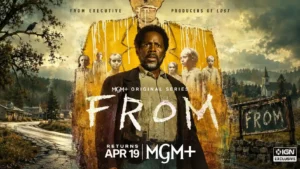
From, Season 4 Feature Scores
Overall Scorata score: 3.4/5
Based on 25 analyzed reviews · View source samples
Explore all 66 feature scores for From, Season 4, organized into pros and cons.
Scores by Feature
Summary
66 reviewed features-
Very positive 4.5-5.024 (36%)
-
Positive 3.5-4.416 (24%)
-
Neutral 2.5-3.412 (18%)
-
Negative 1.5-2.49 (14%)
-
Very negative below 1.55 (8%)
Pros
Sort
-
The ensemble remains one of the season’s most dependable strengths, especially its intense grief and breakdown scenes. Even critics frustrated with the scripts regularly praise the acting.
-
Heartbreaking departures, grief, and the strain of survival often land powerfully, especially in the finale.
-
Boyd and Jade’s unexpected partnership and several tender pairings create some of the strongest emotional scenes.
-
The season receives a distinct reaction on theme depth: exploring the total decay of the human spirit when hope is dangled just out of reach.
-
Terrifying creature encounters and the finale’s sudden darkness can be gripping, though some critics say the middle episodes have lost their edge.
-
Reincarnation, the Man in Yellow, and the town’s history expand the mythology. The additional clues delight theorists but worry viewers looking for closure.
-
A few clever early reveals and brutal finale developments catch viewers off guard, but underused twists divide opinion.
-
Claustrophobic dread and the nightmarish town remain major attractions. The setting feels increasingly oppressive even when the plot slows.
-
Tiny clues and callbacks to earlier seasons reward close followers, though the impact depends on eventual payoff.
-
Smiley and the looming puppets can be terrifying, although some critics wish the creatures played a larger role before the finale.
-
The cursed town’s history, geography, and shifting supernatural rules deepen its oppressive atmosphere.
-
Boyd’s deterioration and deeper arcs for Ethan, Fatima, Jade, and others inspire praise, though some storylines stop before yielding much.
-
Grief and reconciliation are among the season’s strongest scenes, including a heartbreaking goodbye.
-
Deep callbacks to earlier seasons reward existing fans and bring new meaning to old clues.
-
The long-standing cast provides the emotional gravity behind the escalating nightmare.
-
Big reveals and peril keep viewers curious about what happens next, though unanswered questions exhaust some patience.
-
The nightmare-town premise still provides memorable horror and poignant character drama, but a substantial group finds season-long plotting aimless.
-
Enthusiastic horror fans call this a powerful dark chapter, while the season’s harsher critics see an inferior installment.
-
A chaotic nighttime escape becomes one of the finale’s most exhilarating sequences.
-
New arrivals are praised for fitting into the established ensemble without seeming artificially added.
-
Judicious digital enhancements help the creatures appear unnatural while retaining physical weight.
-
Deliberately patient camera work and suffocating framing make the setting feel threatening.
-
Unlikely partners stepping up to protect one another provide welcome hope amid the violence.
-
Kristi and Marielle’s relationship is treated with warmth and dignity, culminating in an affecting farewell.
-
Practical-looking monster work combined with modest digital enhancements is praised for its physical unease.
-
Kristi and Marielle’s tender, tragic goodbye makes their relationship one of the finale’s strongest emotional elements.
-
Layered sound helps shadowy scenes feel threatening without needing constant jump scares.
-
An occasional dramatic musical cue impresses, though the same critic wishes similar care went into the writing.
-
The mixture of practical monster work and digital touches is praised for sustaining the nightmare atmosphere.
-
The season receives a distinct reaction on trauma portrayal: masterfully painting a haunting portrait of human fragility and tenacity.
-
A devoted audience remains invested in the cursed-town mystery, although the season sharply divides critics.
-
Strong supporting performances often do more than the comparatively thin writing gives them room to do.
-
Slow camera movements and shadowy compositions amplify the dread, though their artistry is not universally admired.
-
The open ending drives anticipation for the concluding season, although some viewers worry its mysteries may never pay off.
-
Gory deaths and disturbing imagery intensify the horror for fans, while the brutality limits comfort for more sensitive viewers.
-
The blackout and oppressive night scenes make a striking impression, though one critic finds the broader visual approach plain.
-
Cliffhangers and sheer forward pull keep the series easy to continue despite reservations about its mysteries.
-
The prominently promoted Man in Yellow does become a major driver of the story.
-
Religious questions and shaky faith add a provocative layer to the psychological horror.
-
The dense clues encourage revisiting earlier episodes while waiting for the next chapter.
Cons
Sort
-
Julie’s intriguing time-travel premise receives too little follow-through, a missed opportunity noted by multiple critics.
-
Repeated conversations about plans, threats, and familiar information frustrate viewers who want substantive movement.
-
A dramatic cliffhanger earns enthusiasm from some but leaves others dissatisfied with the season’s unresolved setup.
-
The strongest moments tie long-running mysteries to human stakes; the weakest recycle arguments, neglect promising subplots, and postpone consequences.
-
Several characters seem implausibly trusting of Sophia even after surviving repeated deceptions.
-
Several episodes feel longer than their story material warrants, with critics wishing the series cut filler rather than filling roughly hour-long slots.
-
Graphic brutality and dark psychological terror make the season unsuitable for ordinary family audiences.
-
The long-running puzzle format frustrates critics who want bolder and more distinctive narrative experiments.
-
One harsh assessment finds the show visually bland despite the striking premise.
-
One frustrated viewer says the unresolved finale makes continuing a streaming subscription feel unrewarding.
-
Reactions divide sharply: some welcome new revelations and returning clues, while others finish the season frustrated that major arcs remain unresolved.
-
Early momentum and a busy finale are offset by stretches of filler, repetitive disputes, and delayed payoffs. A minority finds the slower character focus worthwhile.
-
Conversation is a point of sharp disagreement: some admire believable exchanges, while others hear the same arguments repeated.
-
Ellis, Sara, Donna, and other supporting figures are sidelined as sprawling subplots crowd out development.
-
The scarce comic relief makes an increasingly abrasive group of survivors harder to warm to.
-
Ellis remains too often a passenger in others’ plots, despite a sympathetic performance.
-
The ten-episode structure is criticized for spreading limited story progression too thin.
-
Victor and Jade retain strong support, but multiple critics find Boyd’s anger and the ensemble’s bickering tiring.
-
The long wait between seasons disappoints viewers eager to resolve the latest cliffhanger.
-
Big set pieces are bunched at the beginning and end, while a sprawling array of subplots breaks the flow.
-
The Man in Yellow and Sophia begin with strong menace and an intriguing infiltration, but the latter’s limited consequences diminish the threat for critics.
-
Some find a more coherent thread linking earlier clues, while others see mounting questions and unclear character decisions.
-
The season receives a distinct reaction on editing quality: editing fixes that could make the pacing and the flow of an episode feel much more natural.
-
Tense openings and endings often surround sluggish middle sections, although some episodes sustain attention through strong performances.
-
Some find the dangerous, intricate story addictive; others are worn out by filler and repetitive detours.
-
The finale supplies violence, loss, and spectacular danger, but critics disagree about whether it earns its cliffhanger or makes up for a slow season.
Use Cases
Best for
Sort
-
Monster violence, intense darkness, and psychological dread make the season appealing to horror enthusiasts, though scares are unevenly distributed.
-
Viewers who enjoy slow-burning character work may appreciate the deliberate approach, provided they accept repetitive stretches.
-
Callbacks, clues, and cryptic revelations reward sustained attention and memory of earlier seasons.
-
Sustained atmosphere and cliffhanger pull favor consecutive viewing, particularly for those tired of waiting through filler weeks.
-
A startling finale and continuing mysteries offer plenty to debate and theorize about.
-
Graphic monster violence, bleak grief, and intense psychological horror make this a stronger fit for mature audiences.
Conditional or not ideal for
Sort
-
Returning fan viewingLongtime fans get new clues and powerful character moments, but delayed answers can test even committed viewers.
-
Mystery-solving viewingThere is abundant material for theories, but the lack of decisive resolutions can leave puzzle-focused viewers irritated.
-
Weekly episodic viewingWeekly theories can spark conversation, but sparse revelations make week-to-week waiting frustrating for some.
-
Children's viewingBloody monster attacks and emotionally devastating death scenes make this inappropriate for young children.
-
Family viewingCruel, bloody attacks and disturbing deaths are too intense for a mixed-age family screening.
-
Scare-sensitive viewingThe nightmarish violence and distressing deaths can be overwhelming even when the pace temporarily softens.
-
Newcomer viewingSeason four relies heavily on older mysteries and character histories, so new viewers may struggle to follow it.
-
Casual streaming viewingDense unresolved mythology and recurring plot threads make this difficult to enjoy casually.
Cast & Creators
-
SophiaDoyle gives Sophia an unsettling mix of apparent innocence and concealed menace, making her a standout newcomer.
-
Boyd StevensPerrineau makes Boyd’s exhaustion, fear, and faltering authority painfully believable. His chemistry with Jade also stands out.
-
ActorVan Landschoot makes Kristi’s final goodbye with Marielle deeply moving.
-
ActorAlpay brings spark to Jade’s abrasive honesty and shares a standout dynamic with Boyd.
-
Man in YellowHughes brings quiet, chilling menace to the Man in Yellow without needing flashy gestures.
-
ActorMoore gives Ellis a strong performance, even as critics wish the character had more independence.
-
ActorSaunders gives Donna an expressive but controlled strength during her more personal scenes.
-
CreatorGriffin is praised for shaping the show’s claustrophobic visual identity and deeply disturbing atmosphere.
-
MarielleOhm brings tenderness and heartbreak to Marielle’s final goodbye.
-
FatimaGhafoori receives special praise for a wonder-filled monologue and the emotion beneath Fatima’s ordeal.
-
VictorMcCord’s bruised, vulnerable Victor remains a fascinating figure amid the escalating horror.
-
ActorWebster handles Ethan’s grief with convincing maturity and emotional nuance.
-
ActorKonrad’s shared scene with Julie is praised as unexpectedly beautiful.
-
Tabitha MatthewsMoreno is praised as a reliable presence, even when other supporting roles are underserved.
-
ActorCheramy helps turn a quiet scene with Sara into an unexpectedly moving character moment.