
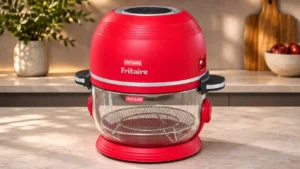
Fritaire Feature Scores
Overall Scorata score: 3.2/5
Based on 24 analyzed reviews · View source samples
Explore all 79 feature scores for Fritaire, organized into pros and cons.
Scores by Feature
Summary
79 reviewed features-
Very positive 4.5-5.09 (11%)
-
Positive 3.5-4.419 (24%)
-
Neutral 2.5-3.422 (28%)
-
Negative 1.5-2.426 (33%)
-
Very negative below 1.53 (4%)
Pros
Sort
-
The glass bowl makes browning and rotation easy to follow without lifting the lid, although moisture can fog it.
-
The colorful, rounded retro design is a standout on the countertop.
-
The top touchscreen and manual time and temperature controls are generally intuitive.
-
The range of bright and pastel finishes gives kitchens more decorating options than ordinary black appliances.
-
The different cooking setups add meaningful versatility, though baking and other modes can be limited by airflow and temperature.
-
The naturally smooth glass releases residue easily without an applied coating.
-
Successful meals can taste delicious, although some tests yielded dry or disappointing food.
-
The rack, rotating basket, spit and grabber expand cooking options, but add fiddly parts and cleanup.
-
The unit was reported to arrive well protected.
-
The tumbler can eliminate manual shaking; stationary foods usually still need to be flipped.
-
Basic assembly is straightforward, although the separate motor and batteries add steps.
-
The swirling soapy water loosens grease at the bottom; upper walls and accessories still require attention, and some testers found hand washing faster.
-
Crisping depends heavily on food and setup; the tumbler sometimes excels, while other tests produce pale or soft fries.
-
Overall impressions are mixed: the distinctive design and useful extras win fans, while cooking consistency and handling disappoint others.
-
The heater can run quietly, but the rotating basket and motor can be noisy.
-
Glass and stainless food-contact surfaces appeal to coating-conscious cooks, but plastic parts and quality concerns temper enthusiasm.
-
Air-frying results vary widely by tester, food and accessory; several tests fell short of conventional drawer fryers.
-
Several testers liked the compact footprint, while others found the wide body and separate lid bulky.
-
The illuminated display is easy to read for some testers, but bright light can make it difficult.
-
The rotisserie can produce good small cuts, but the limited clearance and separate motor make it less convenient.
-
The tested unit arrived in excellent condition.
-
The appliance is relatively easy to move for some users, although its glass construction calls for care.
-
Manual temperature control is welcome, though coarse increments can limit fine adjustments.
-
Experiences differ: some found automatic resumption convenient, while another reported settings reset when lifting the lid.
-
Some cooks achieved satisfying meals with less oil, though extra oil was needed to improve fries in one test.
-
The manufacturer provided some clarification, though important specification questions remain.
-
Manual adjustments are useful, but fixed fan speed and limited settings reduce flexibility.
-
Some cooks appreciate being able to start without preheating, while others found heating and preheat guidance inconvenient.
Cons
Sort
-
The exposed glass and lid can get uncomfortably hot, with some reports of burns or melting vents.
-
The separate battery-powered rotisserie motor is widely criticized for needing batteries and adding setup steps.
-
Rotating accessories have tight load limits, and food must be balanced and able to turn freely.
-
Food residue can cling to the bare metal rack or mesh, especially with oily or saucy foods.
-
Handling hot mesh, glass and the removable heater can be awkward despite the supplied grabber.
-
Temperature tracking is inconsistent across tests, with both overheating and failure to reach the target reported.
-
Water can leak from the motor opening or collect beneath the bowl during cleanup.
-
Slow heating and difficulty reaching the set temperature were reported.
-
The manual can omit practical setup and handling details, leaving cooks to experiment.
-
The narrow round stand has limited room to spread food in one layer.
-
The entire heater lid must be lifted and set on a heat-safe surface, making access more cumbersome than a drawer.
-
A tester reported a persistent heated-plastic smell from the lid, despite no detectable transfer to food.
-
Published material, capacity and warranty descriptions contain inconsistencies that deserve clarification.
-
Airflow can displace light food pieces or delicate toppings.
-
Grease and juices can collect on mesh and bowl walls, adding cleanup effort.
-
Short and inconsistently described warranty terms reduce confidence in a premium appliance.
-
Recipe timings often need adjustment to achieve the right doneness or crispness.
-
The round air stand is useful for flat foods but offers limited surface area.
-
The external motor and rotating attachments can be fiddly to attach and may need support.
-
Removing the heater lid allows heat to escape, making recovery after adding food slow.
-
The glass bowl does not detach from its base, making sink washing and draining less convenient.
-
The stand can tip or slide when loaded unevenly, although it is simpler to use than the tumbler.
-
The glass bowl is heavier than a typical basket and can be awkward to handle.
-
Automatic shutoff when lifting the lid is helpful, but hot exposed surfaces still require care.
-
Some small meals finish quickly, but many tests took longer than competing air fryers or required extra time.
-
The fixed fan speed limits control for delicate cooking tasks.
-
Stirring or adding food requires lifting the hot lid, complicating otherwise simple cooking.
-
Moist cooking can fog the glass and reduce the benefit of the clear bowl.
-
The cord sits close to the removable heater, so care is needed when lifting it.
-
Heat recovery is slow after opening, though temperature is steadier once the target is reached.
-
The removable hot lid needs clear space above and a heat-safe resting surface.
-
Lower measured short-cycle energy use is tempered by failure to reach the target and heat escaping from the exterior.
-
Early durability reports range from sturdy accessories to melting vents and concern about flimsy construction.
-
Some units worked consistently, but thermostat defects and unreliable motor or settings behavior raise concerns.
-
Some units felt sturdy, but flimsy plastic, loose motor supports and warped vents were reported.
-
Crowding and top-directed heat can leave the underside undercooked; the tumbler helps redistribute food.
-
One-touch settings are convenient but can be too aggressive or insufficient for particular foods.
-
The round bowl works for modest portions, but its usable capacity is limited by accessory clearance and food shape.
-
The premium price is easier to justify for the glass and rotating accessories than for cooking speed or convenience alone.
-
The appliance can fit some cupboards, but the extra accessories and non-nesting lid need storage room.
-
Recipe guidance and presets are not consistently accurate; some cooks appreciate the online recipes.
-
A broad temperature range supports different tasks, but actual temperature performance can limit its usefulness.
-
Basic controls are simple, but accessories, lid handling and recipe adjustments can make the workflow fiddly.
-
The rotating mesh basket can improve redistribution but is awkward to load, unload and clean.
-
Reports conflict on which accessories tolerate the dishwasher; the fixed glass bowl is generally described as hand-clean only. Check the instructions for your exact unit.
-
Material disclosures are useful but claims of a wholly plastic-free design need qualification.
-
Handles help lift hot parts, although gloves or a grabber are still needed.
-
Texture varies substantially: some meals are juicy and crisp, while others turn dry, tough or chewy.
-
Browning can be uneven, especially on the stationary stand; rotating foods or flipping can help.
-
Rotating accessories can improve evenness, but stationary food often cooks unevenly and may require turning.
-
Glass wipes clean easily, but the fixed bowl, mesh attachments and trapped water complicate a thorough cleanup.
Use Cases
Best for
Sort
-
The clear glass cooking chamber appeals to cooks who want to watch food and avoid conventional coated baskets.
-
Meat outcomes range from juicy and well browned to dry and tough, particularly on lean cuts.
-
The unusual retro shape and bright finishes suit kitchens where countertop appearance matters.
-
French fry results range from evenly crisp in the tumbler to pale, dry or undercooked.
-
Glass and bare steel food-contact surfaces are appealing to cooks avoiding conventional PTFE coatings.
-
Wings can turn out juicy and crisp with adjusted timing, but some tests found dryness or uneven crisping.
-
Vegetables often come out tasty and well browned, especially when watched closely or tumbled.
-
The glass and steel food-contact surfaces appeal to plastic-avoiding cooks, but some plastic components remain.
-
Fish and seafood can cook successfully, although timing needs care to avoid dryness.
-
The compact body can suit a small kitchen, provided there is room for the lid and accessories.
-
Small snacks and simple meals can be convenient, but slow cooking and fiddly handling reduce the advantage for other foods.
-
Toasties and grilled cheese can crisp very well, but the underside often needs flipping.
-
Basic controls can be beginner-friendly, although sparse guidance and a learning curve frustrate some first-time owners.
-
Small steak portions can brown successfully, though timing and internal temperature require attention.
-
Modest one- or two-person portions are a better match than large meals.
-
Dehydrating can work with manual adjustments, but the default settings and limited tray area can be drawbacks.
-
Leftover pizza can be reheated to a hot, crisp finish in minutes.
-
Small cuts can benefit from higher heat for browning, although temperature control is variable.
-
Watching food through the glass can help when experimenting with unfamiliar recipes.
-
The versatile setups can help kitchens without a strong convection oven, but do not necessarily replace a capable full-size oven.
Conditional or not ideal for
Sort
-
Frozen snacks and sidesFrozen snacks can be successful, but standardized tests found uneven results and some burning.
-
Whole chickens and tall roastsOnly very small birds fit the rotisserie comfortably; larger roasts are difficult to accommodate.
-
Fresh-cut fries and wedgesFresh potatoes can come out crisp with the right setup, but some tests found them soft or slow to cook.
-
Small-batch bakingSmall cookie batches can work, but strong top heat can make cakes and bread difficult.
-
Large family mealsLimited flat space and tumbler capacity make feeding a large family in one batch difficult.
-
Small family mealsSmall families can manage modest portions, but larger appetites may require multiple batches.
-
Tall bread bakingStrong top heat makes bread liable to burn before the middle cooks.
-
Batch cookingThe limited cooking surface often necessitates smaller batches rather than crowding food.
-
Dedicated air fryingAs a dedicated air fryer it is less compelling for speed-first cooks who want consistent crisping.
-
Multiple dishes at onceThe single chamber and narrow stand limit cooking multiple separate dishes at once.
-
Tofu and plant-based cookingThe stand is preferable to the tumbler for tofu that breaks apart.