If you want better Bluetooth connection stability
Choose Creative Pebble X Plus Computer Speakers. It scores 5.0 vs 3.3 for Bluetooth connection stability, with a 3.9 overall score.

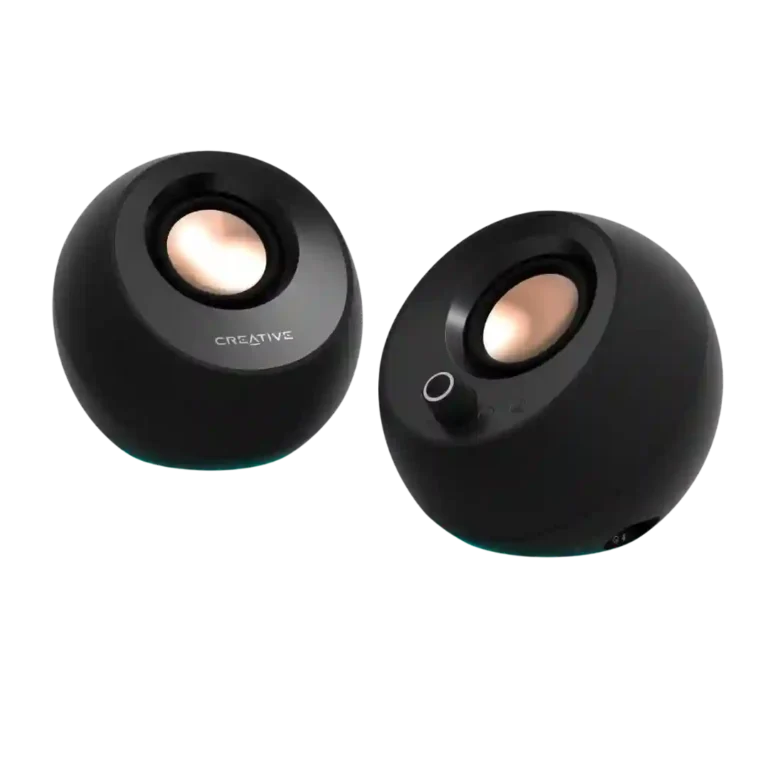
Choose these for clear, compact desktop sound, easy inputs, and standout value. Skip them if you need deep bass, room-filling volume, flawless USB/Bluetooth reliability, or a power adapter in the box.
Best for small desks, offices, dorm rooms, and compact gaming setups needing clear everyday music, dialogue, calls, and video without spending much.
Not ideal for bass-heavy listening, large-room playback, a completely cable-free desk, or buyers who need flawless USB and Bluetooth behavior across every computer.
Creative Pebble Pro makes its strongest case as a compact, affordable upgrade over laptop and monitor speakers. Reviewers repeatedly praise its clear vocals, crisp detail, stereo separation, small footprint, flexible USB, aux, and Bluetooth inputs, and tasteful RGB lighting. With a 30W USB-C PD adapter, many hear a meaningful jump in loudness and bass punch. The tradeoff is consistency: deep bass remains limited, the app and EQ options are weak, the fixed inter-speaker cable complicates clean desks, and a minority report USB or Bluetooth dropouts, power quirks, static, or early failures. It is a capable near-field system for everyday music, video, calls, and gaming, but not a substitute for larger powered speakers or a subwoofer-backed setup.
Compared with other Computer Speakers, this product is above average in Detail retrieval, Dynamic headroom, near average in Value for money, Cohesive presentation, below average in Audio format support, Physical control responsiveness, Cabinet construction / bracing.
| Attribute | This product | Category average | Difference |
|---|---|---|---|
| Audio format support | 1.0 | 3.7 | -2.7 |
| Physical control responsiveness | 1.8 | 4.2 | -2.4 |
| Cabinet construction / bracing | 2.4 | 4.4 | -2.0 |
| Inter-speaker connectivity | 1.3 | 3.5 | -2.2 |
| Wired audio connectivity | 2.7 | 4.5 | -1.8 |
| App usability and reliability | 1.6 | 3.6 | -2.0 |
| EQ customization | 2.5 | 4.0 | -1.4 |
| Bluetooth connection stability | 3.3 | 4.5 | -1.3 |
Choose Creative Pebble X Plus Computer Speakers. It scores 5.0 vs 3.3 for Bluetooth connection stability, with a 3.9 overall score.
Choose Edifier M90. It scores 5.0 vs 2.8 for Amplifier power requirements, with a 4.3 overall score.
Choose Creative XF1. It scores 4.7 vs 2.4 for Cabinet construction / bracing, with a 4.2 overall score.
Products reviewers directly compared with this model, grouped into quick takeaways.
It can produce pleasing mid-bass, especially with 30W USB-C PD power and good placement, but deep sub-bass is limited. Bass-focused listeners will prefer larger speakers or a system with a subwoofer.
The speakers work from a computer USB port, but many owners hear substantially more volume, bass, and fullness with a 30W PD adapter. The adapter is not included.
Yes. Clear mids and intelligible voices are among the most consistent strengths for Zoom calls, tutorials, podcasts, movies, and everyday video.
Many users report quick, stable pairing, but a meaningful minority experiences drops, reconnection loops, or wake-from-sleep problems. Reliability can depend on the computer, operating system, and power setup.
The decorative RGB rings can generally be disabled or adjusted from the speaker controls. Some users still report status LEDs, unexpected nighttime lighting, or limited customization.
They are most consistent as near-field desktop speakers in a small room. Some owners get room-filling sound, but distance, angle, limited deep bass, and maximum-volume constraints make them a weaker large-room choice.
These are a few of the reviews included in our analysis.
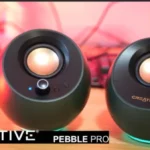
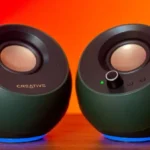
There might not be a better option for under a hundred bucks
Creative Pebble Pro speakers deliver impressive sound quality without breaking the bank, perfect for small spaces and versatile connectivity.
The Creative Pebble Pro are excellent, tiny computer speakers, boasting powerful bass and crisp treble. But they have some flaws.
The latest Review,,,reviews, breaking news, comment, reviews and features from the experts at PC Gamer
Creative's Pebble Pro speakers offer fun lighting effects and surprisingly robust sound with real stereo separation for well under $100.
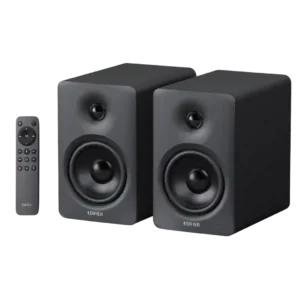
Choose the M90 for powerful, spacious sound, exceptional connectivity, and easy TV integration in a compact desktop-friendly pair. Skip it if you need Wi-Fi or AirPlay, front-mounted controls, or deep...
Pros: Bass performance, Value for money
Cons: On-device controls, Auto-off and standby behavior
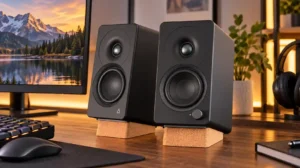
Choose the XF1 for clear desktop audio, flexible connections, and powerful EQ in a compact pair. Skip it if you need deep bass without a subwoofer, consistently polished sound at...
Pros: Placement footprint, speaker size
Cons: HDMI ARC, HDMI ARC support
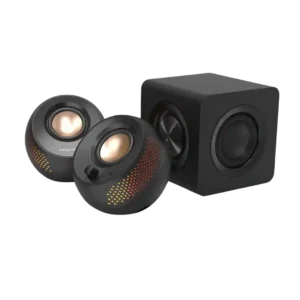
Choose the Creative Pebble X Plus if you want compact desktop speakers with RGB, strong volume, and subwoofer-backed bass. Skip it if you need deep sub-bass, clean cable management, advanced...
Pros: Value for money, Subwoofer
Cons: App reliability, EQ customization
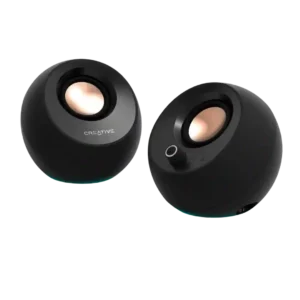
Choose these for clear, compact desktop sound, easy inputs, and standout value. Skip them if you need deep bass, room-filling volume, flawless USB/Bluetooth reliability, or a power adapter in the...
Pros: Overall sound quality, Value for money
Cons: Amplifier power requirements, Wired input