
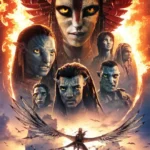
Avatar: Fire and Ash Feature Scores
Explore all 42 feature scores for Avatar: Fire and Ash, organized into pros and cons.
Scores by Feature
Summary
42 reviewed features-
Very positive 4.5-5.010 (24%)
-
Positive 3.5-4.49 (21%)
-
Neutral 2.5-3.48 (19%)
-
Negative 1.5-2.410 (24%)
-
Very negative below 1.55 (12%)
Pros
Sort
-
Visuals are the overwhelming consensus strength: breathtaking color, scale, texture, and 3D immersion make Pandora spectacular. Even detractors often call it the year’s best-looking film.
-
CGI is routinely described as world-class, photorealistic, and nearly free of visible trickery. It remains the film’s strongest technical achievement.
-
Action is one of the clearest strengths, with aerial combat and large battles frequently ranked among the franchise’s best. Repetition and sheer duration sometimes turn excitement into fatigue.
-
The motion-capture ensemble generally earns praise for commitment and emotional detail, although a minority found some performances lifeless or unconvincing.
-
Entertainment value ranges from exhilarating blockbuster fun to outright boredom. Most agree the spectacle is enjoyable, but story tolerance determines whether the full experience works.
-
The sound design is powerful and physical, making water, arrows, impacts, and large-scale action feel especially immersive in theaters.
-
Pandora remains richly detailed and immersive, especially through the Wind Traders and spiritual lore. Yet many wanted far more exploration of the Ash People and their culture.
-
Varang and Quaritch bring fun, kinetic, dangerous chemistry that gives the familiar conflict fresh energy.
-
Humor works best in playful whale and villain moments, but the repeated youth slang and strained levity often clash with the serious drama.
-
Suspense is effective when the action tightens, with some calling this the most intense Avatar installment, though not every dramatic beat surprises.
-
Cinematography is frequently admired for balancing enormous spectacle with intimate detail, although ultra-clear imagery and frame-rate shifts can look unnerving.
-
The costumes help distinguish cultures and visually communicate the identities of Pandora’s different clans.
-
As large-scale science-fiction action, the film can be daring, thrilling, and deeply satisfying for genre fans.
-
Production design is praised as masterful, particularly in the richly built environments and theatrical scale.
-
The younger Na’vi ensemble is singled out as one of the film’s strongest performance groups.
-
Themes of grief, faith, colonialism, and environmental protection can add real depth, but several reviewers found the film’s ideas simplistic, contradictory, or underused.
-
James Cameron’s command of spectacle remains formidable, though one harsh critic blamed the direction for weak emotional performances.
-
Its anti-colonial and environmental concerns feel timely to supportive viewers, but critics say the militarized spectacle sometimes contradicts the message.
-
The score divides opinion: some praise its epic themes and improvement over the previous film, while others find it forgettable or underpowered.
Cons
Sort
-
Repetition is the dominant complaint. Reviewers repeatedly said the plot retraces The Way of Water, though a few felt the continuity still works as one ongoing saga.
-
The 197-minute runtime is the most common practical complaint. Some viewers never felt the length, but many found it unjustified, exhausting, or in need of major cuts.
-
Dialogue is a major liability, frequently described as awkward, clunky, cringeworthy, or overloaded with forced “bro” banter.
-
The story is the film’s most consistent weakness: many found it hollow, recycled, or stretched thin beneath the spectacle. A smaller group still found the continuing family conflict engaging enough.
-
The dense ensemble and lore can become muddled or unfocused, but a few viewers found the many plot threads surprisingly easy to track.
-
Lead-performance reactions are mixed: some praise Sam Worthington’s maturity, while others still find him wooden or lacking charisma.
-
The ending divided reviewers: some called it gratifying or moving, while many found it repetitive, abrupt, anticlimactic, or lacking finality.
-
The screenplay earns occasional praise for complexity, but most reviewers fault its repetition, thin subplots, and failure to develop promising ideas.
-
Photorealistic motion and environments often feel remarkably real, but the fire effects, Kiri’s age portrayal, and arcade-like artificiality broke immersion for some.
-
Attempts at youth comedy and levity can clash awkwardly with grief, violence, and the film’s otherwise solemn tone.
-
The film’s Indigenous parallels drew concern for lacking nuance and reducing complex cultural dynamics to familiar stereotypes.
-
Complex action is often clear and readable, but frequent high-frame-rate switching and a few jarring edits repeatedly break immersion.
-
Rewatch appeal depends heavily on format and fandom: devotees are eager to return, while skeptics say the film fades quickly or loses power at home.
-
The family drama lacks the depth and emotional force some viewers expect from a film of this scale and length.
-
Families should expect considerably more intensity and mature material than a simple visual showcase might suggest.
-
Sexualized villain material is more pronounced than in earlier entries and may be uncomfortable for some family viewers.
-
The escalated battles, bloodshed, and repeated threats may feel excessive for viewers seeking a gentler family adventure.
-
Character work is uneven. Jake, Neytiri, Quaritch, and parts of the younger ensemble gain welcome depth, while Spider, Varang, and several family arcs often feel underwritten or repetitive.
-
Pacing splits sharply. Some said the 197 minutes fly by, while many others found the middle and final stretches padded, repetitive, or exhausting.
-
Romance lands unevenly: Kiri and Spider seem sweet to one reviewer, while others find the young pairing forced or distracting.
-
Special-effects reactions are mostly excellent, with groundbreaking VFX and seamless capture work, though one reviewer thought the fire and overall effects regressed.
-
Emotional impact varies widely. Grief and family material moved some viewers deeply, while others felt detached or manipulated by characters they could not care about.
-
The biggest screen and 3D presentation can justify the ticket for spectacle fans. Viewers focused on story or watching at home are much less likely to find the time and cost worthwhile.
Cast & Creators
-
VarangOona Chaplin is repeatedly singled out as a ferocious, terrifying, and magnetic Varang. Reviewers often wish the film gave her more screen time and a fuller arc.
-
NeytiriZoe Saldaña brings fierce physicality and raw grief to Neytiri, earning consistent praise as one of the film’s strongest performers.
-
QuaritchStephen Lang makes Quaritch more entertaining and layered than before, with several reviewers calling him the cast’s standout or one of the franchise’s best villains.
-
Jake SullySam Worthington earns praise for a more mature, layered Jake Sully, although some reviewers still find him wooden or short on charisma.
-
KiriSigourney Weaver’s Kiri performance works beautifully for some reviewers, though others remain distracted by the mismatch between her mature voice and teenage character.
-
SpiderJack Champion’s Spider performance ranges from fully endearing to frustratingly wooden, mirroring the divided response to the character’s central role.
-
CinematographerRussell Carpenter’s cinematography is usually praised as spectacular and highly readable, though one reviewer found its crystal clarity unnerving.
-
Costume DesignerDeborah L. Scott’s costumes are praised for helping distinct cultures feel visually alive and immediately legible.
-
ComposerSimon Franglen’s score is praised for stepping out of the prior music’s shadow and delivering genuinely epic themes.