
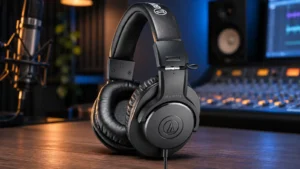
Audio-Technica ATH-M20x Feature Scores
Overall Scorata score: 3.6/5
Based on 26 analyzed reviews · View source samples
Explore all 62 feature scores for Audio-Technica ATH-M20x, organized into pros and cons.
Scores by Feature
Summary
62 reviewed features-
Very positive 4.5-5.013 (21%)
-
Positive 3.5-4.425 (40%)
-
Neutral 2.5-3.49 (15%)
-
Negative 1.5-2.415 (24%)
Pros
Sort
-
Experts consistently praise the performance available at the budget price, though a few would spend more for clearer sound or better hardware.
-
Most find the lightweight construction easy to wear, especially compared with heavier models.
-
Vocals and instruments are frequently praised for their presence and relatively flat midrange, though one tester finds the center image cloudy.
-
The sound is widely considered impressive for the price, with clear mids and a relatively honest presentation, but lacks the refinement and extension of better monitors.
-
Owners report surviving accidental drops and other knocks; the lightweight construction is not necessarily fragile in ordinary use.
-
Many recommend these as an affordable first or spare studio pair; listeners seeking higher fidelity may prefer an upgrade.
-
The light weight and moderate pressure make the headphones comfortable for many wearers, although the firm, shallow cups do not suit everyone.
-
The cups can seal securely for average-sized ears, but their shallow, relatively rigid design may feel cramped or less snug for others.
-
Several owners describe lasting daily use and good resilience, although exposed wiring and cracking or worn padding are potential weak points.
-
The thick, flexible cable generally feels robust; the single-sided design is convenient.
-
Measured harmonic distortion is generally unobtrusive, and some listeners report clean playback without audible distortion.
-
Owners often express satisfaction with the sound and comfort for the price, even with the basic construction and cable.
-
Clamping pressure is generally light enough to be comfortable, although a little tightness can develop after a couple of hours.
-
The headband has substantial cushioning and is generally well liked, especially for spreading weight.
-
A relatively flat midrange and balanced overall voicing are recurring strengths. Deviations in deep bass and upper treble prevent fully accurate monitoring.
-
Several testers find no dedicated amplifier necessary, although one encountered soft, muffled sound with weaker smartphones.
-
The sliding headband is easy to size, though some find its lack of satisfying notches less refined.
-
Left and right drivers match closely in the reported tests, including after prolonged ownership.
-
Several testers report clear playback without harshness or distortion even at high volume.
-
The headphones can get plenty loud when driven adequately.
-
The closed-back seal generally limits sound escaping into the room, although leakage can become more noticeable at higher volume.
-
Many describe natural, convincing sound, though one tester notes inaccurate midrange texture.
-
Padding ranges from soft and comfortable to firm and unforgiving depending on the wearer; small cups and wear are common caveats.
-
A discreet black, utilitarian design suits studio work; some find the prominent branding or plain plastic less attractive.
-
The headphones generally work well across computers and audio interfaces, with some reports of weaker output from phones.
-
Isolation helps with room noise and higher pitches, but low-frequency noise often passes through. Experiences vary considerably with fit and expectations.
-
Many hear impressive detail for the price, especially in the midrange. Recessed upper frequencies and reduced clarity compared with higher models limit fine scrutiny.
-
Some listeners wear these for several hours without discomfort, but firm pads, heat or pressure lead others to take breaks after an hour or two.
-
Plug-in operation and the adapter are straightforward; managing the lengthy fixed cable can be annoying.
-
Lightweight plastic and thin reinforcements feel less refined than higher models, although many owners find the structure surprisingly solid.
-
The plug and adapter make it convenient to switch among a phone, laptop and guitar amp.
-
The plug connection feels secure and well made.
-
The measured frequency response is consistent across listeners, which helps when applying a common calibration profile.
-
Measured manufacturing consistency is good, with few deviating pairs in the reported tests.
-
The fit is generally secure for stationary use and normal movement but less dependable during vigorous activity.
-
Left-right positioning can be clear for basic monitoring, but some listeners find precise localization unreliable.
-
Adding some low-frequency EQ can make action-game audio more exciting.
-
Packaging is simple and relatively minimal, with a premium-looking box but less luxurious internal wrapping.
Cons
Sort
-
The nonfolding cups, long lead and absent carry pouch make packing and transportation awkward.
-
The cable is permanently attached, so changing cable length or replacing a damaged lead is not straightforward.
-
A damaged hardwired cable is a major repair concern, although simple screw repairs can be manageable.
-
Small exposed wires near the cups can catch on objects, creating a potential failure point.
-
The long lead readily tangles or catches on furniture and may need to be secured at a desk.
-
Cup movement is restricted compared with higher models, limiting flexibility and sometimes making the fit feel stiff.
-
The bulky plug can be difficult to insert fully through a phone case.
-
Contact between the cable and furniture can transmit audible rubbing noise.
-
Glasses arms can create gaps in the vinyl pads and reduce isolation.
-
The hollow yokes are judged less robust than those on higher M-Series models.
-
One listener finds rounded contours and weak separation between musical elements.
-
The lack of an inline microphone makes the headphones inconvenient for calls.
-
The plastic finish can scratch easily according to one owner.
-
Measured bass extension falls short of what the stated frequency range might suggest.
-
The performance improvement over the original ATH-M20 is described as marginal, so existing owners may not need to replace it.
-
The closed design offers limited spatial openness; stereo placement is adequate for basic work but not a spacious concert-like presentation.
-
Highs range from smooth and nonharsh to noticeably recessed or uneven. Missing upper-treble detail is a recurring concern for precise audio work.
-
The roughly three-meter cord offers excellent reach in a studio, but can snag or become cumbersome at a desk or with a phone.
-
The materials are plainly budget-oriented, although some find the finish or construction more substantial than expected.
-
A little frame creaking can be audible when moving around, although it is not described as severe.
-
The included quarter-inch adapter is useful for studio gear, but the lack of a pouch or extra cables keeps the package basic.
-
The closed cups can trap heat and cause sweating, though some wearers report little discomfort from warmth.
-
The thin metal headband and padding are possible wear points; experiences range from cracking after months to foam staying intact for two years.
-
Bass is generally controlled rather than exaggerated. Several listeners miss sub-bass extension and impact, while others find the low end satisfying.
Use Cases
Best for
Sort
-
The low price is a major advantage: many experts find the sound and studio utility unusually good for the money.
-
Basic recording, playback and monitoring are the standout applications, with a useful midrange and inexpensive construction.
-
An inexpensive, straightforward entry point for students and new producers, especially for recording and learning to monitor sound.
-
Clear speech and audible recording details make these useful for editing videos and balancing audio at a desk.
-
Content creators can get useful monitoring and editing clarity inexpensively without paying for professional-grade refinements.
-
Short sessions are comfortable for many listeners and allow breaks before heat or pressure builds.
-
Balanced, clear playback is enjoyable for many listeners, but those who prefer boosted bass or expansive sound may find it less engaging.
-
They can be satisfying for general listening at home or a desk, but a restrained bass response may be underwhelming for some.
-
Affordable monitoring is useful for music production and tracking, especially for newcomers working with a modest setup.
-
The balanced midrange makes these useful for entry-level critical listening, though demanding listeners may want greater detail and a wider soundstage.
-
Useful for basic podcast monitoring and editing at low cost, though subdued sibilance and bass can make precise audio judgments harder.
-
The modest unit price makes equipping a studio or podcast room with multiple pairs practical.
-
The clear, present midrange works particularly well for vocals, despite subdued upper harmonics.
-
The midrange-focused tuning works well for acoustic material, particularly when an expansive soundstage is not essential.
-
Their honest monitoring sound and closed-back design work well for practicing instruments without disturbing others.
-
They can work for casual DJ monitoring at moderate levels, but limited swivel and isolation make them less compelling for demanding DJ work.
-
The closed cups, long lead and clear sound are useful for electronic drum-kit practice on a budget.
-
One tester finds hip-hop enjoyable with the balanced tuning, although bass-focused listeners may prefer more low-end impact.
-
A long lead and low price suit musicians using a wired monitoring system during live performances.
-
One long-term owner reports stable driver balance after two years of heavy teaching use.
-
Affordable, durable monitoring is useful for students and music teachers who need to hear recorded takes clearly.
-
Closed cups allow quiet instrument practice and playback without disturbing neighbors.
-
Average or smaller ears can fit inside the cups without being pinched.
-
Quiet indoor listening is a better fit than noisy outdoor environments because isolation is limited.
-
They can work reliably as a stationary office pair when treated carefully.
-
A straightforward wired connection suits studio work when wireless features are not needed.
Conditional or not ideal for
Sort
-
Audio mixing and masteringUsable for light mixing and learning, but bass and treble deviations can cause overcompensation. Critical final mixes benefit from reference checks or more accurate monitors.
-
Bass-heavy musicListeners seeking strong sub-bass and a physical kick are likely to be disappointed by the restrained low end.
-
CommutingA long fixed cable, nonfolding construction and weak isolation make these a poor choice for commuting.
-
Smartphone listeningThe long cable and bulky connector are inconvenient with phones, and weak phone outputs may sound soft, although some devices drive them adequately.
-
GamingSome enjoy the stereo detail for games, while others find effects weak, directional cues limited or speech less clear; a dedicated gaming headset may suit demanding players better.
-
TravelThe long cable, nonfolding cups and lack of a carry bag are drawbacks for packing and travel.
-
Electronic musicThe lack of deep bass and kick makes electronic dance music less satisfying for several listeners, despite one favorable general genre assessment.
-
Large earsSmall, shallow cups may press against larger ears and feel cramped or warm.
-
ExerciseThey are not designed for workouts and can slip during high-intensity movement.
-
Air travelWeak low-frequency isolation leaves aircraft rumble audible, making these a poor choice for flights.
-
Phone and video callsWithout an inline microphone, these are not a practical all-in-one headset for calls.
-
RunningThey can slip off during running and other vigorous movement.
-
Rock and metal musicRock tracks with prominent drums and bass guitar may lack the weight expected from the recording.