
If you want better guest appearances
Choose Carrie. It scores 5.0 vs 3.0 for guest appearances, with a 4.0 overall score.

College storylines include strong language, suggestive humor and sexual-health discussions, along with sensual dancing, kissing and light alcohol use. Brief fighting, a campus bomb threat and other mature social issues add intensity.
Choose it for a lively new Hillman ensemble, strong HBCU representation and a sequel that often honors its roots without living in them. Skip it if rushed 10-episode pacing, romance-heavy detours or overt issue dialogue will frustrate you.
Longtime Hillman fans and newcomers who want a character-driven college dramedy with contemporary HBCU culture, intergenerational themes and a lively young ensemble.
Viewers seeking the original series’ multicamera comic rhythm, slow-burn character development or a season that gives every social issue and relationship plenty of room to breathe.
A Different World largely earns its return to Hillman by giving the new class enough charm, cultural specificity and identity to stand beside the legacy cast. Maleah Joi Moon draws the most consistent praise, while the ensemble chemistry, HBCU setting, contemporary social themes, soundtrack and production frequently land well. The tradeoff is compression: ten half-hours force some serious topics, friendships and romances to sprint, and several critics felt the back half becomes repetitive or too soap-driven. Legacy appearances are another split point—warm and meaningful for some, distracting fan service for others. The result is a generally successful continuation with genuine heart and a strong foundation, but one that would benefit from more room to breathe and tighter control of its old-versus-new balance.
Compared with other TV Shows, this product is above average in ethical sensitivity, ensemble balance, continuity, near average in spin-off quality, main cast performance, below average in directing quality, accent authenticity, plot twists.
| Attribute | This product | Category average | Difference |
|---|---|---|---|
| directing quality | 1.0 | 4.2 | -3.2 |
| ethical sensitivity | 5.0 | 2.8 | +2.2 |
| accent authenticity | 1.0 | 3.0 | -2.0 |
| plot twists | 2.0 | 4.0 | -2.0 |
| ensemble balance | 5.0 | 3.1 | +1.9 |
| continuity | 5.0 | 3.3 | +1.7 |
| dialogue quality | 1.8 | 3.4 | -1.5 |
| cultural representation | 4.9 | 3.6 | +1.3 |
Choose Carrie. It scores 5.0 vs 3.0 for guest appearances, with a 4.0 overall score.
Choose Interview With the Vampire, Season 3. It scores 5.0 vs 2.0 for character consistency, with a 4.3 overall score.
Choose A Knight of the Seven Kingdoms, Season 1. It scores 5.0 vs 1.0 for directing quality, with a 4.5 overall score.
Choose The Gentlemen, Season 2. It scores 5.0 vs 4.0 for spin-off quality, with a 4.2 overall score.
Products reviewers directly compared with this model, grouped into quick takeaways.
No. The new students and their relationships work as a standalone story, though familiarity with Hillman and the returning characters adds extra layers.
Yes. Several legacy characters have meaningful roles, but reactions are mixed on how much space they take from the younger class.
The 10 half-hour episodes cover a full school year, and the most common criticism is that major issues, romances and supporting arcs move too quickly.
Not exactly. This version is a single-camera dramedy with a more modern, sometimes soapier tone, while still using humor, Hillman traditions and returning characters.
Its HBCU setting, cultural specificity and current concerns are major strengths, although some dialogue and issue-driven storylines can become overly direct or surface-level.
The supplied material supports a youngest general recommendation around age 14 because of strong language, suggestive humor, sexual-health themes, sensual dancing, light alcohol use and threat-related material.
These are a few of the reviews included in our analysis.
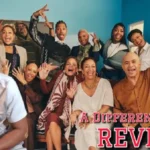




Netflix’s ‘A Different World’ reboot gets some points for diversity and sweet themes, but the sentimentality of college years includes...
A Different World (2026) succeeds where other reboots fail, capturing HBCU culture for a new generation that carries the original's legacy.
TL;DR: Netflix's A Different World sequel starts strong with layered new characters and earned nostalgia for the original cast, but loses...
Netflix’s A Different World returns to Hillman with a new generation balancing college, identity, social media, fashion, relationships and legacy
Is A DIFFERENT WORLD: Episodes 1.1-1.3 family friendly? Find out only at Movieguide. The Family and Christian Guide to Movie Reviews and...

Best for sharp adult humor, magnetic chemistry and a deeply satisfying farewell. Skip it if familiar will-they-won’t-they plotting or deliberately messy leads are dealbreakers.
Pros: humor, writing quality

Choose Widow’s Bay for its dark laughs, richly haunted island and memorable ensemble. Skip it if you need straightforward scares, rapid answers to every mystery or a completely resolved finale.
Pros: humor, genre satisfaction
Cons: ending satisfaction, season pacing

Choose Season 15 for warm, character-driven comedy, meaningful growth, and a finale that rewards longtime fans. Skip it if the short binge format, uneven replacement voices, or occasional clumsy commentary...
Pros: franchise connection, character development

Best for sharply acted, compassionate, high-pressure hospital drama. Skip it if graphic procedures unsettle you or you need a neatly resolved season finale.
Pros: character development, acting performance
Cons: character consistency, dialogue quality