
Ha-Chan, Shake Your Booty!
Where It Has the Edge
- production design is 4.9 vs 4.5. Haru’s cozy, record-filled home and the broader colorful design create an inviting world that several critics wanted to...

Scorata scores summarize analyzed review evidence on a 1–5 scale; they are not laboratory measurements or a simple average of customer star ratings. Feature scores summarize the reviews covering that feature. The overall score averages feature scores within each review, then combines review averages. When both expert and customer evidence are available, those two groups receive equal weight. Products can have different review coverage, so small score gaps do not establish a winner.
Recommendations prioritize important features for the category, with a score of at least 3.5, a gap of at least 0.25 points and at least two supporting reviews per product. Features with widely varying scores or broad connectivity contexts are excluded from recommendations. These safeguards do not establish statistical significance.
Quick verdict
The available evidence supports the recommendation below, but does not establish an overall winner. Check the remaining features against your priorities.
Choose Ha-Chan, Shake Your Booty! for production design.
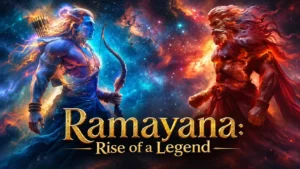
There is not enough comparable review evidence to recommend Ramayana: Rise of a Legend over the other product.
No clear scored advantage over the other product.
Scores are out of 5. Missing scores mean missing review evidence, not a missing feature.
The opening competition is singled out as dazzlingly assembled, using its cutting to heighten the rush of dance before the sudden tragedy.
Frantic cutting and overediting are recurring complaints. They disrupt spatial clarity and stop action or dance sequences from settling into an effective rhythm.
The multilingual exchanges in Japanese, Spanish, and English efficiently establish intimacy and a lived-in cross-cultural relationship.
Clunky English lines and relentless explanatory speeches weigh down the dialogue. The strongest criticism targets a tendency to announce ideas instead of dramatizing them.
The hopeful final movement lands beautifully for several critics, but others find the climax predictable or a key romantic plot resolution abrupt and underwhelming.
The part-one cutoff is a recurring limitation. It leaves the central confrontation unresolved, with some viewers frustrated that the story stops just as its main conflict begins.
The script can be economical, sensitive, and modern, especially in early character work, but contrivances and underdeveloped supporting relationships keep it from fully cohering.
The screenplay covers a great deal of material and occasionally finds personality in the adaptation. Its repeated exposition, rigid moral framing and thinly developed leads attract substantial criticism.
Haru’s connections with Luis and Fedir carry convincing warmth and attraction, with the central performers selling both intimacy and romantic tension.
The couple’s chemistry is warmly celebrated in several enthusiastic assessments. Other responses find little spark between them, making their relationship a significant point of disagreement.
The film’s bawdy banter, awkward decisions, and surreal gags often work very well, though a few critics feel the comedy sometimes weakens the grief or falls flat.
Lakshmana’s lighter moments charm some viewers. Another assessment hears repeated quips falling into awkward silence, so the humor is far from universally effective.
Bright colors, elegant compositions, sweeping movement, and wide dance framing earn frequent praise, though one critic felt the camera sometimes falls out of step with the choreography.
Bright colors, sweeping camera moves and sunset skies can make the world look magnificent. Harsher assessments find flat framing and frantic compositions that fail to connect.
The standout street confrontation turns punches into dance with flair, making the film’s most action-driven set piece feel inventive and exuberant.
The battles offer colossal, imaginative highlights that thrill admirers. Negative assessments find them weightless or overedited, though even a mixed response singles out the late aerial clash.
The grief-and-recovery core is affecting, but reactions split over whether the increasingly busy plot enriches Haru’s journey or scatters its impact.
The mythic journey can feel rousing and engrossing, particularly in its strongest early passages. Dense setup, weaker later momentum and limited individual perspective prevent a consistent endorsement.
Wladyka earns substantial praise for bold visual ideas, emotional warmth, and confident dance staging, even as some critics fault his handling of the film’s competing tones.
The direction earns praise for ambitious staging and visually striking battles. Others see airless scenes, messy composition and too little space for human drama.
The film’s life-affirming idea—that grief and joy can coexist and movement can help a person rejoin life—generally lands warmly without becoming purely sentimental.
Messages about duty, balance and compassion resonate strongly with sympathetic viewers. Detractors find the same lessons repetitive, prescriptive and closer to lectures than drama.
At its best, the film turns grief, desire, and recovery into something moving and deeply human; at its weakest, whimsical excess can blunt the intended catharsis.
Exile, devotion and the late bird battle move some viewers deeply. Others find the same major events emotionally thin because the characters have too little quiet time to develop.
The film repeatedly swerves away from the safest crowd-pleaser template, though some later turns rely on predictable deception and contrivance.
Bringing this cultural world to blockbuster scale feels refreshing to one viewer. Another finds the adaptation too general in its approach to establish a memorable voice of its own.
Haru is sympathetic and vivid, but several critics found her arc underwritten or abruptly pushed into behavior that feels less nuanced than the early character work.
Ravana’s conflicting motives provide the richest characterization. The leads are often judged too idealized or underdeveloped to make their turning points fully involving.
The fantasy dances and street-fight number are frequent highlights for their energy and storytelling, though a minority found some dancing technically loose or visually underwhelming.
Ravana’s worship dance earns praise for choreography and audience impact. A contrasting assessment finds that overediting and airless staging undermine the dance work’s potential.
Grief, renewal, desire, and cultural identity can feel thoughtful and mature, but detractors find some themes simplified or flattened by the film’s whimsical approach.
Themes of moral balance, courage and duty can inspire reflection. Criticism centers on a simplistic good-versus-evil framework and too little room for genuine moral inquiry.
Kikuchi often makes Haru’s grief and messy behavior feel believable, but some late choices and surreal turns strain recognizable psychology for certain critics.
The fantasy feels physically convincing to some viewers, who appreciate its natural-seeming weight. Others see synthetic environments and battles without tangible impact.
The movie can move with a lively cadence, but recurring chapter cards and an overlong feel are recurring drag points for some critics.
Pacing is a persistent point of disagreement: one viewer finds the long English cut flies by, while many others describe prolonged setup, rushed climaxes or stretches that drag.
The attraction and tenderness can be persuasive, but the Fedir storyline is less satisfying when jealousy, lies, and familiar romantic complications take over.
The central romance produces moving wedding moments and warm devotion for some viewers. Others want more courtship and interaction, or find that the couple never develops a convincing spark.
The Japanese, Mexican, and broader Latin influences are woven together with unusual specificity and warmth; the multicultural setting is repeatedly treated as one of the film’s richest strengths.
The film’s Indian cultural perspective is praised for provoking curiosity and appreciation. An unfamiliar viewer values the chance to explore a different set of stories and beliefs.
The roughly two-hour experience feels breezy to some, but multiple critics thought the story could benefit from trimming.
The long duration feels absorbing and fast-moving to some viewers. Others find the packed narrative laborious or sleepily plotted, especially in a single sitting.
The central emotional path is understandable, but unanswered practical details and Haru’s abrupt choices sometimes make motivations or connective logic feel thin.
Some viewers find the expansive story surprisingly easy to follow. Others struggle with dense world building, rapid exposition.
The grief drama has genuine feeling, but some dramatic beats do not fully click when broad comedy and increasingly chaotic plotting take over.
The drama can feel tender, life-affirming and full of family devotion. A strongly opposing assessment finds it inert beneath the spectacle.
The unusual comedy-drama-musical blend can be a cross-cultural delight when its modes click together.
A quoted early audience reaction enthusiastically endorses the fantasy execution, preferring it to the experience offered by Nolan’s The Odyssey.
One viewer found the movie substantially more somber than its trailer suggested, making the promotional tone feel somewhat misleading.
Replacing the part-one subtitle with Rise of a Legend is criticized for suggesting a complete story when the central journey remains unfinished.
Rinko Kikuchi is the clearest consensus strength, praised for quiet charisma, comic precision, emotional range, and the ability to ground the film’s wildest turns.
Kapoor’s calm, restrained Rama draws both exceptional praise and strong criticism. Admirers see majesty and grace; detractors find solemnity without enough emotional life.
The ensemble is generally a strength, with the cast keeping the film lively and emotionally accessible even when the material turns messy.
The cast draws broad praise in several assessments, especially for its presence and action work. A dissenting response finds the performances expressionless and one-note.
The supporting ensemble is frequently lively and appealing, with especially strong comic notices for YOU and warm praise for the actors around Kikuchi, though one critic found them comparatively thin.
Supporting turns, especially Lakshmana’s warmth and wit, earn enthusiastic praise. The cast around the principal couple often adds personality and emotional color.
The early portrait of contemporary Tokyo, ballroom culture, multilingual relationships, and home life creates a vivid social world that carries through the film.
The world can feel magical and enveloping, with enough detail to pull viewers into an unfamiliar mythic setting. One severe critique finds the environments synthetic and unable to suggest life beyond the frame.
Bold color, magical-realist imagery, playful chapter graphics, and expressive fantasy sequences give the film a confident personality, even when some flourishes are judged excessive.
Vibrant imagery and a lavish fantasy canvas delight some viewers. Others experience the same visual approach as synthetic, overbearing and lacking a coherent style.
Haru’s cozy, record-filled home and the broader colorful design create an inviting world that several critics wanted to step inside.
Palace sets and a richly imagined world are praised for their visual splendor. The production design offers pleasures even in some otherwise mixed assessments.
The spangly ballroom looks, vivid wardrobe, and culturally inflected party attire contribute strongly to the film’s playful, expressive visual identity.
Costumes are a dependable visual attraction, contributing to the film’s grandeur. One viewer also appreciates how the outfits distinguish the characters’ personalities and presence.
Most responses find it charming, funny, lively, and crowd-pleasing, with dance and visual invention carrying the experience even for critics who question the story.
Enjoyment ranges from a thrilling, immersive ride to an exhausting spectacle. Admirers are swept along by the action, while detractors find the experience hollow or tiring.
The 3D presentation receives several strong endorsements for enhancing the spectacle. One viewer still enjoys it but reports a headache and finds that the film works without the glasses.
The AI lip matching in the English version inspires unusually polarized reactions. Some praise seamless immersion, while others find the altered mouths distracting, uncanny or emotionally sterile.
The atmosphere is warmly praised as part of a well-realized world, helping an unfamiliar viewer stay immersed.
CGI is one of the most divisive elements: some see world-class spectacle, while others describe rubbery creatures, weightless battles and dated game-like imagery. Several positive responses still identify isolated weak effects.
The collaboration between South Asian and Hollywood creative teams is praised for paying off, particularly in the film’s musical and visual ambition.
The post-credit scene is described as an exciting tease, especially for viewers already familiar with the legend.
The English version preserves the experience for some viewers and receives praise for its synchronization. Others prefer subtitles because clunky dialogue and digitally altered mouths weaken the performances and drama.
The adaptation is admired for treating its sacred source seriously, with some viewers welcoming its reinterpretations. A sharply negative assessment argues that the execution drains the original story of wonder.
Familial and marital devotion are celebrated as sources of warmth, giving the huge adventure a tender, life-affirming dimension.
Haru’s sister-and-cousin support system brings warmth, comedy, and relaxed chemistry, although one critic wanted the sister relationship developed more fully.
The adaptation’s emphasis on mothers is praised as meaningful and respectful, bringing their influence on the story into focus.
Flat lighting is a specific visual complaint, contributing to an image that lacks texture and depth.
Bold makeup is part of the film’s vibrant, characterful presentation and works in concert with the costumes and production design.
A lack of distinctive interpretive voice limits how memorable the film feels on its own terms, despite its exceptional scale.
Repeated explanations of duty, motivations and plot developments are criticized as tiresome. The screenplay often reinforces its themes after their meaning is already clear.
The hero and villain spend much of the film in separate narrative tracks. Packed setup and an ending near the start of the main conflict can make this feel more like preparation than a satisfying complete arc.
Sita’s dignity, intelligence and fighting ability are welcome strengths for admirers. A critical assessment finds her flashes of autonomy too quickly curtailed by a conventional damsel role.
Spiritual significance is a major attraction for admirers of this interpretation. Other assessments criticize repeated invocations of duty and reliance on reverence to compensate for dramatic shortcomings.
The giant-demon battles are praised for being scary and pulse-pounding. Their frightening energy is treated as an enjoyable part of the spectacle.
The orchestral and Indian musical elements are widely praised for adding majesty, emotion and force to the battles. One mixed assessment finds that even booming compositions cannot give poorly paced scenes their missing rhythm.
Enormous battles, mythic landscapes and operatic stakes give the film an unmistakably vast canvas. Even several qualified assessments admire its ambition and scope.
The frank treatment of desire, hookups, and non-monogamy is often viewed as mature and unusually nonjudgmental rather than merely provocative.
The effects can be a major attraction, particularly in smaller scenes that feel more convincing. Positive assessments praise the spectacle and its blend with practical stunt work.
Impressive stunt work helps the action engage on a visceral level, complementing the film’s large digital spectacle.
This is the largest fault line: many admire the nimble mix of grief, comedy, romance, and fantasy, while others find the shifts jarring enough to weaken the emotional payoff.
Ravana is the most consistently admired character, combining menace, charisma and internal conflict. His magnetic presence often makes the villain more involving than the ostensibly heroic lead.
Some English voice delivery is criticized as whiny and contemporary in a way that strips the dialogue-heavy drama of grandeur.
Its warm, crowd-pleasing energy makes it easy to recommend for viewers receptive to eccentric dance dramedies, though its quirks will not suit everyone.
Character appeal varies sharply: Lakshmana is celebrated as lovable in one assessment, while another finds Rama too boring to support emotionally.
Reimagining Ravana’s ten heads as conflicting versions or voices within his mind is an arresting visual and dramatic idea. It stands out even in a strongly negative assessment.
Creature execution attracts criticism for rubbery, unconvincing designs and uneven integration with human performers. These weaknesses can diminish otherwise ambitious battle scenes.
The production’s ambition is visible in its lavish realization and extensive effects work. Positive assessments credit the team with putting its resources on screen.
One critic worried the film’s pleasures may fade quickly despite its immediate crowd-pleasing impact, leaving long-term staying power uncertain.
The blend of Japanese, Latin, and Western pop—and playful familiar-song arrangements—adds energy, cultural texture, and several memorable musical moments.

Choose this inventive, unsettling documentary for fearless questioning, dark humor, and unpredictable storytelling. Skip it if you want a short, straightforward exposé with definitive answers.
Pros: originality, humor

Extraordinary performances and richly observed relationships make this a rewarding, emotionally forceful drama. Its nearly three-hour length and slow opening demand patience and undivided attention.
Pros: class commentary, character development

Best for a hypnotic, bookish mystery with tactile visuals and cerebral chills. Skip it if reading-heavy, attention-demanding storytelling sounds more exhausting than exciting.
Pros: Atmosphere, cinematography
Cons: audience appeal

Best for an intimate, searching documentary that rewards focused attention and invites discussion. Skip it when devastating grief, addiction footage, and unresolved family tensions would be too much.
Pros: emotional impact, theme depth