
Without Blood
Where It Has the Edge
No clear scored advantage over the other product.

Scorata scores summarize analyzed review evidence on a 1–5 scale; they are not laboratory measurements or a simple average of customer star ratings. Feature scores summarize the reviews covering that feature. The overall score averages feature scores within each review, then combines review averages. When both expert and customer evidence are available, those two groups receive equal weight. Products can have different review coverage, so small score gaps do not establish a winner.
Recommendations prioritize important features for the category, with a score of at least 3.5, a gap of at least 0.25 points and at least two supporting reviews per product. Features with widely varying scores or broad connectivity contexts are excluded from recommendations. These safeguards do not establish statistical significance.
Quick verdict
The available evidence supports the recommendation below, but does not establish an overall winner. Check the remaining features against your priorities.
There is not enough comparable review evidence to recommend Without Blood over the other product.
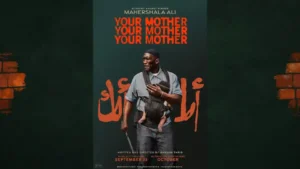
Choose Your Mother Your Mother Your Mother for character development and message quality.
No clear scored advantage over the other product.
Scores are out of 5. Missing scores mean missing review evidence, not a missing feature.
Early critical reception is poor in the cited report, which notes a 36% critic score from 13 reviews and mostly unfavorable reactions.
Early critical response is described as exceptionally enthusiastic, including a perfect initial aggregate score cited by one source. The supplied reviews themselves are overwhelmingly favorable despite recurring caveats.
Festival audience response is described as muted, with one report saying the film failed to excite viewers at TIFF.
The film is seen as a strong theatrical proposition for viewers open to an action movie with spiritual and family concerns. Its unusual mix may be less immediate for audiences expecting nonstop combat.
The central characters are often judged underdeveloped, with flashbacks and generalized viewpoints leaving Nina and Tito feeling thin or stock-like.
Latif’s progression from rigid provider and killer toward a more vulnerable father is widely viewed as compelling. His inner journey often matters more than the external hitman plot.
The anti-war and trauma themes are easy to identify, but critics often find the message overly obvious, didactic, simplistic, or insufficiently profound.
The film’s ideas about mercy, grace, faith, responsibility, and being present for family resonate strongly. Its moral argument avoids reducing redemption to one heroic act.
Editing is a recurring weakness. Frequent flashbacks are called intrusive, immersion-breaking, repetitive, and damaging to the conversational momentum.
The editing is singled out as fluid and supportive of the film’s momentum. It keeps the action readable rather than reducing fights to a blur of cuts.
The screenplay is criticized for giving the actors too little to work with and for becoming less effective once the film settles into extended talk.
The screenplay is praised for turning a practical parenting crisis into a vehicle for questions about faith, violence, and grace. Some reviewers note clunkier or scattered material, but the writing is generally seen as ambitious and purposeful.
The central conversations are criticized for lacking authenticity, which makes the emotional exchange feel more constructed than lived-in.
Even with heightened villains and genre flourishes, the family dynamics and emotional pressure are often described as grounded and lived-in. The action also benefits from a sense of physical consequence.
The film aims for deep feeling, but weak momentum and repeated violent imagery often leave critics emotionally distant or numb rather than moved.
Grief, family pressure, and spiritual doubt give the film a strong emotional pull. Several reviewers describe the final stretch and father-daughter material as especially affecting.
The restaurant exchange can be engrossing, but most critics find the dialogue broad, on-the-nose, detached, or abstract. The repeated monologues often weaken the natural tension between Nina and Tito.
Dialogue is praised as purposeful, with lines tied closely to character, faith, and payoff. The film’s conversations often carry as much weight as its fights.
The film tackles trauma, guilt, revenge, war, and memory, yet many critics find the treatment too simple or thin for such weighty themes.
Faith, grief, violence, hypocrisy, mercy, and parental duty are treated as intertwined rather than separate topics. Reviewers generally find the spiritual questions unusually serious for an action film, even when some themes get lost in the chaos.
Nina’s arc is criticized as familiar rather than fresh, with one critic saying the story is something audiences have seen before.
The familiar retiring-hitman premise is substantially complicated by family drama and an unusually serious examination of Islamic faith. Reviewers praise that combination as a fresh hybrid.
The story is widely seen as promising in premise but too thin in execution. Critics repeatedly describe it as slight, lackluster, or unable to carry the weight of its ideas.
The core story is praised as involving and emotionally grounded, especially when focused on Latif’s everyday struggle to care for his children. Its more eccentric criminal threads draw somewhat more mixed reactions.
As a drama, the film is uneven: portions of the central conversation can grip, but other stretches are described as dull, claustrophobic, lifeless, or tedious.
The family drama gives the action story its emotional center, particularly grief, parenthood, and strained faith. Reviewers generally find those domestic stakes more involving than a conventional hitman setup.
Most reactions to the ending are negative, calling it flat, predictable, trite, anticlimactic, or rushed. One critic strongly disagrees and finds the final ambiguity powerful.
The conclusion is one of the clearest points of disagreement: some call it daring, audacious, or powerful, while others find it divisive, too convenient, or insufficiently satisfying. Its spiritual resolution works best for viewers already invested in the film’s themes.
Direction is sharply divided. The opening attack and some poetic visual choices are praised, and Hayek calls Jolie an extraordinary director, but many critics find the full film stiff, heavy-handed, overcautious, or structurally misjudged.
Bassam Tariq earns strong praise for balancing intimate family drama, religious reflection, humor, and violent action without losing a distinct point of view. Even critics of the film’s messier passages tend to admire his ambition and visual command.
Suspense works best in the anticipation of Nina and Tito’s meeting and the opening violence. Once the conversation settles in, several critics say the tension fades or is undercut by flashbacks.
The film builds strong tension through both violent threats and family stakes. Its most effective stretches are described as gripping, nail-biting, or edge-of-your-seat.
Despite its short length, the film is frequently described as sluggish or inert once the long conversation takes over. The prologue has weight, but the later structure struggles to maintain momentum.
Pacing is mixed: some praise the swift narrative economy, while others find the first half deliberately slow or the overall rhythm sluggish. Its contemplative approach is likely to work better for patient viewers.
The deliberate vagueness around motives, history, and context leaves parts of the film frustratingly unclear. That ambiguity often blunts rather than enriches the drama.
The many religious, family, criminal, and satirical threads do not always connect cleanly. Some reviewers admire how details pay off, while others describe the narrative as scattered, tenuous, or not fully coherent.
Cinematography earns some of the film’s strongest craft praise, especially for the ochre landscapes, opening framing, and Seamus McGarvey’s work. The flashbacks are a notable exception, with one critic finding them visually underwhelming.
The humid, saturated imagery and intimate close-ups earn strong praise, with several reviewers calling the film gorgeous or among the year’s best-looking. The camera gives both family scenes and violence a tactile presence.
The relationship between Nina and Tito gains power from mutual recognition and shared trauma. Their tense chemistry helps several of the quieter restaurant scenes land.
The father-daughter relationship is the clearest chemistry highlight, especially the push-and-pull between Latif and Fatiha. Other family and comic pairings also help the film feel lived-in.
The opening assault is one of the most consistently effective passages, described as harrowing, fantastic, and affecting. The film’s action is otherwise limited.
The action is usually praised as sharp, physical, and unusually legible, with sword fights that carry emotional consequence. A minority found the set pieces too brief or sparse for the way the film was marketed.
The film can lose viewers once the table conversation settles in; one critic says the characters and their stories eventually stop sustaining interest.
Despite its meditative stretches, the film is repeatedly described as entertaining, funny, and gripping. Its appeal comes from the contrast between domestic urgency and bursts of heightened action.
The intentionally unnamed country and war divide opinion, but the negative reactions dominate. Critics wanting concrete historical or social grounding find the world too vague to feel fully anchored.
Houston is rendered as an immersive collision of Muslim, evangelical, Mormon, criminal, and working-class communities. The detailed social environment makes the heightened premise feel unusually specific.
The visual style has striking poetic and atmospheric flourishes, but reactions are mixed. Some critics admire the imagery while others call it imitative, overworked, or compensating for a hollow center.
The saturated color, sweaty close-ups, neon, shadow, and stylized religious imagery give the film a distinctive look. Reviewers frequently describe it as beautiful, rich, or visually immaculate.
The restaurant sound mix is singled out as excellent, using silence, voices, small table sounds, and ambience to sharpen the scene.
The sound work receives a direct positive mention for adding noticeably to the film. It supports the intensity of the action and atmosphere.
The farmhouse prologue stands out as a striking visual set piece, with the house and surrounding dry grass giving the opening attack a memorable physical presence.
The film’s wealthy compounds, worship spaces, strip-club environments, and other heightened locations are praised for looking colorful and spectacular. Those spaces help the action feel specific rather than generic.
Acting is one of the film’s clearest strengths. Several critics call the performances powerhouse, career-high, or top-of-the-game, although a few reactions find the delivery overly theatrical or strained.
Performances are a major strength, with repeated praise for the cast’s control, vulnerability, menace, and comic timing. Even more mixed reactions to the film rarely fault the acting.
The supporting ensemble gets a warm notice, with the secondary cast collectively praised for doing a great job.
The ensemble is widely praised, with the younger cast and colorful antagonists giving the film warmth, humor, and tension around Ali’s central performance.
The leads receive strong individual praise, especially for restrained physical acting and subtle emotional shifts. Hayek Pinault and Bichir are repeatedly credited with giving the material more force than the writing provides.
Mahershala Ali’s performance is the strongest point of consensus, praised for physical authority, restraint, grief, warmth, and quiet shame. Multiple reviewers call it among his best work or among the year’s best performances.
Young children are specifically described as likely to be bored by the mostly adult, dialogue-driven setup.
The film is praised for centering Black Muslim and Pakistani-American perspectives with specificity rather than treating faith as decoration. Its Muslim family life feels ordinary, textured, and unusually prominent for a studio action film.
The adaptation is described as quite faithful to Alessandro Baricco’s story, though that fidelity also preserves structural choices some critics think work better on the page.
It is a poor fit for family viewing with young children, largely because the film is dominated by adult conversation rather than child-oriented storytelling.
The film’s most distinctive emotional thread is Latif learning that providing and protecting are not enough; he has to become present, nurturing, and vulnerable. Reviewers repeatedly praise that treatment of fatherhood as the story’s heart.
As an action-thriller, the film stands out for mixing hitman conventions with faith, grief, and parenthood. Genre fans who accept the introspective emphasis generally find the result fresh and rewarding.
The humor is a consistent surprise, ranging from awkward parenting to eccentric side characters and darkly comic violence. Most reviewers find it effective levity, though a few note tonal clashes.
Hwan’s menace works because it is controlled rather than purely theatrical. Reviewers describe him as genuinely scary, frightening, unpredictable, and effectively menacing.
Son Lux’s electronic score receives emphatic praise, with several reviewers calling it incredible, wonderful, or among the year’s best. It adds propulsion while reinforcing the film’s spiritual and cultural texture.
The film often succeeds at balancing brutality, grief, comedy, and spirituality, but this is also a source of disagreement. Some praise the tonal control; others find certain jokes, caricatures, or antagonist shifts jarring.
The violence is graphic and bloody, but several reviewers appreciate that it carries consequence rather than functioning as empty spectacle. One critic found the graphic intensity distracting enough to slow the story.
One review directly argues that the action-heavy promotion misrepresents a film that is far more meditative and family-focused. Viewers expecting a nonstop samurai-style action movie may be surprised by how sparse the combat is.

Choose this inventive, unsettling documentary for fearless questioning, dark humor, and unpredictable storytelling. Skip it if you want a short, straightforward exposé with definitive answers.
Pros: originality, humor

Best for a hypnotic, bookish mystery with tactile visuals and cerebral chills. Skip it if reading-heavy, attention-demanding storytelling sounds more exhausting than exciting.
Pros: Atmosphere, cinematography
Cons: audience appeal

Best for an intimate, searching documentary that rewards focused attention and invites discussion. Skip it when devastating grief, addiction footage, and unresolved family tensions would be too much.
Pros: emotional impact, theme depth

Best for patient suspense, an unforgettable score, and an unsettling masked killer. Skip it for very young children or if you want to avoid intense scares; its restrained kills also...
Pros: directing quality, score quality
Cons: message quality