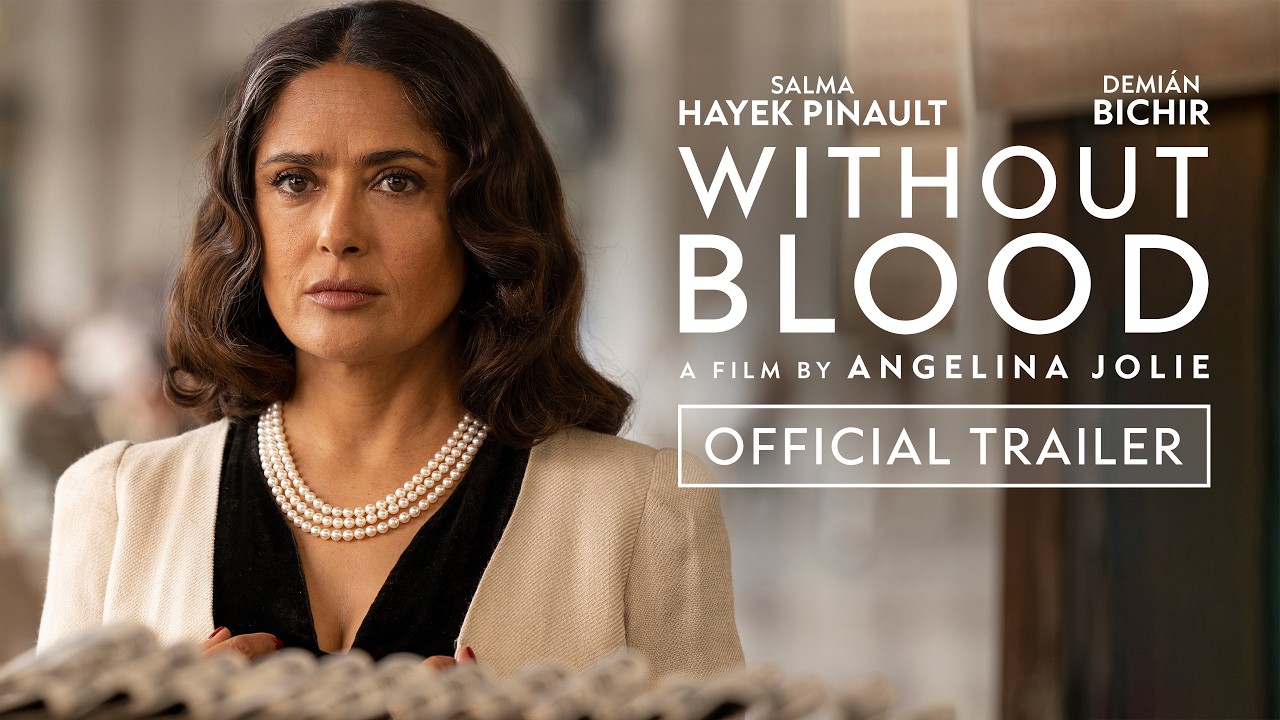
Choose it for committed performances, a harrowing opening, and a handful of striking visual moments. Skip it if you need sustained tension, deep characterization, or a more specific and nuanced treatment of war, trauma, and revenge.
Best for
Viewers who like intimate, performance-led dramas about trauma, memory, and revenge may respond to the two-hander structure, restrained acting, and atmospheric visual work.
Not for
Viewers looking for fast pacing, sustained suspense, concrete historical grounding, or deeply developed characters may find the film too inert, vague, and repetitive.
Verdict
Without Blood has a compelling core: two trauma-scarred people confronting the violence that shaped their lives. Salma Hayek Pinault and Demián Bichir are frequently praised for controlled, committed performances, while the opening attack, cinematography, and isolated visual choices show real craft. The problem is what happens once the film settles into its long restaurant exchange. Across the reviews, repeated flashbacks, broad dialogue, vague context, and thin characterization keep draining momentum and emotional force. Angelina Jolie’s direction earns praise for specific sequences and even an emphatic endorsement from Hayek, but the broader critical response finds the finished film too heavy-handed, cautious, or structurally inert. The result is a sincere war-and-revenge drama with strong acting and flashes of visual power, yet too little dramatic shape to make its themes land consistently.
Acting is one of the film’s clearest strengths. Several critics call the performances powerhouse, career-high, or top-of-the-game, although a few reactions find the delivery overly theatrical or strained.
Cinematography earns some of the film’s strongest craft praise, especially for the ochre landscapes, opening framing, and Seamus McGarvey’s work. The flashbacks are a notable exception, with one critic finding them visually underwhelming.
lead performance: 4.8, 3 reviews, strong consensus
The leads receive strong individual praise, especially for restrained physical acting and subtle emotional shifts. Hayek Pinault and Bichir are repeatedly credited with giving the material more force than the writing provides.
The opening assault is one of the most consistently effective passages, described as harrowing, fantastic, and affecting. The film’s action is otherwise limited.
Direction is sharply divided. The opening attack and some poetic visual choices are praised, and Hayek calls Jolie an extraordinary director, but many critics find the full film stiff, heavy-handed, overcautious, or structurally misjudged.
The story is widely seen as promising in premise but too thin in execution. Critics repeatedly describe it as slight, lackluster, or unable to carry the weight of its ideas.
Editing is a recurring weakness. Frequent flashbacks are called intrusive, immersion-breaking, repetitive, and damaging to the conversational momentum.
Most reactions to the ending are negative, calling it flat, predictable, trite, anticlimactic, or rushed. One critic strongly disagrees and finds the final ambiguity powerful.
Despite its short length, the film is frequently described as sluggish or inert once the long conversation takes over. The prologue has weight, but the later structure struggles to maintain momentum.
Hayek Pinault is one of the film’s most consistently praised elements, with critics highlighting her restraint, dignity, physical detail, and emotional control. A minority find some gestures overly mannered or theatrical.
Bichir earns strong praise for subtle shifts, restraint, and his tense interplay with Hayek Pinault, though one critic sharply faults him for lacking gravitas and depth.
McGarvey’s cinematography is repeatedly singled out as a strength, from a heroic effort in one review to work described as some of his best in over a decade.
Compared with other Movies, this product is above average in sound design, production design, action sequence quality, near average in cinematography, acting performance, below average in message quality, audience appeal, entertainment value.
Comparison summary
32 compared features
Above average0.4+ pts higher
6(19%)
Same as averagewithin 0.3 pts
3(9%)
Below average0.4+ pts lower
23(72%)
Largest category differences
Attribute
This product
Category average
Difference
message quality
1.1
3.7
-2.6
audience appeal
1.5
3.8
-2.3
entertainment value
1.5
3.7
-2.2
theme depth
1.8
3.7
-1.9
realism
1.5
3.5
-2.0
emotional impact
2.0
3.9
-1.9
critic appeal
1.5
3.4
-1.9
world-building
2.0
3.8
-1.8
Consider This Instead
If you want better age appropriateness
Choose The Rip. It scores 5.0 vs 1.5 for age appropriateness, with a 3.7 overall score.
Products reviewers directly compared with this model, grouped into quick takeaways.
Incendies
Similar: vague conflict setting and war-trauma storytellingThe review says Without Blood most resembles Incendies in its deliberately unspecified conflict framework.
My Dinner With Andre
Better: dialogue-driven two-hander executionThe film is likened to a less-assured version of My Dinner With Andre, especially in its talk-heavy structure.
Our Father, the Devil
Better: treatment of conflict and lingering violenceThe comparison says Our Father, the Devil grapples thoughtfully with conflict while this film only raises similar questions.
FAQ
Are the performances a strength?
Usually, yes. Salma Hayek Pinault and Demián Bichir receive frequent praise for restraint and emotional control, although a few critics find the acting theatrical or uneven.
Is the movie action-heavy?
No. The opening attack is one of its most praised sequences, but most of the film is a quiet, dialogue-driven confrontation between Nina and Tito.
Does the film identify the war or country?
No. The setting and conflict are deliberately unspecified, a choice several critics find too vague and insufficiently grounded.
How is the pacing?
The film is relatively brief, but many critics still describe the central conversation as slow, inert, or stage-bound, especially when flashbacks interrupt it.
How faithful is it to the source material?
One review calls the adaptation quite faithful to Alessandro Baricco’s story, while several critics argue that its abstraction and talk-heavy structure work better on the page.
Does the ending satisfy?
Reaction is split but mostly negative: several critics call it flat, rushed, trite, or anticlimactic, while one finds the final ambiguity powerful and effective.
Sample Expert Reviews We Analyzed
These are a few of the reviews included in our analysis.
Choose this inventive, unsettling documentary for fearless questioning, dark humor, and unpredictable storytelling. Skip it if you want a short, straightforward exposé with definitive answers.
Best for a hypnotic, bookish mystery with tactile visuals and cerebral chills. Skip it if reading-heavy, attention-demanding storytelling sounds more exhausting than exciting.
Best for an intimate, searching documentary that rewards focused attention and invites discussion. Skip it when devastating grief, addiction footage, and unresolved family tensions would be too much.
Best for patient suspense, an unforgettable score, and an unsettling masked killer. Skip it for very young children or if you want to avoid intense scares; its restrained kills also...