
Mayday
Where It Has the Edge
- audience appeal is 4.6 vs 4.4. Reviewers see strong appeal for fans of buddy comedies, throwback action, and Ryan Reynolds’ style, with several calling...

Scorata scores summarize analyzed review evidence on a 1–5 scale; they are not laboratory measurements or a simple average of customer star ratings. Feature scores summarize the reviews covering that feature. The overall score averages feature scores within each review, then combines review averages. When both expert and customer evidence are available, those two groups receive equal weight. Products can have different review coverage, so small score gaps do not establish a winner.
Recommendations prioritize important features for the category, with a score of at least 3.5, a gap of at least 0.25 points and at least two supporting reviews per product. Features with widely varying scores or broad connectivity contexts are excluded from recommendations. These safeguards do not establish statistical significance.
Quick verdict
The review evidence points to a tradeoff: audience appeal versus originality and special effects quality. Choose according to which strengths matter more to you; the overall score alone does not settle that choice.
Choose Mayday for audience appeal.
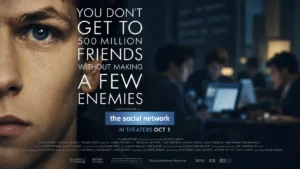
Choose The Social Network for originality and special effects quality.
Scores are out of 5. Missing scores mean missing review evidence, not a missing feature.
The original score makes little impression in the one review that addresses it, which remembers the licensed songs but not the score.
The electronic score adds propulsion, unease, and lonely piano textures to the drama. Its distinctive sound is repeatedly praised as an unusually effective match for the subject.
One content-focused review approves of the complete absence of sex or nudity.
The sexualized college-party backdrop can be uncomfortable for viewers concerned about objectification or explicit situations. Some find that material distracting from the story’s other strengths.
One reviewer finds the plot increasingly confusing and frustrating when its logic is examined closely, despite the otherwise straightforward escape setup.
Programming, financing, and multiple lawsuits become surprisingly easy to follow for many viewers. The shifting timelines reward attention and can still challenge some audiences.
The nearly two-hour length works for some because of strong momentum, but several reviewers think the movie drags or would be better closer to 90 minutes.
The roughly two-hour runtime usually passes quickly, sustained by dialogue and precise editing. One enthusiast would welcome an even longer, more complex version.
The buddy-road-movie structure is repeatedly described as familiar, predictable, and derivative even when reviewers enjoy how individual scenes are executed.
The emphasis on a constructed, psychologically driven Zuckerberg distinguishes the story from a conventional biopic. Its originality lies in the character-focused approach rather than merely the subject’s recency.
Digital effects draw mixed reactions: most shots are convincing or good enough, but a few green-screen and cartoonish moments noticeably break immersion.
The digital twin illusion is widely admired as seamless and unobtrusive. Exceptions include one viewer who finds the doubling strange and another who dislikes visibly artificial winter breath.
The central banter is often praised as funny and lively, but one strongly negative review finds the dialogue forgettable.
Fast, witty exchanges reveal power, insecurity, and character while keeping conversations unusually exciting. The speed can take a little adjustment, but the dialogue is one of the most consistently praised strengths.
The screenplay earns praise for smart genre writing and balanced character beats, but detractors call it safe, by-the-numbers, or even half-baked.
The screenplay turns programming, ownership disputes, and depositions into engrossing drama with unusually sharp verbal exchanges. Its nonlinear framing is widely admired, with occasional complaints about functional characters, heavy-handed moments, and invented motivations.
Aerial work and some locations look highly convincing, but realism is inconsistent; one reviewer rejects the period world and character behavior as fundamentally unbelievable.
The campus milieu and performances give the story persuasive dramatic reality. That convincing feeling remains distinct from whether every event happened as shown.
The central escape-and-friendship story is engaging for most reviewers, but detractors find it basic, thin, or unable to capitalize fully on its strong premise.
A business origin story becomes a gripping drama of ambition, betrayal, and lawsuits. Most find it remarkably absorbing, though a few see a polished story whose inventions undermine its larger claims.
Effects are generally considered polished and impressive, though a few conspicuous CGI moments undermine the illusion.
Invisible effects make the twin casting especially convincing. Admirers value this restrained use of technology for supporting performances and story.
The political and humanist ideas add welcome substance, but reviewers disagree on whether they feel thoughtful and resonant or merely surface-level.
Ambition, status, isolation, and betrayal give the film depth well beyond the creation of a website. Many find that complexity timeless, while a few reject its account of technology and social relationships.
The ending receives praise for landing on a gracious thematic note about service and recognition rather than just spectacle.
The lonely final gesture is praised for quiet pathos and a small suggestion of change. Others find the attempt to soften Zuckerberg late, unnecessary, or too explicit.
The film earns praise for humanizing Soviet citizens and complicating simple U.S.-versus-Russia binaries, though some critics still find parts of its cultural framing simplified.
The film sharply captures campus privilege, status, and elite social codes for many viewers. Its treatment of women and the claim to represent an entire generation receive pointed criticism.
Nikolai and Troy get meaningful growth and a believable friendship, but some critics find Troy or the supporting family arcs thin, rushed, or underdeveloped.
Zuckerberg emerges as an ambiguous mix of brilliance, insecurity, cruelty, and longing. Some admire the purposeful focus on him; others want more development for Eduardo and the surrounding characters.
The buddy-adventure tone is accessible, but violence, profanity, and mature content lead family-focused reviewers to advise against it for kids or sensitive viewers.
Sexual situations, lingerie, and harsh language make this a difficult choice for family viewing with younger children. The business drama is aimed chiefly at older audiences.
The comedy usually lands through Branagh’s deadpan work, visual gags, and lead banter, but Reynolds fatigue and some broad third-act silliness divide reviewers.
Dry insults, sharp banter, and the Winklevoss brothers give the drama a lively comic edge. The Harvard-president scene is a frequently admired burst of humor.
Most reviewers think comedy, action, and emotion are blended smoothly, while detractors point to abrupt transitions, an identity crisis, or over-the-top third-act silliness.
The cold atmosphere is often appreciated as fitting the protagonist’s world and the film’s dark perspective. For one dissatisfied viewer, that same chill makes the experience too clinical.
Many reviewers are surprised by the film’s warmth, friendship, and family material, although a few find the sentimentality underdeveloped or unearned.
The ruptured friendship and quiet signs of loneliness can be wrenching, with some finding greater emotional force on a rewatch. Others feel kept too far from the characters to care deeply.
The more serious moments are praised for subtlety, giving the action-comedy enough dramatic weight without overwhelming its lighter tone.
Friendship and betrayal give corporate decisions the stakes of a vigorous personal drama. The unlikely combination of computers, money, and moral conflict often feels thrilling.
The humanist message about propaganda, patriotism, and seeing people beyond national stereotypes is often praised, though some critics consider it simplistic or obvious.
The film invites reflection on ambition, greed, and the harm that can accompany online communication. Some find that warning incisive; others reject its broader account of technology and human connection.
As a throwback buddy action-comedy, the film strongly satisfies its target audience with banter, chases, fights, heart, and nostalgic genre energy.
As a corporate drama and an unlikely thriller, the film makes business ethics and intellectual-property disputes exciting. Viewers interested in those genres find an especially strong fit.
Reynolds and Branagh’s odd-couple chemistry is repeatedly called the heart of the film, carrying the comedy, emotional beats, and long stretches of the story.
The central friendship gains force from Eisenberg and Garfield’s convincing interplay. Hammer’s digitally doubled brothers also feel like distinct people with natural chemistry.
Profanity and coarse language are flagged as meaningful content concerns, particularly for families and sensitive viewers.
Harsh expletives are treated as part of the film’s viewing concerns. They can matter for viewers seeking gentler language.
Goldstein and Daley are widely praised for energetic, confident staging and smart tonal control, though one dissenting review sees the storytelling as undercooked.
Fincher makes computer work and legal arguments feel urgent through precise staging and careful visual control. The cool approach usually impresses, although some viewers find it emotionally distancing or dislike the rowing detour.
The camerawork is widely praised as fluid, inventive, and unusually cinematic for streaming, especially in fights, aerial scenes, long takes, and moving POV shots.
Fluid camerawork and carefully composed frames make the settings vivid without constant showmanship. Tracking shots and the textured campus imagery stand out as particular pleasures.
Most reviews praise the brisk momentum and constant forward motion, though a few find the opening awkward or the overall film somewhat too long.
Most find the storytelling brisk, energetic, and free of dead stretches despite its talk-heavy subject. A dissenting assessment says momentum never fully returns after the boat race.
Action editing is praised for seamlessly blending performers, stunt doubles, and set-piece momentum without losing clarity.
Brisk cutting keeps several timelines and lawsuits moving with clarity and rhythm. One dissenting response finds the constant switches contribute to emotional detachment.
The pursuit structure creates credible tension and an enjoyable cat-and-mouse momentum, especially as the heroes race toward asylum and safety.
Ownership disputes and competing ambitions generate the drive of a thriller. Tension comes from arguments and betrayals rather than conventional spectacle.
The Cold War setting can feel convincing through locations and period detail, but one harsh review says the world never feels believable as 1980s Soviet Russia.
Harvard, start-up spaces, and legal rooms feel like specific, lived-in environments. Their detail and atmosphere help make a fast-changing story immersive.
High production values and period atmosphere impress many reviewers, though one critic finds the sets too pristine and artificial to feel believable.
Campus rooms, offices, and legal spaces feel carefully chosen and convincing. Small set details reinforce the personalities and help anchor the changing environments.
One review specifically praises Reynolds’ crisp Navy look, helping sell the Top Gun-style pilot persona.
Wardrobe details help define Zuckerberg’s personality and the surrounding social world. The attention to seemingly casual clothing is appreciated as part of the characterization.
Reviewers admire the cinematic scale, kinetic camera placement, and distinctive action imagery, although some dislike the overly clean digital sheen.
The controlled, often dark visual style gives conversations and rooms unusual cinematic polish. Most admire its precision, while the stylized rowing sequence and an especially dark theatrical presentation draw reservations.
Rewatch interest is split: some see an easy repeat-watch comfort movie, while others expect to forget it quickly or never revisit it.
Repeat viewings often renew admiration or reveal greater emotional and thematic richness. One viewer finds it rewarding to revisit occasionally but unlikely to become frequent comfort viewing.
As part of an existing streaming subscription, the movie is often seen as worthwhile entertainment, though one critic says it is not worth subscribing solely to watch.
The two-disc Blu-ray earns a strong ownership recommendation through the combination of an admired film, good presentation, and extensive extras.
Most reviewers find Mayday highly entertaining, funny, and easy to enjoy, with only a small minority calling it forgettable or disappointing.
The film makes rooms full of arguments as absorbing as more conventional spectacle. Enthusiasm is widespread, although its chilly personalities and disputed biographical claims can temper the experience.
Supporting actors are generally liked, especially Bakalova and Dorociński, but several reviews complain that Bakalova, Morse, and their subplots are underused.
Garfield supplies much of the human vulnerability, while Timberlake brings seductive energy and Hammer adds dry comedy. Brief turns also make an impression, though not every supporting role feels necessary.
Branagh is the consistent standout and often scene-stealer. Reynolds is more divisive, praised when subdued but criticized when he falls back on his usual wisecracking persona.
Eisenberg gives Zuckerberg a sharp, guarded intensity, with tiny flashes of insecurity beneath the insults. His restraint makes a difficult protagonist compelling without asking for easy sympathy.
The Springsteen-heavy ’80s soundtrack is repeatedly praised for fitting the story, period setting, and themes without feeling like empty nostalgia.
The music works both as dramatic texture and as rewarding listening in its own right. The opening and closing songs earn special praise, and the Blu-ray preserves the music’s depth.
Period authenticity is mixed: some reviewers feel the setting convincingly evokes 1987, while others say the dialogue, visuals, or atmosphere never fully feel like the era.
Substantial fictionalization is a recurring caveat, especially around motivations and relationships. Some accept those liberties as part of a compelling drama; others believe they seriously weaken a film about living people.
Performances are a major strength, especially Branagh’s comic-action turn. Reynolds earns praise when restrained, though several critics find his familiar persona limiting.
The ensemble makes rapid exchanges and unpleasant personalities compelling. Eisenberg, Garfield, and Timberlake attract especially consistent praise for precision, vulnerability, and charisma.
The broad critical response is described as positive, and the reviewer citing the aggregate agrees that critics largely got the favorable verdict right.
Critical enthusiasm is unusually strong, with the roundups describing broad praise and considerable awards interest. Several individual critics still resist calling it an unquestioned masterpiece.
Reviewers see strong appeal for fans of buddy comedies, throwback action, and Ryan Reynolds’ style, with several calling it a potential theatrical crowd-pleaser.
The film has broad appeal beyond Facebook users, with particular rewards for fans of business drama and technology culture. Its dense dialogue and abrasive characters can make that appeal more selective.
The movie’s bloody violence, coarse language, and mature material make it better suited to teens and adults than younger children.
The adult partying and sexual situations limit suitability for younger teens. The more cautionary assessments favor older adolescents over younger viewers.
The action is one of the clearest consensus wins, with fluid fights, inventive chases, strong aerial work, and several set pieces ranked among the year’s best.
Inventing motives and relationships for living people raises concerns about ownership, bias, and reputational harm. The film’s entertainment value does not resolve those ethical reservations for its critics.
The 1080p transfer looks natural, clear, and well contrasted, with strong blacks and preserved detail in dark scenes. Slight banding is a minor blemish in an otherwise excellent picture.
The two-disc Blu-ray offers worthwhile commentaries, a substantial making-of documentary, and informative breakdowns of editing, sound, and individual scenes. The breadth and depth of the extras are strongly praised, despite irritating bleeps in Fincher’s commentary.
The leads are judged exceptionally well cast, with their distinctive qualities serving difficult, morally complicated roles.
The combination of Sorkin’s verbal energy and Fincher’s visual precision is repeatedly celebrated. Editing, acting, and music complete a collaboration that many feel brings out each participant’s best work.
Many see a defining portrait of its era whose concerns about power and isolation remain relevant years later. A dissenting view rejects its claim to explain a whole generation.
The portrayal of college drinking and drug use is a particular concern for parents considering younger teen viewers.
The deterioration of Mark and Eduardo’s friendship supplies important human stakes. Its collapse is praised as a natural progression, with loyalty and money becoming increasingly difficult to separate.
The two-disc set’s layered sleeve and foldout case are praised as attractive. The presentation makes ownership feel thoughtfully packaged.
The film’s male-centered world draws criticism for marginalizing women and reducing some roles to caricatures or plot functions. Another reading sees it as a clear depiction of misogyny that does not itself endorse that behavior.
Practical stunt work and hand-to-hand sequences are praised for adding physicality, clarity, and old-school action appeal.
The film contains abundant fights, gunfire, injuries, and bloody action; family-focused reviewers see that level as a meaningful drawback for younger or sensitive viewers.
The 5.1 mix supplies lively ambience, deep bass, and clear musical detail well beyond expectations for a dialogue-driven drama. A few words remain difficult to catch, but the presentation is considered close to ideal.
Responses to the trailers differ sharply: one admirer calls the trailer exceptional, while another finds the promotion difficult to decipher. The Facebook-movie framing can obscure the character drama’s appeal.
Crowded bars, club bass, keyboard taps, and footsteps create lively sonic environments. The Blu-ray assessment praises the immersive atmosphere and distinct detail while noting that a few words remain hard to catch.

Choose this inventive, unsettling documentary for fearless questioning, dark humor, and unpredictable storytelling. Skip it if you want a short, straightforward exposé with definitive answers.
Pros: originality, humor

Best for a hypnotic, bookish mystery with tactile visuals and cerebral chills. Skip it if reading-heavy, attention-demanding storytelling sounds more exhausting than exciting.
Pros: Atmosphere, cinematography
Cons: audience appeal

Best for an intimate, searching documentary that rewards focused attention and invites discussion. Skip it when devastating grief, addiction footage, and unresolved family tensions would be too much.
Pros: emotional impact, theme depth

Best for patient suspense, an unforgettable score, and an unsettling masked killer. Skip it for very young children or if you want to avoid intense scares; its restrained kills also...
Pros: directing quality, score quality
Cons: message quality