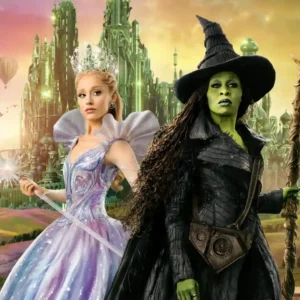

Wicked: For Good
Where It Has the Edge
- emotional impact is 4.5 vs 3.8. The emotional payoff is one of the strongest areas of agreement. The Elphaba-Glinda relationship, especially the title duet...

Scorata scores summarize analyzed review evidence on a 1–5 scale; they are not laboratory measurements or a simple average of customer star ratings. Feature scores summarize the reviews covering that feature. The overall score averages feature scores within each review, then combines review averages. When both expert and customer evidence are available, those two groups receive equal weight. Products can have different review coverage, so small score gaps do not establish a winner.
Recommendations prioritize important features for the category, with a score of at least 3.5, a gap of at least 0.25 points and at least two supporting reviews per product. Features with widely varying scores or broad connectivity contexts are excluded from recommendations. These safeguards do not establish statistical significance.
Quick verdict
The available evidence supports the recommendation below, but does not establish an overall winner. Check the remaining features against your priorities.
Choose Wicked: For Good for emotional impact.
There is not enough comparable review evidence to recommend Way of the Warrior Kid over the other product.
No clear scored advantage over the other product.
Scores are out of 5. Missing scores mean missing review evidence, not a missing feature.
A few darker sequences generate real tension, particularly around transformations, political danger, and the build toward Glinda’s wedding and the witch hunt.
The lengthy training sequences are criticized for lacking dramatic tension.
The story becomes harder to follow as it intersects with The Wizard of Oz. Reviewers criticize abrupt character turns, missing connective tissue, and an expectation that viewers will fill gaps from prior knowledge.
The plot is straightforward and easy to follow even when its developments feel derivative.
The screenplay draws substantial criticism for disjointed structure, underexplained turns, repetitive ideas, and additions that do not justify the expanded runtime.
The writing has occasional subtlety and efficient exposition, yet predictable plotting, didactic dialogue and simplistic characterization are major drawbacks.
The sequel’s darker themes can be potent, especially around propaganda, prejudice, power, complicity, and moral compromise. Reviewers disagree on whether the film explores those ideas deeply enough or only gestures toward them.
The story's treatment of war, masculinity and growing up is criticized for lacking moral complexity.
Reworking familiar Wizard of Oz events can be clever and fun, but some critics see the second half as overly dependent on inherited plot machinery. A few appreciate the creative connections as a fresh spin.
The film follows a well-worn mentor-and-underdog template, with little novelty in its plot or expected story beats.
Glinda’s expanded arc earns substantial praise, while several supporting characters are criticized as rushed or underdeveloped. The result is strong growth at the center but uneven attention around the ensemble.
Marc and Jake have emotionally promising arcs, but their characterization often feels shallow, rushed or inconsistent.
The film keeps most violence restrained or implied, which some reviewers appreciate, though darker threats, beatings, and body-horror transformations still give the sequel a more intense edge.
Combat flashbacks and the dangerous climax are considered unusually intense for a family-oriented film.
Humor is noticeably reduced from Part One, and some critics miss the comic spark that balanced its sentimentality. Others still find Glinda’s reactions, Jeff Goldblum’s Wizard, and isolated comic beats genuinely funny.
Dry humor and some playful performances work well, but a cutesy makeover montage and awkward jokes draw criticism.
Families may appreciate the restrained violence and PG approach, but darker themes, frightening transformations, and an implied intimate scene make the sequel less universally comfortable for younger viewers.
The film has family-friendly themes and an appealing underdog premise, but the action and heavier content make age an important consideration.
The romance is sharply mixed. Some find Elphaba and Fiyero moving or passionate, while others call their physical relationship rushed, hollow, awkward, or disruptive to the stronger friendship story.
Marc's crush adds sweetness without becoming a conventional romance, although the fair sequence can feel contrived.
The emotional payoff is one of the strongest areas of agreement. The Elphaba-Glinda relationship, especially the title duet and final stretch, is repeatedly described as moving, tear-inducing, and cathartic.
The uncle-nephew bond supplies touching moments, but sentimentality and artificial storytelling can prevent the emotion from lasting.
Some reviewers feel the digital sheen and greenscreen-like environments make the world look artificial. The most positive comments come when physical sets and grounded textures overcome that effect.
The online humiliation can feel recognizable, but stereotypical characters, an easy transformation and a larger-than-life rescue frequently strain credibility.
Pacing is the most persistent complaint. Reviewers repeatedly describe a strange combination of dragging scenes and rushed plot turns, with the two-film split often blamed for making Act II feel both padded and hurried.
Training gives the story momentum for some, but unnecessary sequences, repetitive workouts and rushed emotional development create uneven pacing.
The action earns positive notices when it arrives, especially broom-flight chases and heavier physical set pieces. Reviewers describe these moments as clever, energetic, and more forceful than expected.
The rescue finale frequently earns praise for energy and staging, though one strongly critical assessment finds the action flat and static.
Dialogue receives limited but negative attention, mainly for repetitive wording and lines that feel clunky or overused. These complaints reinforce broader concerns about the script.
Motivational speeches and prescriptive lines can make the characters sound like mouthpieces rather than real people.
The shorter runtime is appreciated compared with Part One, but many still consider the film overlong for the amount of story it contains. Several reviewers argue substantial trimming would improve it.
The film feels overlong when the training arc reaches a natural stopping point before a substantial final stretch.
The implied intimacy between Elphaba and Fiyero is mild by adult standards but drew criticism for feeling awkward, prolonged, or potentially uncomfortable for families expecting a straightforward PG musical.
Brief suggestive humor contributes to concerns about suitability for younger children.
The more consistently somber tone works better for some reviewers than Part One’s abrupt shifts, but others find the seriousness at odds with Oz’s inherent whimsy or disrupted by misplaced comedy and romance.
A light mood works at times, but shifts into exaggerated comedy or excessive drama can be jarring.
The film is widely seen as a faithful translation of Act II, which pleases established fans but also preserves many of the stage version’s structural weaknesses. Several reviewers explicitly treat that faithfulness as both strength and limitation.
The film preserves the book's central philosophy of self-improvement, accountability and discipline.
Erivo and Grande’s shared chemistry is repeatedly described as electric and central to the movie’s emotional pull. Romantic chemistry draws more mixed reactions, especially around Elphaba and Fiyero.
The uncle and nephew share convincing chemistry, especially when allowed to interact naturally rather than exchange lessons.
The political and moral messaging is one of the most debated elements. Some reviewers find the warnings about propaganda, authoritarianism, prejudice, and complicity timely and powerful; others find the treatment shallow or muddled.
Courage, perseverance and empathy are widely appreciated ideas, but the military-centered and sometimes preachy delivery divides opinion.
Editing is one of the clearer weaknesses, with complaints about choppy musical staging, awkward transitions, and material that feels in need of substantial trimming.
Abrupt cuts and limited variety in action coverage undermine the sense of movement and craftsmanship.
The central friendship remains compelling, but the story is widely regarded as weaker than Part One. Critics repeatedly point to Act II’s rushed turns, Wizard of Oz overlap, and strained connective plotting.
The underdog premise offers genuine warmth and an appealing arc, but many find the predictable plot, didactic writing and split focus limiting.
Camera movement and a few musical sequences are praised, but the dim, washed-out, heavily backlit look is a persistent complaint. Reviewers are split between admiring inventive framing and wishing the imagery were easier to see.
Expressive camera techniques capture Marc's nervousness, but the broader cinematography is sometimes considered flat or ordinary.
The finale is divisive: some reviewers find it bittersweet, moving, and satisfying, while others call it rushed, contrived, anticlimactic, or tonally mismatched with the story’s darker implications.
The fiery rescue finale is frequently described as exciting or effective despite its implausibility. Others find it so exaggerated that it undermines the film's earlier goodwill.
Jon M. Chu’s direction splits reviewers sharply. Some celebrate the scale, musical staging, and visual ambition, while others criticize conventional blocking, overstuffed frames, or a lack of cinematic spark.
McG's inventive visual touches and energetic rescue sequence earn praise, but critics also find the direction overly polished, abrupt or lacking distinctiveness.
Cynthia Erivo and Ariana Grande receive overwhelming praise, often described as the reason the film survives its weaker plotting and pacing. Their vocals, dramatic work, and shared scenes are consistently highlighted.
Jude Hill's vulnerability often makes Marc engaging, while Chris Pratt's subdued or familiar performance divides opinion.
The supporting ensemble is generally well regarded, with praise for performers such as Jonathan Bailey, Ethan Slater, Marissa Bode, and Jeff Goldblum. Michelle Yeoh’s singing and several underused roles draw the main reservations.
Linda Cardellini's warmth is repeatedly praised, although her role offers limited room to make an impact.
The music is one of the most divided areas. The title song and No Good Deed are frequent highlights, but reviewers repeatedly say Act II lacks Part One’s memorable songs and find the new additions forgettable or merely serviceable.
Vintage needle drops can lighten the mood, but the constant parade of recognizable pop songs becomes distracting for some.
The performances are one of the film’s safest strengths, with the central cast repeatedly praised for carrying material that many reviewers found structurally weaker. Even mixed reviews often single out the acting as a reason the sequel still works.
Strong performances give the familiar story heart, particularly in its central family relationships.
The PG-friendly restraint works for some families, but the darker second half, body-horror transformations, and mature themes made several reviewers question suitability for younger children.
The PG-13 content and intense peril make the film more appropriate for teenagers than young children.
Fans of the stage musical are widely expected to get more from the film than newcomers or viewers lukewarm on Part One. Several reviews frame it as a satisfying fan experience even when broader appeal feels less certain.
The reassuring, traditional storytelling is likely to appeal to audiences who enjoy familiar feel-good films.
Visually, the film is a major point of division. Sets, costumes, scale, and color can look sumptuous, but dim lighting, desaturation, backlighting, and artificial-looking CGI repeatedly blunt the intended wonder.
Gaming-inspired imagery and energetic stylings provide some personality, though the overall look can feel generic or overly slick.
Overall enjoyment is mixed but generally respectable. Devoted fans and viewers swept up by the performances often have a good time, while others find the long, uneven second act a slog.
Enjoyment ranges from genuine affection for the warm family drama to frustration with its predictable story and excessive instruction.
The film's emphasis on avoiding revenge and showing empathy is appreciated. Reactions are divided over whether its depiction of bullying is recognizable or simplistic and whether the response is proportionate.
Digital effects are a recurring visual weak spot. Reviewers call out uncanny de-aging, artificial animals, and conspicuous digital environments, though a few felt the effects integrated well enough with the practical sets.
Sarah repeatedly recedes into the background once Jake takes over, leaving relatively little room for the mother's perspective despite her appealing performance.
The film's focus on adult concerns and masculine guidance can obscure Marc's own perspective and needs.
The familiar formula is executed with warmth for some, but others find the by-the-numbers approach derivative.
One review raises a pointed concern about how the film’s romance and language may reinforce troubling ideas around desirability and skin tone. That criticism is specific rather than broadly echoed.
The darker dramatic mode generally lands well when the film focuses on friendship, sacrifice, and political pressure. Reviewers who respond to it describe the sequel as more human, serious, and emotionally potent.
The adult star's prominence repeatedly pulls attention away from the boy's own development.
The script efficiently establishes the loss of Marc's father.
The family offers opportunities for mutual support and healing, but some object to the marginalization of the single mother.
The story's examination of the lasting absence of fathers provides meaningful emotional questions about mentorship and childhood.
The failed-mission flashbacks add emotional weight and context to Jake's struggles, though they can be harrowing.
As a movie musical, the film works best for viewers already receptive to the form and the source. The leads, spectacle, and musical presentation satisfy genre fans even when the second-act songs are considered weaker.
Shared loss gives the family bond emotional potential, but the film often rushes through grief rather than exploring it fully.
The growing bond between uncle and nephew, including their capacity to help each other heal, supplies much of the warmth.
Mild foul language is one of the reasons younger children are advised to skip the film.
The makeup and styling receive strong praise where discussed, contributing to the film’s elaborate Oz aesthetic and character presentation.
Some welcome a model of manhood grounded in kindness and vulnerability, while others find the military and physical-toughness emphasis stereotypical or excessively narrow.
The story gives emotional struggles too little room, presenting exercise and structured routines as a simplified answer to complex problems.
Jake's combination of discipline, tenderness and practical guidance is effective for many, but the film sometimes treats his methods as unquestionable rather than allowing genuine dialogue.
Some appreciate a military mentor who combines discipline with vulnerability, while others find the pervasive military language and recruitment-like worldview excessive.
Repeated drills and workout routines can become tedious rather than dramatically engaging.
Most obstacles are too easy to anticipate, diminishing the suspense over whether Marc will succeed.
The dual journey of uncle and nephew feels uneven, with neither story receiving quite the attention it needs.
The appreciation of military service is welcomed by some, but others object to its recruitment-like emphasis.
Sarah's role is criticized for relegating her to a supporting position or questioning her parenting rather than giving her a meaningful perspective.
The practical craft receives favorable notice, especially when tactile sets and in-camera elements help Oz feel physically realized rather than purely digital.
Jake's combat trauma adds emotional depth for some, but others find the film too quick to gloss over its complexity.
The positive references to loving God and country complement the film's encouragement to do the right thing.
The darker transformations and body-horror touches are effective for some reviewers, who find them creepy and memorable. Others note that the intensity may be unsettling for younger viewers.
The orchestral score is praised for giving the darker story weight and for carrying musical themes effectively through the film.
The emphasis on developing the will to pursue goals, rather than just reaching physical benchmarks, makes Marc's inner growth meaningful.
Some appreciate the film's relative restraint and sincerity, while others find the sweetness and moralizing cloying.
A well-chosen rock song can enliven the training, but the near-constant placement of pop hits is criticized as excessive.
Where discussed broadly, the spectacle and magical effects are praised for helping make Oz feel grand and cinematic.
The treatment of boys' struggles is criticized for failing to engage meaningfully with contemporary concerns.
The training sequences are often enjoyable and give Marc's progress a clear direction, though their repetition and length frustrate some viewers.
The imaginative shifts in Marc's surroundings while gaming communicate his feelings of empowerment.
Kenny can be convincingly nasty, but his characterization and motivation often feel one-dimensional or insufficiently explored.
Marc is easy to root for when his vulnerability and determination make him relatable.
The movie's throwback sensibility recalls uplifting older family dramas, blending affecting sincerity with corniness.
Costumes are a standout craft element, repeatedly described as lavish, imaginative, character-rich, and visually striking. Even reviews critical of the movie’s lighting tend to praise the wardrobe itself.
Production design is among the strongest consensus positives. Oz is repeatedly described as elaborate, colorful, detailed, sumptuous, and richly built even by critics who dislike the lighting or CGI layered over it.
The home-media audio presentation earns strong praise for crisp vocals, powerful bass, directionality, and an expansive soundstage.
Oz’s physical design remains rich, but reviewers differ on whether the film makes the society feel truly lived-in. Some praise the detailed environment; others say crowds and digital landscapes keep the world emotionally distant.
The filmmaking craft is criticized for lacking the energy and ingenuity expected from an experienced blockbuster director.
The most enthusiastic reviewers see the two-film adaptation as something they will revisit for years, especially for the performances, musical moments, and return to Oz.
The reviewers who discuss the theatrical or home-media value directly find the spectacle, technical presentation, and extras substantial enough to justify the experience.

A deeply human coming-of-age drama carried by remarkable performances and an honest portrayal of grief. Its gentle optimism moves most viewers, though some find the final stretch hurried or overly...
Pros: Grief portrayal, acting performance
Cons: pacing

Billie Jean King’s magnetic first-person storytelling makes this an exhilarating portrait of athletic courage and social change. The filmmaking follows a familiar documentary structure, and her full tennis résumé gets...
Pros: entertainment value, Biographical coverage
Cons: Narrative structure

Choose this inventive, unsettling documentary for fearless questioning, dark humor, and unpredictable storytelling. Skip it if you want a short, straightforward exposé with definitive answers.
Pros: originality, humor

A singular voice, powerful piano playing and intimate film photography make this concert absorbing for receptive listeners. Its uninterrupted, often similar-sounding songs and lack of background context are an acquired...
Pros: directing quality, cinematography
Cons: pacing, Song variety