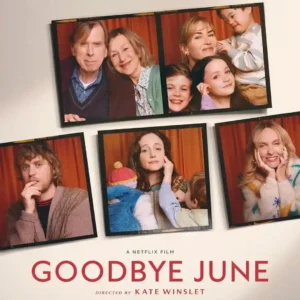

Goodbye June
Where It Has the Edge
No clear scored advantage over the other product.

Scorata scores summarize analyzed review evidence on a 1–5 scale; they are not laboratory measurements or a simple average of customer star ratings. Feature scores summarize the reviews covering that feature. The overall score averages feature scores within each review, then combines review averages. When both expert and customer evidence are available, those two groups receive equal weight. Products can have different review coverage, so small score gaps do not establish a winner.
Recommendations prioritize important features for the category, with a score of at least 3.5, a gap of at least 0.25 points and at least two supporting reviews per product. Features with widely varying scores or broad connectivity contexts are excluded from recommendations. These safeguards do not establish statistical significance.
Quick verdict
There is not enough consistent, comparable evidence for a clear recommendation. Use the feature details and supporting reviews to weigh the tradeoffs.
There is not enough comparable review evidence to recommend Goodbye June over the other product.
There is not enough comparable review evidence to recommend A Merry Little Ex-mas over the other product.
No clear scored advantage over the other product.
No clear scored advantage over the other product.
Scores are out of 5. Missing scores mean missing review evidence, not a missing feature.
The storytelling is described as visually clear and straightforward, making the family’s immediate crisis easy to follow.
Clarity is a weak spot in two different ways: parts of the story feel painfully over-explained, while abrupt emotional reversals can make connective material seem missing.
The photography is generally admired for clear, restrained framing, with particular praise for soft-focus work that reflects June’s fading perception.
The photography is divisive: it helps create an attractive Christmas look, but repeated shots framed through blurry holiday foliage can feel mannered and distracting.
Reviewers respond strongly to the film’s ideas about presence, forgiveness, family repair, and making use of the time that remains. Even some negative reviews acknowledge the sincerity of its intentions.
The movie’s ideas about healthy separation, family change, small acts, sustainability, and personal fulfillment are often appreciated. The main criticism is that the final reconciliation can weaken its earlier emphasis on Kate reclaiming her own ambitions.
The film earns strong marks for examining grief, mortality, family roles, forgiveness, and the value of limited time, even from reviewers who criticize its plotting.
The film reaches for depth through career sacrifice, divorce, family identity, gratitude, and sustainability. Those ideas add welcome substance, but several are introduced more thoughtfully than they are resolved.
Kate Winslet’s debut draws more praise than criticism for its actor-friendly restraint, intimate staging, and emotional control. Detractors find the approach prosaic, textbook, or insufficiently cinematic.
Steve Carr’s direction is a standout, using character-led staging and a relatively cringe-free comic rhythm to make the stronger bits feel organic rather than forced.
As a grief drama, the film lands unevenly. Admirers value its humane restraint and emotional range, while critics think the sentimentality often overwhelms the harder truths.
The dramatic material is a weak point, with serious scenes sometimes feeling awkward enough to seem disconnected from the performers and surrounding comedy.
Editing gets mixed marks: rapid cutting is praised for building early stress, but abrupt transitions and a wordless reconciliation montage are criticized for weakening emotional flow.
Frequent date cards can feel distracting and unnecessary; simpler cues toward Christmas would have kept the timeline clear without interrupting the flow.
Many reviewers find the grief responses, family bickering, and mundane details strikingly true to life. Others see artificial characters, contrived resolutions, or an unrealistically empty and polished hospital.
The awkwardness of divorce, resentment, and new partners can feel surprisingly genuine, but contrived behavior, implausible logistics, artificial environments, and convenient plot turns frequently strain credibility.
The dialogue divides reviewers: some find the family conversations impressively realistic, honest, and sharp, while others call them heavy-handed, overly explanatory, or closer to daytime drama.
Dialogue ranges from self-aware and amusing to cheesy, pretentious, or painfully sugary. Modern jokes and puns can be sharp, but repeated therapy-speak and broad lines wear out their welcome.
The humor is usually seen as a welcome strength, with tender, dark, and offbeat comic moments helping relieve the grief. A few jokes misfire, but the lighter beats often keep the film from becoming oppressively heavy.
Comedy is highly taste-dependent. Supporters enjoy the self-aware puns, quirky side characters, and chaotic set pieces, while detractors find the same material broad, repetitive, cringe-inducing, or simply unfunny.
Most reviewers appreciate the attempt to balance sadness, warmth, and humor without becoming relentlessly grim. The main disagreement is whether that restraint holds or eventually gives way to treacle and sentimentality.
The tone can balance silly comedy, warmth, and heartfelt moments surprisingly well, yet goofy scenes sometimes sabotage serious beats or clash with the divorce premise.
The final stretch is divisive: a few reviewers praise its beautiful closing scene and stronger late emotion, while others call the resolution corny, too tidy, glutinous, or sugary.
The ending is one of the movie’s most divisive—and most frequently criticized—elements. A few viewers find the predictable reconciliation satisfying, but many think it rushes, feels unearned, or undercuts Kate’s stated desire for a different life.
Reviewers caution that the dying-parent story makes this an awkward choice for cheerful family holiday viewing, even though the objection is emotional weight rather than explicit content.
The generally wholesome presentation makes it mild, cozy family fare on content alone, but its formulaic quality may make stronger Christmas classics a better choice for a family movie night.
Characterization is one of the most repeated weaknesses. Many critics call the siblings archetypal, thin, or too neatly defined, though a few find real texture in the family roles and individual moments.
Character work lands unevenly. Supporters like the no-villain approach and the extra room given to side characters, while detractors call key figures thin, stereotyped, inconsistent, or too easily redirected by the plot.
The nearly two-hour length is a recurring drawback. Reviewers say it can feel demanding or like a chore, even when they understand why the grief process needs room to breathe.
Despite a roughly 90-minute length, the movie can feel stretched because the climax repeatedly seems to end and then continues. The problem is how the finale uses the runtime rather than the nominal length itself.
For viewers receptive to a holiday grief weeper, some critics find it tender, restrained, and highly effective. Others think it is too familiar and insufficiently engaging within the genre.
As a Christmas rom-com, the movie splits viewers almost evenly between cozy satisfaction and formula fatigue. Supporters see a charming seasonal comfort watch; detractors see another disposable Hallmark-adjacent entry with too little invention.
The plot is widely considered familiar and predictable, with repeated comparisons to earlier dysfunctional-family and dying-parent dramas.
The divorce and re-marriage angle offers a somewhat fresher entry point, but the plot remains highly predictable holiday-romcom machinery. The ending is often telegraphed well in advance.
The sibling friction is often convincing, especially Julia and Molly’s confrontations. Several critics praise the tension between them even when they think the eventual reconciliation is too neat or rushed.
Chemistry is mostly positive, especially between Silverstone and Oliver Hudson as longtime partners with lingering affection. A few pairings feel much less convincing, and some viewers see little spark in the central romance.
Overall story reactions are mixed: some see a moving, beautiful family farewell, while others find a formulaic or paper-thin weepie whose familiar structure limits its effect.
The story benefits from an adult divorce-at-Christmas setup and a cozy family arc, but it can also feel hollow, formulaic, or too thin for its themes. The post-fairytale premise is often more interesting than the conventional resolution.
Responses are sharply split. Some reviewers describe the film as devastating, consoling, and powerful enough to make them cry; others find the emotion manufactured, muted, or unable to land.
The movie often succeeds as warm seasonal comfort through heartfelt family moments, nostalgia, and an uplifting glow. At its weakest, the emotional stakes feel shallow or the finale turns potentially meaningful material into frustration.
The screenplay is the main fault line in the critical response. Supporters call it sharp, raw, sincere, and even remarkable; detractors describe it as thin, formulaic, heavy-handed, amateurish, and too tidy.
The screenplay swings between warm, personable, funny genre craft and thin, predictable construction. Its strongest moments feel self-aware and lively; its weakest rely on dated jokes, underdeveloped ideas, and an overly neat payoff.
Pacing is mixed: one reviewer praises its good clip, while others say the second half loses its way or that scenes linger longer than their emotional payoff justifies.
Pacing varies by viewer: several praise a pleasant, brisk flow, but others find the middle boring or the climax stretched well past its natural endpoint. The late resolution is the most common pacing complaint.
The emotional subject limits repeat viewing: reviewers describe it as comforting when needed but also as the kind of film they may only watch once, especially not every Christmas.
Rewatch appeal is very low. The movie is often described as forgettable, with little reason to return even when its cute, cozy moments work in the moment.
Entertainment value depends heavily on tolerance for a slow, sad family drama: one critic found it static and under-engaging, while another still considered it worth recommending.
Entertainment value lands in the middle overall. Fans of low-stakes Christmas comfort find it warm, easy, and sometimes surprisingly fun, while harsher critics call it boring, disposable, or actively irritating.
The ensemble is the film’s clearest strength: reviewers repeatedly say the cast elevates thin or familiar writing, with several calling the performances excellent, stellar, or the main reason to watch.
The ensemble is generally a strength, with warmth and commitment often elevating familiar material. The weaker moments are described as stiff, uneven, or cartoonishly broad.
The supporting ensemble is credited with making predictable material soar, using strong performances to add life and credibility beyond what is on the page.
Supporting performances are a major bright spot, especially Jameela Jamil, Pierson Fodé, and Timothy Innes, who bring comic energy and charm. Melissa Joan Hart is more divisive largely because her role is so limited.
The central performances receive exceptional praise, especially Helen Mirren’s June, who is repeatedly described as magnificent, flawless, believable, and devastating.
The lead work is one of the strongest areas, driven by widespread praise for Alicia Silverstone’s warmth, expressiveness, comic timing, and star presence. A small minority find her unconvincing or overplayed, but the overall response is strongly positive.
The visual approach is deliberately restrained and performance-centered. Some reviewers find it smooth, clear, and intimate; others call it televisual, overly glossy, inconsistent, or aesthetically jarring.
The festive visual style is one of the most consistently praised elements: snow, lights, cozy interiors, and postcard-like town imagery create strong Christmas atmosphere. A few critics find the look synthetic or shoddy, but the broader response is very favorable.
The lived-in production details help the film aim for a grounded, emotionally truthful atmosphere, even when the characterization does not always match that realism.
Production design is usually a strength, with richly decorated homes, wintry town spaces, and a tactile holiday feel. At its most artificial, the same meticulous staging can look contrived and synthetic.
The deathbed setting and holiday timing make this a selective watch, but some reviewers expect its relatable family dynamics and warmth to reach a broader audience than the premise suggests.
The clearest audience is anyone actively seeking uncomplicated Christmas comfort, Hallmark-style romance, or ’90s nostalgia. Viewers tired of familiar seasonal formulas are much less likely to be won over.
The content is broadly mild and inoffensive, with nothing presented as especially challenging for the intended TV-PG audience.
The movie fares poorly when judged by conventional critical criteria, working better as vibes-first comfort viewing than as a film with much formal or narrative ambition.
The animated opening is mostly a standout thanks to its cute paper-art style and polished execution. The main drawback is that its flowery presentation can feel unnecessary.
The casually integrated two-dad family and contemporary details can feel natural and welcome, though some representation also comes across as conspicuously checkbox-driven.
The romance is the central fault line: the yearning, lived-in chemistry, and second-chance warmth can be convincing, but the reunion can also feel too easy, insufficiently earned, or less appealing than letting Kate move on.
Suspense is essentially absent because the romantic destination is obvious and the story creates almost no sense of real stakes.
Costume design is a clear strength, with colorful coordinated winter wardrobes and stylish festive looks reinforcing the Christmas mood without relying only on obvious red-and-green choices.
One reviewer specifically praises the use of small hospital and household sounds, such as the whistling kettle and corridor hum, for deepening the intimate atmosphere.
Winterlight is one of the film’s clearest successes, with an inviting small-town community, whimsical holiday identity, and lived-in seasonal atmosphere. The family home and town details create a convincing Christmas world.

Choose this inventive, unsettling documentary for fearless questioning, dark humor, and unpredictable storytelling. Skip it if you want a short, straightforward exposé with definitive answers.
Pros: originality, humor

Extraordinary performances and richly observed relationships make this a rewarding, emotionally forceful drama. Its nearly three-hour length and slow opening demand patience and undivided attention.
Pros: class commentary, character development

Best for a hypnotic, bookish mystery with tactile visuals and cerebral chills. Skip it if reading-heavy, attention-demanding storytelling sounds more exhausting than exciting.
Pros: Atmosphere, cinematography
Cons: audience appeal

Best for an intimate, searching documentary that rewards focused attention and invites discussion. Skip it when devastating grief, addiction footage, and unresolved family tensions would be too much.
Pros: emotional impact, theme depth