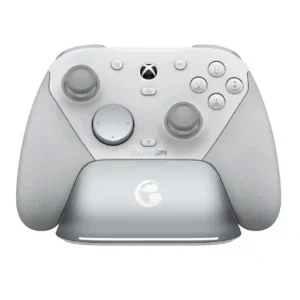
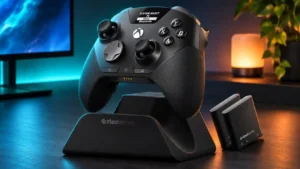
GameSir G7 Pro
Where It Has the Edge
No clear scored advantage over the other product.

Scorata scores summarize analyzed review evidence on a 1–5 scale; they are not laboratory measurements or a simple average of customer star ratings. Feature scores summarize the reviews covering that feature. The overall score averages feature scores within each review, then combines review averages. When both expert and customer evidence are available, those two groups receive equal weight. Products can have different review coverage, so small score gaps do not establish a winner.
Recommendations prioritize important features for the category, with a score of at least 3.5, a gap of at least 0.25 points and at least two supporting reviews per product. Features with widely varying scores or broad connectivity contexts are excluded from recommendations. These safeguards do not establish statistical significance.
Quick verdict
The available evidence supports the recommendation below, but does not establish an overall winner. Check the remaining features against your priorities.
There is not enough comparable review evidence to recommend GameSir G7 Pro over the other product.
Choose SteelSeries Aeon Pro Wireless Controller for battery life and platformer control precision.
No clear scored advantage over the other product.
Scores are out of 5. Missing scores mean missing review evidence, not a missing feature.
Most reviewers measured roughly 8–13 hours per charge, which is adequate rather than class-leading. The included dock softens the weakness because the controller is easy to top up between sessions.
Per-battery endurance is sufficient for long sessions, typically discussed around a dozen hours. With a charged spare, practical downtime becomes far less important than a single charge duration.
The bundled charging dock is a popular quality-of-life extra, keeping the controller topped up and giving the dongle a storage spot. Criticism centers on the nonmagnetic fit, bright lighting, or limited usefulness for wired-only Xbox setups.
The charging dock stands out for doing several jobs well: charging the controller, holding a spare battery and stick caps, and linking two gaming systems. A standby-charging quirk was later addressed by firmware.
Charging was described as quick in the reviews that timed it, with estimates ranging from about 45 minutes to roughly two hours for a full charge. The dock makes the process especially convenient.
Charging the spare pack was reported to be quick, recovering a useful amount of charge within an hour.
Mobile support is a consistent strength, particularly on Android, where Bluetooth pairing is straightforward and responsive. Reviewers who move between PC and phone appreciate using one controller across both.
A failed Bluetooth attempt on several secondary devices makes mobile and portable-device compatibility uncertain for at least one tester.
Xbox support is the G7 Pro’s most repeated platform caveat: the standard model is wired-only, which frustrates couch players. Some special editions add wireless Xbox support, but usually at a higher price.
Xbox support is broadly dependable, with easy wireless play and practical system switching. It is especially convenient beside a PC connected to the same dock.
Precise TMR movement and alternate D-pad options can suit platformers well, but control preference matters. One reviewer specifically valued the clicky inputs for precision platforming while another found the D-pad less trustworthy.
Platformers respond well to the precise sticks and quick mechanical inputs, with game-specific configurations adding control over 2D movement.
Stick tension is a preference-sensitive weakness: reviewers noted the sticks can feel light, and one specifically wanted a tighter right stick. There is no hardware tension adjustment to solve that preference.
Stick tension feels reassuringly controlled rather than floppy. Some reviewers notice a firmer or longer movement than on a standard Xbox controller.
Rubberized surfaces and plastics often feel premium at first, but material impressions become more mixed over time. Reviewers mention creaking panels, dirt-catching texture, and components that can feel cheaper than the controller’s best parts.
Soft-touch grip surfaces and tactile plastics make the controller pleasant to hold and give the materials an upscale character.
The package is unusually generous for the price, commonly including a dock, long cable, receiver, and extra D-pads, with some editions adding bonuses. Reviewers repeatedly treat the accessory bundle as part of the value story.
Two batteries, spare stick caps, and the multifunction dock add tangible value. Missing a second dock cable or carrying case disappoints some buyers at this price.
Rear paddle quality is mixed. Some reviewers find the buttons practical and well-positioned, while others call them mushy, cheap, dull, or less responsive than the rest of the controller’s inputs.
The large mechanical paddles feel snappy and premium to many hands, but others dislike their size, force requirements, or inability to remove them.
Several reviewers found the controls stayed reliable through long or repeated sessions with no mushiness or degradation. Longer-term critical testing raised concerns about consistency once hardware and firmware issues appeared.
After the initial adjustment, reviewers report repeatable inputs and a controller that keeps behaving reliably across games and sessions.
Full analog trigger movement is generally smooth and well controlled, especially for racing inputs. One reviewer thought the rapid mode lacked the crispness of the very best implementations.
The full-range triggers feel smooth and controlled with satisfying travel rather than a mushy pull.
Main rumble is generally viewed as strong, controllable, and immersive without overwhelming the hands. It is a useful extra, though reviewers spend more praise on the sticks and triggers than on vibration itself.
Rumble and vibration effects provide substantial, well-tuned feedback, especially in racing games and moments of impact.
The 1,000Hz PC mode can sharpen response and even eliminate sluggish aiming for some users, but it often requires Nexus to enable. One critical test also found higher polling settings could introduce instability.
High polling rates help the controller feel fast on PC, while Xbox operates at a lower rate. The real-world speed impresses even though rival controllers can quote bigger numbers.
Many reviewers completed multi-hour sessions without cramps or meaningful fatigue, helped by the shape and weight. Others reported thumb or hand discomfort, showing that long-session comfort still depends on hand size and stick preference.
One large-handed tester experienced pinky strain after a couple of hours because the thin grips and low paddles changed their hand position.
Stick movement is usually described as smooth, light, and predictable, with clean movement across the center and edges. A few reviewers preferred a firmer or more conventional feel.
The thumbsticks move smoothly and predictably, with one tester likening their motion to skating on ice.
The four-motor feedback can deliver both strong rumbles and subtler effects, adding useful immersion. Trigger-specific vibration receives less enthusiasm and can feel buzzy or unnecessary in unsupported games.
Precise haptics add texture to movement and in-game action without pulling attention away from play.
Wireless latency over 2.4GHz is usually low enough to feel effectively immediate, including in reflex-heavy games. One critical measurement found more variable delay, so it is strong rather than universally flawless.
The proprietary wireless link felt notably quicker than Bluetooth in direct use, supporting responsive gameplay.
Most reviewers describe 2.4GHz wireless stability as excellent, with no dropouts and seamless play. Isolated reports of inconsistent response or reconnect behavior keep the record from being perfect.
Wireless operation was stable in successful setups, with no noticeable dropouts while moving among supported hosts.
The G7 Pro often feels more premium than its price suggests, thanks to its grips, mechanical controls, substantial weight, and clean fit. Cheaper plastics and long-term wear keep it from matching the very best luxury controllers.
Reviewers repeatedly describe a polished, expensive-feeling controller, from its switches to the finish and dock. The quality is evident even among those questioning the price.
PC is consistently the G7 Pro’s strongest platform, combining wired and 2.4GHz play with 1,000Hz polling, gyro, and full Nexus customization. Most reviewers found it an excellent PC controller, though one critical long-term test reported instability.
PC support is flexible and largely successful on supported setups, but Windows 10 testers reported serious input-lag or performance problems. This is an important compatibility qualification.
Rubberized grips are widely praised for comfort and control during sweaty or long sessions. The tradeoff is maintenance: the texture can collect dust, grime, or oils and may become less pleasant with age.
The wraparound textured grips earn widespread praise for staying secure and resisting sweaty slips. Several reviewers consider their feel a standout part of the design.
Trigger response is repeatedly praised, especially with the stops engaged for short, clicky presses in shooters. The lighter actuation can feel meaningfully faster than a standard Xbox-style trigger.
Triggers react quickly in both full-travel and shortened modes, which makes their response useful across shooting and driving games.
The familiar shape, comfort, and straightforward core controls make the G7 Pro suitable for casual play as well as competitive use. Some of its advanced tuning features may be more than casual players need.
For relaxed play, comfortable grips, satisfying controls, and fuss-free power keep the controller pleasantly out of the way.
Mechanical controls can work very well in fighters, with positive results in games such as Street Fighter, Tekken, and Marvel vs. Capcom. Serious fighting-game players should still note the recurring concerns around D-pad precision and feel.
Short hair-trigger travel and quick, tactile controls make counters and fast parries particularly satisfying in fighting-focused play.
The lack of Nintendo Switch 2 support was a notable disappointment in the review that focused on it. Buyers wanting one controller across Xbox-style platforms and Switch will need another option.
Nintendo Switch owners cannot count on it as their Switch controller. Its licensed Xbox and PC focus leaves Nintendo gaming out.
The controller has noticeable heft but is generally considered manageable and well distributed, with some reviewers preferring its lighter feel to premium rivals. Weight preference varies, especially for long sessions.
The controller has a substantial premium heft without feeling unwieldy to most testers. A few find it heavy beside lighter rivals, so preferred weight matters.
D-pad feel is one of the most divisive parts of the controller. Some enjoy the mechanical click, while many others describe the caps as mushy, flimsy, wobbly, imprecise, or cheaper-feeling than the rest of the pad.
The D-pad's satisfying click wins praise, although some testers criticize stiff activation or find its feel less comfortable than expected.
TMR sticks are repeatedly praised for strong resistance to drift and wear, with reviewers reporting near-zero or no drift at sensible deadzone settings. Extremely low deadzones can still reveal tiny idle movement in test tools.
Contactless Hall Effect sensors are valued for avoiding traditional potentiometer wear and helping keep stick drift at bay.
The G7 Pro is easy to use at a basic level, but its TMR sensitivity, extra buttons, and deep tuning can require adjustment. Reviewers who changed profiles or curves noted a short acclimation period before the controls felt natural.
Relocated menu buttons, prominent paddles, and slightly different stick motion require an adjustment period. Most players settle in, though the learning curve irritates some.
The standard bumpers are generally solid and usable, but they attract less praise than the controller’s mechanical triggers and extra buttons. A few reviewers thought they felt more ordinary or membrane-like than the rest of the controls.
Bumpers often earn praise for their clicky mechanical feel, but one player struggled to reach the right shoulder control comfortably.
Overall reception is strongly positive: most reviewers call the G7 Pro excellent, a favorite, or one of the best controllers under $100. The enthusiasm is tempered by wired-only standard Xbox use, D-pad complaints, and a few serious durability reports.
Overall impressions tend strongly positive, with the uninterrupted power system and premium controls creating genuine enthusiasm despite the cost.
Wired and 2.4GHz input delay is usually described as extremely low or simply unnoticeable in play. Even critical measurements generally keep latency modest, though not every test matched the most optimistic specifications.
Most users report quick, virtually instantaneous inputs, but two Windows 10 tests surfaced severe lag or stuttering. Performance depends on the PC environment.
The Hall Effect triggers were praised for controlled analog input, particularly when accelerating, braking, or making nuanced presses. Reviewers generally found them accurate and easy to modulate.
Full-range analog triggers offer controlled acceleration in racing games, though one tester wanted more resistance for fine throttle adjustments.
A reviewer who tried the G7 Pro with PlayStation 5 could not get the two to connect. It should not be treated as a native PlayStation controller.
This is not a viable replacement controller for PlayStation players; reviewers repeatedly warn that the PS5 is unsupported.
Racing tests were positive when reviewers used the full analog trigger travel for throttle and braking. The Hall Effect triggers and precise sticks allow smoother, more deliberate control than simple digital inputs.
Driving games benefit from long analog trigger travel, precise steering, and strong rumble. One tester wished for extra trigger resistance for fine throttle work.
Trigger stops are among the G7 Pro’s most celebrated features, with several reviewers calling the short microswitch mode exceptionally tactile and fast. A broken stop latch in longer-term testing is the important durability warning.
Flip-switch trigger stops are a highlight: they turn long analog pulls into quick, tactile hair-trigger clicks. Reviewers especially like the genre-specific flexibility.
Four onboard profiles are repeatedly praised because they let players keep different mappings and sensitivity setups ready for different games. Switching profiles from the controller is quick and convenient.
Eight configurations can live on the controller, making switching layouts between games quick without revisiting desktop software.
TMR sticks drew repeated praise for fine aiming, tiny corrections, circularity, and dependable control. Several reviewers felt the extra precision was especially noticeable in shooters and other accuracy-heavy games.
Hall Effect sticks generally deliver accurate steering and aiming, though a few players find their movement unfamiliar at first. Competitive precision improves after adjustment for most.
Fast TMR aiming, short trigger pulls, extra buttons, and high polling rates make the G7 Pro attractive for competitive play. The appeal is tempered by mixed D-pad feedback and disagreement over two rear buttons versus four.
Competitive players get fast triggers and responsive switches, yet grip fit, paddle force, and the lack of some esports-oriented inputs divide opinion.
The controller fits small-to-medium hands particularly well, and several reviewers found every control easy to reach. Larger-handed users are more divided, with some describing the body as a little small.
Large hands may not fit the relatively thin grips comfortably, particularly with the low rear paddles affecting finger placement.
TMR and Hall Effect components inspire confidence about long-term wear, but durability is not uniformly reassuring. Two critical long-term reports described broken trigger or trigger-stop hardware, creating a meaningful reliability caveat.
Solid construction and contactless stick hardware inspire confidence for longer-term use. Actual years-long wear remains unproven, and the rubber grip material raises one concern.
The G7 Pro’s clean Xbox-like styling, transparent details, swappable plates, and special editions earn plenty of praise. Some reviewers still find the standard look plain, and light finishes can show grime.
The understated black or white design looks polished, with textured grips and metallic accents giving the controller a clean desktop presence.
Most reviewers describe a solid or rock-solid controller that feels sturdier than its price suggests. A smaller group noticed creaking panels, cheaper plastics, or long-term wear that keeps it below the best premium builds.
Dense construction, close-fitting parts, and a solid feel consistently reinforce the premium impression. Reviewers rarely find anything loose or flimsy.
The familiar Xbox-style shape is broadly praised, with rounded grips and reachable extra controls helping the controller sit naturally in the hands. Ergonomics are a consistent strength even when reviewers disagree on size.
The familiar Xbox-style shape and textured grips make the controller natural to hold through most games. A few large-handed users find the grip proportions or rear paddles ergonomically awkward.
Overall comfort is one of the most consistent positives, with rubberized grips, familiar shaping, and manageable weight supporting long sessions. A minority of reviewers prefer a larger body or softer stick feel.
Most testers find the familiar Xbox-shaped body reassuringly comfortable, including over several hours. One reviewer with larger hands reported an awkward grip angle and hand aches.
The clicky mechanical controls are satisfying to many reviewers, but noise is a real taste issue. Some found the back buttons and sticks distractingly clacky, and nighttime players may find the clicks intrusive.
Mechanical buttons have an audible, satisfying click that many liken to a good keyboard. The distinct sound is generally a positive part of the tactile feedback.
Face buttons generally register quickly and cleanly thanks to optical microswitches. A few reviewers wanted shallower or snappier actuation, so responsiveness is strong without being universally best-in-class.
The face buttons give immediate, definite feedback with very little perceived delay, helping fast inputs feel dependable.
Bluetooth pairing was quick and seamless in the mobile testing that evaluated it, making the controller easy to move to Android devices. No clear recurring Bluetooth-specific problem was reported in the scored material.
Bluetooth is convenient when it works, but experiences conflict sharply: some enjoy easy pairing and one tester could barely use it across devices.
Optical and mechanical switches are widely praised for crisp, tactile actuation and a more premium feel than membrane buttons. Face-button feel is the exception, with a few reviewers calling the presses bumpy, deep, or less refined.
Crisp mechanical buttons register clearly and usually feel superb. A minority find the face controls and D-pad too stiff, making the overall feedback less universally loved.
One reviewer singled out GameSir’s software ecosystem as a major strength, praising how much control it provides over the hardware. The broader Nexus experience is more mixed, but ongoing software support itself was viewed positively.
SteelSeries' software and engineering support can be helpful with issues, but desktop dependencies mean some fixes take extra steps.
Nexus offers powerful tuning, profiles, remapping, polling-rate controls, and gyro settings, but the app itself divides opinion. Some call it intuitive and lightweight, while others report disconnects, awkward menus, readability issues, or update quirks.
GG is generally seen as capable and easy to navigate, especially alongside the OLED. Some testers miss deeper trigger curves or more flexible paddle assignments.
Four programmable extra inputs give the G7 Pro useful flexibility, and lockouts help players avoid accidental presses. Layout preference is subjective, especially for users who would rather have four traditional rear paddles.
Programmable rear buttons are useful for moving actions off the face buttons and creating per-game layouts. Extra bumper inputs and broader mapping targets would give enthusiasts more freedom.
Nexus provides deep software control over mappings, response curves, deadzones, vibration, gyro, and profiles. PC gets the richest experience, while mobile customization is more limited and the app itself can be awkward.
SteelSeries GG offers generous software tuning, including stick dead zones, profiles, vibration, and automatic PC game configurations. A few high-end adjustments remain missing.
The rear buttons are usually easy to reach without changing grip, and several reviewers liked their natural placement. Others found them too flush, sunken, or easy to hit accidentally depending on hand size.
The four prominent rear paddles divide opinion: many find them perfectly placed, while others activate them accidentally or struggle with the lower pair.
Extra rear controls are useful for actions such as reload, crouch, melee, and shifting while keeping thumbs on the sticks. Lock switches are repeatedly praised for preventing accidental presses when the buttons are not needed.
Mapping actions to rear controls can simplify combat, dodging, or vehicle handling. The benefit varies with paddle placement and how easily the buttons can be pressed.
Customization is one of the G7 Pro’s biggest strengths, spanning swappable D-pads and faceplates, four profiles, remapping, curves, deadzones, gyro, and vibration. Hardware modularity is less complete because the main sticks and buttons are not universally swappable.
There is substantial tuning through profiles, remapping, and stick adjustments, but deep hardware changes and advanced curves or macros are comparatively limited.
Button mapping is flexible both through Nexus and with on-controller shortcuts, so extra inputs can be assigned quickly. The system is easy to use, although some external software cannot treat every extra control as a fully independent button.
Button remapping and stored profiles are easy to access, yet the paddles cannot always trigger macros, keyboard shortcuts, or independent game actions.
The 3.5mm jack is convenient and one reviewer was surprised by its clean sound quality, but experiences were not uniformly positive. Another heard persistent static, while wireless audio introduced latency in one test.
Keeping a 3.5mm headset jack is welcomed as a handy option for wired earbuds and headsets.
Motion control can add useful camera or aiming options on PC, but accuracy varies by configuration. Some reviewers were pleased with tracking while others found mouse-style motion imprecise or unstable.
A reviewer specifically criticizes the lack of useful motion-control functionality for their preferred way of playing.
Shooters are a natural fit for the G7 Pro because precise TMR sticks, short trigger stops, and extra inputs support quick aiming and reactions. Loud or awkward rear controls are the main FPS-specific complaints.
Shooters benefit from responsive sticks, micro-switch buttons, and hair triggers, but some reviewers find the lower paddles or initial stick feel too slow for demanding competition.
PC wireless use was generally praised as quick and dependable through the 2.4GHz receiver, with testers reporting little or no noticeable delay. One audio-focused test still found latency through the dongle when using headphones.
The dock's low-latency 2.4GHz link works well for nearby Xbox and PC setups. Having no separate dongle limits flexibility when those systems are far apart.
Wired performance is consistently fast and reliable, with measurements placing it among the quickest modes available on the controller. The downside is not performance but the fact that standard Xbox use forces this mode.
A wired connection provided a useful fallback when one Windows 10 machine experienced wireless PC-mode latency.
Most connection testing was positive, with reviewers describing wireless links as rock solid or seamless. A smaller number encountered reconnect loops, polling-related instability, or inconsistent behavior after updates.
Connection switching usually works without fuss or dropouts, though a few PC configurations suffered disruptive latency or setup-specific failures.
Firmware updates can materially change behavior and fix problems, but the process has occasional quirks. One reviewer warned about controller-versus-dock update order, while another saw an update resolve a serious PC issue.
Firmware updates can resolve practical charging behavior, though installation through the desktop GG app may be inconvenient for Xbox-only households.
Value is one of the strongest consensus points: the G7 Pro brings many $150–$200-class features to the roughly $80 tier. Wired-only standard Xbox use and pricier wireless editions make the equation less compelling for some console buyers.
The high asking price is the most consistent criticism. Its battery and switching conveniences feel worth the premium to some, but others point to cheaper, highly capable rivals.
Macro and turbo support is a weakness on the licensed G7 Pro. Several reviewers note that these functions are restricted or absent, which matters for players who expect full automation features from a pro controller.
The lack of macro assignments for the back paddles limits what advanced PC users can automate directly from the controller.
Setup is repeatedly described as simple: plug in the dongle or dock, choose the mode, power on, and play. Bluetooth and PC pairing also worked with little fuss in hands-on testing.
Initial connection and switching feel straightforward for most users, particularly when both systems are beside the dock. The dual-port setup itself takes little effort.
Most functions feel intuitive, especially the OLED-based settings and rapid source switching. The unusually placed menu buttons can interrupt early familiarity.
One reviewer with a disability found the G7 Pro’s quicker trigger response meaningfully helpful for slower reactions. Physical accessibility adjustments remain more limited than on some elite controllers.
Some owners may find accessory compatibility narrower than expected, especially when using third-party charging gear or specialized custom parts.
Bumper inputs are generally responsive and easy to reach, though one reviewer wanted a snappier response after using a more expensive controller. They work well, but are not the standout control on the G7 Pro.
The included braided cable is repeatedly described as long and useful, especially because standard Xbox play requires a wire. The removable cable retainer adds protection, though needing the cable on Xbox remains the larger compromise.
One reviewer tested mobile cloud gaming and found Bluetooth play worked perfectly. That makes the controller a credible option for cloud play on supported mobile devices.
Packaging protected one review unit well enough that nothing arrived damaged, while another unit had its D-pad come loose in transit. Delivery condition therefore looks generally acceptable but not flawless.
Mac owners cannot rely on the full SteelSeries GG desktop experience, limiting deeper setup and firmware maintenance compared with Windows users.
Taking the controller away from the desk can be awkward when the dock and cables are part of its main appeal. A few reviewers miss a protective carry case.
Switching between a nearby Xbox, PC, and Bluetooth device is unusually fluid, with the QuickSwitch dock sparing repeated pairing and dongle swaps. The dual-host advantage depends on keeping both wired devices within reach.
The controller is reasonably approachable to open and service: one teardown needed only a T6 driver and pry tool, and another reviewer demonstrated that internal stick components can be replaced. That is encouraging for hands-on owners.
A retro and emulation-focused test found the mechanical D-pad worked especially well for classic fighting inputs. The interchangeable cap options also help tailor the feel to older game styles.
The G7 Pro skips RGB lighting, and reviewers generally did not consider that a meaningful loss. Some even preferred the cleaner look and potential battery benefit, though RGB-focused buyers will miss the theatrics.
In one racing-focused test, the sticks were precise enough for tight steering without forcing constant overcorrection. That supports confident fine control in driving games.
Thumbstick tops usually provide secure rubberized grip and good control, but they can collect dirt or grime. The concave shape and surface texture are also matters of personal preference.
A dedicated dock and limited easy Bluetooth use make the controller less convenient to take between locations for some owners.
The removable USB-C cable retainer is a small but useful design detail that helps brace the connector and reduce strain during wired play. Reviewers appreciated the thoughtfulness even if they sometimes removed it for looks.
Xbox wake-from-standby support is welcomed as a practical perk that some third-party wireless controllers lack. It makes the gamepad easier to treat as a main Xbox controller.
Nearly everyone loves the hot-swappable two-battery approach: drop in a fresh pack and continue without plugging in mid-game. It is the controller's clearest point of agreement.
The subtle button legends can be difficult to read, particularly on light-colored versions or in dim rooms. Two reviewers treated visibility as a genuine usability drawback rather than merely an aesthetic choice.
One reviewer found the face buttons sit a little low relative to the surface, but still liked their satisfying click. Travel is therefore a minor preference issue rather than a major functional problem.
Magnetically attached stick caps snap on and off without a struggle, while the dock provides safe spots for the spares. Reviewers like the convenience even when wishing for more cap choices.
Large lettering and responsive navigation make the OLED settings menu clearer than the tiny, fiddly displays found on some controllers.
The onboard OLED is more than decoration: it makes source switching, profiles, battery levels, and basic remapping accessible without opening software. Some find the small display or initial menu navigation less polished.
Physical personalization is relatively shallow at this price: you can change the stick caps, but the D-pad, paddles, and basic button layout stay fixed. Owners wanting swappable modules may feel restricted.
Support experiences were mixed in the limited material available. One failed unit was replaced, but another reviewer described replacement frustrations and advised persistence when seeking help.
Reviewers who compared it with standard or earlier controllers often describe the G7 Pro as a meaningful upgrade, particularly for its TMR sticks, trigger stops, extra inputs, and wireless PC support.
Directional accuracy depends heavily on the chosen D-pad. Alternate caps can work well, but the circular design caused accidental diagonals for one reviewer and was difficult to trust in hectic play.
Gyro aiming is useful when tuned well, but reviewer experiences are mixed. Some found it accurate and helpful, while others described mouse-emulation limits, jerkiness, or unreliable behavior.
The Hall Effect sticks are precise and generally responsive, with resistance to drift. Some enthusiasts would prefer TMR sensors or need time to adapt to the stick feel.
TMR performance is a headline strength: reviewers consistently praise the sticks for precision, responsiveness, smooth movement, and drift resistance. Several consider them a tangible upgrade over conventional Hall Effect or potentiometer designs.
Moving the View, Menu, and Share buttons below the sticks is polarizing. Some appreciate the easier reach after adapting; others miss the standard Xbox placement every time they pause.
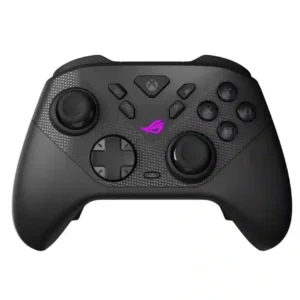
Best for precise TMR sticks, fast trigger stops, low-latency 2.4GHz play, and deep tuning. Skip it if you want a cheaper all-rounder, softer buttons for long sessions, or painless console-only...
Pros: overall satisfaction, button quality
Cons: d-pad accuracy, charging dock support
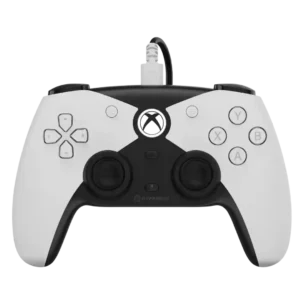
Best for a comfortable, affordable Xbox/PC pad with precise Hall sticks, a PlayStation-style layout, and useful rear buttons. Skip it if wireless play, deep software tuning, or consistently top-tier D-pad...
Pros: overall satisfaction, value for money
Cons: wired performance, vibration quality
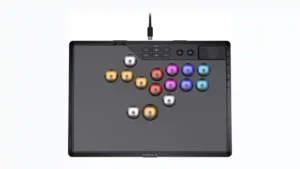
Choose it if you want a premium, tournament-ready leverless controller with excellent 2.4GHz wireless, deep actuation tuning, and sturdy construction. Skip it if loud, tall buttons, a heavy chassis, or...
Pros: overall satisfaction, button quality
Cons: control placement, button noise
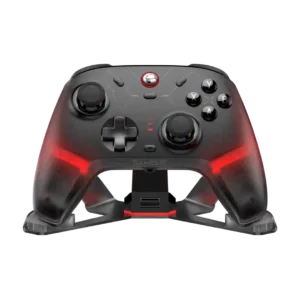
Choose the GameSir Cyclone 2 if you want a low-cost PC/Switch/mobile controller with precise sticks, deep customization, and a dock. Skip it if Xbox/PS5 support, premium buttons, or flawless dock/battery...
Pros: value for money, charging dock support
Cons: d-pad feel, compatibility with Xbox