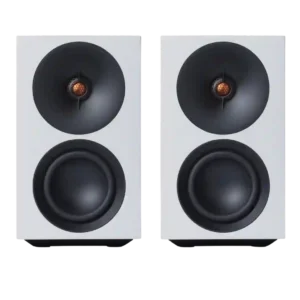

Cambridge L/R S
Where It Has the Edge
No clear scored advantage over the other product.

Scorata scores summarize analyzed review evidence on a 1–5 scale; they are not laboratory measurements or a simple average of customer star ratings. Feature scores summarize the reviews covering that feature. The overall score averages feature scores within each review, then combines review averages. When both expert and customer evidence are available, those two groups receive equal weight. Products can have different review coverage, so small score gaps do not establish a winner.
Recommendations prioritize important features for the category, with a score of at least 3.5, a gap of at least 0.25 points and at least two supporting reviews per product. Features with widely varying scores or broad connectivity contexts are excluded from recommendations. These safeguards do not establish statistical significance.
Quick verdict
The available evidence supports the recommendation below, but does not establish an overall winner. Check the remaining features against your priorities.
There is not enough comparable review evidence to recommend Cambridge L/R S over the other product.
Choose Edifier S880DB MKII for On-device controls and Status indicators.
No clear scored advantage over the other product.
Scores are out of 5. Missing scores mean missing review evidence, not a missing feature.
The basic package covers power, the inter-speaker link and remote control, but source cables are sparse. USB-C, RCA and optical cables may need to be supplied separately.
The box includes a generous set of useful cables, and multiple reviewers appreciated not having to immediately buy basic connection accessories.
The color-coded LED makes input identification straightforward, but feedback is otherwise sparse. Precise volume status is difficult to judge, and the lack of a volume indicator is a recurring usability limitation.
The small OLED display is consistently well liked because it clearly shows source, volume, or mode without becoming distracting. Auto-dimming and subtle presentation suit both desks and living rooms.
Driver protection is mixed because the speakers have no grille option, leaving the woofer exposed to fingers. The tweeter's phase cap does provide some useful physical protection.
Metal protection over the tweeters is a practical strength, reducing the risk of damage from fingers or accidental contact without hiding the drivers.
Very high volume is the clearest sonic limit: the stage can flatten, become shouty or compressed, and demanding bass can introduce audible strain. One first-listen report found the broader L/R range clean at high levels, but the S-specific tests are more cautious.
Playback stays clean through normal listening levels. One test reported no distortion at all, while another heard only a hint of clipping near maximum volume.
The speaker-to-speaker link feels unusually well engineered, with a secure locking connection and a sophisticated active architecture. The tradeoff is that the pair must be physically linked, with no wireless inter-speaker option.
The long inter-speaker cable gives enough reach for wide placement, including either side of a large TV. It offers useful placement flexibility even though the cable itself is bulky.
The Voice and Movie modes make speech more prominent by lifting the mids without becoming excessively aggressive. That makes podcasts, dialogue-heavy TV and movie use easier to follow.
For TV and movies, dialogue comes through crisp and easy to follow. The speakers can push speech forward convincingly even in a simple two-channel setup.
It plays surprisingly loud for a compact desktop pair and can fill offices and small rooms with ease. The strongest results come below all-out volume, where composure is better preserved.
Compact cabinets still get very loud, with enough output for small rooms and more than enough at a desk. Volume capability is a clear strength.
The Bluetooth remote is functionally comprehensive and does not need line of sight, but its execution is mixed. Hard plastic, no backlight, occasional lag or sync issues, and heavy dependence on the handset all reduce convenience.
The rechargeable touch puck is the most consistent usability complaint: gestures can misfire, volume changes can trigger other commands, and wake-up can lag. A few reviewers still liked the concept or found it workable when used slowly.
Voices come through with strong character, clarity and stable placement, from spoken content to sung vocals. Even more critical takes still describe the vocal presentation as natural and easy to follow.
Vocals are often clear, lively, and forward, but placement and tuning matter. A few takes found central voices restrained, dry, or slightly muffled until the speakers were adjusted.
The presentation stays cohesive even while creating plenty of space between instruments. Complex material tends to feel layered and unified rather than fragmented or disconnected.
The presentation is praised for staying integrated and coherent, with bass, mids, and upper detail blending naturally rather than feeling disjointed.
Automatic standby works, but waking from an idle state can take roughly seven to eight seconds. That delay is long enough to miss the opening seconds of content unless playback is restarted.
The remote's energy-saving behavior can delay the first command after it wakes, adding friction to otherwise simple adjustments.
The overall balance is generally smooth, even and close to neutral, making long sessions easy to tolerate. It is not strictly reference-flat, though, with some bass warmth and a touch of enjoyable sonic coloring.
The default balance is generally neutral and easy to live with, and Monitor mode is a frequent favorite. Some presets push bass and treble too far, while room placement can also shift the balance.
Detail retrieval is consistently strong, revealing fine textures, small harmonic changes and background elements without making the presentation clinical. Resolution remains convincing across Bluetooth, USB and other sources.
Fine detail is a standout strength, with cymbals, guitars, vocals, and layered mixes coming through cleanly and distinctly. Near-field listening especially highlights the resolution.
The L/R S is especially well suited to desks, offices, bedrooms and other smaller spaces, where its compact footprint can still produce room-filling scale. It is larger than some desktop rivals, so very narrow desks need more care.
The compact footprint and strong output make these especially good for desktops, offices, and small to medium rooms. Only very tight desk spaces may find them a bit larger than ideal.
Remote button response can occasionally lag enough to require another press. It is not constant, but it happens often enough to make control feel less immediate than it should.
Touch-control responsiveness is a recurring weakness. Wake delays, late reactions, and accidental commands can turn simple adjustments into repeated attempts.
There is ample dynamic headroom through normal and fairly loud listening, and energetic passages can sound confident and lively. Some material still feels a touch reserved, and the advantage fades as the system approaches its volume ceiling.
The speakers handle dynamic swings and punch surprisingly well for their size, including movies and energetic records. Classical material can expose some limits in large-scale dynamic range.
As a complete product, the L/R S combines premium build, attractive design, easy setup and broad small-room versatility unusually well. It is better framed as a polished lifestyle hi-fi system than a purist studio tool.
Build, styling, connectivity, and sound combine into a highly capable compact system that earns enthusiastic recommendations. The touch remote is the clearest flaw keeping the overall experience from feeling as polished as the hardware.
In bedrooms, offices and other small rooms, the pair can serve as a convincing TV or soundbar alternative with wide, theater-like presentation. Optical connection works well for that role, though HDMI ARC is not available.
They work well as compact TV or movie speakers, with strong dialogue and useful optical connectivity. They are less convincing as a complete soundbar replacement when HDMI ARC, very deep bass, or a wider cinematic spread matters.
The included inter-speaker cable is short for lowboard, shelf or wider stereo placement. A longer cable is available, but broader layouts may require that extra purchase.
The proprietary inter-speaker cable is repeatedly described as chunky or unwieldy. It works, but it is the least graceful part of an otherwise tidy compact setup.
Cabinet construction feels unusually solid and premium for the size, with crisp edges, dense enclosures and finishes that hold up in more upscale rooms. Build quality is one of the safest reasons to justify the price.
Cabinets feel solid, weighty, and well finished, with construction quality that supports the premium impression. One sample had a small finish-adhesion flaw, but that was the exception.
Because amplification is built in, no separate amplifier is required. That self-contained approach is a major part of the product's simplicity and desktop appeal.
Built-in amplification is a major convenience: the system works without a separate amp, reducing both setup complexity and additional cost.
On-device control is one of the clearest weaknesses. Beyond rear-mounted power/source and setup switches, there is no convenient speaker-mounted volume or mute control, leaving everyday operation heavily dependent on the remote.
The physical volume, bass, and treble knobs feel precise and useful, and they provide a welcome escape from the touch remote. Their rear placement can make daily access awkward.
The EQ options are subtle rather than dramatic, with Normal usually preferred for balanced listening and Voice or Movie useful for specific content. Placement EQ can make a noticeable improvement when the desk or wall setting matches the room.
Sound tailoring is unusually flexible through rear tone controls, presets, and the ConneX app's custom EQ. Monitor is often preferred, while Classic or Dynamic can sound overcooked to some listeners.
aptX HD is viewed as a solid choice for higher-quality Bluetooth listening. It gives the wireless side of the system more credibility than basic Bluetooth alone.
LDAC support is a major wireless-audio plus and is repeatedly praised. The tradeoff is no aptX family support, while iPhone users fall back to SBC.
Bluetooth connectivity is straightforward, with pairing described as immediate, easy or a breeze across phones used in testing. It fits the system's simple, no-network approach well.
Bluetooth pairing is consistently simple and quick, with devices finding the speakers easily. Wireless setup is one of the least troublesome parts of daily use.
Review contexts may differ, so use caution when interpreting the score gap.
Music is the core strength: the speakers sound lively, spacious, detailed and engaging across rock, electronic, jazz, classical and other material. The voicing favors enjoyable, fatigue-free listening over strict studio-monitor neutrality.
Music performance is a core strength across rock, pop, jazz, electronic, and record playback. The pair is detailed, engaging, and versatile enough to move between casual listening and more focused near-field sessions.
The digital inputs top out at 24-bit/96kHz, and one test found a higher-resolution SACD rip would not play. That is adequate for common desktop use but restrictive for listeners with higher-resolution source libraries.
High-resolution playback over USB and digital inputs is treated as a real strength for buyers who want better-quality source files without adding another DAC.
Midrange performance is the most divided part of the tonal picture. Some listening finds it crisp, clear and beautifully expressive, while other tests hear a slight veil, less energy and reduced nuance compared with stronger rivals.
Midrange is usually clean, natural, and informative, with vocals often pushed pleasantly forward. Some listeners wanted more thrust, openness, or expressiveness, so the tuning is not universally lush.
DynamEQ helps quiet listening retain punch and tonal body, so background-level playback stays natural and engaging. The speakers still reveal more of their ability once the volume rises beyond very low levels.
Low-volume listening remains clear and satisfying, making the pair well suited to near-field desks and quiet background sessions.
USB-C, optical and RCA give the system useful wired flexibility, with USB-C setup described as immediate and sound quality remaining consistent across digital inputs. The wired options are a strong part of the desktop-friendly design.
Connectivity is one of the clearest strengths, with USB-C, optical, coaxial, and RCA options covering desktops, TVs, streamers, and other sources. The speakers are unusually flexible for a compact active pair.
Bass is strong for the cabinet size, often described as tight, punchy and surprisingly full. Opinions split on tuning: some hear a little too much warmth or bloom, while deeper sub-bass and extreme-volume impact remain physically limited.
Bass opinion depends heavily on room, placement, and expectations: many found it surprisingly deep, punchy, and controlled for the size, while others heard limited low-end extension or boom near walls. The sub output neatly addresses the deepest-bass gap.
Gaming benefits from the strong low end and precise directional imaging, giving explosions more impact and positional cues more clarity. The same spacious presentation that works for music translates well to games.
Gaming use benefits from punchy sound and very low perceived Bluetooth latency. The compact footprint also suits a gaming or creative desk.
The subwoofer output is a welcome expansion path, though the built-in bass is strong enough that some listeners may not feel an immediate need for one. A sub becomes more worthwhile if deep low-end extension is a priority.
The dedicated sub output is widely praised and makes it easy to add deeper low-end weight. The speakers have useful bass on their own, but a sub is the better route for true deep-bass effects.
Stereo imaging is a standout strength, with wide, precise placement, a solid center image and an unusually spacious feel for the cabinet size. Careful toe-in or tilt helps preserve that focus, especially off-axis.
Stereo imaging is usually precise and spacious, especially near field, with instruments and vocals easy to place. The main limitation is that some TV material can feel less expansive than ideal.
Treble is usually smooth, clear and substantial without turning sharp or sibilant, which helps long listening sessions stay comfortable. A more critical take hears a slight upper-frequency rolloff that trades accuracy for forgiveness.
Treble is usually clear, smooth, and detailed without becoming fatiguing. A few listeners wanted more air or heard some edge at the extremes, but harshness is not the dominant character.
Overall sound quality is the product's strongest consensus point: spacious, refined, detailed and much larger-sounding than the cabinets suggest. The main caveats are bass tuning, slightly restrained mids in some tests and reduced composure at the very top of the volume range.
Overall sound quality is the product's strongest consensus point: clean, detailed, balanced, and surprisingly full for compact active speakers. Bass depth, upper-air, and vocal character draw some criticism, but the broad sonic verdict remains very positive.
Optical is a practical TV connection and was singled out as the preferred route when HDMI is unavailable. It works well, but it does not offer the same convenience as HDMI ARC.
Optical input works well as the practical TV connection, delivering clear dialogue and solid bass without needing an AV receiver.
Setup is one of the easiest parts of ownership: Bluetooth pairing can take seconds, USB-C is recognized quickly, and the placement switches are simple to understand. The self-contained active design also avoids amplifier setup.
Setup is usually plug-and-play: connect the speakers, power them, choose a source, and start listening. One reviewer found the channel-identification instructions unclear, but the overall process is considered easy.
Value is generally strong once sound, build and engineering are considered together. It costs more than some desktop alternatives, but the combination of scale, imaging, finish and simplicity repeatedly makes the premium feel defensible.
Value is strong when discounted, where the sound, build, and connectivity can compete well above the price. At full MSRP, the cheaper MR5 and other alternatives make the value case less automatic.
The clean, minimal cabinet design is one of the most consistently praised aspects of the product. Crisp lines, the exposed copper/orange tweeter and premium-feeling finishes give it a modern look that works on desks or in living spaces.
The design earns near-universal praise for looking more like compact hi-fi than ordinary computer speakers. Curved details, wood accents, and a premium two-tone look help them fit comfortably in visible living spaces.
Native AirPlay is absent, which is a meaningful drawback for buyers who want Apple-centric network streaming.
HDMI ARC is missing, and that repeatedly comes up as a convenience loss for TV-centered setups. Optical is the main workaround.
There is no RGB or flashy lighting, so buyers looking for a gaming-style visual show may find the design too restrained.
Packaging is sturdy and protective, including well-packed or double-boxed treatment that inspires confidence before setup.
The USB-C audio input does not provide 5V power for peripherals, a missed convenience for desk setups where spare powered USB ports are valuable.
Even a scratched, dusty vintage record remained highly enjoyable, suggesting the speakers can stay musical without making every source flaw dominate the experience.
The pair is not especially tiny or lightweight, but it remains manageable enough to move between setups. Very cramped desks may still find the size more substantial than expected.
Bluetooth latency was described as barely noticeable in computer use, making wireless playback feel responsive for timing-sensitive desktop use.
A clean, quiet background helps small details emerge without obvious hiss or grit. Low noise and low distortion at normal listening levels contribute to the polished presentation.
There is no internal phono stage, so a turntable needs its own phono preamp or an external one. That omission limits the otherwise broad all-in-one appeal.
One movie-focused test found the stage too contained vertically and laterally, with less sense of sound spreading toward the room boundaries than desired.
Bluetooth stability is excellent in the tested setups, with rock-solid pairing and no reported connection dropouts.
The app can be useful for EQ and source control, but several reviewers found its smart features limited or unnecessary. Native streaming integrations are also sparse.
Edifier customer service responded quickly and thoroughly to a channel-setup question, resolving unclear documentation with a helpful explanation.
There is no headphone output, which reduces convenience for desktop users who want to switch quickly from speakers to private listening.
Native Spotify Connect is not supported, so Spotify users must rely on another playback path rather than direct service integration.
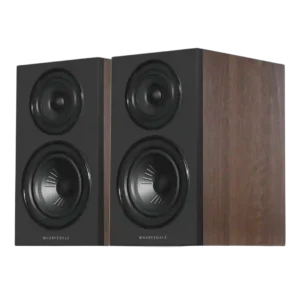
Choose the Diamond 12.1i for balanced, punchy hi-fi sound, strong bass and premium build at a budget price. Skip it if you mostly listen very quietly, need shallow-shelf placement, or...
Pros: Design and aesthetics, Music performance
Cons: Low-volume performance
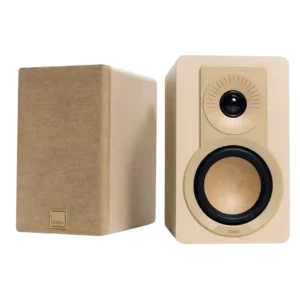
Choose the Kupid for lively, detailed sound in a desk or small-room system where compact size matters. Skip it if you need deep bass, huge-room output, or want to pair...
Pros: Bass performance, Value for money
Cons: Amplifier power requirements, Break-in period

Choose the Coda W if you want big, precise stereo sound, strong bass, HDMI ARC and simple turntable/desktop connectivity without a separates stack. Skip it if built-in Wi-Fi/multi-room streaming, compact...
Pros: Stereo imaging accuracy, Aesthetic design / Finish options
Cons: Smart features, EQ customization
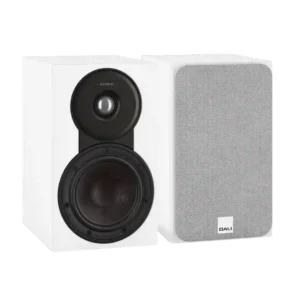
Choose the Sonik 1 for compact-room hi-fi with vivid vocals, punchy bass and precise imaging. Skip it if you need deep sub-bass, dislike forward treble, or cannot justify the steep...
Pros: Value for money, Aesthetic design / Finish options