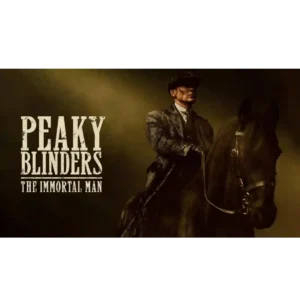
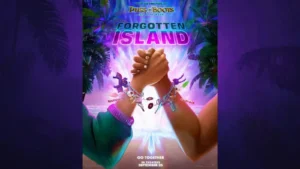
Peaky Blinders: The Immortal Man
Where It Has the Edge
- directing quality is 4.5 vs 4.3. Tom Harper is frequently praised for confident staging, visual control, suspense, and explosive set pieces. A few reviews...

Scorata scores summarize analyzed review evidence on a 1–5 scale; they are not laboratory measurements or a simple average of customer star ratings. Feature scores summarize the reviews covering that feature. The overall score averages feature scores within each review, then combines review averages. When both expert and customer evidence are available, those two groups receive equal weight. Products can have different review coverage, so small score gaps do not establish a winner.
Recommendations prioritize important features for the category, with a score of at least 3.5, a gap of at least 0.25 points and at least two supporting reviews per product. Features with widely varying scores or broad connectivity contexts are excluded from recommendations. These safeguards do not establish statistical significance.
Quick verdict
The review evidence points to a tradeoff: directing quality versus critic appeal. Choose according to which strengths matter more to you; the overall score alone does not settle that choice.
Choose Peaky Blinders: The Immortal Man for directing quality.
Choose Forgotten Island for critic appeal.
Scores are out of 5. Missing scores mean missing review evidence, not a missing feature.
An apparent CGI hat is called conspicuously poor, creating a distracting visual blemish in the effects work.
The CGI is a showcase, with richly stylized character work and imagery that stands out even beside recent high-end animated releases.
An apparent CGI hat is called distractingly bad, standing out as a conspicuous weakness in the effects work.
The supernatural animation and creature effects—especially Manang’s movement and transformations—are presented as technically impressive and visually memorable.
The romantic material fares poorly, with Tommy’s sex scene described as cheesy rather than convincing.
The film’s choice to keep the core relationship centered on friendship rather than forcing in romance is treated as a refreshing creative strength.
Period immersion is weakened for some by modern-looking styling, oversized stakes, and questionable wartime plausibility. The film’s stylized mythmaking of Tommy also draws skepticism.
Despite the supernatural setting, the fear of friends growing apart gives the central conflict a grounded emotional reality.
The sexual material draws a negative reaction because Tommy’s sex scene is viewed as cheesy and out of place.
The central bond stays focused on platonic friendship rather than romance, a restraint specifically welcomed by a family-focused response.
The central comeback structure, Nazi scheme, and legacy conflict are often described as familiar or clichéd, with several critics saying the film rarely finds a genuinely new plot shape.
The broad friendship-and-portal framework is familiar, but the memory-loss structure and cultural setting give the plot enough personality to keep it from feeling generic.
Hazy reverie-style editorial cuts are criticized as visually cheesy and as interruptions to the otherwise painterly presentation.
Music-synchronized cuts and music-video-like passages give the film a rhythmic editing style that suits its restless, mixtape-like energy.
The eerie, supernatural-leaning material is praised as some of the eeriest material the franchise has attempted.
Manang and the darker folklore imagery can be genuinely scary, including body-separation imagery and intense chases; some admire that edge while others warn it may overwhelm younger kids.
Several set pieces generate strong tension and claustrophobia, especially the pub and tunnel material. Negative reviews say predictability weakens the climax and removes the sharper twists associated with the series.
The race to preserve the girls’ memories and escape the island creates real tension, particularly once the darker threat closes in.
Dialogue receives mixed marks: some reviewers praise sharp lines and economical exposition, while others call it simplistic, clunky, corny, or overly explanatory.
The script can be genuinely funny and warm, though repeated catchphrases and a few lines land awkwardly enough to keep the dialogue from being uniformly strong.
Some newcomers report following the story surprisingly easily without heavy recaps, but other reviews point to shaky logic or exposition that does too much work.
The missing-memory structure is clever but can become difficult to follow as side quests, lore, and rapid exposition accumulate, especially through the middle.
The film’s grief-heavy, introspective drama gives Tommy’s final chapter weight for many viewers, though its persistent misery and brooding occasionally overwhelm the entertainment.
The friendship drama lands hard when the movie focuses on the fear of growing apart, giving the fantasy stakes a surprisingly tender emotional center.
The film restores the show’s swagger, music, visual language, and callbacks, satisfying many longtime fans. Others see missing characters and major legacy decisions as betrayals of the series’ established arcs.
The film reshapes Filipino folklore for its own story while still feeling rooted in recognizable classic traditions rather than stripping them of their darker identity.
Murphy and Keoghan’s father-son dynamic is often described as raw, magnetic, and powerful. A smaller group felt the pair never generated the expected sparks or emotional bond.
Jo and Raissa feel like lifelong friends rather than a scripted pairing, with warm, lived-in chemistry that gives their separation real emotional weight.
As a gangster-period-drama send-off, the movie retains much of the show’s identity and pulp energy. Several critics still feel it plays more like an extended television episode than a fully realized feature.
As a big-screen animated adventure, it delivers the color, action, emotion, humor, and spectacle expected from the format at a very high level.
The action lands best once Tommy returns to Birmingham, with the pub confrontation, shootouts, explosions, and finale frequently singled out. Critics who wanted more momentum found the action too delayed or the climax predictable.
The action is fast, kinetic, and visually inventive, giving the island adventure a constant sense of movement without losing its comic energy.
The core legacy-and-war story is compelling and emotionally satisfying for many reviewers, but others call the movie unnecessary, thin, half-baked, or unable to justify rewriting the series’ prior ending.
The friendship-and-memory core earns substantial praise for heart and sincerity, but the story loses some clarity and force when too many creatures, detours, and ideas compete for attention.
Legacy, grief, trauma, memory, family inheritance, and self-definition give the film substantial thematic weight. Critics who resist the movie argue these ideas are compressed, overplayed, or left insufficiently explored.
The film goes beyond a simple friendship lesson to explore memory, identity, separation, grief, cultural roots, and the painful but survivable changes that come with growing up.
The script earns credit for themes, twists, and some strong dialogue, but criticism is substantial: exposition, clichés, rushed character work, and compressed plotting repeatedly surface.
The screenplay is imaginative and often funny, but reactions split over its structure: the emotional ideas are strong while the crowded plotting and rushed connective tissue can weaken them.
For supporters, the film delivers grief, regret, family conflict, and a powerful farewell with real force. Detractors found key deaths rushed, contrived, or too hollow to land.
For many, the friendship-and-memory story builds to a moving or even devastating payoff, though a smaller group feels the frantic structure sometimes blunts that emotional force.
The cinematography is the clearest consensus strength, praised for striking light, shadow, mud, rubble, wintry landscapes, and a genuinely cinematic sense of scale.
Low-angle and wide compositions help the animated world feel larger and more cinematic, adding scale to both the island and its creatures.
The strongest readings focus on legacy, self-definition, family, and the cost of valuing power over people. One severe critic felt the film squandered the larger sense of purpose built around Tommy.
Its message about accepting change without erasing the people and memories that shaped you comes through clearly and gives the adventure substance beyond the quest mechanics.
Tommy’s reckoning with grief and Duke’s struggle with his father’s legacy work for many reviewers, but the compressed format leaves several supporting characters—and, for some, Duke himself—feeling thin or underdeveloped.
Jo and Raissa are generally well realized, but many side characters get less room to grow; the crowded creature roster often feels more colorful than fully developed.
Pacing is the most consistent weakness: the first half is repeatedly described as slow or drawn out, while the later material can feel rushed as too much story is compressed into feature length.
Pacing is the most repeated weakness: the movie moves at breakneck speed, piles on characters and jokes, and often leaves little breathing room even when that energy is exciting.
At roughly feature length, the movie often feels too compressed for the number of character turns and plot developments it attempts. Several reviewers explicitly wish the story had been a season or miniseries instead.
At roughly two hours, the film can feel longer than its breathless pace suggests, with some wishing the crowded middle had been trimmed.
The ending is intensely divisive: many call it fitting, powerful, or even perfect closure for Tommy, while others believe it needlessly overturns the stronger symbolism of Season 6.
Most reactions find the finale moving and satisfying, but there is real disagreement over whether its resolution is earned, with some calling the ending rushed or contrived.
Tom Harper is frequently praised for confident staging, visual control, suspense, and explosive set pieces. A few reviews fault specific tonal or narrative choices even while admiring the filmmaking.
The direction is ambitious and confident in its visual storytelling, though one view finds the emotional material less fully developed than the stylistic fireworks.
Dark comedy—especially the Garrison grenade sequence and father-son mud fight—provides welcome relief from the gloom. A few detractors find some of the comic touches cheesy rather than sharp.
The comedy is usually a hit, ranging from slapstick and absurd creature jokes to rapid visual gags, though some find the juvenile or hyperactive material grating.
The film’s cold-blooded, stylized violence generally fits the franchise’s appeal and is often balanced with swagger or dark humor, though it can edge into grim excess for some viewers.
The harder PG violence and frightening action give the movie welcome edge for some older viewers, but they make it less comfortable for the youngest audience.
Tommy’s spiritual and gypsy side is praised as one of the most worthwhile expansions of his character in the film.
Filipino culture is woven into the setting, language, food, music, family life, and mythology rather than used as decoration, making the film feel specific and welcoming at the same time.
The score is repeatedly praised for building dread, atmosphere, and intensity, especially as Tommy’s return pushes the film toward its climax.
The original score is warmly received for supporting both emotion and cultural identity, including the use of Filipino and Indigenous musical textures.
The sombre, gothic, highly stylized mood works for some as a fitting final chapter, but others find the film tonally off, overly miserable, campy, or caught awkwardly between old and new Peaky Blinders.
The blend of horror, slapstick, sentiment, and manic comedy is bold but uneven; some enjoy the contrast while others find the shifts jarring or exhausting.
Rewatch interest is sharply polarized: one enthusiastic reviewer immediately wanted another viewing, while several detractors say they would not revisit it and even feel it harms the series’ rewatchability.
The dense visual details, fast jokes, and emotional payoff make repeat viewing especially appealing to those who connect with its style.
Reactions range from gripping, highly enjoyable fan service to dull, hollow, or unnecessary viewing. A common middle ground is that the movie becomes much more entertaining after its slow first half.
The movie is widely seen as a fun, energetic theatrical ride, especially for viewers who enjoy rapid-fire jokes and visual invention; the same intensity can exhaust others.
Aggregated critical reaction is broadly favorable but not uniform, with enthusiasm for craft and performances tempered by repeated complaints about pacing, script compression, and sequel necessity.
The overall critical response in this set is very enthusiastic, with multiple critics placing it among the year’s strongest animated films despite recurring pacing complaints.
Longtime Peaky Blinders fans are the clearest audience, especially for the callbacks and emotional closure. Reviewers disagree on newcomers: some found the film easy to follow, while others strongly recommend watching the series first.
Its mix of friendship, comedy, folklore, and vivid animation reaches well beyond small children, with particular appeal for preteens, teens, animation fans, and Filipino audiences.
For supporters, Birmingham and the Peaky underworld feel convincingly restored and expanded into wartime. Critics miss the old ensemble and argue the newer, thinner supporting world makes the film feel smaller than the series.
Nakali is imaginative and culturally rich, with memorable creatures and environments, though several responses wish the film slowed down enough to explore that world more deeply.
Blitz-era Birmingham, grime, rubble, docks, pubs, and warehouses are generally rendered with impressive tactile detail and scale. One negative review thought parts of the production looked like a soundstage.
Manila and Nakali are both packed with texture, color, and culturally specific detail, with environments that feel designed rather than merely filled.
The soundscape can feel forceful and theatrical, with one review highlighting Dolby Atmos impact and another calling the sound design incredible. A major dissent criticizes an aggressive music-to-dialogue mix.
The soundscape can add real theatrical punch, but one screening found music and effects occasionally loud enough to obscure dialogue.
The visual presentation is consistently celebrated: smoky interiors, chiaroscuro lighting, slow-motion swagger, period grime, and large-scale wartime imagery make the movie look distinctly cinematic.
Its neon palette, mixed-media flourishes, anime influences, and constantly shifting visual language are among its biggest attractions, even if the intensity occasionally becomes sensory overload.
The supporting ensemble is generally considered strong, particularly Keoghan, Roth, Rundle, Graham, and Ferguson. The bigger complaint is often that the movie underuses them or gives their characters too little depth.
The supporting voices provide strong comic color, with several side characters becoming scene-stealers even when their narrative roles are thin.
The cast is one of the film’s safest bets: even many negative reviews praise the performances, with the central actors repeatedly credited for elevating uneven material.
The voice ensemble is a major strength, with energetic, expressive performances that keep the friendship and comedy convincing even when the plot gets busy.
Cillian Murphy’s return as Tommy is overwhelmingly praised for its weary stillness, menace, grief, and emotional control; even harsh critics routinely identify him as a major strength.
The two lead voices are consistently praised for making Jo and Raissa likable, distinct, and emotionally credible through both comedy and conflict.
Modern-rock needle drops remain a signature strength and are widely praised for driving emotion and atmosphere. A few reviewers find the choices dated, overly loud, or less appealing outside the iconic theme reprise.
The soundtrack is energetic and memorable, mixing Filipino music with ’80s and ’90s pop, though the sheer number of needle drops can sometimes feel overdone.
The PG label comes with real caveats: older kids and teens are a better fit than very young or sensitive viewers because the villain and darker imagery can be intense.
Animation is the clearest consensus strength, blending polished 3D work with anime, manga, and 2D flourishes in a way that feels unusually inventive and alive.
There is plenty for families to enjoy, but this is a harder-edged PG than the brightest DreamWorks fare, with frightening monsters, rude humor, mild language, and darker themes.
The central friendship is the film’s emotional anchor: affectionate, messy, believable, and strong enough to carry a story about separation, memory, and growing into different lives.
Language is relatively mild by mainstream standards, but one family-focused response finds even that level unnecessary and distracting.
The return of Tommy’s tailored Peaky Blinders look remains a major visual pleasure, with covetable coats and sharp suiting earning praise. One review found Duke’s modern-looking styling immersion-breaking.
Reviewers appreciate the use of World War II events and the counterfeit-currency plot as historical grounding. Others question specific period details, plausibility, or the sentimental elevation of Tommy within wartime history.
Several reactions argue the trailers undersell the finished film, while a few also push back on superlative marketing claims; overall, the campaign does not fully capture the movie’s strengths.
The big-screen outing is framed as earned and worth paying for, with the theatrical presentation treated as part of the appeal.

A deeply human coming-of-age drama carried by remarkable performances and an honest portrayal of grief. Its gentle optimism moves most viewers, though some find the final stretch hurried or overly...
Pros: Grief portrayal, acting performance
Cons: pacing

Billie Jean King’s magnetic first-person storytelling makes this an exhilarating portrait of athletic courage and social change. The filmmaking follows a familiar documentary structure, and her full tennis résumé gets...
Pros: entertainment value, Biographical coverage
Cons: Narrative structure

Choose this inventive, unsettling documentary for fearless questioning, dark humor, and unpredictable storytelling. Skip it if you want a short, straightforward exposé with definitive answers.
Pros: originality, humor

A singular voice, powerful piano playing and intimate film photography make this concert absorbing for receptive listeners. Its uninterrupted, often similar-sounding songs and lack of background context are an acquired...
Pros: directing quality, cinematography
Cons: pacing, Song variety