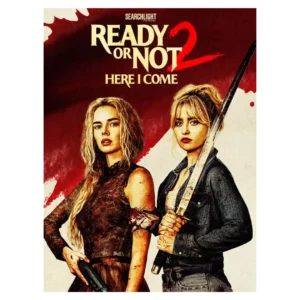
Ready or Not 2: Here I Come
Where It Has the Edge
No clear scored advantage over the other product.

Scorata scores summarize analyzed review evidence on a 1–5 scale; they are not laboratory measurements or a simple average of customer star ratings. Feature scores summarize the reviews covering that feature. The overall score averages feature scores within each review, then combines review averages. When both expert and customer evidence are available, those two groups receive equal weight. Products can have different review coverage, so small score gaps do not establish a winner.
Recommendations prioritize important features for the category, with a score of at least 3.5, a gap of at least 0.25 points and at least two supporting reviews per product. Features with widely varying scores or broad connectivity contexts are excluded from recommendations. These safeguards do not establish statistical significance.
Quick verdict
The available evidence supports the recommendation below, but does not establish an overall winner. Check the remaining features against your priorities.
There is not enough comparable review evidence to recommend Ready or Not 2: Here I Come over the other product.
Choose Wicked: For Good for drama quality and acting performance.
No clear scored advantage over the other product.
Scores are out of 5. Missing scores mean missing review evidence, not a missing feature.
The editing receives specific praise for smoothly blending the first movie’s ending into the sequel’s opening and creating a faux-continuous transition. Elsewhere, continuity-style nitpicks temper that positive impression.
Editing is one of the clearer weaknesses, with complaints about choppy musical staging, awkward transitions, and material that feels in need of substantial trimming.
The bloody effects can be gleefully satisfying, but repeated spontaneous-combustion gags lose impact for several reviewers. What was once a surprise becomes predictable when the sequel returns to the same goopy payoff too often.
Where discussed broadly, the spectacle and magical effects are praised for helping make Oz feel grand and cinematic.
The Grace-Faith drama is highly divisive. Their reconciliation adds a welcome personal layer for some viewers, but many critics find the bickering repetitive, the resentment unconvincing, or the emotional beats poorly placed amid a life-or-death hunt.
The darker dramatic mode generally lands well when the film focuses on friendship, sacrifice, and political pressure. Reviewers who respond to it describe the sequel as more human, serious, and emotionally potent.
The screenplay gets credit for finding witty variations on the first movie’s structure in the strongest reviews. Less enthusiastic critics think the added rules and emotional subplot make the writing less focused than it should be.
The screenplay draws substantial criticism for disjointed structure, underexplained turns, repetitive ideas, and additions that do not justify the expanded runtime.
One review raises concern that the international wealthy families risk leaning on cultural stereotypes, while also crediting the filmmakers with keeping those characters unpredictable enough to avoid a wholly one-note treatment.
One review raises a pointed concern about how the film’s romance and language may reinforce troubling ideas around desirability and skin tone. That criticism is specific rather than broadly echoed.
Pacing is sharply split. Several reviewers praise the immediate start, breakneck movement, and strong momentum, while others say exposition, relationship detours, a long final act, or the second half slow the movie down.
Pacing is the most persistent complaint. Reviewers repeatedly describe a strange combination of dragging scenes and rushed plot turns, with the two-film split often blamed for making Act II feel both padded and hurried.
Reviewers who discuss the horror side often say the sequel is less frightening than the first, with action and gore replacing sustained fear. A few still find individual stretches dark, creepy, or tense.
The darker transformations and body-horror touches are effective for some reviewers, who find them creepy and memorable. Others note that the intensity may be unsettling for younger viewers.
The emotional core is inconsistent. Some reviewers are genuinely invested in Grace and Faith reconnecting and appreciate the added heart, while many others find the sister conflict undercooked, forced, or too thin to carry the expanded story.
The emotional payoff is one of the strongest areas of agreement. The Elphaba-Glinda relationship, especially the title duet and final stretch, is repeatedly described as moving, tear-inducing, and cathartic.
Direction is praised when the film turns carnage into readable, energetic horror-comedy and stages its biggest set pieces with confidence. More negative reviews fault the filmmakers for choosing repetition and safe franchise expansion over sharper invention.
Jon M. Chu’s direction splits reviewers sharply. Some celebrate the scale, musical staging, and visual ambition, while others criticize conventional blocking, overstuffed frames, or a lack of cinematic spark.
Makeup and prosthetic work are praised as part of the movie’s practical gore package, especially in its messiest set pieces. One reviewer also flags rough wig continuity, keeping the reaction from being uniformly positive.
The makeup and styling receive strong praise where discussed, contributing to the film’s elaborate Oz aesthetic and character presentation.
Character depth is one of the more consistent weaknesses. Grace gets meaningful growth in some reviews, but many critics find Faith, the hunters, and much of the expanded ensemble underwritten, archetypal, or crowded out by the game mechanics.
Glinda’s expanded arc earns substantial praise, while several supporting characters are criticized as rushed or underdeveloped. The result is strong growth at the center but uneven attention around the ensemble.
As a horror-comedy sequel, reactions range from enthusiastic approval to outright rejection. Fans of its blood-soaked, knowingly ridiculous formula often call it a worthy continuation, while detractors see an unnecessary and inferior repeat.
As a movie musical, the film works best for viewers already receptive to the form and the source. The leads, spectacle, and musical presentation satisfy genre fans even when the second-act songs are considered weaker.
The practical gore work is singled out as a strength, with prosthetics, makeup, stunts, and physical effects combining to make the biggest kills feel messy and theatrical.
The practical craft receives favorable notice, especially when tactile sets and in-camera elements help Oz feel physically realized rather than purely digital.
Dialogue earns praise when the movie fires off snarky one-liners or lets Elijah Wood deliver the rules with dry precision. The sister arguments and heavy exposition draw much harsher reactions, often described as clunky, repetitive, or unnatural.
Dialogue receives limited but negative attention, mainly for repetitive wording and lines that feel clunky or overused. These complaints reinforce broader concerns about the script.
Visual reactions range from lush, sinister, and cleanly legible to flat and drab. The strongest praise goes to how the camera handles crowded action and the expanded spaces, while the harshest criticism says the sequel lacks the first film’s moody visual punch.
Camera movement and a few musical sequences are praised, but the dim, washed-out, heavily backlit look is a persistent complaint. Reviewers are split between admiring inventive framing and wishing the imagery were easier to see.
The gore is intentionally extreme and often part of the fun, but several reviewers think the violence crosses into ugliness when beatings linger or the brutality feels less cartoonish. Others explicitly appreciate that the gore stays purposeful and theatrical.
The film keeps most violence restrained or implied, which some reviewers appreciate, though darker threats, beatings, and body-horror transformations still give the sequel a more intense edge.
Suspense is one of the clearest tradeoffs of going bigger. A few critics find strong tension in individual chases and fights, but many miss the first film’s intimate terror and say the wider grounds, predictability, and plot armor drain urgency.
A few darker sequences generate real tension, particularly around transformations, political danger, and the build toward Glinda’s wedding and the witch hunt.
The enlarged rulebook is a frequent stumbling block: multiple reviewers call the mythology convoluted, inconsistent, or overloaded with explanation. Others enjoyed the absurd clauses and thought the rules created fun opportunities for schemes and surprises.
The story becomes harder to follow as it intersects with The Wizard of Oz. Reviewers criticize abrupt character turns, missing connective tissue, and an expectation that viewers will fill gaps from prior knowledge.
The story works best when it keeps Grace moving through the new hunt, but several critics found the expanded premise over-plotted, thin, or harder to justify than the original. A smaller group thought the sequel found a clever enough route forward.
The central friendship remains compelling, but the story is widely regarded as weaker than Part One. Critics repeatedly point to Act II’s rushed turns, Wizard of Oz overlap, and strained connective plotting.
Most criticism lands on how closely the sequel repeats the first film’s game and rhythms, with fewer surprises and less novelty. Some reviewers still found enough new rules, characters, and twists to keep the familiar structure lively.
Reworking familiar Wizard of Oz events can be clever and fun, but some critics see the second half as overly dependent on inherited plot machinery. A few appreciate the creative connections as a fresh spin.
The movie’s heightened logic is easier to accept when Weaving grounds Grace’s ordeal, but several reviewers call out extreme plot armor and implausible escapes. The larger, more game-like structure can weaken the sense that the danger is real.
Some reviewers feel the digital sheen and greenscreen-like environments make the world look artificial. The most positive comments come when physical sets and grounded textures overcome that effect.
The action is one of the sequel’s strongest and most discussed features. Reviewers repeatedly praise the ballroom fight, brutal brawls, creative kills, and bigger set pieces, though a minority call some fights repetitive, stiff, or overextended.
The action earns positive notices when it arrives, especially broom-flight chases and heavier physical set pieces. Reviewers describe these moments as clever, energetic, and more forceful than expected.
Runtime is a recurring concern among less enthusiastic reviewers, who say the movie runs long, begins to feel its length, or adds minutes the story does not need. A few faster-paced reviews had no issue with the 108-minute ride.
The shorter runtime is appreciated compared with Part One, but many still consider the film overlong for the amount of story it contains. Several reviewers argue substantial trimming would improve it.
The comedy frequently lands through gruesome slapstick, inept rich villains, Elijah Wood’s deadpan delivery, and the film’s self-aware excess. Still, a sizable group finds the jokes forced, repetitive, tepid, or less sharp than the original.
Humor is noticeably reduced from Part One, and some critics miss the comic spark that balanced its sentimentality. Others still find Glinda’s reactions, Jeff Goldblum’s Wizard, and isolated comic beats genuinely funny.
The ending divides opinion. Some reviewers enjoyed the final turn, satisfying climax, or setup for more, while others found the payoff unsurprising, rushed, overstuffed, illogical, or simply weaker than the first film’s finish.
The finale is divisive: some reviewers find it bittersweet, moving, and satisfying, while others call it rushed, contrived, anticlimactic, or tonally mismatched with the story’s darker implications.
The sequel’s darker social undercurrent works for reviewers who see more weight in its attack on entrenched power. Others find the thematic bite too thin to match the louder scale and bloodshed.
The sequel’s darker themes can be potent, especially around propaganda, prejudice, power, complicity, and moral compromise. Reviewers disagree on whether the film explores those ideas deeply enough or only gestures toward them.
The eat-the-rich message works best for reviewers who enjoy the sequel doubling down on corrupt power and oligarchy. Others find the satire blunt, shallow, repetitive, or less incisive than the first film’s simpler class conflict.
The political and moral messaging is one of the most debated elements. Some reviewers find the warnings about propaganda, authoritarianism, prejudice, and complicity timely and powerful; others find the treatment shallow or muddled.
Weaving and Newton’s sister chemistry works very well for many reviewers, who like their comic friction, physical teamwork, and contrasting energies. Others find the relationship rushed or forced, so the performances often land better than the written estrangement.
Erivo and Grande’s shared chemistry is repeatedly described as electric and central to the movie’s emotional pull. Romantic chemistry draws more mixed reactions, especially around Elphaba and Fiyero.
The horror-comedy tone works when cartoon gore, deadpan humor, and self-aware absurdity stay in sync. Several critics say that balance breaks when prolonged cruelty or darker violence collides with the movie’s otherwise playful register.
The more consistently somber tone works better for some reviewers than Part One’s abrupt shifts, but others find the seriousness at odds with Oz’s inherent whimsy or disrupted by misplaced comedy and romance.
Rewatch appeal is mixed. One critic says the two movies make an easy back-to-back watch and another is eager for more, while less enthusiastic viewers say this sequel is less memorable and does not demand repeat viewing.
The most enthusiastic reviewers see the two-film adaptation as something they will revisit for years, especially for the performances, musical moments, and return to Oz.
The theatrical value depends heavily on taste. One reviewer urges seeing it with a crowd rather than waiting for streaming, while another says streaming is the safer choice if the sequel’s repetition makes a ticket feel hard to justify.
The reviewers who discuss the theatrical or home-media value directly find the spectacle, technical presentation, and extras substantial enough to justify the experience.
Entertainment value is genuinely split but leans positive: many reviewers call the sequel a blast, a crowd-pleaser, or a solidly fun bloodbath. The negative camp sees repetition, lore, and overlength turning the same ingredients into diminishing returns.
Overall enjoyment is mixed but generally respectable. Devoted fans and viewers swept up by the performances often have a good time, while others find the long, uneven second act a slog.
Costume work receives mixed notice. One reviewer says the design supports the film well, while another points to visibly cheap construction in some of the wealthy characters’ clothing.
Costumes are a standout craft element, repeatedly described as lavish, imaginative, character-rich, and visually striking. Even reviews critical of the movie’s lighting tend to praise the wardrobe itself.
The sequel has flashes of striking visual personality, from gothic spaces to Renaissance-inspired imagery and stylized bloodshed. Some reviewers find that look bold and playful, while others see a blander, less audacious presentation than the first film.
Visually, the film is a major point of division. Sets, costumes, scale, and color can look sumptuous, but dim lighting, desaturation, backlighting, and artificial-looking CGI repeatedly blunt the intended wonder.
The larger estate, golf course, casino, ritual spaces, and other status-heavy environments give the sequel a fitting arena for its expanded game. Reviewers praise the scale and design, though one felt the golf-course potential was not fully used.
Production design is among the strongest consensus positives. Oz is repeatedly described as elaborate, colorful, detailed, sumptuous, and richly built even by critics who dislike the lighting or CGI layered over it.
The expanded mythology is the biggest point of disagreement. Some reviewers love the larger cabal, stranger rules, and new possibilities; others say the John Wick-style expansion makes a simple premise cluttered, overexplained, or less fun.
Oz’s physical design remains rich, but reviewers differ on whether the film makes the society feel truly lived-in. Some praise the detailed environment; others say crowds and digital landscapes keep the world emotionally distant.
One reviewer criticizes a sequel music choice as less original than the first film’s use of the song, making the soundtrack feel more recycled than inspired in that moment.
The music is one of the most divided areas. The title song and No Good Deed are frequent highlights, but reviewers repeatedly say Act II lacks Part One’s memorable songs and find the new additions forgettable or merely serviceable.
The supporting cast is a major source of fun, especially Elijah Wood, Shawn Hatosy, Sarah Michelle Gellar, David Cronenberg, and Kathryn Newton. The main caveat is that the larger ensemble leaves some performers and villains with too little material.
The supporting ensemble is generally well regarded, with praise for performers such as Jonathan Bailey, Ethan Slater, Marissa Bode, and Jeff Goldblum. Michelle Yeoh’s singing and several underused roles draw the main reservations.
Samara Weaving is the clearest point of agreement: most reviewers find her magnetic, physical, expressive, funny, and convincing as a traumatized survivor pushed straight back into danger. A small minority felt the sequel gives Grace less range or weakens what made her special.
Cynthia Erivo and Ariana Grande receive overwhelming praise, often described as the reason the film survives its weaker plotting and pacing. Their vocals, dramatic work, and shared scenes are consistently highlighted.
The cast is widely viewed as a major asset, with reviewers repeatedly praising the performers’ commitment to the movie’s ridiculous, bloody tone. Even several negative reviews say the acting is stronger than the material around it.
The performances are one of the film’s safest strengths, with the central cast repeatedly praised for carrying material that many reviewers found structurally weaker. Even mixed reviews often single out the acting as a reason the sequel still works.
The movie plays especially well for horror fans, fans of the first film, and lively theater crowds. Several reviewers specifically describe it as a communal screams-and-laughs experience, while colder reactions suggest casual viewers may be less impressed.
Fans of the stage musical are widely expected to get more from the film than newcomers or viewers lukewarm on Part One. Several reviews frame it as a satisfying fan experience even when broader appeal feels less certain.
The PG-friendly restraint works for some families, but the darker second half, body-horror transformations, and mature themes made several reviewers question suitability for younger children.
Digital effects are a recurring visual weak spot. Reviewers call out uncanny de-aging, artificial animals, and conspicuous digital environments, though a few felt the effects integrated well enough with the practical sets.
The film is widely seen as a faithful translation of Act II, which pleases established fans but also preserves many of the stage version’s structural weaknesses. Several reviewers explicitly treat that faithfulness as both strength and limitation.
Families may appreciate the restrained violence and PG approach, but darker themes, frightening transformations, and an implied intimate scene make the sequel less universally comfortable for younger viewers.
The romance is sharply mixed. Some find Elphaba and Fiyero moving or passionate, while others call their physical relationship rushed, hollow, awkward, or disruptive to the stronger friendship story.
The orchestral score is praised for giving the darker story weight and for carrying musical themes effectively through the film.
The implied intimacy between Elphaba and Fiyero is mild by adult standards but drew criticism for feeling awkward, prolonged, or potentially uncomfortable for families expecting a straightforward PG musical.
The home-media audio presentation earns strong praise for crisp vocals, powerful bass, directionality, and an expansive soundstage.

Choose this inventive, unsettling documentary for fearless questioning, dark humor, and unpredictable storytelling. Skip it if you want a short, straightforward exposé with definitive answers.
Pros: originality, humor

Best for a hypnotic, bookish mystery with tactile visuals and cerebral chills. Skip it if reading-heavy, attention-demanding storytelling sounds more exhausting than exciting.
Pros: Atmosphere, cinematography
Cons: audience appeal

Best for an intimate, searching documentary that rewards focused attention and invites discussion. Skip it when devastating grief, addiction footage, and unresolved family tensions would be too much.
Pros: emotional impact, theme depth

Best for patient suspense, an unforgettable score, and an unsettling masked killer. Skip it for very young children or if you want to avoid intense scares; its restrained kills also...
Pros: directing quality, score quality
Cons: message quality