Compare D-Link Aquila Pro AI R95 vs TP-Link Archer BE900

D-Link Aquila Pro AI R95

D-Link Aquila Pro AI R95

Overall score 4.8 / 5

Based on 4 scored reviews

vs
TP-Link Archer BE900

TP-Link Archer BE900

Overall score 4.1 / 5

Based on 12 scored reviews

How we score

Scorata scores summarize analyzed review evidence on a 1–5 scale; they are not laboratory measurements or a simple average of customer star ratings. Feature scores summarize the reviews covering that feature. The overall score averages feature scores within each review, then combines review averages. When both expert and customer evidence are available, those two groups receive equal weight. Products can have different review coverage, so small score gaps do not establish a winner.

Recommendations prioritize important features for the category, with a score of at least 3.5, a gap of at least 0.25 points and at least two supporting reviews per product. Features with widely varying scores or broad connectivity contexts are excluded from recommendations. These safeguards do not establish statistical significance.

Quick verdict

What each product is best for

The review evidence points to a tradeoff: whole-home coverage and latency versus guest network. Choose according to which strengths matter more to you; the overall score alone does not settle that choice.

Choose D-Link Aquila Pro AI R95 for whole-home coverage and latency.

Choose TP-Link Archer BE900 for guest network.

Why these recommendations?

D-Link Aquila Pro AI R95

Where It Has the Edge

  • whole-home coverage is 5.0 vs 4.0. Mesh claims and real-world range testing both point to broad coverage, including difficult rooms and outdoor space.
  • latency is 5.0 vs 4.2. Gaming lag was nearly absent, ping times improved, and MLO was credited with keeping interactive traffic highly responsive.
  • range is 5.0 vs 4.4. The R95 reached a previously troublesome back office and pushed through two thick brick walls into a garden.

TP-Link Archer BE900

Where It Has the Edge

  • guest network is 4.8 vs 4.5. Guest networks are easy to share using an on-screen QR code and keep visitors separate from the main...
D-Link Aquila Pro AI R95 4.8 overall score
TP-Link Archer BE900 4.1 overall score

Compare features

Scores are out of 5. Missing scores mean missing review evidence, not a missing feature.

Scored on both products

Other features

Channel selection
D-Link Aquila Pro AI R95
5.0

The R95 automatically chooses cleaner channels and can shift frequencies quietly when neighboring Wi-Fi causes interference.

TP-Link Archer BE900
2.0

The split 5GHz spectrum reduces the number of usable channel choices.

Multi-Link Operation
D-Link Aquila Pro AI R95
5.0

MLO is one of the clearest practical advantages: it lowers lag, strengthens reliability, and makes wireless gaming feel close to Ethernet.

TP-Link Archer BE900
2.6

MLO results depend on revision and client: some tests found little benefit or failed to connect, while another reported fast, stable operation. Alternating MLO is more limited than simultaneous links.

Security features
D-Link Aquila Pro AI R95
4.8

WPA3, Enhanced Open, and dedicated IoT zones create a security package reviewers describe as reassuring and broadly protective.

TP-Link Archer BE900
3.0

VPN support is useful, while advanced HomeShield security tools are behind a subscription.

Latency consistency
D-Link Aquila Pro AI R95
5.0

The move to the R95 produced better ping behavior and almost completely eliminated the random dropouts previously affecting the household.

TP-Link Archer BE900
4.0

Jitter is decent for ordinary wireless gaming and communication; Ethernet is preferable for greater stability.

Long-range speed
D-Link Aquila Pro AI R95
5.0

Even in a difficult rear office, the R95 reached full broadband speed after the previous router could not provide a reliable signal.

TP-Link Archer BE900
4.0

High-band downloads can remain impressively fast at 80–100 feet, but distant bedrooms and lower floors sometimes see much slower speeds.

Outdoor coverage
D-Link Aquila Pro AI R95
5.0

The signal extended into the garden after crossing two thick brick walls, a route the ISP-provided router usually failed to cover.

TP-Link Archer BE900
4.0

Some tests maintained excellent speeds outdoors, while a balcony in another layout had weak coverage.

Wall penetration
D-Link Aquila Pro AI R95
5.0

A test signal passed through two thick brick walls and still reached the garden, outperforming the reviewer’s standard ISP hub.

TP-Link Archer BE900
4.0

Performance through walls can be impressive, but 6GHz and basement coverage vary considerably with construction and layout.

Whole-home coverage
D-Link Aquila Pro AI R95
5.0

Mesh claims and real-world range testing both point to broad coverage, including difficult rooms and outdoor space.

TP-Link Archer BE900
4.0

A single unit can deliver strong speeds throughout a home, but some distant rooms or balconies may still benefit from mesh expansion.

Latency
D-Link Aquila Pro AI R95
5.0

Gaming lag was nearly absent, ping times improved, and MLO was credited with keeping interactive traffic highly responsive.

TP-Link Archer BE900
4.2

Latency is adequate to very good for ordinary tasks, although measured wireless latency is not exceptional among routers.

Range
D-Link Aquila Pro AI R95
5.0

The R95 reached a previously troublesome back office and pushed through two thick brick walls into a garden.

TP-Link Archer BE900
4.4

Range is often excellent, with strong reception far from the router, though building layout and band choice can change results considerably.

Congestion handling
D-Link Aquila Pro AI R95
5.0

Automatic interference detection and channel changes helped the R95 avoid neighboring-network congestion without requiring user intervention.

TP-Link Archer BE900
4.5

The second 5GHz band is useful for distributing traffic and reducing congestion, although this benefit depends on the network.

Dead-zone elimination
D-Link Aquila Pro AI R95
5.0

The Smart Mesh setup is presented as capable of removing dead spots and maintaining a stable connection throughout the home.

TP-Link Archer BE900
4.5

Strong wireless reach helps reduce weak spots, and compatible extenders can fill remaining gaps.

Network monitoring
D-Link Aquila Pro AI R95
4.5

Continuous network analysis lets the router adjust settings proactively rather than waiting for the user to diagnose performance problems.

TP-Link Archer BE900
5.0

The touchscreen makes live client counts and CPU and memory usage easy to monitor without opening a separate interface.

Close-range speed
D-Link Aquila Pro AI R95
5.0

Nearby devices reached the full 150Mbps available from the test connection in both download and speed tests.

TP-Link Archer BE900
4.7

Nearby throughput is frequently outstanding, although older client devices may fall well short of a fast internet plan's full speed.

Guest network
D-Link Aquila Pro AI R95
4.5

Guest-network options are considered useful for family homes and are easy to reach through the app.

TP-Link Archer BE900
4.8

Guest networks are easy to share using an on-screen QR code and keep visitors separate from the main network.

Device capacity
D-Link Aquila Pro AI R95
4.8

The router is built for device-heavy homes; reviewers praised its ability to handle demanding users, though that capacity can be excessive for a small flat.

TP-Link Archer BE900
4.7

The router is designed for demanding households, and one test with around 80 connected devices ran without drops.

WAN port speed
D-Link Aquila Pro AI R95
4.9

Most coverage praises the 2.5Gb WAN connection, while one source describes a 10Gbps WAN port as ready for future ultra-fast fiber.

TP-Link Archer BE900
5.0

The 10Gbps WAN option provides headroom for fast broadband connections.

IoT device compatibility
D-Link Aquila Pro AI R95
4.7

Smart lights, plugs, cameras, and other connected devices integrate smoothly and continue working during demanding household traffic.

TP-Link Archer BE900
4.8

A separate IoT network and stable operation with many smart devices make it useful for connected homes.

Ethernet port count
D-Link Aquila Pro AI R95
5.0

Three 2.5Gb LAN ports provide enough high-speed wired connections for devices such as a gaming PC and NAS.

TP-Link Archer BE900
5.0

The extensive Ethernet selection accommodates many wired devices and may eliminate the need for a separate switch.

IoT network
D-Link Aquila Pro AI R95
4.5

Dedicated IoT zones give smart-home devices their own space and add a reassuring layer of separation.

TP-Link Archer BE900
4.5

Dedicated IoT Wi-Fi helps keep smart devices organized and separate from other household traffic.

LAN port speed
D-Link Aquila Pro AI R95
5.0

The 2.5Gb LAN ports are praised for delivering top-speed wired connections to demanding local devices.

TP-Link Archer BE900
5.0

Fast LAN connections can keep up with multi-gigabit internet service.

Network segmentation
D-Link Aquila Pro AI R95
4.5

Separating IoT equipment from the main network is viewed as an effective way to integrate smart devices more securely.

TP-Link Archer BE900
4.5

Guest network separation helps keep visitors away from the main home network.

Network stability
D-Link Aquila Pro AI R95
5.0

Reviewers saw steady speeds, near-elimination of dropouts, and stable service even when the network extended across the home.

TP-Link Archer BE900
5.0

A busy network with dozens of devices ran without connection drops in one test.

Ownership and support

Channel width support
D-Link Aquila Pro AI R95
5.0

Ultra-wide channels are credited with turning the Wi-Fi 7 specification into performance users can actually notice.

TP-Link Archer BE900
2.0

The two 5GHz radios divide the available spectrum, making wide channels harder to accommodate.

Value for money
D-Link Aquila Pro AI R95
3.8

The R95 offers high-end performance at a competitive or mid-range price for its class, but its premium capacity is hard to justify in a lightly connected small home.

TP-Link Archer BE900
3.1

The high price is easier to justify for dual 10Gbps connectivity or the interactive screens; cheaper routers and mesh alternatives offer better value for many households.

320 MHz support
D-Link Aquila Pro AI R95
5.0

Reviewers connect the 320MHz channels directly to the R95’s impressive bandwidth and real-world responsiveness.

TP-Link Archer BE900
4.5

Ultra-wide 320MHz channels contribute to its high-speed appeal for compatible clients.

Connection reliability
D-Link Aquila Pro AI R95
5.0

Connections remained consistent during testing, while MLO and heavy-use results showed a major improvement over older ISP equipment.

TP-Link Archer BE900
4.8

Stable operation is a strength, including a week with roughly 80 connected devices and no reported drops.

2.5 GbE support
D-Link Aquila Pro AI R95
4.8

A 2.5Gb WAN port plus multiple 2.5Gb LAN ports gives the R95 a strong, current wired foundation.

TP-Link Archer BE900
5.0

Four 2.5Gbps ports give fast wired devices more room to connect without an extra switch.

Setup ease
D-Link Aquila Pro AI R95
4.8

QR-led onboarding and the Aquila app make initial setup quick and refreshingly straightforward.

TP-Link Archer BE900
4.6

Initial setup is consistently described as quick and straightforward.

Multi-gig Ethernet support
D-Link Aquila Pro AI R95
4.8

Multiple 2.5Gb connections keep the wired side modern and suitable for fast broadband, gaming systems, and storage.

TP-Link Archer BE900
4.9

A pair of 10Gbps connections alongside four 2.5Gbps ports provides unusually flexible multi-gig networking.

10 GbE support
D-Link Aquila Pro AI R95
5.0

One reviewer reports a 10Gbps WAN port and presents it as future-ready for ultra-fast fiber service.

TP-Link Archer BE900
5.0

Dual 10Gbps ports are a major selling point, allowing a fast WAN connection without sacrificing a 10Gbps wired LAN.

Installation process
D-Link Aquila Pro AI R95
4.8

The installation flow is app-based and simple, with reviewers highlighting the speed and clarity of getting online.

TP-Link Archer BE900
4.8

Getting the router running is quick, particularly through Tether's step-by-step setup.

Controls and connectivity

Wi-Fi 7 support
D-Link Aquila Pro AI R95
5.0

Wi-Fi 7 is the heart of the R95’s appeal, delivering high capacity, low latency, and strong performance for compatible devices.

TP-Link Archer BE900
3.3

Wi-Fi 7 delivers excellent speeds with compatible clients; early implementations were less mature and MLO is not always reliable.

Wi-Fi speed
D-Link Aquila Pro AI R95
5.0

Its 9.5Gbps-class capacity is repeatedly described as exceptionally fast, easily covering gaming, streaming, and demanding household traffic.

TP-Link Archer BE900
4.7

Peak and local Wi-Fi speeds are consistently impressive, including multi-gigabit transfers with suitable hardware.

Parental controls
D-Link Aquila Pro AI R95
3.7

Opinions split sharply: one reviewer found the controls basic and the filtering manual, while others called the family options useful or advanced.

TP-Link Archer BE900
3.8

Free parental controls are useful for basic filtering and schedules; more advanced controls require HomeShield.

App setup quality
D-Link Aquila Pro AI R95
4.8

The Aquila app earns consistent praise for making network creation and first-time configuration painless.

TP-Link Archer BE900
4.8

Tether makes initial configuration straightforward, with guided steps and QR-assisted onboarding.

Mobile app quality
D-Link Aquila Pro AI R95
4.5

The app is well designed for onboarding and offers a useful collection of family, guest, and network-reporting tools.

TP-Link Archer BE900
4.5

The Tether app is clear, convenient and covers most common adjustments, with deeper settings available elsewhere.

Wi-Fi standard support
D-Link Aquila Pro AI R95
4.5

Alongside its Wi-Fi 7 network, the R95 is praised for accommodating older computers and mobile devices on legacy bands.

TP-Link Archer BE900
4.5

Support for modern and older wireless standards makes the router versatile for a mix of client devices.

Performance

Content filtering
D-Link Aquila Pro AI R95
2.0

The filtering tools are a weak point because unsuitable sites must be entered manually and there are no preset category filters.

TP-Link Archer BE900
3.5

Basic website filtering is available, but more advanced app filtering requires a paid plan.

2.4 GHz performance
D-Link Aquila Pro AI R95
5.0

The combined 2.4GHz/5GHz network immediately reached the full 150Mbps available in the office test.

TP-Link Archer BE900
3.8

The 2.4GHz band can provide excellent speeds throughout an apartment, but basement and outdoor results vary considerably.

Mesh performance
D-Link Aquila Pro AI R95
5.0

Smart Mesh is described as providing stable connectivity across the home rather than merely extending a weak signal.

TP-Link Archer BE900
4.0

EasyMesh worked with another TP-Link router, while a tested third-party node failed to connect clients.

5 GHz performance
D-Link Aquila Pro AI R95
5.0

The legacy-device network, which includes 5GHz, delivered the full broadband rate both nearby and in the rear office.

TP-Link Archer BE900
4.1

5GHz throughput is often exceptional, although dividing the spectrum can restrict channel options and distance reduces speeds.

6 GHz performance
D-Link Aquila Pro AI R95
5.0

The dedicated 6GHz network immediately reached 150Mbps and maintained full speed throughout testing.

TP-Link Archer BE900
4.5

6GHz can deliver multi-gigabit local transfers and impressive nearby speeds, but some floor layouts sharply reduce reception.

Download performance
D-Link Aquila Pro AI R95
5.0

Steam downloads reached the full available connection speed and stayed there consistently.

TP-Link Archer BE900
4.5

Downloads are often extremely fast even at distance, though one fiber test found inconsistent wireless download results across devices and test services.

Multi-device performance
D-Link Aquila Pro AI R95
5.0

Dozens of clients and mixed household workloads stayed stable, with reviewers reporting smooth service across screens, consoles, calls, and smart-home gear.

TP-Link Archer BE900
4.5

Substantial wireless capacity makes simultaneous household activity a promising strength.

Wireless performance
D-Link Aquila Pro AI R95
5.0

Across office tests and busy-home use, the R95 delivers fast, responsive wireless service that reviewers place among the product’s biggest strengths.

TP-Link Archer BE900
4.8

Wireless throughput is a standout strength, with excellent results in many tests and some variation across devices, distance and building layouts.

Wired device performance
D-Link Aquila Pro AI R95
4.8

High-speed Ethernet ports are expected to provide lag-free, top-speed connections for gaming PCs, consoles, TVs, and NAS devices.

TP-Link Archer BE900
5.0

Wired testing reached full 2Gbps and 5Gbps internet speeds, and Ethernet offers greater gaming stability.

Comfort and build

Design and appearance
D-Link Aquila Pro AI R95
4.8

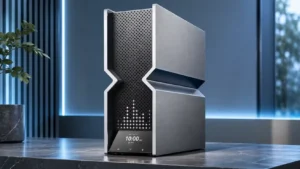
The winged shape is consistently described as striking, sleek, and closer to modern art than a conventional router.

TP-Link Archer BE900
4.8

The vertical hourglass housing and hidden antennas look distinctive and modern rather than like a conventional antenna-covered router.

Evidence available for one product

Other features

Ease of use
D-Link Aquila Pro AI R95No score yet
TP-Link Archer BE900
4.5

Simple device connection options make everyday use approachable.

Activity reports
D-Link Aquila Pro AI R95
4.5

AI-supported network reports add useful visibility through the Aquila Pro AI app.

TP-Link Archer BE900No score yet
Airtime efficiency
D-Link Aquila Pro AI R95
5.0

Concurrent smart devices, streams, calls, and games remained smooth, while OFDMA and related technologies kept many-client performance stable.

TP-Link Archer BE900No score yet
Auto-sensing Ethernet ports
D-Link Aquila Pro AI R95No score yet
TP-Link Archer BE900
4.5

Automatic detection of the connected Ethernet cable simplifies initial setup.

Automatic channel optimization
D-Link Aquila Pro AI R95
5.0

The AI Wi-Fi Optimiser continuously looks for less crowded channels, keeping interference management out of the user’s hands.

TP-Link Archer BE900No score yet
Automatic configuration
D-Link Aquila Pro AI R95
4.9

From creating suitable networks to changing channels and optimizing settings, the R95 handles much of the tuning automatically.

TP-Link Archer BE900No score yet
Band steering
D-Link Aquila Pro AI R95No score yet
TP-Link Archer BE900
2.0

Phones sometimes struggle to change bands when moving around the house.

Bandwidth management
D-Link Aquila Pro AI R95
5.0

The AI Traffic Optimiser directs bandwidth where it is needed most, reducing the need for manual tuning.

TP-Link Archer BE900No score yet
Beamforming effectiveness
D-Link Aquila Pro AI R95
5.0

Beamforming is cited alongside OFDMA and MU-MIMO as a reason the network remains stable with dozens of devices.

TP-Link Archer BE900No score yet
Client steering
D-Link Aquila Pro AI R95No score yet
TP-Link Archer BE900
2.5

Some phones do not switch bands smoothly as they move between rooms.

Configuration flexibility
D-Link Aquila Pro AI R95No score yet
TP-Link Archer BE900
4.6

There is considerable flexibility to separate bands and fine-tune settings, with advanced controls available in the browser.

Cross-brand mesh compatibility
D-Link Aquila Pro AI R95No score yet
TP-Link Archer BE900
1.5

A tested D-Link EasyMesh node could be added but failed to serve clients; matching TP-Link equipment worked instead.

Device compatibility
D-Link Aquila Pro AI R95No score yet
TP-Link Archer BE900
3.8

Broad device support is useful, but MLO compatibility and wireless speeds on particular phones can vary.

Expandability
D-Link Aquila Pro AI R95
5.0

The system can grow by linking additional AQUILA PRO AI routers into a broader mesh network.

TP-Link Archer BE900No score yet
Floor-to-floor coverage
D-Link Aquila Pro AI R95No score yet
TP-Link Archer BE900
4.0

A single unit can serve multiple floors, but reinforced floors and basements may weaken certain bands considerably.

Future upgrade readiness
D-Link Aquila Pro AI R95No score yet
TP-Link Archer BE900
4.0

The fast ports and Wi-Fi 7 capabilities offer headroom for future upgrades, but the early implementation drew criticism for immaturity.

Gaming optimization
D-Link Aquila Pro AI R95
4.9

Low latency, ample speed, and stable multi-device operation make the R95 especially strong for online gaming.

TP-Link Archer BE900No score yet
Heat management
D-Link Aquila Pro AI R95No score yet
TP-Link Archer BE900
2.5

The housing can become quite warm under testing, even with active cooling.

Included accessories
D-Link Aquila Pro AI R95No score yet
TP-Link Archer BE900
2.5

The included flat Ethernet cable was disliked by one user who preferred to use a different cable.

ISP compatibility
D-Link Aquila Pro AI R95No score yet
TP-Link Archer BE900
4.5

A tested 2Gbps fiber connection reached its full speed over Ethernet.

Launch quality control
D-Link Aquila Pro AI R95No score yet
TP-Link Archer BE900
2.0

The original early-release Wi-Fi 7 implementation was criticized as unfinished.

Link aggregation
D-Link Aquila Pro AI R95No score yet
TP-Link Archer BE900
5.0

Combining two 2.5Gbps links for NAS connectivity helped increase local transfer performance.

Mesh coverage
D-Link Aquila Pro AI R95
5.0

Adding compatible units is intended to create comprehensive coverage with no dead spots.

TP-Link Archer BE900No score yet
Mesh scalability
D-Link Aquila Pro AI R95
5.0

Multiple AQUILA PRO AI routers can be connected easily, giving the system room to grow with a larger home.

TP-Link Archer BE900No score yet
Mid-range speed
D-Link Aquila Pro AI R95No score yet
TP-Link Archer BE900
4.5

Midrange wireless speeds remain strong in testing, although throughput depends on the device and band.

Packaging quality and presentation
D-Link Aquila Pro AI R95No score yet
TP-Link Archer BE900
5.0

The substantial packaging makes for a pleasing unboxing experience and presents the router neatly.

Power consumption
D-Link Aquila Pro AI R95No score yet
TP-Link Archer BE900
2.5

Power consumption is higher than typical routers, especially during downloads and heavier activity.

Quality of service
D-Link Aquila Pro AI R95
5.0

Automatic QoS behavior intelligently prioritizes bandwidth for the traffic that needs it most.

TP-Link Archer BE900No score yet
Remote management
D-Link Aquila Pro AI R95No score yet
TP-Link Archer BE900
4.5

Tether makes remote monitoring and management convenient after account setup.

Settings organization
D-Link Aquila Pro AI R95No score yet
TP-Link Archer BE900
4.0

The app's settings are arranged in a relatively clear, intuitive interface.

SFP+ connectivity
D-Link Aquila Pro AI R95No score yet
TP-Link Archer BE900
4.8

The SFP+ combo port adds flexibility for compatible fiber connections.

Status light control
D-Link Aquila Pro AI R95No score yet
TP-Link Archer BE900
4.8

Both front screens can be dimmed or disabled, and can be scheduled to turn off overnight.

Status light usefulness
D-Link Aquila Pro AI R95No score yet
TP-Link Archer BE900
5.0

The display-based approach avoids the annoyance of conventional blinking status lights.

Subscription requirements
D-Link Aquila Pro AI R95No score yet
TP-Link Archer BE900
2.3

HomeShield charges extra for more advanced parental controls, scheduling and security functions.

Traffic prioritization
D-Link Aquila Pro AI R95
5.0

The AI Traffic Optimiser receives strong praise for directing bandwidth to the most important activity automatically.

TP-Link Archer BE900No score yet
Usage schedules
D-Link Aquila Pro AI R95No score yet
TP-Link Archer BE900
3.0

Basic scheduling is available for free, but more detailed schedules and usage restrictions require a subscription.

USB storage sharing
D-Link Aquila Pro AI R95No score yet
TP-Link Archer BE900
3.0

USB storage sharing is useful, though configuration requires the browser and transfer speeds should not be expected to rival dedicated fast storage.

Video conferencing optimization
D-Link Aquila Pro AI R95
5.0

MLO and stable performance reduce interruptions and improve responsiveness during video calls.

TP-Link Archer BE900No score yet
Weight and handling
D-Link Aquila Pro AI R95No score yet
TP-Link Archer BE900
3.3

The unit is heavy compared with some alternatives, although one buyer found much of the unboxing weight came from the packaging.

Wireless backhaul
D-Link Aquila Pro AI R95No score yet
TP-Link Archer BE900
2.0

A dedicated wired backhaul is preferable when mesh bandwidth demands are high; the split 5GHz band is not necessarily a strong wireless backhaul solution.

Ownership and support

160 MHz support
D-Link Aquila Pro AI R95No score yet
TP-Link Archer BE900
2.0

Splitting 5GHz into two bands restricts the room available for wide 160MHz channels, particularly when DFS channels are involved.

Customer support
D-Link Aquila Pro AI R95No score yet
TP-Link Archer BE900
4.5

Free expert setup assistance is a welcome option for buyers who need extra help.

Matter support
D-Link Aquila Pro AI R95
4.5

Matter is presented as helping lights, plugs, and cameras communicate more efficiently while reducing strain on the wider network.

TP-Link Archer BE900No score yet
MIMO support
D-Link Aquila Pro AI R95
5.0

MIMO-based operation helps the router stay stable with dozens of connected devices.

TP-Link Archer BE900No score yet
Product support lifespan
D-Link Aquila Pro AI R95No score yet
TP-Link Archer BE900
1.5

The original V1 revision's reported end-of-life status is disappointing for early adopters; check the hardware revision before buying.

Quad-band support
D-Link Aquila Pro AI R95No score yet
TP-Link Archer BE900
3.6

The four-band layout adds capacity, but its split 5GHz design can be less flexible than a second 6GHz band.

Security update support
D-Link Aquila Pro AI R95No score yet
TP-Link Archer BE900
2.0

The V1 revision was reported to have reached the end of firmware support, a concern for ongoing security maintenance.

Setup guidance
D-Link Aquila Pro AI R95No score yet
TP-Link Archer BE900
4.5

Step-by-step prompts and QR codes help guide users through the initial setup.

Tri-band support
D-Link Aquila Pro AI R95
5.0

The 2.4GHz, 5GHz, and dedicated 6GHz arrangement earns praise for combining legacy-device support with high-end Wi-Fi 7 speed.

TP-Link Archer BE900No score yet
Upgrade value
D-Link Aquila Pro AI R95No score yet
TP-Link Archer BE900
2.8

A move from an older router can improve throughput, but the extra cost over less expensive Wi-Fi 7 models is difficult to justify for many homes.

USB port support
D-Link Aquila Pro AI R95No score yet
TP-Link Archer BE900
4.5

Extra USB connectivity is handy for households with external devices and wired network needs.

WPA3 support
D-Link Aquila Pro AI R95
4.8

WPA3 encryption is repeatedly highlighted as an important source of confidence for home-network security.

TP-Link Archer BE900No score yet

Controls and connectivity

Access controls
D-Link Aquila Pro AI R95
3.8

Family access features are useful in some households, but the limited filtering system keeps them from feeling fully developed.

TP-Link Archer BE900No score yet
Node pairing ease
D-Link Aquila Pro AI R95
5.0

Compatible AQUILA PRO AI units are described as easy to connect into a larger mesh.

TP-Link Archer BE900No score yet
On-router display customization
D-Link Aquila Pro AI R95No score yet
TP-Link Archer BE900
4.2

Custom messages, animations and graphics are fun to personalize, but may not justify the extra cost on their own.

Smart home compatibility
D-Link Aquila Pro AI R95
4.7

Smart-home devices continued running smoothly under load, while dedicated IoT zones and Matter-related efficiency strengthen connected-home use.

TP-Link Archer BE900No score yet
Touchscreen responsiveness
D-Link Aquila Pro AI R95No score yet
TP-Link Archer BE900
4.0

The touchscreen is easy to interact with, but its scrolling is not as fluid as a smartphone's.

Web interface quality
D-Link Aquila Pro AI R95No score yet
TP-Link Archer BE900
4.3

The browser interface offers a broad selection of advanced network controls beyond what is accessible in Tether.

Wi-Fi 6 support
D-Link Aquila Pro AI R95
4.5

Owners of Wi-Fi 5 and Wi-Fi 6 devices can still use the secondary 2.4GHz/5GHz network without giving up strong performance.

TP-Link Archer BE900No score yet
Wi-Fi 6E support
D-Link Aquila Pro AI R95No score yet
TP-Link Archer BE900
4.0

Wi-Fi 6E clients can achieve fast speeds, though results vary across devices and may not match newer Wi-Fi 7 hardware.

Performance

Advertised speed accuracy
D-Link Aquila Pro AI R95No score yet
TP-Link Archer BE900
2.0

The aggregate bandwidth figure is ambitious; splitting a band can inflate the headline number without a comparable practical benefit.

MU-MIMO performance
D-Link Aquila Pro AI R95
5.0

MU-MIMO is part of the technology mix credited with preserving performance in crowded, device-heavy networks.

TP-Link Archer BE900No score yet
OFDMA performance
D-Link Aquila Pro AI R95
5.0

OFDMA contributes to stable service when many clients are active at the same time.

TP-Link Archer BE900No score yet
On-router display usefulness
D-Link Aquila Pro AI R95No score yet
TP-Link Archer BE900
4.4

Dual front screens provide useful status information, easy touch controls and guest QR codes, although some buyers view them as expensive extras.

Operating noise
D-Link Aquila Pro AI R95No score yet
TP-Link Archer BE900
5.0

The active cooling fan was inaudible in use.

Performance under load
D-Link Aquila Pro AI R95
5.0

Homes full of streaming, gaming, calls, and smart devices ran smoothly without hiccups, making heavy simultaneous use a standout strength.

TP-Link Archer BE900No score yet
Upload performance
D-Link Aquila Pro AI R95No score yet
TP-Link Archer BE900
4.3

Upload speeds are often fast, although some tests show a greater drop at distance than downloads.

Comfort and build

Power adapter size
D-Link Aquila Pro AI R95No score yet
TP-Link Archer BE900
2.0

The external power brick can be awkward to position around the router.

Size and footprint
D-Link Aquila Pro AI R95No score yet
TP-Link Archer BE900
3.2

Hidden antennas make the tower less sprawling than some rivals, but it is still a large, tall router that needs dedicated space.


Other Top Routers to Consider

#2 GL.iNet GL-BE3600 Slate 7
4.5

Best for frequent travel, fast VPNs, dual 2.5GbE and resilient multi-WAN. Skip it if you need full 6GHz/320MHz Wi‑Fi 7, mesh, or desktop-class USB storage and long-range indoor coverage.

Pros: VPN client support, value for money

Cons: 6 GHz performance, USB storage sharing

#3 GL.iNet Flint 2 (GL-MT6000)
4.4

Exceptional VPN speeds, strong Wi-Fi 6 coverage and extensive OpenWrt controls make the Flint 2 a compelling value. Its advanced setup, missing 6GHz band and firmware-specific caveats matter if you...

Pros: setup ease, configuration flexibility

Cons: Wi-Fi 7 support, USB storage sharing

#4 MSI Roamii BE Pro
4.3

Best for affordable tri-band Wi-Fi 7, abundant 2.5GbE ports, and deep free controls. Skip it if you need consistently strong garden coverage, foolproof app setup, or proven top-tier speeds across...

Pros: value for money, design and appearance

Cons: node pairing ease, outdoor coverage

#5 ASUS ROG Strix GS-BE18000
4.3

Seven 2.5GbE LAN ports, fast Wi-Fi 7 and excellent configurability make this a versatile gaming and home-network hub. The missing 10GbE port, uneven long-range 2.4GHz performance and regional AFC restrictions...

Pros: Wi-Fi speed, Ethernet port count

Cons: 10 GbE support, WAN port speed