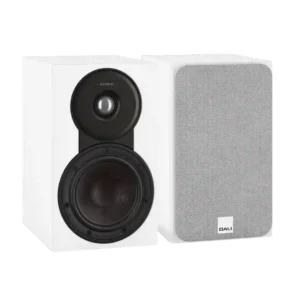
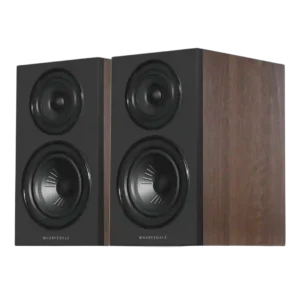
Dali Sonik 1
Where It Has the Edge
- Small-room suitability is 4.9 vs 4.0. Small rooms, bedrooms, offices and compact living spaces are ideal matches. The speakers can also fill medium rooms,...

Scorata scores summarize analyzed review evidence on a 1–5 scale; they are not laboratory measurements or a simple average of customer star ratings. Feature scores summarize the reviews covering that feature. The overall score averages feature scores within each review, then combines review averages. When both expert and customer evidence are available, those two groups receive equal weight. Products can have different review coverage, so small score gaps do not establish a winner.
Recommendations prioritize important features for the category, with a score of at least 3.5, a gap of at least 0.25 points and at least two supporting reviews per product. Features with widely varying scores or broad connectivity contexts are excluded from recommendations. These safeguards do not establish statistical significance.
Quick verdict
The review evidence points to a tradeoff: Small-room suitability versus Included accessories and Tonal balance. Choose according to which strengths matter more to you; the overall score alone does not settle that choice.
Choose Dali Sonik 1 for Small-room suitability.
Choose Wharfedale Diamond 12.1i for Included accessories and Tonal balance.
Scores are out of 5. Missing scores mean missing review evidence, not a missing feature.
The Sonik 1 handles loud signals with very little audible distortion, maintaining clarity and control when pushed.
Very high-volume stress is the one clear distortion concern: one reviewer heard the sound harden and deteriorate when the speakers were driven beyond sensible levels. At normal listening levels, that behavior was not reported.
Dali includes useful rubber feet for shelf and wall placement, but the package is otherwise sparse and does not include speaker cables.
The magnetic grilles are useful and keep the front looking clean without visible mounting holes. Some reviewers prefer the drivers uncovered aesthetically, so the grilles are a welcome option rather than an essential part of the look.
Small rooms, bedrooms, offices and compact living spaces are ideal matches. The speakers can also fill medium rooms, though desktop near-field use may feel larger than necessary.
The speakers work very well in small rooms and desktop-style systems, and some reviewers had success fairly near walls. Their cabinet depth and rear port make literal shallow-bookshelf placement much less convincing than the name suggests.
Construction is generally praised for careful detailing, rigid materials and a premium feel. One first-look reviewer was less impressed by the flat MDF front, squared edges and vinyl treatment.
Cabinet execution is repeatedly praised as unusually sophisticated for the price, with solid construction, targeted bracing and low-resonance behavior. Reviewers consistently describe the enclosure as sturdy and well engineered.
Despite their compact cabinets, the Sonik 1 can play with convincing scale and fill small to medium rooms. They stay composed as volume rises rather than sounding strained.
The 12.1i can sound surprisingly room-filling and lively above modest levels, but there is a ceiling. One reviewer heard the sound harden when pushed to extreme volume, and another noted the small cabinets cannot deliver unlimited scale.
The overall balance is rich, natural and full without obvious excess. A mild upper-frequency emphasis keeps it from sounding perfectly neutral in every setup.
Most reviewers hear an even, balanced response with a mildly warm or relaxed tilt rather than a bright one. One listening test found a track that emphasized the frequency extremes, but the broader pattern is smooth and controlled.
Even busy recordings remain organized, clear and musically connected. Bass, mids and treble keep pace with one another without the presentation falling apart.
Separation and coherence work together well: instruments get breathing room without the presentation falling apart into disconnected pieces. Reviewers describe the result as unified, controlled and well organized.
Vocals are consistently singled out for accuracy, presence and emotional immediacy. Voices sound natural, clearly focused and unusually tangible for speakers this size.
Voices come through with excellent clarity, natural timbre and convincing weight. Reviewers repeatedly praise how easily phrasing, texture and vocal character remain intelligible.
The Sonik 1 is less demanding than its sensitivity figures might suggest. Reviewers had excellent results with common 50-60 watt integrated amplifiers and did not find exotic amplification necessary.
Most reviewers find the 12.1i easy to drive and forgiving of amplifier choice, with modest power being sufficient. One reviewer did need more gain than with larger Wharfedales before the speakers fully opened up.
Fine details come through clearly, from individual string plucks to dense layers in complex mixes. Reviewers repeatedly hear more articulation than they expect from compact entry-level speakers.
Fine detail is a major strength, with reviewers hearing texture, layered information and subtle phrasing clearly. A few comparisons suggest pricier or brighter rivals can expose a little more top-end information.
Fast attacks, crescendos and demanding passages are handled with confidence. The Sonik 1 keeps bass and transients controlled instead of becoming slow or congested.
The speakers are lively and dynamically capable once given a little volume, tracking attack, rhythm and busy passages with little strain. Moderate listening levels are enough to unlock much of their energy.
The single-wire binding posts are simple and well made, and most reviewers did not see the lack of bi-wiring as a serious loss. Cable enthusiasts may still prefer a more flexible terminal arrangement.
The wired speaker terminals receive a rare direct compliment: the multi-way binding posts are described as good quality. This is a straightforward passive-speaker connection rather than a connectivity-heavy design.
Treble is crisp, detailed and spatially revealing, but several reviewers hear a mild forwardness. Amplifier character, toe-in and room placement can make the upper range sound smoother or more prominent.
Treble is smooth, controlled and notably non-fatiguing, with enough bite and detail to stay lively. The tradeoff is a slightly safe or rolled-off top end that can sound less open and sparkly than some rivals.
Bass is fast, punchy and far fuller than the cabinet size suggests. Deep-bass listeners should note that ultimate weight is limited and the rear port does much of the low-end work.
Bass is one of the standout strengths: deep for the size, tuneful, punchy and generally well controlled. Reviewers also hear improved articulation over the predecessor, with only occasional comments about slight muddiness or ultimate extension.
Imaging is a major strength, with sharply located center vocals and convincing three-dimensional placement. The stage can extend beyond the cabinets and remain easy to follow.
Imaging is consistently well organized, with strong separation, stable placement and a stage that often extends beyond the cabinets. The presentation favors coherence over exaggerated holographic effects.
The central image can appear slightly above the cabinets, adding believable vertical scale to vocals and instruments.
The stage can have convincing height and depth, with one reviewer describing it as expansive across the room. Another found the image well placed but not especially tall or holographic, so height is good rather than spectacular.
The clean, modern styling blends easily into living rooms and looks premium with the grilles installed. The squared front and exposed design details are more divisive for buyers who prefer a softer, less conspicuous look.
The visual design is repeatedly described as mature, classic and more expensive-looking than the price implies. Reviewers like the restrained modern styling rather than flashy or overtly retro cues.
Performance is widely considered excellent for the money, with detail, bass and refinement that resemble pricier speakers. The main value concern comes from the high US price and strong cheaper alternatives within Dali’s lineup.
Value is the strongest consensus point: reviewers repeatedly call the 12.1i outstanding, brilliant or unusually competitive for the money. Several say it performs like a speaker from a noticeably higher price bracket.
The Sonik 1 is approachable to connect and works with ordinary passive-speaker systems, but rear-port placement and toe-in can take some experimentation. Once positioned, the sweet spot is easy to enjoy.
Setup is generally easy, and several reviewers found the speakers simple to position. The rear-firing port still calls for some breathing room and may require a little experimentation near walls.
Across vinyl, CDs and streaming, the Sonik 1 sounds engaging, versatile and musically expressive. It handles delicate vocals, dense rock and rhythmic material with equal confidence.
Across rock, electronic, jazz, classical, vocals and other material, the 12.1i is described as engaging, musical and easy to live with. Its broad genre versatility is one of the clearest reasons reviewers recommend it.
Several reviewers say the speakers improve after some playing time, opening up and becoming richer. They are best judged after a few hours rather than straight out of the box.
In a direct TV test, presenter speech had convincing weight, inflection and presence, making spoken content easy to follow. Coverage is limited to one reviewer, but the result was strongly positive.
One reviewer specifically considers the Diamond 12.1i highly appropriate for a multichannel AV system. The wider Diamond family also makes that use case a natural fit, but direct evaluative coverage is limited.
Build, finish and general execution feel more premium than entry-level pricing suggests. Reviewers repeatedly describe the speakers as solid, confidence-inspiring and refined rather than cheaply made.
Packaging is a small but clearly praised detail, with sturdy foam protection and a notably premium-feeling unboxing experience. The speakers arrive well protected despite their budget positioning.
Recording tolerance is mixed: one reviewer finds the relaxed voicing easy with varied source quality, while another says compressed or poorly mastered tracks can sound flat and exposed. Better recordings consistently bring out the strongest performance.
Quiet listening is the main recurring sonic caveat. The 12.1i remains listenable and balanced at low levels, but several reviewers find it reserved, less resolving or simply less special until the volume rises.
The midrange is consistently clean, smooth and articulate, with vocals and instruments remaining natural and distinct. Some rivals offer a little more openness or insight, but the 12.1i's midband is still a strong point.
Wide dispersion spreads sound evenly enough that listeners do not need to remain locked into a narrow central seat.
Overall sound quality is exceptionally well regarded for the price, combining balance, detail, bass weight and musical ease. The main qualifications are softer low-level performance and limited party-level output.
The bass is substantial enough that one reviewer never felt a need for a subwoofer at normal levels. Deep-bass listeners may still want one for extension below roughly 60Hz.
Warranty support may vary by market, and one reviewer cautions that genuine repair parts could be harder to obtain locally.
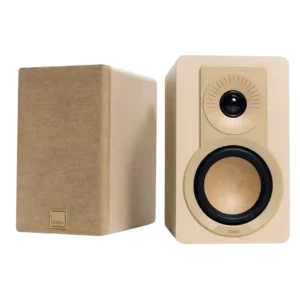
Choose the Kupid for lively, detailed sound in a desk or small-room system where compact size matters. Skip it if you need deep bass, huge-room output, or want to pair...
Pros: Bass performance, Value for money
Cons: Amplifier power requirements, Break-in period

Choose these if you want detailed, room-filling sound, excellent connectivity, and premium styling in a compact powered pair. Skip them if you need effortless remote control, native streaming services, HDMI...
Pros: Overall product quality, Overall sound quality
Cons: Remote control usability, Control button responsiveness

Choose the Coda W if you want big, precise stereo sound, strong bass, HDMI ARC and simple turntable/desktop connectivity without a separates stack. Skip it if built-in Wi-Fi/multi-room streaming, compact...
Pros: Stereo imaging accuracy, Aesthetic design / Finish options
Cons: Smart features, EQ customization
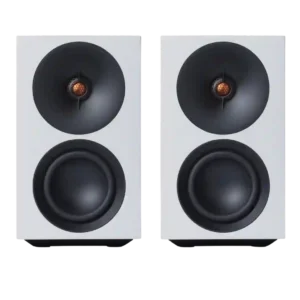
Best for compact rooms when you want expansive stereo imaging, polished build, easy setup, and punchy sound without a separate amp. Skip it if you need reference-neutral mids, deep sub-bass,...
Pros: Design and aesthetics, Small-room suitability
Cons: Distortion at high volume, On-device controls