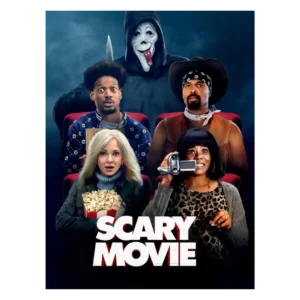
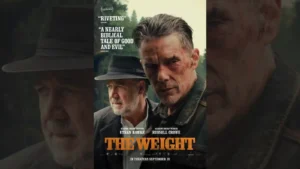
Scary Movie
Where It Has the Edge
- entertainment value is 4.3 vs 3.9. The overall experience depends strongly on tolerance for crude, absurd, deliberately lowbrow comedy. Fans can have a relaxed,...

Scorata scores summarize analyzed review evidence on a 1–5 scale; they are not laboratory measurements or a simple average of customer star ratings. Feature scores summarize the reviews covering that feature. The overall score averages feature scores within each review, then combines review averages. When both expert and customer evidence are available, those two groups receive equal weight. Products can have different review coverage, so small score gaps do not establish a winner.
Recommendations prioritize important features for the category, with a score of at least 3.5, a gap of at least 0.25 points and at least two supporting reviews per product. Features with widely varying scores or broad connectivity contexts are excluded from recommendations. These safeguards do not establish statistical significance.
Quick verdict
The review evidence points to a tradeoff: entertainment value versus value for money and humor. Choose according to which strengths matter more to you; the overall score alone does not settle that choice.
Choose Scary Movie for entertainment value.
Choose The Weight for value for money and humor.
Scores are out of 5. Missing scores mean missing review evidence, not a missing feature.
The satire rarely develops a clear point of view, leaving the social and industry commentary feeling toothless, confused, or needlessly hostile.
Reviewers respond strongly to the film's ideas about labor, class, institutional power, greed, and solidarity. Even when the politics are called direct or blunt, the social message is generally seen as meaningful rather than disposable.
As a horror spoof, the movie often functions more like a reference reel than a complete comedy. It recognizes many recent films but rarely develops a sharp point of view about them.
The film is widely seen as a satisfying throwback survival thriller, with its 1970s-style grit and character-driven adventure earning repeated praise. Even mixed reviews generally recognize the appeal of its old-fashioned genre approach.
The movie has little thematic substance beyond nostalgia, franchise self-commentary, and broad complaints about modern culture.
Many critics appreciate the survival story's deeper interest in class, labor, greed, solidarity, fatherhood, and institutional cruelty. Others find those ideas blunt, shallow, or insufficiently explored.
The Scream-inspired family storyline offers a workable spine, but it quickly dissolves into a nonsensical chain of sketches with little investment, continuity, or character consequence.
The core premise—a desperate father leading a dangerous gold transport—is often called a strong, well-told yarn with clear stakes. Less enthusiastic critics find the execution saggy, familiar, or weaker than the setup.
Michael Tiddes keeps the references visually legible but struggles to impose rhythm, focus, or connective tissue on the overloaded material.
Padraic McKinley's debut is frequently praised for confidence, atmosphere, and physical staging, especially in the survival set pieces. Dissenting reviews fault uneven visual choices, limited suspense, or action coverage that sacrifices clarity.
The comedy is wildly inconsistent. Inspired sight gags, fourth-wall jokes, and committed delivery earn real laughs, but the rapid-fire barrage contains far more stale, obvious, stretched, or recycled punchlines.
Humor is used sparingly but effectively, with reviewers noticing both subtle comic touches in the script and lighter moments that relieve the otherwise grim trek.
The script has a few clever concepts but relies too heavily on recognition, repeated bits, and surface-level references. Many setups are stretched past their punchlines or never develop into proper jokes.
The script earns praise for its premise, momentum, character relationships, and class themes, but reactions are uneven. Critics of it point to contrivances, thin secondary characters, forced beats, and shortcuts in the final act.
The opening and final act move best, while the middle loses momentum through long, repetitive sketches and abrupt detours. Even the short runtime can feel laborious when jokes fail.
Pacing is one of the most divided attributes. Positive reviews praise sustained momentum and a confident clip, while critics of the film point to a long setup, a sagging middle, or an overlong runtime.
The movement from setup to setup feels bumpy and abrupt, making the film play like loosely assembled sketches rather than a smoothly escalating comedy.
Editing is a major point of disagreement: some critics call it sharp, intentional, or even stunning, while others say fast cuts and disjointed transitions make climactic action rushed or hard to follow.
The central story follows the modern Scream template extremely closely, often feeling more like a crude restaging than an inventive parody.
Some viewers enjoy the story's surprises and resistance to cookie-cutter plotting, but others see predictable bones and familiar turns beneath the polished execution.
The final stretch is consistently stronger than the middle, with darker swings, legacy-cast payoffs, and a more focused climax that finally delivers some of the movie’s biggest laughs.
The finale divides opinion. Some find the hard-won resolution entertaining and emotionally earned, while others think its cheerful turn clashes with the story's darker themes or arrives too neatly.
The film lacks a stable tonal throughline, jumping from nostalgia to gross-out comedy, political provocation, and unrelated parody without smooth transitions.
The film's tone is a repeated concern, especially when its grim, punishing journey gives way to a sunnier resolution or an anachronistic musical flourish. Reviewers who raise the issue generally find those shifts mismatched.
The younger characters receive more setup than expected and can feel better defined than comparable legacy-sequel characters, although many are still reduced to one-note traits.
Some reviews find the travelers distinct, sympathetic, and well-defined enough for their changing dynamics to matter. Others see thin archetypes, an over-idealized protagonist, and underwritten supporting characters.
The cinematography accurately recreates recognizable horror imagery and helps the visual parodies read immediately.
The wilderness photography is one of the most consistently praised crafts, with reviewers admiring its foreboding landscapes, period texture, and composed imagery. A few object to murky lighting, shallow focus, or claustrophobic framing.
The handling of gender, pronouns, queer identities, and Gen-Z politics is the movie’s most contentious weakness. Several jokes feel dated or cruel, though a minority view the everyone-is-a-target approach as self-aware and inclusive.
Anna's assimilation history gives the film some meaningful cultural texture, but multiple reviewers criticize the Native character's narrative function or say the racial politics are too bluntly handled.
The late action-comedy material gives Cindy a welcome showcase, with energetic fighting and physical gags that improve the final act.
The physical set pieces—especially the rope bridge, river crossing, and later confrontations—are often tense, tactile highlights. A minority find some action confusingly cut, implausible, or less exciting than the setup promises.
The basic Ghostface setup is easy to grasp, but the movie repeatedly abandons it for disconnected sketches, crowded cameos, and characters who vanish for long stretches.
Several reviewers report moments of confusion, especially during fast-cut action or late-story developments. The underlying mission remains simple, but visual and narrative transitions sometimes make execution harder to follow.
The 96-minute length is compact and welcome on paper, but weak comic rhythm can still make the movie feel slow despite its short running time.
The nearly two-hour length is a recurring drawback, with several reviewers arguing that tighter cuts would improve the film. One more positive assessment considers the 113-minute ride an uncomplicated, worthwhile use of time.
Cindy and Brenda’s rapport remains one of the movie’s strongest pleasures, and the returning ensemble often clicks when allowed to share scenes. The movie does not give that chemistry enough room.
The strongest relationship work comes from the believable camaraderie and friction within the group and the understated connection between Murphy and Anna. A few reviews find some alliances too thinly developed.
The scattered laughs and nostalgic reunion are not enough to make the film an easy theatrical recommendation for most viewers.
Most direct recommendations say the film is worth seeking out, and several specifically encourage seeing its physical set pieces on a big screen. More qualified praise still frames it as worthwhile genre entertainment.
The overall experience depends strongly on tolerance for crude, absurd, deliberately lowbrow comedy. Fans can have a relaxed, enjoyable time, while others may find the long stretches between strong jokes exhausting.
For many reviewers, the straightforward adventure delivers sturdy, old-school entertainment with enough peril and character interplay to stay engaging. More negative critics find it merely agreeable or weighed down by sluggish stretches.
The music choices help the parodies resemble their source films and contribute to the movie’s strongest stylistic imitations.
The music choices outside the score are much more divisive, especially the anachronistic rock needle drop near the ending. A few viewers enjoy that choice, while several critics call it jarring or tonally wrong.
The committed cast is the clearest strength, especially the returning leads and Olivia Rose Keegan. Some performers are underused or trapped in tired routines, but they frequently make thin material more watchable.
The cast is widely praised for giving the rugged material credibility, with the strongest notices going to Ethan Hawke and several supporting players. Even more reserved assessments still describe the ensemble as solid.
Anna Faris and Regina Hall remain the movie’s strongest leads, repeatedly creating laughs through timing, expression, and total commitment.
Ethan Hawke's restrained, gravel-voiced turn is the clearest point of consensus, repeatedly described as the film's anchor and among his strongest recent work. The main reservation is that a few critics find him less convincing in full action-hero mode.
The younger ensemble and cameo players are energetic and game, with several charismatic turns helping individual sketches land.
Russell Crowe, Julia Jones, Avi Nash, Austin Amelio, and the broader ensemble receive frequent praise for adding menace, warmth, or personality around Hawke. Even reviews critical of the characters often distinguish the performances as strong.
The movie is built primarily for viewers who already enjoy the first two entries and early-2000s Wayans humor. Newcomers and younger audiences are less likely to connect with its references, nostalgia, and deliberately dated style.
Several critics describe the film as crowd-pleasing, theater-worthy adult entertainment, particularly for viewers who miss old-fashioned survival adventures. Others think its slow stretches make streaming a better fit.
The recreated horror locations are impressively recognizable and often make the parodies funnier before a joke is even delivered.
Sets, period vehicles, worn environments, and other production details are consistently credited with making the Depression-era world believable and textured.
The costumes closely mirror the Scream requel’s character styling, helping the visual parody register immediately.
Period clothing, especially the worn workwear and denim, is repeatedly credited with helping the 1933 setting feel lived-in and authentic.
The movie convincingly imitates the look of its horror targets, with sets, framing, and visual identities that often resemble the source films closely.
The weathered 1970s throwback look, natural environments, and period imagery are frequently admired. Critics who dissent complain about overly murky images, shallow focus, or stylized framing that distracts from the action.
The dialogue is generally praised as sharp and purposeful, with several reviewers singling out the writing enough to want every line to land clearly. Even positive accounts note that some delivery can be very quiet.
The drama is strongest when the performances keep the human stakes grounded between bursts of action. Reviewers who mention these quieter scenes often find them among the film's best material.
Murphy's separation from his daughter gives the film a strong emotional anchor, and several critics find the opening or quieter character beats genuinely affecting. Others feel the movie pushes the pathos too hard or leaves emotional potential underdeveloped.
Real locations and tactile, practical filmmaking are praised for giving the danger physical credibility and a rugged texture that more polished studio action can lack.
The grounded locations, practical texture, and believable problem-solving often make the danger feel immediate. However, a few major set-piece choices—especially the bridge solution—are criticized as forced or implausible.
The quiet connection between Murphy and Anna works best when treated as mutual respect and tenderness rather than a conventional romance. Several critics, however, find the romantic thread unnecessary, thin, or underdeveloped.
The metallic, propulsive score is often praised for adding dread, momentum, and scale to the journey. Some critics find it distracting, overbearing, or stylistically out of place.
The relentless sexual material is often judged excessive, repetitive, or strangely ineffective rather than genuinely transgressive or funny.
The bridge and river sequences generate the strongest agreement, with many reviewers describing them as gripping or nerve-racking. Still, a substantial minority feel the film never sustains the white-knuckle tension its premise suggests.
One reviewer approves of the rough, unglamorized handling of violence because it carries emotional impact rather than feeling like polished action spectacle.
The period setting is largely praised for researched detail, convincing production texture, and Depression-era context. A few critics question specific historical or geographic choices, including how convincingly the Pacific Northwest is represented.
Rewatch interest is mixed and sparsely discussed: one critic predicts a long afterlife as a comfort-watch 'dad movie,' while others expect it to be remembered pleasantly rather than revisited often.
Creaking forests, environmental texture, and impact-heavy action sound are frequently praised for increasing immersion and tension. One notable complaint is a dialogue mix so quiet that lines become difficult to hear.
The 1933 wilderness and labor-camp setting are often described as immersive, lived-in, and carefully developed, giving the heist real social and physical context.

Choose this inventive, unsettling documentary for fearless questioning, dark humor, and unpredictable storytelling. Skip it if you want a short, straightforward exposé with definitive answers.
Pros: originality, humor

Best for a hypnotic, bookish mystery with tactile visuals and cerebral chills. Skip it if reading-heavy, attention-demanding storytelling sounds more exhausting than exciting.
Pros: Atmosphere, cinematography
Cons: audience appeal

Best for an intimate, searching documentary that rewards focused attention and invites discussion. Skip it when devastating grief, addiction footage, and unresolved family tensions would be too much.
Pros: emotional impact, theme depth

Best for patient suspense, an unforgettable score, and an unsettling masked killer. Skip it for very young children or if you want to avoid intense scares; its restrained kills also...
Pros: directing quality, score quality
Cons: message quality