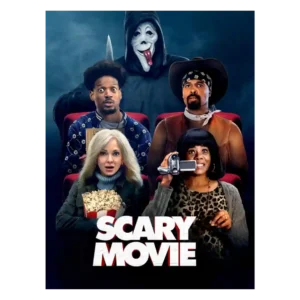
Scary Movie
Where It Has the Edge
No clear scored advantage over the other product.

Scorata scores summarize analyzed review evidence on a 1–5 scale; they are not laboratory measurements or a simple average of customer star ratings. Feature scores summarize the reviews covering that feature. The overall score averages feature scores within each review, then combines review averages. When both expert and customer evidence are available, those two groups receive equal weight. Products can have different review coverage, so small score gaps do not establish a winner.
Recommendations prioritize important features for the category, with a score of at least 3.5, a gap of at least 0.25 points and at least two supporting reviews per product. Features with widely varying scores or broad connectivity contexts are excluded from recommendations. These safeguards do not establish statistical significance.
Quick verdict
The available evidence supports the recommendation below, but does not establish an overall winner. Check the remaining features against your priorities.
There is not enough comparable review evidence to recommend Scary Movie over the other product.
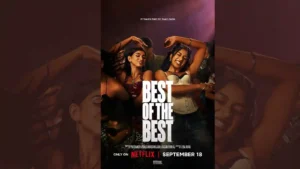
Choose Best of the Best for directing quality and plot clarity.
No clear scored advantage over the other product.
Scores are out of 5. Missing scores mean missing review evidence, not a missing feature.
The satire rarely develops a clear point of view, leaving the social and industry commentary feeling toothless, confused, or needlessly hostile.
Reviewers respond well to its messages about friendship, self-definition, living fully in the present, and choosing a life on your own terms.
The film lacks a stable tonal throughline, jumping from nostalgia to gross-out comedy, political provocation, and unrelated parody without smooth transitions.
The movie is praised for keeping its satire, emotion, songs, and coming-of-age comedy cohesive rather than letting the music-heavy format overwhelm the story.
As a horror spoof, the movie often functions more like a reference reel than a complete comedy. It recognizes many recent films but rarely develops a sharp point of view about them.
Dance-movie fans are the core audience: many reviewers see it as a welcome, highly enjoyable throwback, while a few feel its familiar formula keeps it from becoming memorable.
The movie has little thematic substance beyond nostalgia, franchise self-commentary, and broad complaints about modern culture.
The film gets strong marks for friendship, identity, and sisterhood, but one critic argues that deeper cultural pressures on South Asian women are raised without being fully explored.
Michael Tiddes keeps the references visually legible but struggles to impose rhythm, focus, or connective tissue on the overloaded material.
Lena Khan is repeatedly praised for energetic, clear direction that lets performers and dance routines breathe while keeping the tone buoyant.
The basic Ghostface setup is easy to grasp, but the movie repeatedly abandons it for disconnected sketches, crowded cameos, and characters who vanish for long stretches.
The story is generally easy to follow and its many threads come together cleanly, even when the structure is simple.
The relentless sexual material is often judged excessive, repetitive, or strangely ineffective rather than genuinely transgressive or funny.
A reviewer notes some mention of sex but still considers the movie a comfortable family watch, indicating approval of the relatively restrained level.
The handling of gender, pronouns, queer identities, and Gen-Z politics is the movie’s most contentious weakness. Several jokes feel dated or cruel, though a minority view the everyone-is-a-target approach as self-aware and inclusive.
Most reviewers celebrate the specific South Asian-American setting, dance traditions, and female friendship at the center. A minority argue that parts of the writing feel out of touch or would benefit from deeper female authorship.
The Scream-inspired family storyline offers a workable spine, but it quickly dissolves into a nonsensical chain of sketches with little investment, continuity, or character consequence.
The friendship-centered story is widely seen as warm, relatable, and effective even when simple. The biggest weakness is that several reviewers find the formula too familiar or the later conflict too simplified.
The opening and final act move best, while the middle loses momentum through long, repetitive sketches and abrupt detours. Even the short runtime can feel laborious when jokes fail.
Pacing ranges from top-notch and rhythmically satisfying to noticeably slower once repeated friendship conflict dominates the second half.
The script has a few clever concepts but relies too heavily on recognition, repeated bits, and surface-level references. Many setups are stretched past their punchlines or never develop into proper jokes.
The screenplay earns frequent praise for structure, wit, cultural specificity, and ensemble balance, but critics also point to contrivances, thin supporting characters, and derivative plotting.
The movement from setup to setup feels bumpy and abrupt, making the film play like loosely assembled sketches rather than a smoothly escalating comedy.
Editing gets sharply split reactions. Some praise clean, generous cutting, while another critic says frequent cuts prevent viewers from fully appreciating the choreography.
The comedy is wildly inconsistent. Inspired sight gags, fourth-wall jokes, and committed delivery earn real laughs, but the rapid-fire barrage contains far more stale, obvious, stretched, or recycled punchlines.
The comedy is a major strength for most reviewers, with quick banter and culturally specific jokes landing often. A smaller number note that some jokes fall flat.
The central story follows the modern Scream template extremely closely, often feeling more like a crude restaging than an inventive parody.
Predictability is the most consistent story complaint, with several reviewers saying the film follows familiar college and dance-movie beats almost exactly.
The cinematography accurately recreates recognizable horror imagery and helps the visual parodies read immediately.
The photography is praised for warm campus imagery and colorful staging that gives the dance numbers visual lift.
The 96-minute length is compact and welcome on paper, but weak comic rhythm can still make the movie feel slow despite its short running time.
The near-two-hour length divides critics: some are entertained enough to want even more, while another says the second-half conflict noticeably bloats the runtime.
Cindy and Brenda’s rapport remains one of the movie’s strongest pleasures, and the returning ensemble often clicks when allowed to share scenes. The movie does not give that chemistry enough room.
Maitreyi Ramakrishnan and Priyanka Kedia are consistently praised for making Maya and Anjali feel like longtime friends, with natural banter, warmth, irritation, and emotional history.
The younger characters receive more setup than expected and can feel better defined than comparable legacy-sequel characters, although many are still reduced to one-note traits.
Maya and Anjali are generally viewed as rounded, relatable leads with believable inner conflicts. Several critics say the supporting characters and male arcs are thinner or less reflective.
The final stretch is consistently stronger than the middle, with darker swings, legacy-cast payoffs, and a more focused climax that finally delivers some of the movie’s biggest laughs.
Most reactions to the ending are positive, especially the final dance and reconciliation, though a few critics find the climax abrupt or the resolution too convenient.
The movie is built primarily for viewers who already enjoy the first two entries and early-2000s Wayans humor. Newcomers and younger audiences are less likely to connect with its references, nostalgia, and deliberately dated style.
The cultural specificity is repeatedly described as a strength rather than a barrier, with reviewers expecting the film to connect beyond South Asian audiences and especially with younger dance fans.
The committed cast is the clearest strength, especially the returning leads and Olivia Rose Keegan. Some performers are underused or trapped in tired routines, but they frequently make thin material more watchable.
The cast is widely praised for lively, committed work, especially in the dance-heavy material. The main dissent says some exchanges can feel less natural than intended.
The music choices help the parodies resemble their source films and contribute to the movie’s strongest stylistic imitations.
The soundtrack is repeatedly praised for strong needle drops, varied Indian music, and crowd-pleasing songs that add momentum to the dance sequences.
Anna Faris and Regina Hall remain the movie’s strongest leads, repeatedly creating laughs through timing, expression, and total commitment.
The two leads are one of the strongest points of agreement, with Priyanka Kedia and Maitreyi Ramakrishnan repeatedly praised for charisma, energy, and emotional credibility.
The younger ensemble and cameo players are energetic and game, with several charismatic turns helping individual sketches land.
The ensemble is generally seen as lively and memorable, with several comic standouts. One negative review says many supporting players fade into the background because they are underdeveloped.
The recreated horror locations are impressively recognizable and often make the parodies funnier before a joke is even delivered.
The UCLA setting is praised for feeling like a real social ecosystem rather than a generic campus backdrop.
The costumes closely mirror the Scream requel’s character styling, helping the visual parody register immediately.
Costumes are singled out as part of the film’s vibrant identity, helping both the campus world and performance sequences feel distinctive.
The movie convincingly imitates the look of its horror targets, with sets, framing, and visual identities that often resemble the source films closely.
The best dance set pieces and cinematography are described as colorful, theatrical, and visually striking, though one reviewer says the overall direct-to-streaming look can feel cheap outside the showcase numbers.
The overall experience depends strongly on tolerance for crude, absurd, deliberately lowbrow comedy. Fans can have a relaxed, enjoyable time, while others may find the long stretches between strong jokes exhausting.
Most reviewers find the movie funny, joyous, and easy to watch. Lower scores come from critics who feel the derivative story or slower second half drains too much energy.
The late action-comedy material gives Cindy a welcome showcase, with energetic fighting and physical gags that improve the final act.
Choreography is the clearest consensus strength: reviewers call the routines electric, inventive, culturally varied, and exciting enough to carry even the most familiar story beats.
The dialogue draws both praise and criticism: one review finds it natural and current without trying too hard, while another says English-language exchanges can feel noticeably removed from real speech.
The central friendship conflict often lands emotionally, but one review finds the second-half escalation repetitive and lower-energy.
The friendship story frequently lands with real feeling, from painful arguments to a finale that several reviewers found genuinely moving or uplifting.
The film is described as wholesome and, despite a small amount of mature reference, suitable for a family movie night.
The romance is secondary to the friendship. Some reviewers find the love interests useful to the leads’ growth, while others reject one pairing as formulaic or unappealing.
The recurring friendship theme is designed to connect emotional scenes and, according to the composer, gives the score cohesion without competing with the many songs.
One reviewer calls it a fun family watch and sees little in the content that should worry families.
One critic says the movie is less of the raucous comedy promised by its synopsis, especially once the more dramatic second half takes over.
Several reviewers see it as an easy comfort rewatch, helped by the friendship, music, dance routines, and upbeat spirit.
The scattered laughs and nostalgic reunion are not enough to make the film an easy theatrical recommendation for most viewers.
The campus and South Asian dance community feel specific and lived-in, with tradition and experimentation presented as parts of the same evolving culture.

A deeply human coming-of-age drama carried by remarkable performances and an honest portrayal of grief. Its gentle optimism moves most viewers, though some find the final stretch hurried or overly...
Pros: Grief portrayal, acting performance
Cons: pacing

Billie Jean King’s magnetic first-person storytelling makes this an exhilarating portrait of athletic courage and social change. The filmmaking follows a familiar documentary structure, and her full tennis résumé gets...
Pros: entertainment value, Biographical coverage
Cons: Narrative structure

Choose this inventive, unsettling documentary for fearless questioning, dark humor, and unpredictable storytelling. Skip it if you want a short, straightforward exposé with definitive answers.
Pros: originality, humor

A singular voice, powerful piano playing and intimate film photography make this concert absorbing for receptive listeners. Its uninterrupted, often similar-sounding songs and lack of background context are an acquired...
Pros: directing quality, cinematography
Cons: pacing, Song variety