Scorata scores summarize analyzed review evidence on a 1–5 scale; they are not laboratory measurements or a simple average of customer star ratings. Feature scores summarize the reviews covering that feature. The overall score averages feature scores within each review, then combines review averages. When both expert and customer evidence are available, those two groups receive equal weight. Products can have different review coverage, so small score gaps do not establish a winner.
Recommendations prioritize important features for the category, with a score of at least 3.5, a gap of at least 0.25 points and at least two supporting reviews per product. Features with widely varying scores or broad connectivity contexts are excluded from recommendations. These safeguards do not establish statistical significance.
Quick verdict
What each product is best for
The review evidence points to a tradeoff: audience appeal and visual style versus originality and genre satisfaction. Choose according to which strengths matter more to you; the overall score alone does not settle that choice.
Choose Honeyjoon for audience appeal and visual style.
Choose Call My Agent! The Movie for originality and genre satisfaction.
Why these recommendations?
Honeyjoon
Where It Has the Edge
audience appeal is 4.8 vs 4.3. The film has demonstrated strong festival appeal, and one critic argues it deserves a much wider audience. Its...
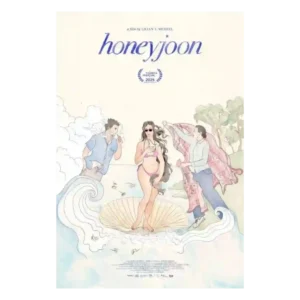
visual style is 4.8 vs 4.5. The visual style combines island vistas, soft compositions, Super 8 texture, crisp digital images, and vertical phone footage....
Call My Agent! The Movie
Where It Has the Edge
originality is 4.3 vs 2.7. The continuation avoids the easiest reset button and gives the old group a new filmmaking crisis instead of...
genre satisfaction is 4.8 vs 3.6. The mix of workplace satire, French farce, and comedy-drama largely lands as intended. Reviewers who respond to that...
chemistry between characters is 5.0 vs 4.6. The returning ensemble chemistry is repeatedly singled out as a major pleasure. Andréa and Noémie’s contrasting energies make...
Honeyjoon4.2 overall score
Call My Agent! The Movie4.6 overall score
Compare features
Scores are out of 5. Missing scores mean missing review evidence, not a missing feature.
Scored on both products
Other features
Ending satisfaction
Honeyjoon
4.8
Call My Agent! The Movie
2.5
Details and evidence for ending satisfaction
Honeyjoon
The closing movement is generally satisfying, with the leads reaching a subtler, more comfortable place rather than undergoing a simplistic transformation.
The ending is one of the few clearly criticized elements, with the movie stopping abruptly while some character business still feels unfinished. That leaves the finale less satisfying than the otherwise warm reunion.
Reviewers see personal specificity in the film’s grief story and visual mix, but some consider the diaspora framework familiar or the overall result too plain to feel fully original.
The continuation avoids the easiest reset button and gives the old group a new filmmaking crisis instead of simply rebuilding ASK. That creates enough fresh material to feel like more than a repetition of the series.
As a grief dramedy with flirtation, politics, and family comedy, the film is appealing but divisive. Several reviewers praise the blend, while others find the genre mix tonally confused or insufficiently developed.
The mix of workplace satire, French farce, and comedy-drama largely lands as intended. Reviewers who respond to that blend find it lively and familiar, though one newcomer wanted more consistent comedy.
The dialogue is praised at its best for naturalistic bickering and culturally specific behavior. A more negative review finds some exchanges stiff and written mainly to deliver exposition.
Fast, barbed dialogue remains one of the film’s defining strengths. The banter and industry digs move quickly enough that some outsiders may miss nuances, but the verbal rhythm is consistently praised.
The film’s treatment of grief, identity, happiness, freedom, and diaspora can feel rich and humane. The main disagreement is whether those ideas are subtly layered or only surface-level and underdeveloped.
The film adds depth to its industry comedy by treating cinema as both work and community. Its affection for people who build movies together gives the reunion more substance than a purely nostalgic special.
The film avoids obvious raunch-com mechanics and big manufactured reversals, which gives its small-scale grief story distinction. Another critic still considers the broader diaspora setup conventional.
The film earns credit for advancing the characters through a new production storyline rather than restoring the old office setup. It keeps continuity while finding a different problem for the ensemble to solve.
The 70–80 minute length is both a strength and a limitation. It keeps the film compact and prevents overstaying, but several reviewers wish it had more room for backstory and political themes.
The feature length is a mixed fit for the ensemble. Two hours can feel stretched in individual scenes yet still leaves less room than the series had for every returning character.
The Iranian diaspora and Woman, Life, Freedom material divides reviewers. Some find it layered, illuminating, and naturally integrated, while others call it shoehorned, underbaked, or performative.
The movie keeps its gaze on the French entertainment business and uses the comeback story to make pointed observations about that culture. Its industry satire carries more bite than a simple celebrity parade.
The meditative pace and brief runtime often feel patient, brisk, and appropriate to the intimate story. A negative review instead experiences long emotional plateaus.
Pacing is the most recurring craft complaint. Some reviewers love the fleet, fast-talking momentum, while others find the middle saggy or certain scenes unnecessarily stretched.
The music is a standout in the more detailed craft discussion, with groovy cues and familiar themes giving the reunion energy. The cinematic expansion of the theme material is especially praised.
The screenplay is often praised for balancing humor, pathos, and precise character detail. Its recurring weakness is overambition: some reviewers find the themes heavy-handed, jokes under-supported, or storylines insufficiently developed.
The script preserves the characters’ voices, fires off industry barbs quickly, and keeps the continuation true to the show. Its density can make some satire harder for outsiders to catch, but the writing is broadly admired.
Details and evidence for chemistry between characters
Honeyjoon
Most reviewers find the mother-daughter chemistry magnetic and believable, especially in the pair’s bickering, tenderness, and uneven attempts to reconnect. One critic felt the staging made them seem less directly engaged with each other.
The returning ensemble chemistry is repeatedly singled out as a major pleasure. Andréa and Noémie’s contrasting energies make an especially strong comic double act, while the wider friendships feel genuine rather than manufactured.
The Azores are photographed with painterly beauty, striking wides, phone imagery, and textured film footage. Reviewers especially like how the landscapes reflect grief and emotional distance rather than functioning as scenery alone.
The widescreen photography gives the continuation a surprisingly glossy, polished look. Aurélien Marra’s work is specifically praised for elevating the film beyond its television roots.
Direction is usually praised for actor work, restraint, emotional honesty, and the intelligent use of setting. Dissenters describe the framing as overly cautious or the style as effective but visually conservative.
Émilie Noblet handles the dialogue-heavy material smoothly and gives the movie a warmer, more glamorous visual finish. The direction is viewed as a confident fit for the established series tone.
The film’s central mother-daughter journey is clear, but one review argues that an overambitious plot introduces more concepts than the short runtime can coherently develop.
Accessibility depends heavily on the viewer. Some newcomers found the recap and self-contained crisis easy to follow, while other critics felt the tangled relationships assume basic familiarity with the series.
The grief drama can build to strong catharsis and poignancy, especially when centered on June and Lela. A skeptical review finds the reserved telling too withdrawn to fully work.
One newcomer found the movie more convincing as behind-the-scenes filmmaking drama than as full-on comedy. The professional crises and personal complications gave the story enough substance to stay interesting.
June and Lela often feel lived-in, specific, and recognizably difficult with each other. More critical reviewers say the short runtime leaves backstory thin or reduces them to generational and cultural types.
Andréa and Noémie gain believable new responsibilities and maturity, and some viewers liked seeing how far the group has evolved. The feature format leaves a few returning characters underused or stuck with thinner arcs.
Many reviewers admire the balance of sorrow, humor, sensuality, and political context. Others find the transitions uneven or the accumulation of modes tonally confusing.
Most reactions think the film balances warmth, satire, and farce without becoming smug or overly sentimental. The main reservation is that a few sequences drift toward cartoonish excess.
The film frequently lands as moving, compassionate, and personally recognizable, especially for viewers familiar with parental loss. Some critics feel the heavier late moments or underdeveloped ideas blunt the intended impact.
Beneath the farce, the reunion lands genuine warmth through the group’s loyalty and shared history. Liliane Rovère’s late contribution is singled out as an especially emotional high point.
The story earns considerable praise as an intimate, compassionate account of grief and a difficult mother-daughter bond. Negative reviews find it too slight, overstuffed, or emotionally withdrawn.
The filmmaking-disaster premise gives the returning cast an engaging reason to reunite and works best when it turns production chaos into character comedy. Some reviewers find individual set pieces weaker or too dependent on prior attachment.
Humor is a major asset, ranging from dry awkwardness and deadpan side characters to bodily jokes and generational bickering. Most reviewers feel it relieves the grief without trivializing it, though one finds the comic structure weak.
The comedy is widely praised for industry jokes, frantic mishaps, and character-based banter, with several standout cameos. A minority view finds the film more interesting than funny, so the humor is strong but not universal.
The film’s central message is compassionate: grief has no single path, joy can coexist with loss, and healing means moving forward while carrying the absent person with you. Its political message is more contested.
The film’s warmest idea is that filmmaking is a communal effort sustained by people who keep showing up for one another. Its show-business satire also carries pointed observations about the French industry.
One review singles out the cross-cutting between mother and daughter as the film’s most powerful sequence, using separation to show them exchanging approaches to grief.
The film is praised as slickly cut, helping the dense dialogue and fast-moving ensemble material keep momentum. Its editing contributes to the polished feature-film presentation.
The film has demonstrated strong festival appeal, and one critic argues it deserves a much wider audience. Its intimate mother-daughter focus and emotional accessibility are the main reasons cited.
Longtime fans are the safest audience, and several critics call the reunion exactly the nostalgic return they wanted. Newcomer reactions are split: some followed it easily, while others felt the tangled history makes prior series knowledge important.
The acting is the clearest consensus strength, with the central performances repeatedly called captivating, vulnerable, funny, and emotionally precise. A few dissenting reviews find the staging distancing or one performance somewhat one-note.
The ensemble is one of the movie’s clearest strengths, with sharp comic timing and an easy return to familiar character rhythms. Even more mixed takes still find the cast a major reason the reunion works.
Details and evidence for supporting cast performance
Honeyjoon
The supporting cast is a strong complement to the leads, with José Condessa’s soulful guide and António Maria’s deadpan concierge singled out for adding warmth and humor.
The returning ensemble and guest players supply many of the movie’s best moments. Calamy, Rovère, Macaigne, and the celebrity cameos draw particular praise, though not every cameo or reduced role feels equally useful.
The two leads carry the film with performances repeatedly described as heartfelt, perfectly cast, and emotionally attuned. Their work gives the compact story much of its depth.
Camille Cottin is consistently praised as an assured center for the chaos, bringing dry intelligence and cool glamour to Andréa. Her performance helps the movie carry the weight of the reunion.
The visual style combines island vistas, soft compositions, Super 8 texture, crisp digital images, and vertical phone footage. This varied approach is consistently identified as one of the film’s most attractive qualities.
Glossy widescreen photography, glamorous sequences, and a warmer palette give the film a polished look. The visual upgrade helps the feature feel more expansive while still belonging to the series.
Even mixed reviews tend to find the film enjoyable, helped by its humor, sensuality, scenery, and compact scale. Its emotional heaviness may limit the uplift for some viewers.
Most reactions describe the film as warm, funny, watchable, and satisfying, especially for fans. Even reviewers who note pacing or structural flaws still find the reunion enjoyable overall.
This is the strongest point of agreement: the movie preserves the series’ wit, warmth, character dynamics, and chaotic workplace spirit. Reviewers repeatedly praise it for moving the characters forward without losing what made the show distinctive.
Reviewers value the lived-in arguments, understated revelations, and smartphone footage for making the relationship and vacation feel authentic rather than mechanically plotted.
The romantic and sexual thread adds sensual energy, but one critic finds the cautious framing unable to generate enough excitement between June and João.
Sexuality is handled openly but with restraint. One reviewer specifically praises it as low-key, matter-of-fact, and far removed from raunch-com excess.
The production crises create real tension over whether the team can keep the movie alive. That pressure gives the farce an unexpectedly exciting problem-solving streak.
Familiar musical ideas are refreshed effectively for feature length, including a soaring cinematic treatment of the theme. The soundtrack helps make the reunion feel both recognizable and newly scaled up.