Scorata scores summarize analyzed review evidence on a 1–5 scale; they are not laboratory measurements or a simple average of customer star ratings. Feature scores summarize the reviews covering that feature. The overall score averages feature scores within each review, then combines review averages. When both expert and customer evidence are available, those two groups receive equal weight. Products can have different review coverage, so small score gaps do not establish a winner.
Recommendations prioritize important features for the category, with a score of at least 3.5, a gap of at least 0.25 points and at least two supporting reviews per product. Features with widely varying scores or broad connectivity contexts are excluded from recommendations. These safeguards do not establish statistical significance.
Quick verdict
What each product is best for
The review evidence points to a tradeoff: dialogue quality and sexual content level versus rewatch value and production design. Choose according to which strengths matter more to you; the overall score alone does not settle that choice.
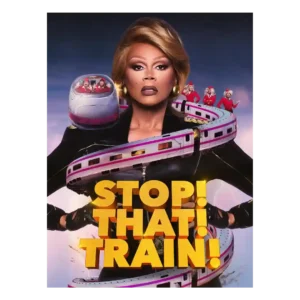
Choose Stop! That! Train! for dialogue quality and sexual content level.
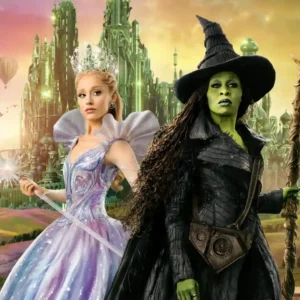
Choose Wicked: For Good for rewatch value and production design.
Why these recommendations?
Stop! That! Train!
Where It Has the Edge
dialogue quality is 4.8 vs 1.5. The strongest lines use queer wordplay, double meanings, and conversational rhythm rather than relying only on familiar references.
sexual content level is 3.8 vs 1.5. The R-rated humor includes innuendo, sexual props, and raunchy jokes, though some viewers found it less explicit than...
Wicked: For Good
Where It Has the Edge
rewatch value is 5.0 vs 2.3. The most enthusiastic reviewers see the two-film adaptation as something they will revisit for years, especially for the...
production design is 4.6 vs 3.4. Production design is among the strongest consensus positives. Oz is repeatedly described as elaborate, colorful, detailed, sumptuous, and...
lead performance is 4.9 vs 4.1. Cynthia Erivo and Ariana Grande receive overwhelming praise, often described as the reason the film survives its weaker...
Stop! That! Train!3.5 overall score
Wicked: For Good3.5 overall score
Compare features
Scores are out of 5. Missing scores mean missing review evidence, not a missing feature.
Scored on both products
Ownership and support
Value for money
Stop! That! Train!
1.0
One strongly negative critic felt the disputed, cheap-looking effects made the theatrical ticket feel insulting, while most others focused less on price.
Wicked: For Good
5.0
The reviewers who discuss the theatrical or home-media value directly find the spectacle, technical presentation, and extras substantial enough to justify the experience.
Rewatch value
Stop! That! Train!
2.3
Fans may enjoy repeat communal screenings and quote-alongs, but inconsistent jokes, dated references, and rough effects limit broader replay value.
Wicked: For Good
5.0
The most enthusiastic reviewers see the two-film adaptation as something they will revisit for years, especially for the performances, musical moments, and return to Oz.
Entertainment value
Stop! That! Train!
3.3
For viewers receptive to proudly stupid camp, the film is an energetic good time; others found the same nonstop approach exhausting or disposable.
Wicked: For Good
3.3
Overall enjoyment is mixed but generally respectable. Devoted fans and viewers swept up by the performances often have a good time, while others find the long, uneven second act a slog.
Other features
Cultural representation
Stop! That! Train!
4.7
The movie’s proud queer perspective is a major strength, centering drag performers as heroes and celebrating queer joy without making them the joke.
Wicked: For Good
1.0
One review raises a pointed concern about how the film’s romance and language may reinforce troubling ideas around desirability and skin tone. That criticism is specific rather than broadly echoed.
Dialogue quality
Stop! That! Train!
4.8
The strongest lines use queer wordplay, double meanings, and conversational rhythm rather than relying only on familiar references.
Wicked: For Good
1.5
Dialogue receives limited but negative attention, mainly for repetitive wording and lines that feel clunky or overused. These complaints reinforce broader concerns about the script.
Special effects quality
Stop! That! Train!
1.8
The storm, greenscreen, and exterior train shots are the most repeated complaint, ranging from knowingly campy to distractingly unfinished.
Wicked: For Good
5.0
Where discussed broadly, the spectacle and magical effects are praised for helping make Oz feel grand and cinematic.
Realism
Stop! That! Train!
4.5
The movie wisely abandons realism and embraces cartoon logic, which suits the camp tone even when it weakens suspense.
Wicked: For Good
1.7
Some reviewers feel the digital sheen and greenscreen-like environments make the world look artificial. The most positive comments come when physical sets and grounded textures overcome that effect.
Action sequence quality
Stop! That! Train!
2.0
The runaway-train set pieces have goofy movement and spectacle, but the thin storm effects keep the danger from feeling exciting.
Wicked: For Good
4.5
The action earns positive notices when it arrives, especially broom-flight chases and heavier physical set pieces. Reviewers describe these moments as clever, energetic, and more forceful than expected.
Suspense
Stop! That! Train!
1.7
Constant jokes and weak effects undercut the danger, making the disaster plot more of a comic framework than a genuinely tense ride.
Wicked: For Good
4.0
A few darker sequences generate real tension, particularly around transformations, political danger, and the build toward Glinda’s wedding and the witch hunt.
Sexual content level
Stop! That! Train!
3.8
The R-rated humor includes innuendo, sexual props, and raunchy jokes, though some viewers found it less explicit than expected.
Wicked: For Good
1.5
The implied intimacy between Elphaba and Fiyero is mild by adult standards but drew criticism for feeling awkward, prolonged, or potentially uncomfortable for families expecting a straightforward PG musical.
Writing quality
Stop! That! Train!
3.1
The script delivers clever queer wordplay and a dense supply of gags, but repetition, weak runners, and thin character work keep it uneven.
Wicked: For Good
1.3
The screenplay draws substantial criticism for disjointed structure, underexplained turns, repetitive ideas, and additions that do not justify the expanded runtime.
Editing quality
Stop! That! Train!
3.0
Some cutaways and visual punchlines are sharply timed, while the competing subplots and repeated gags make other stretches feel jumbled.
Wicked: For Good
1.3
Editing is one of the clearer weaknesses, with complaints about choppy musical staging, awkward transitions, and material that feels in need of substantial trimming.
Family friendliness
Stop! That! Train!
1.5
Parents should expect an adult comedy rather than family viewing because of sexual material, language, drug references, and brief nudity.
Wicked: For Good
3.2
Families may appreciate the restrained violence and PG approach, but darker themes, frightening transformations, and an implied intimate scene make the sequel less universally comfortable for younger viewers.
Tonal consistency
Stop! That! Train!
4.5
Its best quality is total commitment to heightened camp, though occasional sincere drama and attempted suspense do not always blend smoothly.
Wicked: For Good
3.0
The more consistently somber tone works better for some reviewers than Part One’s abrupt shifts, but others find the seriousness at odds with Oz’s inherent whimsy or disrupted by misplaced comedy and romance.
Pacing
Stop! That! Train!
3.2
The opening half usually moves at an effective joke-a-minute clip, while repeated bits, side plots, and the final stretch can make the movie feel longer than it is.
Wicked: For Good
1.8
Pacing is the most persistent complaint. Reviewers repeatedly describe a strange combination of dragging scenes and rushed plot turns, with the two-film split often blamed for making Act II feel both padded and hurried.
Romance quality
Stop! That! Train!
4.0
DeeDee and Cal’s romance is intentionally goofy and lightweight, with enough sweetness to complement the central friendship.
Wicked: For Good
2.7
The romance is sharply mixed. Some find Elphaba and Fiyero moving or passionate, while others call their physical relationship rushed, hollow, awkward, or disruptive to the stronger friendship story.
Runtime
Stop! That! Train!
3.8
At roughly 90 to 95 minutes, the film feels brisk to enthusiastic viewers but surprisingly long to critics who did not connect with the jokes.
Wicked: For Good
2.5
The shorter runtime is appreciated compared with Part One, but many still consider the film overlong for the amount of story it contains. Several reviewers argue substantial trimming would improve it.
Theme depth
Stop! That! Train!
2.0
The film is deliberately lightweight and offers little thematic complexity beyond friendship, cooperation, and queer celebration.
Wicked: For Good
3.2
The sequel’s darker themes can be potent, especially around propaganda, prejudice, power, complicity, and moral compromise. Reviewers disagree on whether the film explores those ideas deeply enough or only gestures toward them.
Plot clarity
Stop! That! Train!
2.8
A simple runaway-train setup gives the comedy useful structure, though some critics found the multiple subplots unnecessarily convoluted.
Wicked: For Good
1.6
The story becomes harder to follow as it intersects with The Wizard of Oz. Reviewers criticize abrupt character turns, missing connective tissue, and an expectation that viewers will fill gaps from prior knowledge.
Directing quality
Stop! That! Train!
4.1
Adam Shankman generally keeps the sprawling cast and relentless gag flow under control, though the rushed production limits visual invention and polish.
Wicked: For Good
2.9
Jon M. Chu’s direction splits reviewers sharply. Some celebrate the scale, musical staging, and visual ambition, while others criticize conventional blocking, overstuffed frames, or a lack of cinematic spark.
Cinematography
Stop! That! Train!
1.8
The bright interiors occasionally pop, but flat digital photography, washed-out lighting, and uninspired framing make the movie look less cinematic than its premise deserves.
Wicked: For Good
2.9
Camera movement and a few musical sequences are praised, but the dim, washed-out, heavily backlit look is a persistent complaint. Reviewers are split between admiring inventive framing and wishing the imagery were easier to see.
Drama quality
Stop! That! Train!
4.0
The tested friendship adds a few sincere and touching beats, but the drama stays light and secondary to the spoof machinery.
Wicked: For Good
4.8
The darker dramatic mode generally lands well when the film focuses on friendship, sacrifice, and political pressure. Reviewers who respond to it describe the sequel as more human, serious, and emotionally potent.
Cast chemistry
Stop! That! Train!
4.9
Ginger Minj and Jujubee’s affectionate, synchronized rapport is widely regarded as the movie’s heart and helps the absurdity feel warm.
Wicked: For Good
4.2
Erivo and Grande’s shared chemistry is repeatedly described as electric and central to the movie’s emotional pull. Romantic chemistry draws more mixed reactions, especially around Elphaba and Fiyero.
Message quality
Stop! That! Train!
3.7
Beneath the silliness, the film champions friendship, cooperation, resilience, and queer joy during a politically difficult moment.
Wicked: For Good
3.1
The political and moral messaging is one of the most debated elements. Some reviewers find the warnings about propaganda, authoritarianism, prejudice, and complicity timely and powerful; others find the treatment shallow or muddled.
Story quality
Stop! That! Train!
3.0
The friendship and runaway-train objective provide a functional spine, but the movie can still feel like loosely connected sketches and cameos.
Wicked: For Good
2.4
The central friendship remains compelling, but the story is widely regarded as weaker than Part One. Critics repeatedly point to Act II’s rushed turns, Wizard of Oz overlap, and strained connective plotting.
Genre satisfaction
Stop! That! Train!
4.0
As a modern disaster spoof, it captures the throw-everything-at-the-wall spirit of Airplane!-style comedy without matching the classics’ consistency.
Wicked: For Good
4.5
As a movie musical, the film works best for viewers already receptive to the form and the source. The leads, spectacle, and musical presentation satisfy genre fans even when the second-act songs are considered weaker.
Originality
Stop! That! Train!
2.1
The train setting adds a playful variation, but the story remains an openly familiar patchwork of Airplane!, disaster-movie, and Mean Girls conventions.
Wicked: For Good
2.6
Reworking familiar Wizard of Oz events can be clever and fun, but some critics see the second half as overly dependent on inherited plot machinery. A few appreciate the creative connections as a fresh spin.
Score quality
Stop! That! Train!
4.5
The disaster-movie musical cues and retro callbacks help establish the spoof tone, with the Poseidon Adventure-style opening music receiving particular praise.
Wicked: For Good
5.0
The orchestral score is praised for giving the darker story weight and for carrying musical themes effectively through the film.
Ending satisfaction
Stop! That! Train!
3.5
The finale keeps enough laughs flowing to remain enjoyable for many viewers, but several critics found the third act rote, prolonged, or unable to stick the landing.
Wicked: For Good
3.1
The finale is divisive: some reviewers find it bittersweet, moving, and satisfying, while others call it rushed, contrived, anticlimactic, or tonally mismatched with the story’s darker implications.
Humor
Stop! That! Train!
3.5
The joke volume is enormous and the best bits are genuinely hilarious, but the hit rate ranges from strong to painfully low depending on the viewer.
Wicked: For Good
3.8
Humor is noticeably reduced from Part One, and some critics miss the comic spark that balanced its sentimentality. Others still find Glinda’s reactions, Jeff Goldblum’s Wizard, and isolated comic beats genuinely funny.
Character development
Stop! That! Train!
3.0
Tess and DeeDee receive a workable friendship arc, but most characters remain broad comic types and the emotional throughline can feel thin.
Wicked: For Good
3.3
Glinda’s expanded arc earns substantial praise, while several supporting characters are criticized as rushed or underdeveloped. The result is strong growth at the center but uneven attention around the ensemble.
CGI quality
Stop! That! Train!
1.5
The digital train and landscape shots are the clearest technical weakness, often looking cheap enough to pull attention away from the comedy.
Wicked: For Good
1.8
Digital effects are a recurring visual weak spot. Reviewers call out uncanny de-aging, artificial animals, and conspicuous digital environments, though a few felt the effects integrated well enough with the practical sets.
Emotional impact
Stop! That! Train!
4.5
The friendship between Tess and DeeDee creates unexpected warmth, especially when hurt, loyalty, and reconciliation briefly cut through the chaos.
Wicked: For Good
4.5
The emotional payoff is one of the strongest areas of agreement. The Elphaba-Glinda relationship, especially the title duet and final stretch, is repeatedly described as moving, tear-inducing, and cathartic.
Makeup quality
Stop! That! Train!
5.0
The queens are presented with flattering lighting, polished hair, and spectacular makeup that gives the production a more glamorous finish.
Wicked: For Good
5.0
The makeup and styling receive strong praise where discussed, contributing to the film’s elaborate Oz aesthetic and character presentation.
Controls and connectivity
Age appropriateness
Stop! That! Train!
1.5
This is an adult-oriented spoof rather than a children’s comedy, with an R rating, sexual jokes, language, drug material, and brief nudity.
Wicked: For Good
3.4
The PG-friendly restraint works for some families, but the darker second half, body-horror transformations, and mature themes made several reviewers question suitability for younger children.
Audience appeal
Stop! That! Train!
3.6
Drag Race fans and viewers who enjoy broad camp are the strongest match, though several nonfans still found the humor accessible and fun.
Wicked: For Good
3.9
Fans of the stage musical are widely expected to get more from the film than newcomers or viewers lukewarm on Part One. Several reviews frame it as a satisfying fan experience even when broader appeal feels less certain.
Comfort and build
Production design
Stop! That! Train!
3.4
The colorful train interiors and class contrasts are appealing, although the rushed, low-budget production becomes obvious outside the main sets.
Wicked: For Good
4.6
Production design is among the strongest consensus positives. Oz is repeatedly described as elaborate, colorful, detailed, sumptuous, and richly built even by critics who dislike the lighting or CGI layered over it.
World-building
Stop! That! Train!
4.0
The Glamazonian Express is a fun exaggerated setting, with luxury, coach, disco, and meditation spaces that support the movie’s cartoon logic.
Wicked: For Good
3.0
Oz’s physical design remains rich, but reviewers differ on whether the film makes the society feel truly lived-in. Some praise the detailed environment; others say crowds and digital landscapes keep the world emotionally distant.
Costume design
Stop! That! Train!
4.4
Colorful uniforms, polished drag looks, and theatrical styling are among the movie’s most consistently praised visual strengths.
Wicked: For Good
4.8
Costumes are a standout craft element, repeatedly described as lavish, imaginative, character-rich, and visually striking. Even reviews critical of the movie’s lighting tend to praise the wardrobe itself.
Visual style
Stop! That! Train!
3.0
The costumes, saturated interiors, and retro camp attitude are appealing, but cheap exteriors and flat photography create a visibly uneven presentation.
Wicked: For Good
3.3
Visually, the film is a major point of division. Sets, costumes, scale, and color can look sumptuous, but dim lighting, desaturation, backlighting, and artificial-looking CGI repeatedly blunt the intended wonder.
Performance
Lead performance
Stop! That! Train!
4.1
Ginger Minj and Jujubee carry the picture with comic confidence, sincerity, and enough emotional grounding to hold the sketch-like material together.
Wicked: For Good
4.9
Cynthia Erivo and Ariana Grande receive overwhelming praise, often described as the reason the film survives its weaker plotting and pacing. Their vocals, dramatic work, and shared scenes are consistently highlighted.
Acting performance
Stop! That! Train!
4.3
The ensemble’s commitment gives the movie most of its momentum, with performers treating even the silliest material seriously enough to make it work.
Wicked: For Good
4.8
The performances are one of the film’s safest strengths, with the central cast repeatedly praised for carrying material that many reviewers found structurally weaker. Even mixed reviews often single out the acting as a reason the sequel still works.
Soundtrack quality
Stop! That! Train!
3.3
The musical numbers are lively and fun for some viewers, while others found the disco songs forgettable or visually constrained.
Wicked: For Good
3.1
The music is one of the most divided areas. The title song and No Good Deed are frequent highlights, but reviewers repeatedly say Act II lacks Part One’s memorable songs and find the new additions forgettable or merely serviceable.
Supporting cast performance
Stop! That! Train!
3.9
Latrice Royale, Rachel Bloom, Chris Parnell, Matt Rogers, and several cameo players repeatedly steal scenes, although a few guest bits fall flat.
Wicked: For Good
3.8
The supporting ensemble is generally well regarded, with praise for performers such as Jonathan Bailey, Ethan Slater, Marissa Bode, and Jeff Goldblum. Michelle Yeoh’s singing and several underused roles draw the main reservations.
Evidence available for one product
Other features
Animation quality
Stop! That! Train!
1.5
The exterior imagery and animated-looking environments were criticized as visually crude and lacking artistic polish.
Wicked: For GoodNo score yet
Faithfulness to source material
Stop! That! Train!No score yet
Wicked: For Good
4.6
The film is widely seen as a faithful translation of Act II, which pleases established fans but also preserves many of the stage version’s structural weaknesses. Several reviewers explicitly treat that faithfulness as both strength and limitation.
Language level
Stop! That! Train!
4.3
The comedy mixes bawdy dialogue with cleaner wordplay, and several critics appreciated that some of its biggest laughs do not depend on explicit language.
Wicked: For GoodNo score yet
Practical effects quality
Stop! That! Train!No score yet
Wicked: For Good
4.0
The practical craft receives favorable notice, especially when tactile sets and in-camera elements help Oz feel physically realized rather than purely digital.
Scares
Stop! That! Train!No score yet
Wicked: For Good
3.8
The darker transformations and body-horror touches are effective for some reviewers, who find them creepy and memorable. Others note that the intensity may be unsettling for younger viewers.
Violence level
Stop! That! Train!No score yet
Wicked: For Good
3.0
The film keeps most violence restrained or implied, which some reviewers appreciate, though darker threats, beatings, and body-horror transformations still give the sequel a more intense edge.
Controls and connectivity
Critic appeal
Stop! That! Train!
4.0
Critical response leaned positive overall, but enthusiasm varies sharply depending on tolerance for camp, Drag Race references, and rapid-fire silliness.
Wicked: For GoodNo score yet
Comfort and build
Sound design
Stop! That! Train!No score yet
Wicked: For Good
5.0
The home-media audio presentation earns strong praise for crisp vocals, powerful bass, directionality, and an expansive soundstage.
A deeply human coming-of-age drama carried by remarkable performances and an honest portrayal of grief. Its gentle optimism moves most viewers, though some find the final stretch hurried or overly...
Billie Jean King’s magnetic first-person storytelling makes this an exhilarating portrait of athletic courage and social change. The filmmaking follows a familiar documentary structure, and her full tennis résumé gets...
Choose this inventive, unsettling documentary for fearless questioning, dark humor, and unpredictable storytelling. Skip it if you want a short, straightforward exposé with definitive answers.
A singular voice, powerful piano playing and intimate film photography make this concert absorbing for receptive listeners. Its uninterrupted, often similar-sounding songs and lack of background context are an acquired...