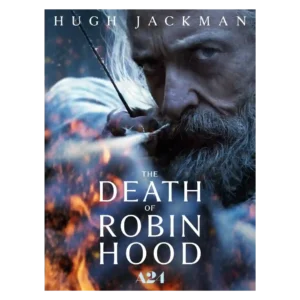
The Death of Robin Hood
Where It Has the Edge
- originality is 4.2 vs 2.0. The plot overturns familiar Robin Hood expectations by treating the legend as a lie and focusing on guilt,...

Scorata scores summarize analyzed review evidence on a 1–5 scale; they are not laboratory measurements or a simple average of customer star ratings. Feature scores summarize the reviews covering that feature. The overall score averages feature scores within each review, then combines review averages. When both expert and customer evidence are available, those two groups receive equal weight. Products can have different review coverage, so small score gaps do not establish a winner.
Recommendations prioritize important features for the category, with a score of at least 3.5, a gap of at least 0.25 points and at least two supporting reviews per product. Features with widely varying scores or broad connectivity contexts are excluded from recommendations. These safeguards do not establish statistical significance.
Quick verdict
The review evidence points to a tradeoff: originality versus theme depth and costume design. Choose according to which strengths matter more to you; the overall score alone does not settle that choice.
Choose The Death of Robin Hood for originality.
Choose Heart of the Beast for theme depth and costume design.
Scores are out of 5. Missing scores mean missing review evidence, not a missing feature.
The story leaves important motivations and backstory deliberately vague. For some viewers, that ambiguity weakens emotional investment and makes Robin’s redemption harder to understand.
The clear goal of reaching the road makes the journey easy to follow.
The movie is nearly humorless, and some reviewers see that severity as a weakness. Its rare flashes of macabre personality come mostly through Little John rather than comic relief.
Simmons supplies a brief, welcome bit of levity before the trek turns grim.
At roughly two hours, the film’s meditative structure does not always feel fully earned. Some reviewers wanted tighter progression through the priory section.
The compact length keeps the journey moving for viewers who value a focused story.
The plot overturns familiar Robin Hood expectations by treating the legend as a lie and focusing on guilt, mortality, and the end of violence. That subversion is one of its strongest creative choices.
The succession of survival hazards rarely surprises, yet several viewers still find its conventional structure satisfying.
The aged, weathered transformation mostly works, especially the hair and overall grime. One reviewer found the beard application noticeably uneven in places.
Visible wounds and practical makeup give James’s injuries a painful physical presence.
Michael Sarnoski’s direction is bold, visually controlled, and committed to deconstructing the legend. Reactions split over whether that restraint creates profundity or an overly severe, underpowered drama.
David Ayer handles the stripped down survival story with skill, though the ending and familiar plot leave a few viewers wanting more restraint.
The film emphasizes ugly, intimate violence and harsh period living over romantic adventure. Reviewers often find the tactile detail convincing, even when the realism becomes oppressive.
Preparedness and practical locations ground much of the trek. Stacked injuries and certain predator encounters strain belief for others.
Pacing is the most repeated complaint. The deliberate shift from a violent opening to a quiet priory drama works for some, but many describe the middle as sluggish, restless, or ponderous.
Many praise the steady 101 minute pace, while others find the opening or quiet walking scenes slow and the obstacle rhythm repetitive.
Several reviewers found the redemption story haunting, tender, and unexpectedly moving. Others felt the film’s coldness, thin characterization, and slow middle prevented the intended emotions from landing.
The loyal bond and final stretch leave many viewers in tears. A few find the sentiment pushed too hard or do not share the same catharsis.
The film works as a somber character study rather than a conventional adventure. Its seriousness gives the material weight, though it can also make the experience feel emotionally remote.
The shared trauma and survival ordeal give the drama emotional force beyond its simple premise.
Jim Ghedi’s folk-inflected score is widely praised for its mournful power. It deepens the old-world atmosphere and gives the film emotional lift when the drama turns sparse.
The score can heighten the scale and tenderness with restraint, but a few hear it as syrupy or emotionally insistent.
Some reviewers love the intimate storytelling scenes and formal exchanges, while others find the dialogue stilted, mumbled, or emotionally distancing. The writing is strongest in quieter character encounters.
Sparse dialogue suits the isolated trek for some, while awkward one-sided lines or long silences leave others detached.
This is not family-friendly Robin Hood material. Strong bloody violence, child deaths, despair, and a relentlessly adult tone make it unsuitable for casual family viewing.
The dog’s survival is reassuring, but graphic injury and sustained animal peril can be difficult for younger or sensitive viewers.
The film’s ideas about guilt, forgiveness, and redemption are ambitious, but some reviewers feel it never fully commits to or resolves them. Its moral argument can feel more suggestive than satisfying.
The tribute to veterans and military dogs resonates with many. Others find the patriotic voiceover and text coda too explicit or wish the spiritual message went further.
The physical violence and weapon impacts are described as disturbingly realistic. The effects make the action feel painful and immediate rather than glossy or fantastical.
The bloody practical injury work gives the wilderness dangers tangible weight.
The film’s richest material examines how stories reshape violence, whether redemption can be earned, and what a legacy costs. Many reviewers find those themes compelling even when the narrative treatment feels incomplete.
Shared combat trauma gives the companionship a deeper purpose, with survival reflecting the characters’ search for peace.
The screenplay contains thoughtful ideas about storytelling, violence, and absolution, with some beautifully written exchanges. Critics are divided over whether it develops those ideas deeply enough.
The simple script focuses on shared survival and affection. Praise for its emotional clarity sits beside criticism of convenient devices and repeated calamities.
Despite its contemplative second half, the film often preserves a sense that Robin’s past will catch up with him. Reviewers praised the twists and sustained unease even when action recedes.
River crossings, predators, and worsening injuries keep many viewers tense despite the opening reassurance about Odin. Predictability reduces tension for some.
Robin’s gentler connections with Margaret and Brigid are among the film’s most affecting elements. Reviewers especially praise the natural warmth that emerges against the otherwise severe tone.
James and Odin’s mutual care is the film’s clearest strength. Their quiet exchanges and repeated rescues make the relationship feel lived in.
The violence is graphic, ugly, and frequently upsetting, especially in the first act. Even reviewers who admire its purpose warn that the gore and child deaths may be too much for many viewers.
The bone injuries and bloody survival scenes are painful viewing, though their brutality reinforces the danger.
The final image and thematic resolution moved some reviewers with their beauty and restraint. Others found the ending rushed, underexplored, or unable to deliver the emotional punch it promises.
The finale often lands as moving and bittersweet, though its predictability and explanatory coda blunt the effect for some.
The story is the main dividing line: supporters call it profound, moving, and inventive, while detractors find it thin, vague, and dramatically inert. Nearly everyone agrees it is a radical departure from familiar Robin Hood adventures.
The direct survival plot makes room for the bond at its center. Familiar beats and a relentless series of setbacks are its main limits.
The opening combat is savage, messy, and physically convincing rather than heroic or polished. Reviewers admired the stunt work and impact, though the brutality can be exhausting.
The crash, river crossing, and wildlife encounters give the trek visceral stakes. A few viewers wanted less peril or found the largest set pieces overdone.
The movie commits fully to melancholy, austerity, and moral seriousness. That consistency impresses some viewers, while others find the unbroken dourness suffocating and lifeless.
A few find the mix of scenic calm, harsh peril, and sentiment uneven; others admire its controlled treatment of standard material.
Fans of grim revisionist folklore, meditative westerns, and morally thorny period dramas may find the approach rewarding. Traditional swashbuckling expectations are deliberately denied.
It gives dog lovers and survival fans the familiar thrills and emotional payoff they came for without substantially changing the genre.
The cinematography is one of the clearest strengths, with ravishing landscapes, textured 35mm imagery, expressive aspect-ratio changes, and striking contrasts between mud-dark violence and island light.
Wide wilderness views show both the beauty and danger of the journey. The locations and camera work are among the most consistently praised elements.
Robin’s late-life reckoning intrigues reviewers, but many find his inner change too remote, vague, or convenient. The redemption arc works best when grounded in his relationships with Brigid and the children.
James earns empathy through stoicism and devotion to Odin, but some find his life outside the military thinly drawn.
Heavy arrows, axes, and bodily impacts give the violence unusual force, and several reviewers admire the thudding soundscape. One reviewer found the recurring wind effect distracting and repetitive.
Woodland ambience and sharp injury sounds draw viewers into the setting and make the physical danger felt.
The rough fabrics, weathered clothing, and old-world details help sell the medieval setting. The costumes blend naturally with the earthy production design rather than feeling decorative.
Worn outdoor clothing helps sell James’s competence and the rough conditions of the trek.
The film builds a persuasive medieval world of blood feuds, ruined landscapes, religious refuge, and fragile community. Its gothic detail makes the setting feel lived-in and morally harsh.
A vivid sense of the wilderness draws viewers into the trip and makes the environment feel central to the story.
The visual style is a major consensus strength, moving from volcanic darkness, mud, and fire to pastoral light, sea, and stone. The tactile compositions give the film a distinctive, mournful beauty.
Natural looking color and restrained framing help the film balance scenic beauty with isolation.
The graphic first half is a poor fit for younger or sensitive viewers. Its child killings, gore, and bleak moral atmosphere make the film firmly adult-oriented.
Broken bones, bloody injuries, combat memories, and danger to the dog make this more suitable for teens than young children.
The film’s austere pacing, symbolism, and anti-blockbuster structure may appeal more to critics and arthouse audiences than mainstream viewers. That specialized focus can also feel self-conscious.
Early critical coverage is strongly favorable, with praise clustering around the emotional bond and tense survival scenes.
This is most likely to satisfy viewers who enjoy slow, grim period dramas and revisionist folklore. Those expecting a lively Robin Hood adventure or broad entertainment may struggle.
The soldier and dog premise connects strongly with pet owners and viewers drawn to straightforward survival stories, even when the plot follows familiar beats.
Entertainment value is sharply divided: admirers appreciate the reflective mood and unconventional structure, while detractors call it a joyless slog. It is not designed as a breezy or action-heavy crowd-pleaser.
Most find an engaging, accessible survival film with a strong canine lead. A smaller group finds the repeated hardships and walking stretches dull.
The 35mm imagery, sound, and large-scale landscapes benefit from a theatrical presentation. One reviewer specifically felt the film would lose impact on streaming.
One critic considers the modestly scaled wilderness adventure money well spent.
The funeral-like folk music strongly reinforces the film’s mournful identity. Its severity fits the material, though it contributes to the unrelenting gloom.
Soft folk music helps the scenic third act land gently after the harsher survival scenes.
The cast is broadly praised for committed, emotionally grounded work, even by reviewers who disliked the film. The performances often keep the severe material watchable when the story stalls.
The real dog performers draw repeated praise for expressive reactions and convincing training. Some scenes also depend on editing to make Odin feel fully aware of the story.
The supporting ensemble is consistently capable and often excellent, especially in quiet scenes around the priory. Several reviewers still feel the characters are underwritten or given too little screen time.
Anna Lambe’s brief appearance brings welcome tenderness to a story carried mostly by a man and his dog.
Hugh Jackman’s lead is widely regarded as the film’s anchor, combining physical weariness, menace, regret, and restrained tenderness. Even negative reviews often single him out as a major strength.
Pitt’s vulnerable, physically demanding lead turn is a major reason the simple story holds attention.
Digital bears and wolves are the most common visual complaint: several find them conspicuous beside the natural locations and real dog. A minority find the effects convincing enough.
One critic feels the Inuit music functions as atmosphere without enough substance.
The man-and-dog reactions and brisk passages work well for some. Combat flashbacks, a revealing opening, and a minor continuity slip draw recurring criticism.
The film draws thoughtfully from older Robin Hood ballads and the darker edges of the folklore while freely reshaping details. Reviewers generally see its relationship to the canon as purposeful rather than literal.
Robin and Brigid share tenderness and a possible spark, but the film keeps their bond restrained and largely platonic. Viewers expecting a developed romance may find it underrealized.
The dangerous encounters and visible injuries make audiences squirm, giving the ordeal a frightening edge.
The digital wildlife creates danger but can also make the encounters feel less immediate than the practical action.
The film’s muddy combat, rough living conditions, natural light, and austere environments create a convincing medieval texture. Its realism is atmospheric rather than a claim of strict factual reconstruction.
One reviewer finds that the film delivers exactly the straightforward dog-and-survival story it promises.
Stone halls, muddy landscapes, simple orchards, and worn interiors create a vivid gothic medieval world. The design supports the film’s movement from hellish brutality toward fragile sanctuary.
One viewer expects to revisit the film; another appreciates its craft but has no wish to experience the ordeal again.

A deeply human coming-of-age drama carried by remarkable performances and an honest portrayal of grief. Its gentle optimism moves most viewers, though some find the final stretch hurried or overly...
Pros: Grief portrayal, acting performance
Cons: pacing

Billie Jean King’s magnetic first-person storytelling makes this an exhilarating portrait of athletic courage and social change. The filmmaking follows a familiar documentary structure, and her full tennis résumé gets...
Pros: entertainment value, Biographical coverage
Cons: Narrative structure

Choose this inventive, unsettling documentary for fearless questioning, dark humor, and unpredictable storytelling. Skip it if you want a short, straightforward exposé with definitive answers.
Pros: originality, humor

A singular voice, powerful piano playing and intimate film photography make this concert absorbing for receptive listeners. Its uninterrupted, often similar-sounding songs and lack of background context are an acquired...
Pros: directing quality, cinematography
Cons: pacing, Song variety