Scorata scores summarize analyzed review evidence on a 1–5 scale; they are not laboratory measurements or a simple average of customer star ratings. Feature scores summarize the reviews covering that feature. The overall score averages feature scores within each review, then combines review averages. When both expert and customer evidence are available, those two groups receive equal weight. Products can have different review coverage, so small score gaps do not establish a winner.
Recommendations prioritize important features for the category, with a score of at least 3.5, a gap of at least 0.25 points and at least two supporting reviews per product. Features with widely varying scores or broad connectivity contexts are excluded from recommendations. These safeguards do not establish statistical significance.
Quick verdict
What each product is best for
The review evidence points to a tradeoff: tonal consistency and audience appeal versus supporting cast performance and world-building. Choose according to which strengths matter more to you; the overall score alone does not settle that choice.
Choose Girls Like Girls for tonal consistency and audience appeal.
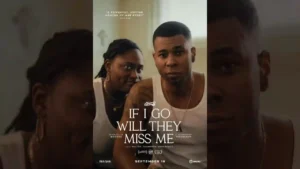
Choose If I Go Will They Miss Me for supporting cast performance and world-building.
Why these recommendations?
Girls Like Girls
Where It Has the Edge
tonal consistency is 5.0 vs 3.5. The wistful, intimate mood remains remarkably steady, avoiding both excessive melodrama and sugary sentimentality.
audience appeal is 4.3 vs 3.8. The film connects most strongly with queer viewers, nostalgic millennials, and anyone who remembers the intensity of first...
soundtrack quality is 5.0 vs 4.5. Period needle drops and queer artists give the soundtrack strong nostalgic and emotional appeal. The music feels carefully...
If I Go Will They Miss Me
Where It Has the Edge
supporting cast performance is 4.8 vs 2.5. Myles Bullock is singled out as scene-stealing, while the nonprofessional ensemble is praised for natural screen presence and...
world-building is 4.9 vs 4.3. Nickerson Gardens and the surrounding Watts community feel lived-in, loving, and socially textured rather than merely used as...
cinematography is 4.9 vs 4.4. The imagery is a major highlight: warm neighborhood portraits, expressive compositions, shadow, and indelible tableaux repeatedly carry emotion...
Girls Like Girls4.0 overall score
If I Go Will They Miss Me4.2 overall score
Compare features
Scores are out of 5. Missing scores mean missing review evidence, not a missing feature.
Scored on both products
Other features
Genre satisfaction
Girls Like Girls
4.5
If I Go Will They Miss Me
2.0
Details and evidence for genre satisfaction
Girls Like Girls
As a queer coming-of-age romance, it delivers tenderness, yearning, heartbreak, and self-discovery even when it follows familiar genre beats.
One strongly negative assessment finds the coming-of-age fable disappointing because familiar beats and over-explanation replace the freshness promised by its premise.
The editing can effectively capture glances, memory, and emotional shifts, but rapid cuts and montage-heavy passages sometimes rush key developments or blur the passage of time.
The film often favors dreamy, lyrical logic over literal explanation. That can be absorbing, but it also leaves parts of the story easier to feel than to explain and potentially difficult for viewers seeking a straightforward narrative.
Details and evidence for faithfulness to source material
Girls Like Girls
The adaptation preserves the music video’s visual DNA, emotional core, and fan callbacks while condensing or changing several book elements. The removal of the original assault is widely welcomed.
Expanding the short gives Lozita and the family more room, but one critic feels the feature loses some of the original’s freer, less narrative-bound quality.
The realism-fantasy balance works beautifully for some critics, but others find the Greek, aviation, and surreal motifs insufficiently integrated. The film can feel cohesive emotionally even when its metaphors pull in different directions.
Details and evidence for chemistry between characters
Girls Like Girls
The leads’ chemistry is usually the film’s strongest pull, especially in quiet looks, touches, and private moments. A minority found the spark too muted to justify the relationship’s pain.
The awkward glances, mixed signals, and queer uncertainty often feel authentic and lived-in. A few stylized or scripted moments undercut that naturalism.
The strongest realism comes from the film’s honest, non-condescending view of family and neighborhood life. Even with surreal flourishes, critics often feel the people and environment remain grounded and emotionally credible.
Coley receives a clear grief-and-self-acceptance arc, while Sonya and several side characters often feel less fully explored. The imbalance leaves parts of the relationship emotionally convincing but narratively underwritten.
The family is often praised for empathy, interiority, and lived-in contradictions, especially around Big Ant and Lozita. A few critics find the central relationships too schematic or insufficiently developed within the feature’s structure.
The core plot is familiar and rarely surprising, but the specific queer perspective, personal history, and mid-2000s setting give it a distinct emotional identity.
The film’s mix of Greek myth, flight imagery, surrealism, and neighborhood realism can feel singular and inventive. Several critics, however, see clear debts to earlier lyrical Black cinema, with one calling the creative voice outright derivative.
The 90-minute length is criticized for leaving character perspectives and emotional specificity underdeveloped rather than feeling efficiently concise.
The dialogue ranges from natural, awkward teenage speech to lines described as stiff, cringey, or overly YA-styled. The quiet visual storytelling often works better than the spoken exchanges.
Sunlit exteriors, intimate close-ups, and a hazy summer palette create a dreamy sense of longing. The look is widely admired, though some found the soft-focus style too uniform for heavier scenes.
The imagery is a major highlight: warm neighborhood portraits, expressive compositions, shadow, and indelible tableaux repeatedly carry emotion that the dialogue does not. The visual approach is among the film’s most consistently praised elements.
The screenplay has genuine sensitivity and several strong emotional ideas, but it often relies on familiar structure, thin side characters, and abbreviated development.
The script is the film’s most divisive craft element: some see strong writerly instincts, while others find it obvious, underwritten, repetitive, or too eager to explain emotion. The feature expansion adds useful family dynamics but can lose subtlety.
The final resolution is divisive because the main cut to black can feel abrupt, while the post-credits scene supplies the romantic closure many viewers wanted. Staying through the credits materially improves the payoff.
The unresolved, hopeful conclusion is mostly admired for refusing a falsely tidy resolution and embracing life’s incompleteness. One critic still feels the ending stumbles slightly and moves away from the film’s strongest element.
The deliberate, slow-burn rhythm works for viewers who enjoy lingering mood and emotional detail. Others find the montages, dead air, and rushed late developments an uneven combination.
The vignette structure can feel nimble and lyrical, but recurring complaints describe the feature as repetitive, amorphous, meandering, or too willing to let its plot drift.
The central romance is tender, volatile, and emotionally recognizable, with strong moments of yearning and intimacy. Some viewers wanted more dialogue, development, or chemistry before the heartbreak intensified.
The film’s clearest message is that self-acceptance and healthy love begin with believing you are worthy of both. Its queer representation is framed through ordinary human longing rather than spectacle.
The film’s belief in imagination, dignity, and the worth of people too often flattened by outside narratives lands powerfully for most critics. The dissenting view finds the message too explicitly dictated rather than organically felt.
The film earns credit for avoiding a standard three-act structure, yet some of its father-son beats are viewed as predictable, familiar, or close to cookie-cutter Sundance storytelling.
The film treats queer teenage love as ordinary, specific, and worthy of a wide theatrical canvas. Its unapologetically sapphic focus is a major strength for viewers who rarely saw themselves centered in coming-of-age stories.
Watts is portrayed with warmth, specificity, and dignity rather than as a shorthand for poverty or danger. The film’s affection for Black and multi-racial community life is one of its strongest points of agreement.
The story is emotionally sincere and easy to connect with, especially through Coley’s grief and self-worth arc. Its main limitation is a familiar, sometimes underdeveloped narrative framework.
The father-son and family story earns substantial praise for tenderness, grace, and emotional complexity, but not unanimous support. Its looser construction and repetitive beats lead some critics to call it unfocused, schematic, or underwritten.
The film meaningfully connects queer self-acceptance, grief, parental wounds, and the need to choose healthier love. Its emotional themes are deeper than its simple plot suggests.
The film finds rich material in fatherhood, masculinity, imagination, systemic pressure, community, and the desire to be seen. Most critics find these ideas resonant, though the harshest critique says the film sacrifices subtlety for cheapened catharsis.
The film’s strongest moments make first love, grief, rejection, and self-acceptance feel immediate and raw. Even mixed reactions often acknowledge that the central emotions land.
At its best, the film is tender, involving, and capable of tearful emotional peaks. The biggest negative view argues that repetitive, over-explained storytelling weakens the poignancy the material should have.
Hayley Kiyoko shows a strong eye for intimacy, mood, and emotional detail in her feature debut. Reactions split over whether the music-video sensibility fully sustains a feature-length narrative.
Walter Thompson-Hernández’s direction is widely admired for visual confidence, empathy, and community intimacy. The main dissent is that his feature can feel derivative, overly aestheticized, or intermittently distancing.
Lozita is allowed moments of humor alongside her firmness, giving the family portrait a little welcome lightness without turning the film into a comedy.
Myles Bullock is singled out as scene-stealing, while the nonprofessional ensemble is praised for natural screen presence and fully inhabited characters.
Period needle drops and queer artists give the soundtrack strong nostalgic and emotional appeal. The music feels carefully chosen rather than used as a greatest-hits showcase.
The music is praised for a lovely, resonant mix that ranges across styles without losing the film’s wistful mood. Its eclectic choices are attention-grabbing but generally treated as a strength.
The two leads carry the film with expressive, emotionally grounded work, and even harsher reactions usually separate their performances from the script’s weaknesses. Supporting performances draw more mixed responses.
The ensemble is one of the film’s clearest strengths, with repeated praise for emotionally present, authentic work. Even the more mixed critiques tend to separate performance quality from their frustrations with the writing.
Maya da Costa gives the film its emotional center with restrained body language, wounded intensity, and a believable progression from guarded grief to self-possession.
The central performances are repeatedly singled out as exceptional, especially Danielle Brooks and J. Alphonse Nicholson. Their emotional detail often compensates for complaints about exposition or familiar story beats.
The warm, colorful, close-up-heavy style creates a strong dreamlike identity. Some viewers find the nostalgic orange haze heavy-handed or insufficiently varied.
The poetic visual language is a defining strength, full of striking compositions, surreal flourishes, warm portraits, and memorable community imagery. The main criticism is that repeated motifs and borrowed lyrical techniques sometimes dilute their impact.
The recurring aircraft roar is used as more than background noise, turning an oppressive part of the neighborhood soundscape into a sign of possibility through Lil Ant’s perspective.
The small-town spaces, early internet culture, and mid-2000s objects create a convincing social world shaped by isolation, nostalgia, and closeted desire.
Nickerson Gardens and the surrounding Watts community feel lived-in, loving, and socially textured rather than merely used as backdrop. The neighborhood itself becomes a vivid emotional environment for Lil Ant’s imagination and family life.
Big Ant’s wardrobe is used thematically, with clothing choices tracking whether he is leaning toward tenderness, darkness, or the visual memory of incarceration.
The film connects most strongly with queer viewers, nostalgic millennials, and anyone who remembers the intensity of first love. Some viewers outside its core fan base may find the story too thin or inward-looking.
The film’s performances and visual beauty keep many critics engaged and even swept up despite its loose structure. Its appeal comes more from atmosphere, feeling, and imagery than conventional narrative momentum.
Critical reactions lean positive but not unanimous, with praise for the performances and emotional sincerity balanced by complaints about thin plotting and uneven pacing.
The animated notebook sketches draw one sharp complaint, with the effect described as chintzy and disruptive beside the film’s stronger formal choices.
The strongest responses find the family drama moving, graceful, and emotionally substantial, with the coming-of-age material landing as more than a simple father-son conflict.
AIM exchanges and romantic uncertainty create localized tension, but the larger conflict is often too abstract or underdeveloped to sustain strong suspense.
The decision to remove the original music video’s homophobic assault is seen as a thoughtful improvement that keeps the focus on emotional growth rather than physical trauma.
AIM windows, Sidekicks, iPods, CDs, bedrooms, and small-town hangouts make 2006 feel lived-in and emotionally specific. The period detail is one of the most consistently praised elements.
Its emotional warmth and representation inspired at least one strong desire to watch it again, especially among viewers connected to the original song and video.