
Girls Like Girls
Where It Has the Edge
No clear scored advantage over the other product.

Scorata scores summarize analyzed review evidence on a 1–5 scale; they are not laboratory measurements or a simple average of customer star ratings. Feature scores summarize the reviews covering that feature. The overall score averages feature scores within each review, then combines review averages. When both expert and customer evidence are available, those two groups receive equal weight. Products can have different review coverage, so small score gaps do not establish a winner.
Recommendations prioritize important features for the category, with a score of at least 3.5, a gap of at least 0.25 points and at least two supporting reviews per product. Features with widely varying scores or broad connectivity contexts are excluded from recommendations. These safeguards do not establish statistical significance.
Quick verdict
The available evidence supports the recommendation below, but does not establish an overall winner. Check the remaining features against your priorities.
There is not enough comparable review evidence to recommend Girls Like Girls over the other product.
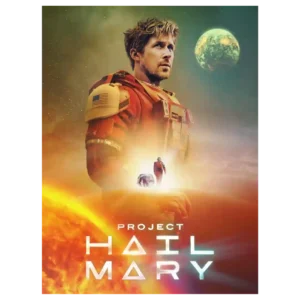
Choose Project Hail Mary for supporting cast performance and story quality.
No clear scored advantage over the other product.
Scores are out of 5. Missing scores mean missing review evidence, not a missing feature.
The supporting cast has warm individual moments, but thinly written roles limit their impact and leave the film heavily dependent on the leads.
Sandra Hüller is the standout supporting performer, with Lionel Boyce also drawing consistent praise for dry humor and grounded rapport. The Earth scenes benefit from their contrast with Gosling.
Period needle drops and queer artists give the soundtrack strong nostalgic and emotional appeal. The music feels carefully chosen rather than used as a greatest-hits showcase.
The song selections are praised for warmth, nostalgia and tonal contrast, complementing the orchestral score without overwhelming scenes.
Maya da Costa gives the film its emotional center with restrained body language, wounded intensity, and a believable progression from guarded grief to self-possession.
Gosling is one of the strongest consensus positives, repeatedly praised for carrying solo stretches with charm, physical comedy and vulnerability. A small minority find the familiar goofy persona strained or tiring.
The two leads carry the film with expressive, emotionally grounded work, and even harsher reactions usually separate their performances from the script’s weaknesses. Supporting performances draw more mixed responses.
The ensemble is widely praised, with Gosling carrying long solo stretches and supporting players giving the Earth scenes personality. One strongly negative take finds the lead’s familiar comic mannerisms tiring.
The central romance is tender, volatile, and emotionally recognizable, with strong moments of yearning and intimacy. Some viewers wanted more dialogue, development, or chemistry before the heartbreak intensified.
One reviewer notes that Grace’s lack of romantic or family attachments reduces the sense of personal sacrifice compared with more emotionally anchored space dramas.
AIM exchanges and romantic uncertainty create localized tension, but the larger conflict is often too abstract or underdeveloped to sustain strong suspense.
Problem-solving and late space hazards generate strong tension for most reviewers, but a few feel the optimistic tone telegraphs success and drains danger.
The wistful, intimate mood remains remarkably steady, avoiding both excessive melodrama and sugary sentimentality.
Tone is the most divisive creative choice: many like the balance of humor, tension and sincerity, while detractors say the comedy undercuts danger and the optimism can feel overly insistent.
The final resolution is divisive because the main cut to black can feel abrupt, while the post-credits scene supplies the romantic closure many viewers wanted. Staying through the credits materially improves the payoff.
The ending is the clearest recurring weakness: multiple reviewers say the final act keeps finding new conclusions, feels rushed or structurally overextended after an earlier emotional peak.
The restrained approach to physical intimacy is viewed as appropriate and refreshingly non-exploitative.
Sexual material is limited to light verbal references and a few suggestive jokes; family-focused reviewers describe it as comparatively tame.
The dialogue ranges from natural, awkward teenage speech to lines described as stiff, cringey, or overly YA-styled. The quiet visual storytelling often works better than the spoken exchanges.
Dialogue reactions are mixed: some praise crisp delivery and clear exchanges, while a harsh dissent calls the jokes and feel-good dialogue dated and shallow.
The screenplay has genuine sensitivity and several strong emotional ideas, but it often relies on familiar structure, thin side characters, and abbreviated development.
The script is mostly praised for making dense science approachable and organizing the nonlinear mystery cleanly, though negative reviews call parts shallow, contrived or over-explanatory.
The editing can effectively capture glances, memory, and emotional shifts, but rapid cuts and montage-heavy passages sometimes rush key developments or blur the passage of time.
Timeline shifts and aspect-ratio transitions are often praised for clarity and momentum; one negative review finds the flashback cutting disorienting and over-explanatory.
The decision to remove the original music video’s homophobic assault is seen as a thoughtful improvement that keeps the focus on emotional growth rather than physical trauma.
A family-focused review describes the movie as comparatively tame, with a couple of corpses but less harsh content than the earlier Weir adaptation.
The story is simple and easy to follow, centering Coley’s growth more than the fate of the romance.
Dense science is generally presented clearly, with multiple reviewers praising how digestible the technical problem solving remains. A few say some concepts are difficult, overly explained or too convenient.
The story is emotionally sincere and easy to connect with, especially through Coley’s grief and self-worth arc. Its main limitation is a familiar, sometimes underdeveloped narrative framework.
Most reviewers see a smart, heartfelt survival-and-friendship story with strong problem-solving momentum. Negative outliers criticize formula, shallow characterization and convenient plotting.
Coley receives a clear grief-and-self-acceptance arc, while Sonya and several side characters often feel less fully explored. The imbalance leaves parts of the relationship emotionally convincing but narratively underwritten.
Grace’s growth and Rocky’s characterization work for many reviewers, but this is notably mixed: critics of the adaptation say Grace’s arc is thinner, underexplored, or too unchanged from start to finish.
The film follows a recognizable summer-romance and coming-of-age structure, with few major surprises or unconventional turns.
The core concept is often praised as fresh, but predictability and familiar genre DNA keep this from being a universal win.
The deliberate, slow-burn rhythm works for viewers who enjoy lingering mood and emotional detail. Others find the montages, dead air, and rushed late developments an uneven combination.
Pacing is mixed: some say the long runtime flies by or benefits from deliberate science detail, while others flag a slow opening, second-act drag, flashback friction and late-act sputter.
The awkward glances, mixed signals, and queer uncertainty often feel authentic and lived-in. A few stylized or scripted moments undercut that naturalism.
The grounded science, practical engineering and tangible sets make much of the film feel believable. Dissenters question character reactions and a handful of convenient scientific or mechanical solutions.
Sunlit exteriors, intimate close-ups, and a hazy summer palette create a dreamy sense of longing. The look is widely admired, though some found the soft-focus style too uniform for heavier scenes.
Space imagery, IMAX scale, framing and texture earn near-universal praise, with Greig Fraser’s work repeatedly called stunning, sublime or top-tier.
The moody score and era-aware musical cues deepen the film’s wistful tone and emotional beats without overwhelming the story.
Daniel Pemberton’s score is a major strength, frequently described as sweeping, unusual, emotional and integral to the film. One dissent finds the constant grandeur overbearing and tension-flattening.
Hayley Kiyoko shows a strong eye for intimacy, mood, and emotional detail in her feature debut. Reactions split over whether the music-video sensibility fully sustains a feature-length narrative.
Lord and Miller are mostly praised for turning dense science into lively blockbuster filmmaking, though critics who resist the goofy tone find the direction over-insistent or too silly.
The film treats queer teenage love as ordinary, specific, and worthy of a wide theatrical canvas. Its unapologetically sapphic focus is a major strength for viewers who rarely saw themselves centered in coming-of-age stories.
The cross-species friendship is praised for taking language, biology and cultural assumptions seriously enough to make cooperation feel meaningful.
As a queer coming-of-age romance, it delivers tenderness, yearning, heartbreak, and self-discovery even when it follows familiar genre beats.
Science-fiction fans are the clearest target: reviewers praise the hard-science problem solving, big-screen wonder and optimistic space-adventure tone, with one major dissent calling it flat and derivative.
At roughly 95 minutes, the film can paradoxically feel both stretched in its quieter passages and too compressed in its dramatic transitions.
At roughly two and a half hours, length is the most repeated complaint; many reviewers feel the second half or ending runs long. A few counter that the problem-solving keeps the runtime lively.
The film’s clearest message is that self-acceptance and healthy love begin with believing you are worthy of both. Its queer representation is framed through ordinary human longing rather than spectacle.
The film’s optimism, pro-science cooperation, friendship and sacrifice resonate strongly with most reviewers. A dissenting critic finds that hope too frictionless and another objects to how the film handles Stratt’s coercion.
The adaptation preserves the music video’s visual DNA, emotional core, and fan callbacks while condensing or changing several book elements. The removal of the original assault is widely welcomed.
Book readers largely see this as a strong, faithful adaptation that preserves the novel’s heart and major beats. The strongest dissent argues that departures from the book flatten its moral and philosophical complexity.
The film’s strongest moments make first love, grief, rejection, and self-acceptance feel immediate and raw. Even mixed reactions often acknowledge that the central emotions land.
Many reviewers report tearing up or crying, especially around Grace and Rocky’s bond and the closing stretch. Even some mixed reviews admit the film lands a few powerful emotional moments.
The leads’ chemistry is usually the film’s strongest pull, especially in quiet looks, touches, and private moments. A minority found the spark too muted to justify the relationship’s pain.
Grace and Rocky are the movie’s emotional engine; most reviewers call their odd-couple friendship warm, funny and genuinely moving. A few find later interactions repetitive or overly sweet.
The film meaningfully connects queer self-acceptance, grief, parental wounds, and the need to choose healthier love. Its emotional themes are deeper than its simple plot suggests.
Friendship, sacrifice, optimism, science and cooperation give the film more thematic weight than a simple adventure for many reviewers. Critics of the adaptation argue those ideas are softened or over-sentimentalized.
Playful moments and awkward teenage behavior provide welcome relief from the grief and romantic turmoil.
Comedy is a genuine strength for many, particularly Gosling’s physical timing and Grace-Rocky misunderstandings. But the jokes are also polarizing, with some reviewers calling them repetitive, cheesy or tonally disruptive.
Critical reactions lean positive but not unanimous, with praise for the performances and emotional sincerity balanced by complaints about thin plotting and uneven pacing.
The broader critical response cited in the reviews is described as about as positive as a major studio release gets.
Age-appropriate casting helps the teenage emotions and awkwardness feel believable rather than overly polished.
Several reviewers see this as unusually accessible sci-fi for families and older kids, with most-ages appeal and mild content by PG-13 standards.
The film connects most strongly with queer viewers, nostalgic millennials, and anyone who remembers the intensity of first love. Some viewers outside its core fan base may find the story too thin or inward-looking.
The film is repeatedly described as a crowd-pleaser, with reports of applause and strong theatergoing enthusiasm. A dissenting review sees that accessibility as calculated and artificial.
Ambient outdoor sound and intimate sonic detail can be immersive, though one reaction criticized the music mix for becoming too loud.
Atmos and sound design receive unanimous praise in the scored sources, from precise spatial cues to Rocky’s sonic language and high-impact action.
The warm, colorful, close-up-heavy style creates a strong dreamlike identity. Some viewers find the nostalgic orange haze heavy-handed or insufficiently varied.
The film’s look is one of its strongest consensus wins: colorful space vistas, tactile sets, aspect-ratio shifts and adventurous camera choices make it feel built for a large screen.
The small-town spaces, early internet culture, and mid-2000s objects create a convincing social world shaped by isolation, nostalgia, and closeted desire.
The Tau Ceti material and alien design give the adventure convincing scale, with space sequences praised as stunning and the science-world detail easy to buy into.
Mid-2000s fashion details such as platform flip-flops and period styling reinforce the setting without feeling like costume-party shorthand.
Grace’s nerdy T-shirt choices are praised as character-driven wardrobe that feels natural for his personality rather than planted references.
AIM windows, Sidekicks, iPods, CDs, bedrooms, and small-town hangouts make 2006 feel lived-in and emotionally specific. The period detail is one of the most consistently praised elements.
The Hail Mary ship and practical environments draw exceptional praise for functional hard-sci-fi detail, tactile construction and large-screen immersion.
Its warm atmosphere, emotional leads, and Pride-season appeal make it an enjoyable watch despite familiar plotting.
Most reviewers find the film extremely watchable and crowd-friendly despite its length, mixing science puzzles, humor and spectacle into an easy theatrical ride.
Its emotional warmth and representation inspired at least one strong desire to watch it again, especially among viewers connected to the original song and video.
Several reviewers expect repeat viewings to hold up well, whether for small production details, emotional impact or the sheer pleasure of revisiting Grace and Rocky.
Action is used selectively but lands hard when it arrives, especially the late space set pieces; reviewers call them grounded, tense and visually impressive rather than nonstop spectacle.
CGI is usually praised for disappearing into the practical sets and Rocky puppetry, adding polish without making the world feel synthetic.
The film usually earns its high stakes through character and problem-solving, but several critics think the bright tone softens danger and emotional weight.
The movie is repeatedly described as clean, wholesome and family-friendly, with restrained profanity and only limited sexual or frightening material.
Language is considered restrained for a PG-13 blockbuster: reviewers note little or no conventional profanity, though substitute swears and uses of God’s name remain.
The long-hair-and-beard look sells Grace’s extended sleep, though one reviewer jokingly calls out his suspiciously maintained highlights.
Rocky’s puppetry and the physical sets are among the highest-consensus technical strengths, repeatedly praised for giving the alien and spacecraft convincing weight and presence.
The movie includes some existentially frightening moments, but one family-oriented review still considers them manageable within an overwhelmingly hopeful adventure.
Visual effects work is consistently praised, especially where digital enhancement blends with practical sets and puppetry rather than replacing them.
The 4K review finds the collector’s SteelBook worth seeking out for buyers who want a more complete edition.

A deeply human coming-of-age drama carried by remarkable performances and an honest portrayal of grief. Its gentle optimism moves most viewers, though some find the final stretch hurried or overly...
Pros: Grief portrayal, acting performance
Cons: pacing

Billie Jean King’s magnetic first-person storytelling makes this an exhilarating portrait of athletic courage and social change. The filmmaking follows a familiar documentary structure, and her full tennis résumé gets...
Pros: entertainment value, Biographical coverage
Cons: Narrative structure

Choose this inventive, unsettling documentary for fearless questioning, dark humor, and unpredictable storytelling. Skip it if you want a short, straightforward exposé with definitive answers.
Pros: originality, humor

A singular voice, powerful piano playing and intimate film photography make this concert absorbing for receptive listeners. Its uninterrupted, often similar-sounding songs and lack of background context are an acquired...
Pros: directing quality, cinematography
Cons: pacing, Song variety