
Finnegan’s Foursome
Where It Has the Edge
No clear scored advantage over the other product.

Scorata scores summarize analyzed review evidence on a 1–5 scale; they are not laboratory measurements or a simple average of customer star ratings. Feature scores summarize the reviews covering that feature. The overall score averages feature scores within each review, then combines review averages. When both expert and customer evidence are available, those two groups receive equal weight. Products can have different review coverage, so small score gaps do not establish a winner.
Recommendations prioritize important features for the category, with a score of at least 3.5, a gap of at least 0.25 points and at least two supporting reviews per product. Features with widely varying scores or broad connectivity contexts are excluded from recommendations. These safeguards do not establish statistical significance.
Quick verdict
The available evidence supports the recommendation below, but does not establish an overall winner. Check the remaining features against your priorities.
There is not enough comparable review evidence to recommend Finnegan’s Foursome over the other product.
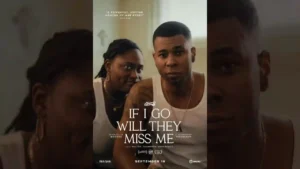
Choose If I Go Will They Miss Me for acting performance and realism.
No clear scored advantage over the other product.
Scores are out of 5. Missing scores mean missing review evidence, not a missing feature.
The movie feels insufficiently trimmed, with repeated golf rounds, wagers, and conversations that add little. Several critics argue that a cut near 90 minutes would have been substantially more effective.
The editing earns specific praise for nimbly moving into the past, letting memory and present-day disappointment illuminate each other.
The brothers’ resentment and grief provide a workable emotional foundation, but the conflicts are usually mild, predictable, and quickly resolved. The film rarely develops the stakes needed for a powerful family drama.
The strongest responses find the family drama moving, graceful, and emotionally substantial, with the coming-of-age material landing as more than a simple father-son conflict.
The family conflicts and emotional payoffs are visible long before they arrive. The story follows a familiar grief-and-reconciliation path with virtually no surprises.
The film earns credit for avoiding a standard three-act structure, yet some of its father-son beats are viewed as predictable, familiar, or close to cookie-cutter Sundance storytelling.
The sibling ribbing and golf jokes produce occasional chuckles, particularly for people who know the game. Repetition, broad delivery, and forced banter keep much of the comedy from landing.
Lozita is allowed moments of humor alongside her firmness, giving the family portrait a little welcome lightness without turning the film into a comedy.
The brothers receive the most attention, while Frankie and Marie are often reduced to simple traits or extensions of their parents. A few viewers found subtle layers, but most wanted more backstory and growth.
The family is often praised for empathy, interiority, and lived-in contradictions, especially around Big Ant and Lozita. A few critics find the central relationships too schematic or insufficiently developed within the feature’s structure.
Grief, fatherhood, legacy, sibling rivalry, and inherited family habits give the film meaningful material. The easygoing approach sometimes reveals subtle feeling, but it often stops short of a deeper exploration.
The film finds rich material in fatherhood, masculinity, imagination, systemic pressure, community, and the desire to be seen. Most critics find these ideas resonant, though the harshest critique says the film sacrifices subtlety for cheapened catharsis.
Edward Burns creates an easygoing ensemble atmosphere and occasionally handles the family material with care. The direction is also criticized for weak tension, repetitive golf staging, and a lack of visual or dramatic ambition.
Walter Thompson-Hernández’s direction is widely admired for visual confidence, empathy, and community intimacy. The main dissent is that his feature can feel derivative, overly aestheticized, or intermittently distancing.
As a golf-centered family dramedy, it works best for viewers who enjoy the sport and Burns’ familiar style. Those expecting sharper comedy, stronger competition, or deeper drama may come away disappointed.
One strongly negative assessment finds the coming-of-age fable disappointing because familiar beats and over-explanation replace the freshness promised by its premise.
The memorial trip offers a warm foundation for a story about grief, rivalry, and family legacy. Most reactions find the execution too slight and repetitive, though a few see an effective, personal character piece.
The father-son and family story earns substantial praise for tenderness, grace, and emotional complexity, but not unanimous support. Its looser construction and repetitive beats lead some critics to call it unfocused, schematic, or underwritten.
The affectionate ribbing sometimes makes the foursome feel like a real family with years of shared history. Other viewers find the family unit less believable when the characters become too schematic.
The strongest realism comes from the film’s honest, non-condescending view of family and neighborhood life. Even with surreal flourishes, critics often feel the people and environment remain grounded and emotionally credible.
The family banter occasionally captures believable teasing and emotional avoidance, but it is repeated so often that it becomes forced and tiring. On-the-nose exposition and scripted-sounding exchanges are common complaints.
Responses split sharply: one critic praises the dialogue as rich and believable, while another calls it stilted and harmful to the film’s poetic flow.
The pub performance, ash-scattering moments, and gradual family reconciliation can be genuinely touching. The lighter tone and shallow speeches sometimes keep the grief from landing as deeply as it could.
At its best, the film is tender, involving, and capable of tearful emotional peaks. The biggest negative view argues that repetitive, over-explained storytelling weakens the poignancy the material should have.
Irish heritage, pub traditions, family lore, and the landscape give the movie warmth and identity. The cultural details work best when they deepen the family’s connection rather than simply decorate the golf trip.
Watts is portrayed with warmth, specificity, and dignity rather than as a shorthand for poverty or danger. The film’s affection for Black and multi-racial community life is one of its strongest points of agreement.
Ireland’s coastal courses and green landscapes are the film’s strongest craft asset. Even negative reactions frequently describe the scenery as gorgeous, breathtaking, or vacation-like.
The imagery is a major highlight: warm neighborhood portraits, expressive compositions, shadow, and indelible tableaux repeatedly carry emotion that the dialogue does not. The visual approach is among the film’s most consistently praised elements.
The basic memorial-trip structure is easy to follow, but several smaller beats and resolutions feel forced or poorly explained. Conversations often replace meaningful progression.
The film often favors dreamy, lyrical logic over literal explanation. That can be absorbing, but it also leaves parts of the story easier to feel than to explain and potentially difficult for viewers seeking a straightforward narrative.
The central foursome often feels comfortable together, especially when the teasing settles into genuine affection. Burns and Brian d’Arcy James are especially convincing as competitive brothers.
Big Ant and Lozita’s relationship feels believable, but its familiarity keeps the dynamic from feeling especially fresh.
The opening takes time to find its rhythm, and the repeated rounds of golf make the middle and back half drag. The mellow pace suits the subject, but the film often feels much longer than its story requires.
The vignette structure can feel nimble and lyrical, but recurring complaints describe the feature as repetitive, amorphous, meandering, or too willing to let its plot drift.
The screenplay has moments of smart family observation, but it relies heavily on repetition, exposition, and generic resolutions. Its strongest ideas about grief and legacy are not developed with enough depth.
The script is the film’s most divisive craft element: some see strong writerly instincts, while others find it obvious, underwritten, repetitive, or too eager to explain emotion. The feature expansion adds useful family dynamics but can lose subtlety.
The film’s clearest idea is that shared rituals can help families grieve, reconnect, and reinterpret a difficult parent. That warm message resonates even when the writing treats it too simply.
The film’s belief in imagination, dignity, and the worth of people too often flattened by outside narratives lands powerfully for most critics. The dissenting view finds the message too explicitly dictated rather than organically felt.
The final stretch brings the family closer and closes on a gently heartfelt memorial gesture. The resolution is predictable, but it leaves the story on a warmer and more satisfying note.
The unresolved, hopeful conclusion is mostly admired for refusing a falsely tidy resolution and embracing life’s incompleteness. One critic still feels the ending stumbles slightly and moves away from the film’s strongest element.
The roughly two-hour length is the most consistent complaint. A simple, low-stakes family golf story is stretched by repeated banter and course sequences well beyond what most viewers feel it needs.
The 90-minute length is criticized for leaving character perspectives and emotional specificity underdeveloped rather than feeling efficiently concise.
Seamus Egan’s lively, Irish-inflected music helps preserve momentum when the pace slows. The score adds warmth and cultural texture without overpowering the family scenes.
Malcolm Parson’s soulful, wistful piano writing is praised for binding the film’s disparate images and ideas together without overpowering them.
The movie mostly sustains a light, warm hangout tone, which many find charming. That breeziness can clash with sudden death and grief, leaving the comedy-drama balance uneven.
The realism-fantasy balance works beautifully for some critics, but others find the Greek, aviation, and surreal motifs insufficiently integrated. The film can feel cohesive emotionally even when its metaphors pull in different directions.
Edward Burns’ Freddy is intentionally prickly, but many find him too abrasive and strained to root for. A smaller group appreciates how naturally Burns fits the wisecracking, resentful role.
The central performances are repeatedly singled out as exceptional, especially Danielle Brooks and J. Alphonse Nicholson. Their emotional detail often compensates for complaints about exposition or familiar story beats.
The ensemble is generally solid, with several warm, natural turns offset by Edward Burns’ more abrasive lead work. Even harsher reactions usually praise at least one supporting performer.
The ensemble is one of the film’s clearest strengths, with repeated praise for emotionally present, authentic work. Even the more mixed critiques tend to separate performance quality from their frustrations with the writing.
Brian d’Arcy James is the most consistently praised performer, bringing warmth, ease, and emotional weight. Erica Hernandez also adds energy and confidence, while the remaining ensemble generally handles limited material well.
Myles Bullock is singled out as scene-stealing, while the nonprofessional ensemble is praised for natural screen presence and fully inhabited characters.
The Parting Glass sequence is widely treated as a musical and emotional highlight. Its intimate pub performance and more expansive credit arrangement give the film a welcome lift.
The music is praised for a lovely, resonant mix that ranges across styles without losing the film’s wistful mood. Its eclectic choices are attention-grabbing but generally treated as a strength.
The film offers pleasant company, attractive scenery, and a relaxed hangout mood for receptive viewers. Others find the repetitive golf and bickering dull enough to overwhelm its modest charm.
The film’s performances and visual beauty keep many critics engaged and even swept up despite its loose structure. Its appeal comes more from atmosphere, feeling, and imagery than conventional narrative momentum.
Golf devotees and longtime Edward Burns fans are the clearest audience. The family story can still connect beyond that niche, but many non-golf viewers may find the constant course action tedious.
The film’s open-hearted tone can be inviting, but its lyrical, avant-garde approach may make it harder for some viewers to settle into its rhythm.
The Irish links, coastline, and greenery give the film an inviting, polished look. The landscape photography is far more distinctive than the otherwise functional and repetitive coverage of golf.
The poetic visual language is a defining strength, full of striking compositions, surreal flourishes, warm portraits, and memorable community imagery. The main criticism is that repeated motifs and borrowed lyrical techniques sometimes dilute their impact.
The animated notebook sketches draw one sharp complaint, with the effect described as chintzy and disruptive beside the film’s stronger formal choices.
Expanding the short gives Lozita and the family more room, but one critic feels the feature loses some of the original’s freer, less narrative-bound quality.
The parents’ early courtship is described as organic, adding tenderness and history to a marriage that is much more strained in the present.
The golf matches rarely feel uncertain or consequential, so the competition produces little tension. Even the closing round improves more through family bonding than genuine sports suspense.
Big Ant’s wardrobe is used thematically, with clothing choices tracking whether he is leaning toward tenderness, darkness, or the visual memory of incarceration.
The recurring aircraft roar is used as more than background noise, turning an oppressive part of the neighborhood soundscape into a sign of possibility through Lil Ant’s perspective.
Nickerson Gardens and the surrounding Watts community feel lived-in, loving, and socially textured rather than merely used as backdrop. The neighborhood itself becomes a vivid emotional environment for Lil Ant’s imagination and family life.

Choose this inventive, unsettling documentary for fearless questioning, dark humor, and unpredictable storytelling. Skip it if you want a short, straightforward exposé with definitive answers.
Pros: originality, humor

Best for a hypnotic, bookish mystery with tactile visuals and cerebral chills. Skip it if reading-heavy, attention-demanding storytelling sounds more exhausting than exciting.
Pros: Atmosphere, cinematography
Cons: audience appeal

Best for an intimate, searching documentary that rewards focused attention and invites discussion. Skip it when devastating grief, addiction footage, and unresolved family tensions would be too much.
Pros: emotional impact, theme depth

Best for patient suspense, an unforgettable score, and an unsettling masked killer. Skip it for very young children or if you want to avoid intense scares; its restrained kills also...
Pros: directing quality, score quality
Cons: message quality