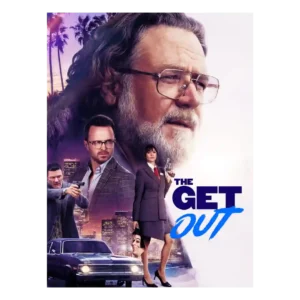
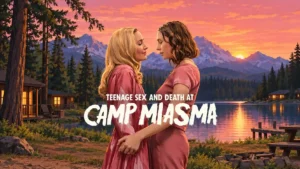
The Get Out
Where It Has the Edge
No clear scored advantage over the other product.

Scorata scores summarize analyzed review evidence on a 1–5 scale; they are not laboratory measurements or a simple average of customer star ratings. Feature scores summarize the reviews covering that feature. The overall score averages feature scores within each review, then combines review averages. When both expert and customer evidence are available, those two groups receive equal weight. Products can have different review coverage, so small score gaps do not establish a winner.
Recommendations prioritize important features for the category, with a score of at least 3.5, a gap of at least 0.25 points and at least two supporting reviews per product. Features with widely varying scores or broad connectivity contexts are excluded from recommendations. These safeguards do not establish statistical significance.
Quick verdict
The available evidence supports the recommendation below, but does not establish an overall winner. Check the remaining features against your priorities.
There is not enough comparable review evidence to recommend The Get Out over the other product.
Choose Teenage Sex and Death at Camp Miasma for emotional impact and rewatch value.
No clear scored advantage over the other product.
Scores are out of 5. Missing scores mean missing review evidence, not a missing feature.
The Los Angeles crime setting lacks memorable locations and a convincing sense of place.
The fake Camp Miasma franchise feels unusually complete thanks to its opening montage, props, sequels, lore and period textures. That invented horror history is repeatedly cited as one of the movie’s most convincing achievements.
Luke Evans’ flamboyant styling is memorable, but its goofiness clashes with the movie’s broader visual palette.
Little Death’s vent-headed silhouette is an especially memorable design, and the film’s stylized wardrobe helps sell its handmade, heightened slasher world.
A few tracking shots and action images show real flair, but the overall presentation is more often anonymous, flat, or lacking visual panache.
Candy colors, matte-painted landscapes, stylized gore and dreamlike compositions form the strongest area of agreement. Even negative reactions often concede that the film looks distinctive and beautiful.
Reactions to the setting are split. Some locations convincingly stand in for Los Angeles, while others make the Australian shoot obvious and visually generic.
Painted backdrops, fake franchise memorabilia, camp sets and tactile props create an unusually rich artificial world. The handmade look is repeatedly celebrated as part of the movie’s identity.
The crowded plotting leaves little room for meaningful investment, so violent turns and late twists land with limited weight.
Beneath the camp and gore, the film often lands as heartfelt, vulnerable and moving, particularly in its treatment of shame, desire and self-acceptance. A few find it less affecting than Schoenbrun’s earlier work.
The setup has workable ideas but is repeatedly described as derivative, familiar, or an imitation of better crime comedies.
One assessment finds the movie so absorbed in homage and reference that it struggles to stand fully on its own story despite its creative flourishes.
The darker violence carries little emotional weight because the characters and stakes are not developed enough to make it matter.
The psychosexual drama is dark, delirious and emotionally charged, using the blurred line between reality and fiction to intensify the central relationship.
The movie can feel stilted and lose momentum as it cuts among competing storylines.
Sharp cuts and inventive transitions give the slasher material extra punch, with the burn-through transition and rapid visual rhythm singled out as especially effective.
The movie rarely creates sustained danger or tension, and many action beats feel toothless. A few critics still enjoyed waiting to see how the storylines would collide.
Tension often comes from anticipation and inevitability rather than traditional jump scares, with the film keeping some viewers on edge even as it undercuts dread with humor.
Most characters are reduced to one-note quirks, familiar types, or functional plot pieces. The crowded story rarely gives their motives and arcs enough room to matter.
Kris’s movement from guarded self-consciousness toward sexual and emotional liberation lands powerfully for many, though some find secondary characters thin or caricatured.
The crime-comedy blend rarely feels cohesive enough to satisfy as either a thriller or a farce. More positive reactions treat it as undemanding, laid-back genre entertainment.
As a meta-slasher, it earns strong praise for loving the genre without simply mocking it, but it deliberately deprioritizes sustained fear and conventional slasher structure.
The opening sexual scene is deliberately comic but can feel jarring and overly in-your-face.
The film’s frank, horny treatment of sexuality is often praised as joyful, liberating and central to its themes rather than merely provocative. A few viewers find the execution too much or still not satisfying on its own terms.
The action is usually serviceable rather than exciting, with several critics finding little tension or originality. One car-wreck sequence stands out for its claustrophobic staging and impact.
The flamboyant massacre and one-take killing spree are frequent highlights, praised for choreography, editing and sheer slasher exuberance. A few viewers are less engaged by the gore-heavy set pieces.
The blackmail, robberies, and character decisions frequently strain credibility, with several plot turns feeling contrived rather than naturally escalating.
The movie intentionally favors dream logic, painted spaces and emotional truth over literal realism. That abstraction is enchanting for some and distancing for others.
The visuals range from anonymous and unremarkable to fluid and inventive. Tracking shots and the interior car-wreck sequence earn praise, but the overall look often lacks a distinctive identity.
Saturated color, tactile lighting, unusual framing and playful camera techniques make the cinematography a standout. The dreamlike camp imagery is repeatedly described as striking and immersive.
The comedy is highly inconsistent: Crowe’s deadpan delivery and some eccentric supporting turns work, but many jokes feel dry, crass, or poorly timed.
The campy gore, industry satire and oddball sexual comedy produce frequent laughs for many viewers. The humor is also a taste filter, with some finding it cringey, forced or ineffective.
The dialogue lacks the sharp wit and quirky specificity expected from this kind of crime comedy. Too many exchanges exist to explain motives or move the next twist into place.
The dialogue can be intimate, funny and unusually candid about desire, but some lines and thematic explanations feel overly declarative or tacked on.
The direction earns occasional praise for brisk movement and a light crime-story tone, but more often struggles to unify the humor, violence, and crowded plotting.
Jane Schoenbrun’s direction is widely admired for its distinctive visual imagination, tonal nerve and personal point of view. The main reservation is that the same freedom can become self-indulgent or narratively unruly.
The film struggles to balance goofy comedy, sincere drama, and sudden violence. A small minority found the lethal-but-light blend effective, but most experienced jarring shifts.
The blend of tenderness, camp, gore, satire and dream logic is exhilarating when it clicks, but the violent tonal shifts can also feel unstable or jarring.
The score divides opinion. Its playful, synth-heavy approach reinforces the unserious tone for one critic, while another finds it misplaced during dramatic and violent scenes.
Alex G’s score is repeatedly praised for its dreamy, inspired mood and its ability to keep the surreal slasher world buoyant.
The screenplay is the central weakness, overloading the movie with twists, thin characters, tonal conflict, and forced connections. Its promising pieces rarely form a satisfying whole.
The script earns praise for ambitious ideas, wit and emotional candor, but its density can become heavy-handed or self-indulgent. The balance between thesis and story is a major dividing line.
A good-hearted view of human nature gives the film more thematic interest than its conventional crime setup initially suggests.
The film’s deepest strength is its layered exploration of desire, shame, identity, fandom and the complicated pleasure of loving flawed art. Even mixed reactions often engage seriously with those ideas.
The intersecting schemes feel tangled and tenuously connected, making the story harder to follow than its basic premise should be.
Dream logic and shifting layers of fiction make the story intentionally slippery, but confusion is a repeated complaint. Viewers comfortable with ambiguity fare much better than those wanting a cleanly resolved plot.
Manco and Sunny provide a warm, grounding relationship, while Paul and Dobrev can be funny when their opposite energies click. That second pairing is more divisive, becoming irritating for some critics.
Hannah Einbinder and Gillian Anderson’s charged, tender chemistry is one of the most consistent strengths, giving the central relationship warmth even when the story turns surreal.
Most critics find the climax flat, unsurprising, or unearned, with the converging subplots producing relief more often than payoff. A few enjoyed seeing the puzzle connect and praised the final song choice.
The ending is sharply divisive: some find the final plunge into fantasy immersive and liberating, while others see padding, confusion or a late collapse in narrative coherence.
Manco and Sunny’s affectionate, loyal relationship is one of the movie’s most effective elements and gives the story a needed emotional anchor.
The Kris-Billy relationship is widely praised as tender, strange and genuinely sexy, with the actors’ chemistry helping the romance survive the film’s most abstract turns.
The central idea of an aging nightclub owner trying to leave crime behind is appealing, but the surrounding story becomes generic, excessive, and unfocused.
The story can be heartfelt, sharp and thematically rich, but it is also one of the main sources of division. Some see a brilliant emotional arc; others see references and surrealism overwhelming a coherent narrative.
The protagonist’s decency and reluctance toward violence give the movie a refreshingly humane streak beneath the criminal chaos.
Its ideas about desire, shame, fandom and loving problematic art resonate strongly when the emotional through-line clicks. Detractors find some of the messaging heavy-handed, muddled or overexplained.
Too many subplots make the film feel sluggish, jarring, or overstuffed despite its moderate runtime. A few critics found the movement brisk or at least never dull.
The pacing is one of the recurring weaknesses, with complaints about long-winded passages, redundancy and a meandering later stretch. The strongest set pieces still move with considerable energy.
At roughly 102 minutes, the movie still feels overfilled because it tries to carry too many characters and ideas.
The length draws some criticism because the film can feel long-winded or padded after its main ideas have landed, particularly around the epilogue and later digressions.
The film leaves little lasting impression for most critics and is often described as forgettable. One review gave its rewatchability the lowest possible mark.
Its dense references, layered imagery and deliberately unstable reality inspire repeated-viewing interest, with several viewers wanting to revisit it immediately or unpack more on a second pass.
The movie is intermittently fun and easy to watch, especially when the cast leans into the goofiness. Its clutter, weak tension, and uneven comedy keep it from becoming consistently engaging.
Most reactions emphasize how funny, strange and wildly entertaining the movie can be, especially for viewers on its wavelength. A small minority find the experience irritating or exhausting instead.
The cast brings strong energy and commitment even when the material falters. Most praise centers on the performers making thin or chaotic scenes more watchable.
The ensemble is broadly praised as fearless and well matched to the film’s heightened tone. Even mixed assessments tend to single out the acting as a strength.
The ensemble is generally game and energetic, with several performers elevating limited roles. The writing often prevents those performances from becoming fully rounded characters.
The supporting ensemble supplies memorable comic and horror-flavored cameos, though several assessments note that many smaller roles are intentionally thin or one-note.
Russell Crowe is the clear highlight, bringing warmth, comic timing, charisma, and grounded presence to Manco. Even the harshest reviews consider him the main reason to keep watching.
The two leads are the clearest consensus strength: Hannah Einbinder brings nervous vulnerability and comic precision, while Gillian Anderson supplies magnetic, playful glamour.
The closing use of the Gipsy Kings’ “Hotel California” is a consistent highlight and gives the ending a stylish final lift.
Needle drops, covers and Alex G’s music are major pleasures, often described as inspired or perfectly chosen. A few choices are considered overly obvious or on-the-nose.
This fits best as a casual streaming crime comedy or B-movie for viewers who enjoy quirky capers. Its recognizable cast broadens the appeal, though the messy execution limits it.
This is a strongly taste-dependent movie: slasher devotees, queer-horror fans and adventurous cinephiles often embrace it, while viewers wanting conventional scares or straightforward storytelling can bounce off hard.
The intentionally unreal digital blood works for some as part of the film’s fever-dream aesthetic, while others notice the computer-generated gore and prefer the practical work.
The queer and trans perspective is treated as a meaningful part of the film’s emotional and genre framework, with its representation praised for creating recognition and connection.
The practical blood work and tactile effects can be fun and convincing, but the mix with digital gore leaves some wishing the film had leaned more heavily on practical techniques.
One assessment finds the conspicuous candy, fast-food and cereal branding distracting enough to briefly pull attention away from the movie.
This is consistently described as a very low-scare horror film. The kills and gore are usually played as camp, memory or comedy rather than sustained dread, which will disappoint viewers seeking real fear.
The combination of practical and digital effects is praised for serving the film’s deliberately exaggerated slasher aesthetic rather than chasing realism.
The bloodshed is extravagant, stylized and often comic rather than punishing, which many slasher fans enjoy. A dissenting view finds the violent payoff too limited for the film’s provocative setup.
The heightened, direct sound work is singled out for making otherwise comic or exaggerated moments feel physically unnerving.
Value reactions are polarized: enthusiastic viewers call individual scenes worth the price of admission, while a strongly negative take says the experience is not worth paying for.

A deeply human coming-of-age drama carried by remarkable performances and an honest portrayal of grief. Its gentle optimism moves most viewers, though some find the final stretch hurried or overly...
Pros: Grief portrayal, acting performance
Cons: pacing

Billie Jean King’s magnetic first-person storytelling makes this an exhilarating portrait of athletic courage and social change. The filmmaking follows a familiar documentary structure, and her full tennis résumé gets...
Pros: entertainment value, Biographical coverage
Cons: Narrative structure

Choose this inventive, unsettling documentary for fearless questioning, dark humor, and unpredictable storytelling. Skip it if you want a short, straightforward exposé with definitive answers.
Pros: originality, humor

A singular voice, powerful piano playing and intimate film photography make this concert absorbing for receptive listeners. Its uninterrupted, often similar-sounding songs and lack of background context are an acquired...
Pros: directing quality, cinematography
Cons: pacing, Song variety