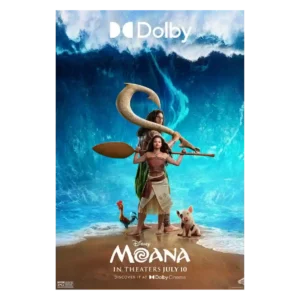
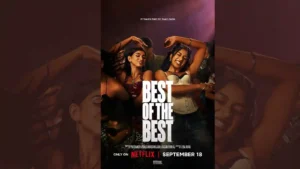
Moana
Where It Has the Edge
- supporting cast performance is 4.8 vs 4.3. Rena Owen, John Tui, and Frankie Adams add warmth, dignity, and family texture. Owen in particular is repeatedly...

Scorata scores summarize analyzed review evidence on a 1–5 scale; they are not laboratory measurements or a simple average of customer star ratings. Feature scores summarize the reviews covering that feature. The overall score averages feature scores within each review, then combines review averages. When both expert and customer evidence are available, those two groups receive equal weight. Products can have different review coverage, so small score gaps do not establish a winner.
Recommendations prioritize important features for the category, with a score of at least 3.5, a gap of at least 0.25 points and at least two supporting reviews per product. Features with widely varying scores or broad connectivity contexts are excluded from recommendations. These safeguards do not establish statistical significance.
Quick verdict
The review evidence points to a tradeoff: supporting cast performance versus rewatch value and acting performance. Choose according to which strengths matter more to you; the overall score alone does not settle that choice.
Choose Moana for supporting cast performance.
Choose Best of the Best for rewatch value and acting performance.
Scores are out of 5. Missing scores mean missing review evidence, not a missing feature.
The remake often inspires a desire to revisit the animated original instead. Its limited surprises and weaker visual translation reduce the incentive for repeat viewing.
Several reviewers see it as an easy comfort rewatch, helped by the friendship, music, dance routines, and upbeat spirit.
The songs, cultural detail, and occasional bursts of whimsy provide real pleasure. Overall enjoyment is limited by repetition, flat stretches, and the constant sense that the animated film offers the same experience more vividly.
Most reviewers find the movie funny, joyous, and easy to watch. Lower scores come from critics who feel the derivative story or slower second half drains too much energy.
Thomas Kail handles some musical and village scenes with energy, but the broader direction is often described as anonymous, stagebound, and overly dependent on the animated blueprint.
Lena Khan is repeatedly praised for energetic, clear direction that lets performers and dance routines breathe while keeping the tone buoyant.
Moana’s songs, her bond with Tala, and parts of the finale can still move audiences. Much of the remake, however, feels emotionally muted because it recreates familiar moments without restoring their original spark.
The friendship story frequently lands with real feeling, from painful arguments to a finale that several reviewers found genuinely moving or uplifting.
You’re Welcome, Shiny, and a few character exchanges still generate laughs. Heihei and other visual gags often translate poorly, becoming awkward or less charming in the realistic style.
The comedy is a major strength for most reviewers, with quick banter and culturally specific jokes landing often. A smaller number note that some jokes fall flat.
The story remains accessible, musical, and centered on courage, family, and community. Families new to the material may have fun, though some critics believe children are better served by the more colorful original.
The film is described as wholesome and, despite a small amount of mature reference, suitable for a family movie night.
The story still contains moving material, yet the remake often rushes emotional beats or fails to let tense and sad moments breathe. That weakens the sense of stakes.
The central friendship conflict often lands emotionally, but one review finds the second-half escalation repetitive and lower-energy.
The story follows the 2016 film beat-for-beat with only minor additions. Viewers should expect the same quest, conflicts, twists, and resolution.
Predictability is the most consistent story complaint, with several reviewers saying the film follows familiar college and dance-movie beats almost exactly.
The screenplay preserves a strong underlying story but contributes little invention of its own. Familiar lines, scenes, and structure are reproduced with only modest adjustments.
The screenplay earns frequent praise for structure, wit, cultural specificity, and ensemble balance, but critics also point to contrivances, thin supporting characters, and derivative plotting.
The voyage often drags between musical highlights, and several critics felt every minute of the nearly two-hour runtime. Familiarity makes slower passages feel even longer.
Pacing ranges from top-notch and rhythmically satisfying to noticeably slower once repeated friendship conflict dominates the second half.
Moana’s story remains refreshingly free of a love interest. The focus stays on leadership, identity, family, and friendship rather than forcing a romance into her journey.
The romance is secondary to the friendship. Some reviewers find the love interests useful to the leads’ growth, while others reject one pairing as formulaic or unappealing.
As a family fantasy musical, it delivers recognizable songs, adventure, comedy, and a clear heroic journey. It works adequately within the genre but rarely feels fresh or magical.
Dance-movie fans are the core audience: many reviewers see it as a welcome, highly enjoyable throwback, while a few feel its familiar formula keeps it from becoming memorable.
At roughly the same length as the original plus a modest extension, the runtime is not excessive on paper. Even so, sluggish middle sections make it feel considerably longer to many viewers.
The near-two-hour length divides critics: some are entertained enough to want even more, while another says the second-half conflict noticeably bloats the runtime.
Themes of identity, duty, inheritance, courage, ecology, and cultural memory remain meaningful. The remake preserves them but misses opportunities to deepen their relevance for a new decade.
The film gets strong marks for friendship, identity, and sisterhood, but one critic argues that deeper cultural pressures on South Asian women are raised without being fully explored.
Moana and Maui sometimes have snappy, playful friction that keeps the adventure moving. Other critics found the pairing awkward, stiff, or short on the effortless camaraderie of the animated film.
Maitreyi Ramakrishnan and Priyanka Kedia are consistently praised for making Maya and Anjali feel like longtime friends, with natural banter, warmth, irritation, and emotional history.
The lyrics and occasional witty exchanges still land, but much of the spoken dialogue feels copied, stiff, or delivered without enough rhythm and spontaneity.
The dialogue draws both praise and criticism: one review finds it natural and current without trying too hard, while another says English-language exchanges can feel noticeably removed from real speech.
The final act earns praise for its warmth, visual lift, and emotional release. The choral score helps the conclusion feel more stirring than several of the middle sections.
Most reactions to the ending are positive, especially the final dance and reconciliation, though a few critics find the climax abrupt or the resolution too convenient.
The editing keeps portions of the adventure moving cleanly, but some transitions and scene rhythms feel clunky. Momentum is strongest during the musical numbers.
Editing gets sharply split reactions. Some praise clean, generous cutting, while another critic says frequent cuts prevent viewers from fully appreciating the choreography.
Mark Mancina’s Pacific Island–inflected choral scoring gives the finale weight and urgency. The music is especially effective when supporting the story’s cultural and emotional peaks.
The recurring friendship theme is designed to connect emotional scenes and, according to the composer, gives the score cohesion without competing with the many songs.
The strongest images are crisp tropical vistas, sweeping island views, and bright ocean colors. Oscar Faura’s long shots give the production some genuine scale even when effects-heavy scenes feel enclosed.
The photography is praised for warm campus imagery and colorful staging that gives the dance numbers visual lift.
The Polynesian and Pacific Islander cast, dance, music, community rituals, and physical diversity are consistently celebrated. The live performers make Motunui’s culture feel more tangible and specific.
Most reviewers celebrate the specific South Asian-American setting, dance traditions, and female friendship at the center. A minority argue that parts of the writing feel out of touch or would benefit from deeper female authorship.
The core tale of identity, leadership, restoration, and voyaging remains strong, clear, and emotionally accessible. The remake benefits greatly from inheriting one of Disney’s better modern stories.
The friendship-centered story is widely seen as warm, relatable, and effective even when simple. The biggest weakness is that several reviewers find the formula too familiar or the later conflict too simplified.
Moana’s growth into a confident leader remains satisfying, and her determination comes through clearly. Maui’s vulnerability and the pair’s bonding receive less depth than they need.
Maya and Anjali are generally viewed as rounded, relatable leads with believable inner conflicts. Several critics say the supporting characters and male arcs are thinner or less reflective.
The tropical palette, costumes, and occasional stylized musical passages can be attractive. Much of the movie still looks flat, overprocessed, stagebound, or less vibrant than the animation it copies.
The best dance set pieces and cinematography are described as colorful, theatrical, and visually striking, though one reviewer says the overall direct-to-streaming look can feel cheap outside the showcase numbers.
The practical clothing is one of the remake’s clearest craft strengths, with rich texture, careful cultural detail, and convincing weathering. Liz McGregor’s work translates the animated designs with impressive precision.
Costumes are singled out as part of the film’s vibrant identity, helping both the campus world and performance sequences feel distinctive.
Motunui, the boats, and the practical island spaces show strong craftsmanship and texture. The production is most convincing before the adventure moves into heavily digital settings.
The UCLA setting is praised for feeling like a real social ecosystem rather than a generic campus backdrop.
The ocean, mythology, village life, and animated flourishes create a colorful world between live action and fantasy. The cultural specificity is more convincing than the digital physicality.
The campus and South Asian dance community feel specific and lived-in, with tradition and experimentation presented as parts of the same evolving culture.
The cast is uneven overall. Catherine Laga’aia and several supporting players bring warmth and presence, while some dialogue delivery feels stiff and Dwayne Johnson often seems restrained.
The cast is widely praised for lively, committed work, especially in the dance-heavy material. The main dissent says some exchanges can feel less natural than intended.
The returning songs are the remake’s most consistent strength, with How Far I’ll Go, We Know the Way, You’re Welcome, and Shiny still landing. The new end-credits song receives much weaker reactions.
The soundtrack is repeatedly praised for strong needle drops, varied Indian music, and crowd-pleasing songs that add momentum to the dance sequences.
Rena Owen, John Tui, and Frankie Adams add warmth, dignity, and family texture. Owen in particular is repeatedly singled out for scene-stealing emotional presence.
The ensemble is generally seen as lively and memorable, with several comic standouts. One negative review says many supporting players fade into the background because they are underdeveloped.
Catherine Laga’aia is one of the film’s most dependable strengths, bringing an earnest presence, likability, and a strong singing voice to Moana.
The two leads are one of the strongest points of agreement, with Priyanka Kedia and Maitreyi Ramakrishnan repeatedly praised for charisma, energy, and emotional credibility.
Viewers unfamiliar with the animated film may enjoy the story and songs on their own terms. Longtime fans are much more likely to question why this nearly identical version exists.
The cultural specificity is repeatedly described as a strength rather than a barrier, with reviewers expecting the film to connect beyond South Asian audiences and especially with younger dance fans.
The coming-of-age themes are presented clearly enough for children while still carrying ideas about identity, duty, and courage for older viewers.
One reviewer calls it a fun family watch and sees little in the content that should worry families.
The seafaring set pieces can look large and energetic, especially the Kakamora and ocean encounters. The climax is more divisive, with some finding it spectacular and others seeing noisy, weightless spectacle.
The animated tattoos and a few stylized musical moments work well, but many hybrid creatures look awkward beside human actors and lose the charm of the original designs.
A few water effects, Kakamora scenes, and stylized sequences impress, but the dominant look is polished yet artificial. Green-screen backgrounds and cartoon creatures frequently lack physical weight.
Choreography is the clearest consensus strength: reviewers call the routines electric, inventive, culturally varied, and exciting enough to carry even the most familiar story beats.
This is an exceptionally faithful adaptation, preserving nearly every plot beat, song, joke, and character turn. That accuracy will comfort some viewers but is also the main reason others find it redundant.
Maui’s wig, prosthetic bodysuit, and overly literal physical recreation are among the most repeated complaints. The look is frequently described as artificial, distracting, or costume-like.
Reviewers respond well to its messages about friendship, self-definition, living fully in the present, and choosing a life on your own terms.
The story is generally easy to follow and its many threads come together cleanly, even when the structure is simple.
The physical sets, costumes, hair, and weathered details are carefully executed. These tangible elements stand out positively against the less convincing digital environments.
The mix of actors, green screens, digital water, and cartoon-like creatures rarely feels physically coherent. Many scenes look polished but not convincingly real.
A reviewer notes some mention of sex but still considers the movie a comfortable family watch, indicating approval of the relatively restrained level.
The effects range from artful water work and lively stylization to obvious green screen and awkward creature designs. The overall result is technically busy but inconsistent.
The movie is praised for keeping its satire, emotion, songs, and coming-of-age comedy cohesive rather than letting the music-heavy format overwhelm the story.
Critical response is predominantly negative, centered on the remake’s lack of purpose and invention. A smaller group considers it a buoyant or at least competent entry among Disney’s live-action adaptations.
One critic says the movie is less of the raucous comedy promised by its synopsis, especially once the more dramatic second half takes over.
The ocean, storms, and environmental effects receive strong, immersive treatment. In a premium theater, the surrounding waves and weather add welcome scale.
The central value problem is that a more vivid version is already widely available. Paying theater prices for a near-copy with flatter visuals is difficult to justify for viewers who know the original.

A deeply human coming-of-age drama carried by remarkable performances and an honest portrayal of grief. Its gentle optimism moves most viewers, though some find the final stretch hurried or overly...
Pros: Grief portrayal, acting performance
Cons: pacing

Billie Jean King’s magnetic first-person storytelling makes this an exhilarating portrait of athletic courage and social change. The filmmaking follows a familiar documentary structure, and her full tennis résumé gets...
Pros: entertainment value, Biographical coverage
Cons: Narrative structure

Choose this inventive, unsettling documentary for fearless questioning, dark humor, and unpredictable storytelling. Skip it if you want a short, straightforward exposé with definitive answers.
Pros: originality, humor

A singular voice, powerful piano playing and intimate film photography make this concert absorbing for receptive listeners. Its uninterrupted, often similar-sounding songs and lack of background context are an acquired...
Pros: directing quality, cinematography
Cons: pacing, Song variety