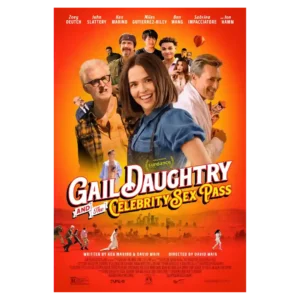
Gail Daughtry and the Celebrity Sex Pass
Where It Has the Edge
- directing quality is 4.7 vs 4.4. David Wain’s commitment to absurdity, fast comic rhythm, and playful celebrity cameos is widely admired, though some felt...

Scorata scores summarize analyzed review evidence on a 1–5 scale; they are not laboratory measurements or a simple average of customer star ratings. Feature scores summarize the reviews covering that feature. The overall score averages feature scores within each review, then combines review averages. When both expert and customer evidence are available, those two groups receive equal weight. Products can have different review coverage, so small score gaps do not establish a winner.
Recommendations prioritize important features for the category, with a score of at least 3.5, a gap of at least 0.25 points and at least two supporting reviews per product. Features with widely varying scores or broad connectivity contexts are excluded from recommendations. These safeguards do not establish statistical significance.
Quick verdict
The review evidence points to a tradeoff: directing quality versus theme depth and cast chemistry. Choose according to which strengths matter more to you; the overall score alone does not settle that choice.
Choose Gail Daughtry and the Celebrity Sex Pass for directing quality.
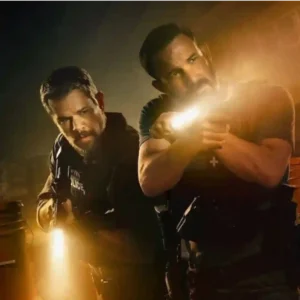
Choose The Rip for theme depth and cast chemistry.
Scores are out of 5. Missing scores mean missing review evidence, not a missing feature.
The locations and bright surfaces support the heightened Hollywood fantasy, but the inexpensive finish can look shiny, shallow, and closer to streaming than a polished theatrical comedy.
The ordinary cul-de-sac and stash house are transformed into threatening, enclosed spaces, making the modest location feel tense rather than cheap.
The movie creates a refreshingly ridiculous version of Hollywood where celebrity logic overrides reality, and that heightened setting remains enjoyable even when individual jokes miss.
The stash house itself can feel lived-in and threatening, but the broader Miami setting is underused. Several critics wanted more local texture and a stronger sense that the story truly belonged to that city.
Los Angeles is presented as bright, tacky, sleazy, and affectionately artificial. Some critics enjoyed that vulgar postcard look, while others found it cheap or visually shallow.
The film’s dark neo-noir lighting and gritty sheen often create a convincing, cinematic mood. The same darkness is also a recurring complaint, with several viewers finding later scenes murky, ugly, or generically Netflix-polished.
At its best, the dialogue turns deliberate nonsense into sharp punchlines. The weakest lines can feel wooden or overworked, but the verbal hit rate impressed several critics.
The dialogue draws frequent criticism for exposition, tough-guy clichés, and repetitive profanity. A smaller group likes the natural banter and hard-boiled rhythm when the actors can make it feel lived in.
The story works primarily as a frame for jokes and cameos. That loose construction delights viewers who accept the format but frustrates those looking for a coherent, fully developed narrative.
The best version of the story is a compact pressure cooker about trust, greed, and corruption. The weaker version becomes generic or muddled once its thin characterization and pileup of twists start showing.
The profanity and juvenile vulgarity fit the deliberately lowbrow style, but at least one critic found that approach puerile rather than playful.
The constant tough-cop profanity can become grating rather than immersive, especially when paired with the film’s sourer stretches.
The late action material is one of the weaker stretches, with the Western-set climax described as laugh-light compared with the faster verbal and visual gags.
The action is divisive: some praise the clear gunfights, chases, and physical impact, while others find it too sparse, generic, or overbearing late in the film. The suspense often lands better than the spectacle.
The Hollywood and celebrity satire has a clear target, but the film rarely pauses long enough to explore it deeply; the emphasis stays on jokes rather than substance.
The moral ambiguity around greed, loyalty, corruption, and who counts as a good cop gives the thriller more substance than a simple shootout movie. Some critics still wish those ideas were sharper or less simplistic.
The central premise and gleefully irrational turns feel fresh and surprising, even though the story openly borrows its basic journey from The Wizard of Oz.
The twists are the most polarizing part of the plot: some land as clever surprises, while others are spotted early or feel mandated by the genre. The structure works better than its actual novelty.
The overall construction moves quickly, but some digitally inserted cameos and transitions feel clunky enough to break the comic flow.
The quieter money-counting and interrogation scenes benefit from deliberate cuts that let tension breathe. Action editing is less consistent, with some complaints about choppiness and a chaotic final stretch.
At roughly 93 minutes, the movie feels fast and satisfying to fans. For viewers who reject the humor, the same runtime can feel far longer than it is.
The film usually moves well enough that its near-two-hour length is not a major problem. The most common runtime complaint is that the wrap-up or finale could lose several minutes.
For viewers who miss broad, fearless absurdist comedy, the movie delivers exactly that kind of experience and feels like a welcome return to an underused style.
As an old-school cop and crime thriller, the movie generally delivers what genre fans want: stars, paranoia, moral murk, and escalating danger. Even lukewarm reviews often concede that it functions as a solid throwback.
The Wizard of Oz structure gives the movie a recognizable path, but the gangster subplot and constant digressions leave the narrative feeling loose, contradictory, or barely held together.
The layered double-crosses and hidden motives are often harder to follow than they need to be. Some enjoy that density, but several reviewers call the plotting muddy, convoluted, or logically inconsistent.
The pace is deliberately relentless and often gets funnier as it goes. Still, repeated bits, a slow first half-hour, and a sagging back half test the patience of less receptive viewers.
Once suspicion takes hold, the film can move with excellent momentum and make its length feel light. The main complaints are a slow first act, a long setup, and finales that sometimes run past the natural stopping point.
A surprising warmth runs underneath the Hollywood satire, keeping the movie from feeling entirely cynical even when the story stays deliberately lightweight.
The central friendship and weary-cop humanity give the movie real emotional weight for some viewers. Others find late grief beats or sentimental touches unearned, leaving the emotional payoff uneven.
The movie gestures toward ideas about celebrity worship and Hollywood fantasy, but the comic detours keep those ideas from reaching a strong emotional or thematic conclusion.
The film’s moral framing of cops and corruption splits opinion. Some appreciate its search for imperfect heroes, while others see the good-cop message as simplistic, too pointed, or close to copaganda.
Some found the finale boldly unpredictable and consistent with the movie’s lunacy, while others considered the resolution bland or less satisfying than the setup.
The ending is sharply divisive. Several critics love the final reveal and resolution, while others think the film keeps going too long, turns generic, or closes on an overly sentimental note.
Gail and Otto’s supportive friendship gives the silliness a warm center, while Jon Hamm and John Slattery’s Mad Men history adds an effective layer of self-aware chemistry.
Damon and Affleck’s chemistry is the clearest consensus strength. Their long friendship gives the trust, suspicion, banter, and confrontations a lived-in weight the script could not easily manufacture.
The screenplay is either tightly engineered nonsense or an underdeveloped spitballing session, depending on the viewer. Its strongest recurring bits show real craft, but weaker sections feel unfinished.
The screenplay earns praise for its contained premise, suspicion engine, and satisfying reveal structure. Its weaker side is exposition, thin secondary characterization, and logic that becomes patchy under the weight of the twists.
Gail gets a modest self-liberating arc, but most of the traveling companions remain intentionally thin comic types rather than fully developed characters.
Character depth is the most consistent weakness. Damon and Affleck get the most usable material, while several supporting officers are repeatedly described as underdeveloped, thin, or introduced too late.
David Wain’s commitment to absurdity, fast comic rhythm, and playful celebrity cameos is widely admired, though some felt the film shows less control than his best work.
Joe Carnahan is widely praised for controlling suspicion, pressure, and contained action with confident genre instincts. A minority find the filmmaking inert, overly blunt, or chaotic once the final act erupts.
The joke density is enormous, but the hit rate is the central point of disagreement. Some laughed harder than they had at a recent comedy, while others found it painfully unfunny.
The humor is light and mostly carried by banter, attitude, and the Damon-Affleck dynamic. Some viewers think that amount is just right, while others wish the grim tone had more levity.
The cartoon and gory violence is a major tonal divider. Some viewers found the sudden brutality hilarious, while others thought it struck a sour note against the movie’s cheerful mood.
The late surge of gunfire and chases can feel excessive when it starts crowding out the intrigue that made the earlier sections work.
The movie is competently shot and technically clean, even when its deliberately cheap-looking aesthetic and inserted cameos make some moments feel less polished.
The moody, low-light cinematography often gives the film a gritty theatrical look and turns confined spaces into pressure cookers. The main drawback is that the final act becomes too murky for at least one critic.
Critical response is highly split: enthusiastic supporters see inspired absurdism, while detractors view the same choices as sloppy, shallow, or underwritten.
Some of the early critical enthusiasm is seen as justified, especially around the darker style and stronger-than-usual Netflix craft. That praise does not erase complaints about generic plotting and thin characters.
This is sharply divisive comedy. Fans of David Wain’s anti-comedy and Los Angeles industry jokes are likely to enjoy it most, while mainstream viewers may find it exhausting or inaccessible.
The movie plays best as a Friday-night, macho crime-thriller watch rather than a broad crowd-pleaser. Viewers already drawn to Damon, Affleck, and old-school cop movies are the clearest fit.
Some viewers were still quoting and remembering the jokes days later or immediately wanted another viewing. Others expected to forget the trip quickly and had no interest in returning.
The mystery can reward a second viewing, and some viewers are eager to revisit how the clues fit together. Others expect the movie to fade quickly once the twists are known.
Supporters describe a breezy, irresistible theatrical experience; detractors found it a draining slog. Enjoyment depends heavily on whether the intentionally stupid humor clicks.
Most reactions land on enjoyable to very entertaining, especially when the movie leans into suspicion and star chemistry. The dissenters see it as disposable, generic streaming fare that is easy to forget.
Zoey Deutch is the clearest point of agreement, balancing wide-eyed sweetness, fast delivery, and controlled absurdity well enough to anchor the entire film.
Damon and Affleck repeatedly elevate the material, with Damon often singled out for the more controlled, layered work. Their performances remain compelling even when the script gives them familiar archetypes.
The cast commits fully to the movie’s heightened silliness. Some found the early overacting tiring, but most agreed the performers understand the absurd tone.
The ensemble is one of the movie’s biggest strengths, with the cast repeatedly credited for lifting routine material. Even harsher takes usually blame the script more than the performers.
The supporting ensemble is energetic and game, with several performers turning tiny roles into memorable comic moments and John Slattery emerging as the most frequent standout.
The supporting cast is frequently praised, especially Steven Yeun and Sasha Calle, and several reviews call the ensemble unusually strong. The frustration is that Taylor, Moreno, and others are not always given enough to do.
Its firmly adult crime-thriller sensibility is part of the appeal for viewers who want a grown-up, hard-edged genre movie.
The bright wardrobe and ruby-red Oz references are a standout, with Gail’s styling helping sell the cheerful storybook tone.
The sound can make gunfire and physical hits feel forceful on a good setup, but the mix is inconsistent. One review specifically notes dialogue being swallowed by ambient noise.
The strongest dramatic scenes are the face-offs between Damon and Affleck, where their friendship and mutual distrust give the macho posturing real emotional intensity.
Despite its explicit premise, the movie often feels oddly wholesome and affectionate. Its sexual material, language, and cartoon violence still make it unsuitable for family viewing with younger children.
The cop lingo, worn-down behavior, and grounded production often create convincing authenticity. That realism is weakened by implausible decisions, continuity errors, and plot mechanics that some reviewers could not buy.
The pulsing, glowering score is a consistent technical strength, amplifying dread and keeping momentum alive through quieter stretches. Even a more skeptical review still finds it propulsive.
The sexual premise and soft-focus set pieces are raunchy but usually presented with playful innocence rather than grim explicitness, which several critics found surprisingly light.
Suspense is the movie’s most dependable craft strength. The money, ticking clock, uncertain loyalties, and Damon-Affleck distrust create sustained pressure even when the eventual action or reveals disappoint.
The contained, grounded pressure-cooker tone works very well at its best. The trouble comes when the movie shifts into shouty action, relentless dourness, or sentimental closure that feels like a different film.
One enthusiastic reviewer felt the movie offered enough star power and old-school excitement to justify paying for the experience rather than only streaming it.

A deeply human coming-of-age drama carried by remarkable performances and an honest portrayal of grief. Its gentle optimism moves most viewers, though some find the final stretch hurried or overly...
Pros: Grief portrayal, acting performance
Cons: pacing

Billie Jean King’s magnetic first-person storytelling makes this an exhilarating portrait of athletic courage and social change. The filmmaking follows a familiar documentary structure, and her full tennis résumé gets...
Pros: entertainment value, Biographical coverage
Cons: Narrative structure

Choose this inventive, unsettling documentary for fearless questioning, dark humor, and unpredictable storytelling. Skip it if you want a short, straightforward exposé with definitive answers.
Pros: originality, humor

A singular voice, powerful piano playing and intimate film photography make this concert absorbing for receptive listeners. Its uninterrupted, often similar-sounding songs and lack of background context are an acquired...
Pros: directing quality, cinematography
Cons: pacing, Song variety