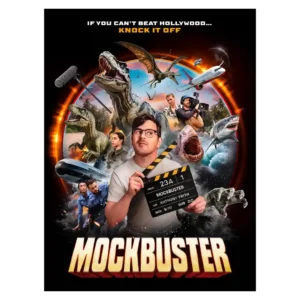

Mockbuster
Where It Has the Edge
- character development is 4.8 vs 4.3. Frith’s shift from stalled corporate-video director to overwhelmed feature filmmaker gives the documentary a strong emotional center. His...

Scorata scores summarize analyzed review evidence on a 1–5 scale; they are not laboratory measurements or a simple average of customer star ratings. Feature scores summarize the reviews covering that feature. The overall score averages feature scores within each review, then combines review averages. When both expert and customer evidence are available, those two groups receive equal weight. Products can have different review coverage, so small score gaps do not establish a winner.
Recommendations prioritize important features for the category, with a score of at least 3.5, a gap of at least 0.25 points and at least two supporting reviews per product. Features with widely varying scores or broad connectivity contexts are excluded from recommendations. These safeguards do not establish statistical significance.
Quick verdict
The review evidence points to a tradeoff: character development versus ending satisfaction and editing quality. Choose according to which strengths matter more to you; the overall score alone does not settle that choice.
Choose Mockbuster for character development.
Choose Remake for ending satisfaction and editing quality.
Scores are out of 5. Missing scores mean missing review evidence, not a missing feature.
The premiere provides a joyful finish, but the route there is rushed. More detail on reshoots, editing, and final delivery would have made the conclusion more satisfying.
The final passages leave an exceptionally strong emotional impression. Their force comes from confronting the last year of Adrian’s life and expressing love that cannot reach him.
Editing and narration usually keep the chaos clear and light on its feet. The jump from reshoots to the premiere feels abrupt and could have used another connective scene.
The shifting archive makes decades feel painfully adjacent, with cuts that dramatize how abruptly life changes. One critic finds occasional cross-cutting clumsy and repetition unnecessary.
The central six-day filmmaking challenge is easy to follow. Context for The Asylum, preparation details, and the path from reshoots to premiere are thinner than they should be.
Earlier-film excerpts help newcomers understand the family history. A reservation is that immersion in the archive sometimes obscures the larger argument.
The funniest moments come from blunt studio executives, improvised problem-solving, and nobody pretending the production is under control. The comedy complements rather than erases the stress.
Dry Hollywood satire, family teasing, and McElwee’s puzzled reactions bring welcome laughter. The humor offers breathing room without erasing the sadness.
Frith’s shift from stalled corporate-video director to overwhelmed feature filmmaker gives the documentary a strong emotional center. His self-doubt and growth make the journey relatable.
Adrian emerges as a witty, ambitious individual across childhood and adulthood, and other subjects bring engaging personalities. Occasional frustration arises when McElwee shifts attention away from them and back to himself.
The six-day shoot supplies genuine tension through clashes, delays, and impossible logistics. The conflict stays engaging without becoming melodramatic.
The real family drama is revealing and compelling, exposing addiction’s effects on intimate relationships.
The Asylum interviews are candid, funny, and among the film’s best material, especially the executives’ blunt descriptions of their business. Once shooting begins, the documentary could use more outside voices.
Candid conversations about addiction offer intelligence and honesty. Adrian’s own interview footage also shows an ability to draw people out.
Frith handles the self-aware documentary with confidence, balancing production chaos, humor, and personal stakes. A few structural gaps keep the final stretch from feeling fully polished.
McElwee’s open, self-questioning approach transforms a family archive into ambitious personal cinema. His observational choices and willingness to confront painful material earn exceptional praise.
Beneath the production comedy is a thoughtful question about whether creating flawed art is better than never creating at all. It also explores ego, compromise, work, family, and success.
Memory, mortality, artistic legacy, and the limits of recording a life intertwine in a searching meditation. Its refusal to settle on easy answers is a widely praised strength.
The stress, self-doubt, and eventual premiere create a surprisingly warm payoff. Its affection for scrappy filmmaking makes the feel-good moments land without seeming manipulative.
The grief is devastating, but affectionate childhood moments and candid reflections give it depth beyond tragedy. Adrian’s own footage makes the loss especially immediate.
Most of the 90-minute journey moves briskly, but the middle logistics can linger. The final act then compresses key steps, creating a slow-middle, rushed-ending rhythm.
Repetition is the clearest pacing complaint, with some passages becoming tedious. These weaknesses are generally treated as secondary to the film’s emotional achievements.
At roughly 90 minutes, it fits its subject and generally feels appropriately sized. Minor middle-section drag does not make the overall length excessive.
The film is praised for building a remarkably complete picture within less than two hours.
The personal dream-chasing narrative gives the industry access a clear emotional spine. It balances setbacks, absurdity, and collaboration well enough to make the process satisfying.
Most critics find the family story and stalled adaptation meaningfully intertwined. Others find the remake thread less engaging or better suited to a separate film, and repetition occasionally weakens the storytelling.
The candid access makes low-budget filmmaking feel messy, exhausting, and genuinely collaborative. A little staging is noticeable, but the pressures and compromises still come across as authentic.
Unvarnished recordings and unresolved self-questioning lend the film unusual honesty. It acknowledges the limits of both a camera’s perspective and the explanations cinema can offer.
B-movie fans and aspiring filmmakers should find it especially rewarding. It offers affectionate schlock culture alongside a practical look at making a feature under absurd constraints.
The documentary is praised for asking searching questions instead of claiming to explain a life completely. Its uncertainty is part of its achievement.
Directing a bargain-basement dinosaur movie while simultaneously documenting the experience gives the story a rare, self-reflexive premise. It finds a fresh angle on the familiar pursuit-of-a-dream arc.
The film earns praise as an utterly singular, intensely personal documentary rather than a conventional grief portrait.
Its strongest idea is that making imperfect work can matter more than waiting for ideal conditions. The film turns creative compromise into an encouraging case for starting somewhere.
The film powerfully connects art, memory, and enduring family love. It also carries a caution about allowing recording to take precedence over lived relationships.
The hectic production, candid personalities, and self-aware comedy make this consistently entertaining. Even viewers unfamiliar with The Asylum can enjoy the ride.
The film is absorbing and sometimes funny despite its painful subject. Some repetitions create fleeting tedium, but the strongest passages remain riveting.
Home movies and Adrian’s recordings become intimate windows into a life that cannot be recovered. Their contrasts reveal personality, grief, and perspectives his father’s camera missed.
The mournful atmosphere is thoroughly devastating. Its emotional weight supports a searching portrait rather than a detached account of loss.
The portrait preserves Adrian’s wit, ambition, and individuality alongside his addiction. One substantial reservation is the absence of family voices that could broaden the account.
The portrayal is praised for showing Adrian without judgment and refusing to reduce him to setbacks. Missing family perspectives nonetheless leave one critic wanting a fuller, more balanced account.
Adrian’s camerawork is admired for precise movement and visually exciting images. His intervention behind the camera adds interest and energy to the film.
Combining the father’s archive with the son’s recordings brings another perspective into the film. Bini’s editorial partnership is also singled out as an apt match.
Charleen’s fading memory gains poignancy beside footage of her younger, vivid self. The contrast makes preservation feel both valuable and troubling.
Adrian’s own recordings and candid conversations make addiction feel personal and unvarnished. The material is illuminating but often upsetting to watch.
Arguments, teasing, estrangement, and love create a revealing picture of family life. Ordinary interactions carry weight because the film shows what those bonds eventually endured.
The father-son relationship is treated with affection and painful self-questioning. McElwee’s doubts about his influence and his inability to save Adrian give the portrayal its emotional weight.
The film’s scrutiny of its own maker is widely admired for vulnerability and candor. Yet filming intimate family struggles can feel intrusive, and one critic reads the underlying practice as a damaging abuse of power.
Joy and absurdity sit alongside mourning, keeping the film from becoming a single-note lament. The remake subplot often supplies the lighter counterweight.
It works beyond The Asylum’s core fan base, especially for B-movie devotees and anyone curious about filmmaking. Aspiring directors are the clearest fit.
McElwee’s reflective voice gives the shifting footage a personal thread. Its dry, soothing delivery carries audible heartbreak without losing its familiar warmth.
Frith is a charming, vulnerable guide whose passion and self-doubt carry the documentary. His occasional impatience and uncertainty make the portrait more candid, though less consistently polished.
The veteran actors and Asylum executives add warmth, humor, and blunt candor. Michael Paré, Eric Roberts, Paul Bales, David Michael Latt, and David Rimawi are particular standouts.
The potent mixture of 16mm and digital imagery gives different eras a distinct texture. Adrian’s visually exciting work adds another expressive register.

A deeply human coming-of-age drama carried by remarkable performances and an honest portrayal of grief. Its gentle optimism moves most viewers, though some find the final stretch hurried or overly...
Pros: Grief portrayal, acting performance
Cons: pacing

Billie Jean King’s magnetic first-person storytelling makes this an exhilarating portrait of athletic courage and social change. The filmmaking follows a familiar documentary structure, and her full tennis résumé gets...
Pros: entertainment value, Biographical coverage
Cons: Narrative structure

Choose this inventive, unsettling documentary for fearless questioning, dark humor, and unpredictable storytelling. Skip it if you want a short, straightforward exposé with definitive answers.
Pros: originality, humor

A singular voice, powerful piano playing and intimate film photography make this concert absorbing for receptive listeners. Its uninterrupted, often similar-sounding songs and lack of background context are an acquired...
Pros: directing quality, cinematography
Cons: pacing, Song variety