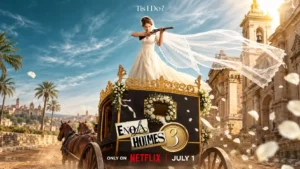
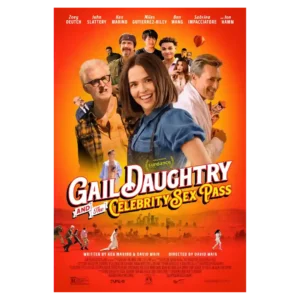
Enola Holmes 3
Where It Has the Edge
- acting performance is 4.8 vs 4.0. An energetic central cast generally remains engaging, with Brown and several character actors carrying even the more awkward...

Scorata scores summarize analyzed review evidence on a 1–5 scale; they are not laboratory measurements or a simple average of customer star ratings. Feature scores summarize the reviews covering that feature. The overall score averages feature scores within each review, then combines review averages. When both expert and customer evidence are available, those two groups receive equal weight. Products can have different review coverage, so small score gaps do not establish a winner.
Recommendations prioritize important features for the category, with a score of at least 3.5, a gap of at least 0.25 points and at least two supporting reviews per product. Features with widely varying scores or broad connectivity contexts are excluded from recommendations. These safeguards do not establish statistical significance.
Quick verdict
The review evidence points to a tradeoff: acting performance versus originality. Choose according to which strengths matter more to you; the overall score alone does not settle that choice.
Choose Enola Holmes 3 for acting performance.
Choose Gail Daughtry and the Celebrity Sex Pass for originality.
Scores are out of 5. Missing scores mean missing review evidence, not a missing feature.
The dialogue is faulted by one critic for sounding engineered for short viral moments instead of natural, well-developed scenes.
At its best, the dialogue turns deliberate nonsense into sharp punchlines. The weakest lines can feel wooden or overworked, but the verbal hit rate impressed several critics.
Critics frequently find the case formula familiar and its deductions less surprising than in previous installments.
The central premise and gleefully irrational turns feel fresh and surprising, even though the story openly borrows its basic journey from The Wizard of Oz.
Barantini makes strong use of Malta and some kinetic camera moves, but his uneven handling of plot, action clarity, and changing tone divides critics.
David Wain’s commitment to absurdity, fast comic rhythm, and playful celebrity cameos is widely admired, though some felt the film shows less control than his best work.
It leans further into chases, conspiracy and romance, reducing the precise detective work that originally made the Holmes name satisfying.
For viewers who miss broad, fearless absurdist comedy, the movie delivers exactly that kind of experience and feels like a welcome return to an underused style.
Chases, brawls, and escapes provide bursts of excitement for many viewers, although a few find the action awkwardly staged or surprisingly scarce.
The late action material is one of the weaker stretches, with the Western-set climax described as laugh-light compared with the faster verbal and visual gags.
Enola’s decision about marriage and independence makes her growth a central attraction, though some find the writing of her adulthood shallow or uneven.
Gail gets a modest self-liberating arc, but most of the traveling companions remain intentionally thin comic types rather than fully developed characters.
Kidnappings, coded clues, and political revelations sometimes become a tangle, while others find the straightforward detective trail easy to follow.
The Wizard of Oz structure gives the movie a recognizable path, but the gangster subplot and constant digressions leave the narrative feeling loose, contradictory, or barely held together.
The treatment of gender, independence, and Britain’s imperial history is applauded by some for giving the adventure substance, while others call it blunt or poorly integrated.
The movie gestures toward ideas about celebrity worship and Hollywood fantasy, but the comic detours keep those ideas from reaching a strong emotional or thematic conclusion.
The screenplay tries to combine family stakes, romance, treasure, and colonial injustice; critics often find that mix contrived or overly busy.
The screenplay is either tightly engineered nonsense or an underdeveloped spitballing session, depending on the viewer. Its strongest recurring bits show real craft, but weaker sections feel unfinished.
The quick-cut approach divides opinion: some love its zippy energy and illustrated clues, while others find action continuity confusing and the flashbacks distracting.
The overall construction moves quickly, but some digitally inserted cameos and transitions feel clunky enough to break the comic flow.
The maturing relationship and a heartfelt Holmes family reconciliation give the lightweight adventure some affecting moments.
A surprising warmth runs underneath the Hollywood satire, keeping the movie from feeling entirely cynical even when the story stays deliberately lightweight.
At roughly 105 minutes, it is shorter than the preceding films and often feels brisker, though some viewers still find the ending stretched or the middle slow.
At roughly 93 minutes, the movie feels fast and satisfying to fans. For viewers who reject the humor, the same runtime can feel far longer than it is.
Some admire the quick pace and shorter running time; others find abrupt cuts exhausting, slow stretches dull, or the conclusion drawn out.
The pace is deliberately relentless and often gets funnier as it goes. Still, repeated bits, a slow first half-hour, and a sagging back half test the patience of less receptive viewers.
Questions of identity, freedom, privilege and British colonialism add substance, but their execution can seem blunt or too lightly explored.
The Hollywood and celebrity satire has a clear target, but the film rarely pauses long enough to explore it deeply; the emphasis stays on jokes rather than substance.
Sunlit Maltese streets, coastlines, and handsome period compositions earn frequent praise, though some question the camera work in action scenes.
The movie is competently shot and technically clean, even when its deliberately cheap-looking aesthetic and inserted cameos make some moments feel less polished.
Some find the emotional resolutions satisfying and fittingly conclusive; others complain that the finale goes on too long or ties loose ends too neatly.
Some found the finale boldly unpredictable and consistent with the movie’s lunacy, while others considered the resolution bland or less satisfying than the setup.
The approachable tone and positive relationships suit some families, but violent confrontations and colonial atrocities complicate an all-ages recommendation.
Despite its explicit premise, the movie often feels oddly wholesome and affectionate. Its sexual material, language, and cartoon violence still make it unsuitable for family viewing with younger children.
The heroine’s cheeky asides and Eudoria’s eccentricity keep some viewers smiling, while others find the comedy strained or less effective than before.
The joke density is enormous, but the hit rate is the central point of disagreement. Some laughed harder than they had at a recent comedy, while others found it painfully unfunny.
The wedding-day kidnapping, hidden gold and colonial conspiracy supply plenty of incidents, but several critics find them formulaic, scattered or flat.
The story works primarily as a frame for jokes and cameos. That loose construction delights viewers who accept the format but frustrates those looking for a coherent, fully developed narrative.
The central romance is frequently praised for its convincing, playful connection. The limited Enola–Sherlock partnership disappoints viewers who loved their earlier banter.
Gail and Otto’s supportive friendship gives the silliness a warm center, while Jon Hamm and John Slattery’s Mad Men history adds an effective layer of self-aware chemistry.
Malta’s historic architecture, lavish interiors, and Victorian details create an attractive backdrop for the caper.
The locations and bright surfaces support the heightened Hollywood fantasy, but the inexpensive finish can look shiny, shallow, and closer to streaming than a polished theatrical comedy.
Detailed Victorian outfits and eye-catching wedding looks are a major attraction, although one critic finds the styling less authentic than before.
The bright wardrobe and ruby-red Oz references are a standout, with Gail’s styling helping sell the cheerful storybook tone.
The Malta scenery, brisk montages, animations, and direct-to-camera flourishes retain much of the series’ look, but they are not universally charming.
Los Angeles is presented as bright, tacky, sleazy, and affectionately artificial. Some critics enjoyed that vulgar postcard look, while others found it cheap or visually shallow.
Returning fans can expect the same spirited tone and playful personality that made the earlier adventures appealing, although the sequel is less inviting to anyone tired of its familiar style.
This is sharply divisive comedy. Fans of David Wain’s anti-comedy and Los Angeles industry jokes are likely to enjoy it most, while mainstream viewers may find it exhausting or inaccessible.
An energetic central cast generally remains engaging, with Brown and several character actors carrying even the more awkward stretches.
The cast commits fully to the movie’s heightened silliness. Some found the early overacting tiring, but most agreed the performers understand the absurd tone.
Millie Bobby Brown is frequently singled out for charisma, warmth, and ease as Enola, although some find her newly mature portrayal more stiff or mannered.
Zoey Deutch is the clearest point of agreement, balancing wide-eyed sweetness, fast delivery, and controlled absurdity well enough to anchor the entire film.
Helena Bonham Carter is a frequent scene-stealer, and Patel and other returning players earn praise; some critics wish the ensemble had more to do.
The supporting ensemble is energetic and game, with several performers turning tiny roles into memorable comic moments and John Slattery emerging as the most frequent standout.
The cast and sweet romance could make this easy to revisit for a casual movie night, but its forgettable central mystery reduces lasting appeal.
Some viewers were still quoting and remembering the jokes days later or immediately wanted another viewing. Others expected to forget the trip quickly and had no interest in returning.
A good number find this a breezy, enjoyable Netflix adventure despite modest detective ambitions. Others see a noticeable case of sequel fatigue.
Supporters describe a breezy, irresistible theatrical experience; detractors found it a draining slog. Enjoyment depends heavily on whether the intentionally stupid humor clicks.
Illustrated collages, sketches and other animated flourishes lend the detective adventure a whimsical visual signature without interrupting the storytelling.
Malta brings welcome sunshine and color, although critics who prefer the earlier films’ cozy London mood find the new setting and serious tone less inviting.
One objection to the casting centers on its approach to Dr. Watson, which a critic finds unconvincing despite otherwise praising the film's performances.
A conspicuously computer-generated appearance at the climactic wedding undercuts the illusion in an otherwise lavish-looking production.
One cast interview praises the playful, organic work between colleagues, while a critic believes the creative-team shift has damaged the series’ tone.
Questions about adulthood and historical wrongdoing add heavier stakes, but some find these dramatic threads poorly balanced or underdeveloped.
Watson and the returning cast enrich the relationships, but sidelining Sherlock and underusing some newcomers leaves viewers wanting more interplay.
The Holmes relationships and mother’s eccentric help remain appealing, but Sherlock’s disappearance sidelines the sibling interplay many wanted.
Familiar fourth-wall asides and returning characters keep the series recognizable, but many feel the third case lacks its predecessors’ sparkle and freshness.
Loyal companions work together to rescue family members and recover stolen treasure, emphasizing support and mercy.
The profanity and juvenile vulgarity fit the deliberately lowbrow style, but at least one critic found that approach puerile rather than playful.
One critic says conspicuously contemporary makeup undermines the Victorian look and distracts from the period atmosphere.
The detective puzzle is the most divisive element: several find it lively or twisty, but many say the clues are simplistic, conveniently placed, or less clever than before.
Flashbacks refresh earlier relationships and plot points, useful for viewers returning after a gap, but their frequency can disrupt the flow.
Some viewers enjoy the surprises, but many regard the revelations as predictable or unearned rather than the payoff to good deductions.
Enola’s determination to keep her professional identity while choosing love offers an affirming image of independence.
Enola and Tewkesbury’s affection supplies warmth and some memorable quiet moments; detractors feel wedding drama displaces sharper sleuthing.
The musical accompaniment is praised for fitting the adventure and adding energy without dominating the scenes.
The sexual premise and soft-focus set pieces are raunchy but usually presented with playful innocence rather than grim explicitness, which several critics found surprisingly light.
Playful visual effects enhance the film's upbeat, puzzle-solving style, working especially well with its quick, lively editing.
Several praise energetic chases and forceful hand-to-hand fights, but others see awkward choreography or disorienting edits.
The transition toward adulthood and colonial injustice sometimes clashes with the franchise’s previously buoyant, youth-oriented adventure style.
Moriarty can be deliciously theatrical and intimidating, but the character is repeatedly faulted for thin motivation and cartoonish menace.
The cartoon and gory violence is a major tonal divider. Some viewers found the sudden brutality hilarious, while others thought it struck a sour note against the movie’s cheerful mood.
Enola’s spirit and independence keep her likable even when her decisions frustrate viewers. A few think the more mature heroine lacks some earlier playfulness.
Critical response is highly split: enthusiastic supporters see inspired absurdism, while detractors view the same choices as sloppy, shallow, or underwritten.
Callbacks and reminders of earlier adventures make the journey feel nostalgic, even when the heavy use of flashbacks is questioned.
Enola’s direct-to-camera commentary adds personality and wit for many, while dissenters find the knowing asides increasingly cutesy or repetitive.
The Victorian setting and colonial context lend interest, but at least one critic finds modern makeup and costumes distracting from period credibility.
The movie creates a refreshingly ridiculous version of Hollywood where celebrity logic overrides reality, and that heightened setting remains enjoyable even when individual jokes miss.

Choose this inventive, unsettling documentary for fearless questioning, dark humor, and unpredictable storytelling. Skip it if you want a short, straightforward exposé with definitive answers.
Pros: originality, humor

Best for a hypnotic, bookish mystery with tactile visuals and cerebral chills. Skip it if reading-heavy, attention-demanding storytelling sounds more exhausting than exciting.
Pros: Atmosphere, cinematography
Cons: audience appeal

Best for an intimate, searching documentary that rewards focused attention and invites discussion. Skip it when devastating grief, addiction footage, and unresolved family tensions would be too much.
Pros: emotional impact, theme depth

Best for patient suspense, an unforgettable score, and an unsettling masked killer. Skip it for very young children or if you want to avoid intense scares; its restrained kills also...
Pros: directing quality, score quality
Cons: message quality