Scorata scores summarize analyzed review evidence on a 1–5 scale; they are not laboratory measurements or a simple average of customer star ratings. Feature scores summarize the reviews covering that feature. The overall score averages feature scores within each review, then combines review averages. When both expert and customer evidence are available, those two groups receive equal weight. Products can have different review coverage, so small score gaps do not establish a winner.
Recommendations prioritize important features for the category, with a score of at least 3.5, a gap of at least 0.25 points and at least two supporting reviews per product. Features with widely varying scores or broad connectivity contexts are excluded from recommendations. These safeguards do not establish statistical significance.
Quick verdict
What each product is best for
The review evidence points to a tradeoff: ergonomics and battery life versus macro customization and compatibility. Choose according to which strengths matter more to you; the overall score alone does not settle that choice.
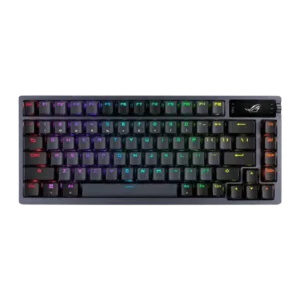
Choose ASUS ROG Azoth for ergonomics and battery life.
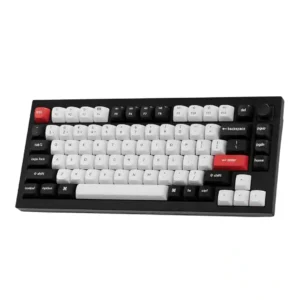
Choose Keychron Q1 HE for macro customization and compatibility.
Why these recommendations?
ASUS ROG Azoth
Where It Has the Edge
ergonomics is 4.0 vs 3.3. Ergonomics were mixed: adjustable feet and stable placement helped comfort, but the high-profile, heavy design could become tiring...
battery life is 4.6 vs 3.5. Battery life drew broad praise, from week-plus real-world use to long-term confidence, though reviewers noted the advertised maximum...
backlight brightness is 4.5 vs 3.0. Backlighting was treated as useful and bright enough for dim conditions, with one reviewer praising illumination and another...
Keychron Q1 HE
Where It Has the Edge
macro customization is 4.0 vs 2.4. Macro and multi-command support is useful and powerful, but the interface or one-key-multiple-command design was confusing or imperfect...
compatibility is 4.9 vs 3.3. Compatibility is highly praised, especially for users moving between Windows and macOS, with several reviewers valuing the platform...
legend visibility is 3.9 vs 2.3. Legend feedback is mixed: one reviewer praised clear legends, while another found subtle typesetting and process issues.
ASUS ROG Azoth4.2 overall score
Keychron Q1 HE4.2 overall score
Compare features
Scores are out of 5. Missing scores mean missing review evidence, not a missing feature.
Scored on both products
Comfort and build
Ergonomics
ASUS ROG Azoth
4.0
Ergonomics were mixed: adjustable feet and stable placement helped comfort, but the high-profile, heavy design could become tiring without support.
Keychron Q1 HE
3.3
Ergonomic feedback is mixed: typing angle and comfort often worked well, but many reviewers disliked the lack of adjustable feet or found the profile too tall.
Typing comfort
ASUS ROG Azoth
3.8
Typing comfort was mostly positive, especially for quiet office/home use and pleasant daily typing, but one reviewer struggled with typos.
Keychron Q1 HE
4.7
Typing comfort is very strong, with reviewers praising long-session comfort, reduced fatigue, and comfortable typing feel.
Durability
ASUS ROG Azoth
5.0
Durability evidence was strong in long-term use, with reviewers saying the board aged well, felt built to last, and could withstand heavy daily use.
Keychron Q1 HE
4.3
Durability evidence is mostly positive due to the sturdy metal construction, though one teardown-focused review warned against opening the board because a connector was easy to damage.
Design aesthetics
ASUS ROG Azoth
4.7
Design aesthetics were generally praised for looking refined, handsome, premium, or striking while still keeping a gaming identity.
Keychron Q1 HE
4.9
Reviewers strongly liked the Q1 HE's clean, premium, understated look, with praise for both the colorways and professional styling.
Size and form factor
ASUS ROG Azoth
4.4
The form factor was praised for being compact without sacrificing as much function as 60% designs.
Keychron Q1 HE
4.5
The scored evidence praises the 75% form factor for staying compact while retaining essential productivity and gaming keys.
Materials quality
ASUS ROG Azoth
4.8
Materials quality was praised for premium-feeling metal, plastics, PBT keycaps, and high-quality components, even with a plastic bottom for wireless performance.
Keychron Q1 HE
4.8
Materials quality is strongly praised, especially the aluminum body, robust construction, PBT caps, and premium finishes, with only the copper variant's finish drawing a caveat.
Build quality
ASUS ROG Azoth
4.9
Build quality was one of the strongest themes, with reviewers repeatedly describing the Azoth as solid, premium, tank-like, exceptionally built, and durable in long-term use.
Keychron Q1 HE
4.9
Build quality is one of the strongest points, with reviewers repeatedly praising the solid metal body, premium feel, rigidity, and high-quality construction.
Battery and charging
Battery life
ASUS ROG Azoth
4.6
Battery life drew broad praise, from week-plus real-world use to long-term confidence, though reviewers noted the advertised maximum requires turning off RGB and OLED extras.
Keychron Q1 HE
3.5
Battery life is acceptable but not a standout; reviewers ranged from calling it weak or only a few days with RGB to saying it was enough for regular use.
Ownership and support
Reliability
ASUS ROG Azoth
3.0
Reliability was mostly good in short-term use but mixed long-term, with one reviewer reporting occasional repeating letters after years and others reporting firmware issues.
Keychron Q1 HE
2.0
The only reliability score is negative, based on PCWorld's recurring wake-from-sleep problems in wireless mode.
Value for money
ASUS ROG Azoth
3.5
Value for money was mixed: many reviewers felt the premium build and features could justify the price, while others considered $250 hard to recommend.
Keychron Q1 HE
3.9
Value is split: many reviewers felt the premium price was justified by build and features, while others called it steep, overkill, or hard to justify in specific variants.
Ease of switch replacement
ASUS ROG Azoth
4.7
Switch replacement was repeatedly described as easy or low-effort, helped by hot-swap sockets and included pullers and tools.
Keychron Q1 HE
4.8
The only direct hands-on switch-removal evidence was positive, with the reviewer finding the process easy.
Other features
Onboard memory
ASUS ROG Azoth
2.2
Onboard memory was criticized because some settings did not behave as expected across connection modes despite the keyboard supposedly having onboard storage.
Keychron Q1 HE
4.5
The only scored evidence is positive, with one reviewer valuing that configurations can be stored on the keyboard.
Switch options
ASUS ROG Azoth
4.6
Switch options were supported by reviewer praise for a wide range of compatible switch choices and multiple NX switch variants.
Keychron Q1 HE
2.3
Switch options are the clearest repeated weakness, with reviewers consistently noting the narrow magnetic-only, linear-only ecosystem.
Compatibility
ASUS ROG Azoth
3.3
Compatibility was mixed: basic Windows and Mac use worked, but customization and firmware support were notably more limited outside Windows.
Keychron Q1 HE
4.9
Compatibility is highly praised, especially for users moving between Windows and macOS, with several reviewers valuing the platform switch and included alternate keycaps.
Volume control
ASUS ROG Azoth
3.1
Volume control was mixed, with reviewers appreciating easy volume access but criticizing the rocker/knob as imprecise, finicky, or cumbersome.
Keychron Q1 HE
4.6
The rotary knob is generally well liked for volume and mute control, with praise for feel, usefulness, and tactile operation.
Per-key lighting control
ASUS ROG Azoth
4.7
Per-key lighting control was positively supported by the ability to adjust the RGB backlight key by key.
Keychron Q1 HE
3.2
Per-key lighting control is limited; one reviewer noted that effects exist, but individual key RGB customization was not available through the app.
Key spacing
ASUS ROG Azoth
3.7
Key spacing opinions were split: some liked the 75% spacing and avoided 60% compromises, while others found the crammed F-row harder to hit accurately.
Keychron Q1 HE
5.0
The only explicit spacing judgment is very positive, with one reviewer calling the key spacing just right.
Portability
ASUS ROG Azoth
3.5
Portability was mixed: one reviewer liked the idea of traveling with it, while another found the heft made it less portable.
Keychron Q1 HE
2.3
Portability is a weakness: reviewers repeatedly liked the layout but found the heavy metal body poor for travel or tournaments.
Profile management
ASUS ROG Azoth
3.1
Profile management was split between easy profile swapping in one review and serious profile-reset problems tied to Armoury Crate in another.
Keychron Q1 HE
2.0
Profile management is a weak point in the scored evidence because PCWorld criticized the lack of automatic per-game profiles.
Frame rigidity
ASUS ROG Azoth
3.9
Frame rigidity was mostly strong, with almost no flex, though some reviewers felt the gasket mount was firmer and less flexible than expected.
Keychron Q1 HE
5.0
Frame rigidity is unanimously praised in the scored evidence, with reviewers noting no flex, no shifting, and strong aluminum construction.
Switch feel
ASUS ROG Azoth
4.4
Switch feel was usually praised as smooth, tactile, satisfying, or excellent, though some reviewers found specific stock switch variants too light or merely average.
Keychron Q1 HE
4.9
Switch feel is one of the most consistently praised attributes, with reviewers describing the magnetic switches as smooth, soft, quiet, premium, and satisfying.
Stabilizer quality
ASUS ROG Azoth
4.2
Stabilizers were generally praised for smoothness and spacebar quality, though one long-term/modding review criticized stems that detached easily.
Keychron Q1 HE
3.8
Stabilizer feedback is mixed, ranging from noticeable rattle to great-feeling stabilizers.
Polling rate
ASUS ROG Azoth
4.2
Polling rate was considered sufficient for high-end wireless use, though later reviewers framed it as no longer cutting edge for elite competitive players.
Keychron Q1 HE
3.8
The 1,000Hz polling rate is generally adequate and responsive, but one review penalized it for lacking 8,000Hz support.
Acoustics
ASUS ROG Azoth
4.8
Reviewers consistently praised the Azoth for a refined, enthusiast-like sound, with multiple reviews calling its acoustics excellent, unique, or better than typical gaming keyboards.
Keychron Q1 HE
4.4
Reviewers usually liked the Q1 HE's sound, describing it as nice, deep, thocky, semi-silent, or excellent, though a few said rivals sounded better or that it could be improved.
Layout options
ASUS ROG Azoth
4.5
Layout options were praised for balancing compact size with retained function-row, arrow, and navigation utility.
Keychron Q1 HE
4.8
Layout evidence is highly positive, especially among reviewers who preferred the Q1 HE's 75% layout over smaller gaming boards.
Keycap quality
ASUS ROG Azoth
4.4
Keycap quality was broadly positive thanks to PBT texture, durability, and resistance to shine, though one reviewer found them slightly slippery.
Keychron Q1 HE
4.7
Keycaps received strong praise for PBT material, comfort, shape, durability, and overall feel, with only minor legend or profile caveats elsewhere.
Key stability
ASUS ROG Azoth
4.8
Key stability was praised mainly through the stable spacebar and measured keystrokes, with little wobble noted in broader switch feedback.
Keychron Q1 HE
5.0
The only direct evidence is very positive, with one reviewer finding minimal lateral movement or stem wobble.
RGB lighting quality
ASUS ROG Azoth
4.1
RGB lighting quality was generally pleasant and attractive, though one review noted an imperfect reddish hue in white lighting.
Keychron Q1 HE
3.9
Lighting quality is mixed-positive: reviewers often found it bright, smooth, vivid, or attractive, but some said it looked muted or got lost under the keycaps.
Extra gaming features
ASUS ROG Azoth
4.5
Extra gaming features were viewed positively overall, especially the OLED display, on-the-fly features, performance monitoring, and full gaming-keyboard feature set.
Keychron Q1 HE
4.3
Gaming extras are generally strong, especially rapid trigger, snap/priority-style functions, and multi-action commands, though one review missed some pro-focused features.
Key responsiveness
ASUS ROG Azoth
4.7
Key responsiveness was praised in both typing and gaming, with reviewers noting snappy response, fast feel, and I had no missed keypresses.
Keychron Q1 HE
4.9
Responsiveness is rated very highly, with reviewers citing fast reaction, low actuation advantages, and little difference from top Hall Effect competitors.
Typing feel
ASUS ROG Azoth
4.7
Typing feel was one of the strongest attributes, with reviewers calling it next-level, fantastic, superb, energetic, or dreamlike, despite a few stock-feel reservations.
Keychron Q1 HE
4.8
Typing feel is one of the product's biggest strengths, with reviewers calling it excellent, satisfying, smooth, cloud-like, and premium.
Actuation consistency
ASUS ROG Azoth
4.8
Actuation consistency was supported by direct praise for consistent, measured keystrokes, especially after switch swapping and with the board’s tuned internals.
Keychron Q1 HE
4.9
The limited direct evidence is very positive, with reviewers saying actuation felt natural across adjustment points and that tracking was very accurate.
Connectivity
ASUS ROG Azoth
4.7
Connectivity was praised across wired, Bluetooth, and 2.4GHz use, with reviewers reporting easy setup, reliable pairing, and no trouble in normal testing.
Keychron Q1 HE
4.7
Connectivity is broadly strong thanks to wired, Bluetooth, and 2.4GHz options, although one reviewer found the mode switch fiddly.
Desk space efficiency
ASUS ROG Azoth
4.5
The 75% layout was praised for saving desk space and giving the mouse hand more room without becoming as restrictive as smaller compact layouts.
Keychron Q1 HE
4.5
The 75% layout was praised for balancing compactness with usability and fitting smaller desks while keeping essential controls.
Latency
ASUS ROG Azoth
4.8
Latency was considered excellent for wireless gaming, with multiple reviewers reporting there was no noticeable lag between me pressing a key or very low-latency behavior.
Keychron Q1 HE
4.8
Latency evidence is very strong in wired and 2.4GHz modes, with reviewers finding wireless close to wired or solid in testing.
Controls and connectivity
Media controls
ASUS ROG Azoth
2.6
Media controls were mixed: reviewers liked having control options but criticized the screen/knob system as awkward or overly sensitive.
Keychron Q1 HE
4.5
The programmable knob was praised as useful for volume and more complex functions, especially for editing workflows.
Software quality
ASUS ROG Azoth
2.4
Software quality was the clearest weakness: Armoury Crate was repeatedly called slow, buggy, bloated, unintuitive, or harmful to otherwise strong hardware.
Keychron Q1 HE
4.1
Software quality is mixed-positive: many praised Keychron Launcher as powerful, easy, and lightweight, while others reported messiness, confusing setup, or wired-only limitations.
Macro customization
ASUS ROG Azoth
2.4
Macro customization was one of the weaker functional areas because reviewers criticized the lack of function-layer assignment and limited macro placement.
Keychron Q1 HE
4.0
Macro and multi-command support is useful and powerful, but the interface or one-key-multiple-command design was confusing or imperfect for some reviewers.
RGB customization
ASUS ROG Azoth
4.6
RGB customization was praised for per-key control, presets, custom effects, and broad adjustment options.
Keychron Q1 HE
3.1
RGB customization is mixed, with several reviewers liking presets or hue controls but others criticizing limited per-key and advanced lighting control.
Hot-swappable switches
ASUS ROG Azoth
4.7
Hot-swappable switches were treated as a key enthusiast-friendly strength, making switch experiments and modifications much easier.
Keychron Q1 HE
3.3
Hot-swap support is useful but constrained because compatible switches are limited to specific magnetic options rather than standard MX-style choices.
Customization options
ASUS ROG Azoth
4.4
Customization was a major strength thanks to hot-swap support, included DIY tools, RGB/OLED options, and mod-friendly design, though software execution limited the experience.
Keychron Q1 HE
4.6
Customization is widely praised for actuation, keymaps, macros, layers, HE features, and browser-based controls, though one dissenting review argued its practical appeal is narrow.
Performance
Legend visibility
ASUS ROG Azoth
2.3
Legend visibility was a repeated weak spot because legends were hard to see when the backlight was off or dimmed.
Keychron Q1 HE
3.9
Legend feedback is mixed: one reviewer praised clear legends, while another found subtle typesetting and process issues.
Backlight brightness
ASUS ROG Azoth
4.5
Backlighting was treated as useful and bright enough for dim conditions, with one reviewer praising illumination and another finding it helpful during load-shedding.
Keychron Q1 HE
3.0
Brightness feedback is mixed: one video found the LEDs pretty bright, while written reviews complained the Caps Lock indicator was hard to see and RGB looked tame.
Wireless performance
ASUS ROG Azoth
4.9
Wireless performance was strongly praised, with reviewers reporting no lag, no dropouts, fast SpeedNova behavior, and long-term wireless reliability.
Keychron Q1 HE
4.2
Wireless performance is mostly strong in 2.4GHz mode, with low latency and solid consistency, though setup or wake issues hurt a couple of reviews.
Noise level
ASUS ROG Azoth
4.7
Noise level was praised as quiet or controlled, especially with red/silent-style switches and layered internal dampening.
Keychron Q1 HE
4.4
Most reviewers found the Q1 HE quiet or quieter than typical mechanical boards, though PCWorld considered it noisy compared with quieter expectations.
Gaming performance
ASUS ROG Azoth
4.8
Gaming performance received very strong praise, with reviewers calling it responsive, reliable, brilliant, and among the best gaming keyboards they had used.
Keychron Q1 HE
4.6
Gaming performance is a major strength; most reviewers found the Q1 HE responsive and effective for competitive play, though one PCWorld review found it less compelling than gaming-focused rivals.
Sound dampening
ASUS ROG Azoth
4.7
Sound dampening was a major strength, with reviewers praising the layered foam, silicone, and gaskets for reducing ping, hollowness, and harshness.
Keychron Q1 HE
4.9
Sound dampening is a standout, with reviewers repeatedly praising foam, gaskets, acoustic pads, and reduced ping or noise.
Evidence available for one product
Ownership and support
Analog input support
ASUS ROG AzothNo score yet
Keychron Q1 HE
3.7
Analog and gamepad-style input drew mixed reactions: several reviewers saw real potential or useful racing/gamepad possibilities, while others found gamepad functions quirky or unable to work natively as expected.
Rapid trigger support
ASUS ROG AzothNo score yet
Keychron Q1 HE
4.9
Rapid trigger support is one of the strongest gaming features, with reviewers repeatedly saying it works well, feels solid, and improves fast inputs.
Other features
Cable quality
ASUS ROG AzothNo score yet
Keychron Q1 HE
3.8
Only one reviewer evaluated the cable directly, calling the included braided USB-C cable decent.
Passthrough features
ASUS ROG Azoth
2.0
Passthrough features were a weakness, with reviewers criticizing the lack of extra USB ports or audio jack.
Good if you want a premium 96% Hall Effect keyboard for work and gaming with excellent build, sound, and customization. Skip it if you need cheaper esports-first speed, 8,000Hz polling,...
Choose it if competitive gaming speed, Rapid Trigger, and deep per-key customization matter more than extras. Skip it if you need wireless, dedicated arrows/media keys, adjustable height, or a lower-cost...
Good if you want a premium, quiet TKL Hall Effect keyboard for typing and gaming. Skip it if price, portability, 8,000Hz polling, or broad switch choice matters most.
Good if you want a premium full-size Hall Effect keyboard with smooth switches, quiet sound, and deep customization. Skip it if you need a portable, budget-friendly board or broad switch...