Compare Ubiquiti UniFi Travel Router vs ASUS RT-BE58 Go

UniFi Travel Router

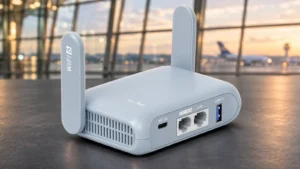
Ubiquiti UniFi Travel Router

Overall score 3.8 / 5

Based on 21 scored reviews

vs
ASUS RT-BE58 Go

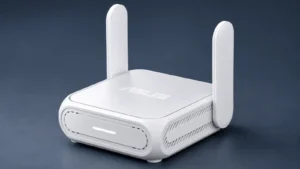
ASUS RT-BE58 Go

Overall score 3.9 / 5

Based on 11 scored reviews

How we score

Scorata scores summarize analyzed review evidence on a 1–5 scale; they are not laboratory measurements or a simple average of customer star ratings. Feature scores summarize the reviews covering that feature. The overall score averages feature scores within each review, then combines review averages. When both expert and customer evidence are available, those two groups receive equal weight. Products can have different review coverage, so small score gaps do not establish a winner.

Recommendations prioritize important features for the category, with a score of at least 3.5, a gap of at least 0.25 points and at least two supporting reviews per product. Features with widely varying scores or broad connectivity contexts are excluded from recommendations. These safeguards do not establish statistical significance.

Quick verdict

What each product is best for

The review evidence points to a tradeoff: ease of use and setup ease versus 5 GHz performance and multi-device performance. Choose according to which strengths matter more to you; the overall score alone does not settle that choice.

Choose Ubiquiti UniFi Travel Router for ease of use and setup ease.

Choose ASUS RT-BE58 Go for 5 GHz performance and multi-device performance.

Why these recommendations?

Ubiquiti UniFi Travel Router

Where It Has the Edge

  • ease of use is 4.8 vs 3.7. Once set up, the router can require very little attention, especially when reconnecting familiar devices.
  • setup ease is 4.8 vs 3.3. Setup is generally quick and straightforward through the mobile app, although a password error and initial updates can...
  • battery portability is 4.8 vs 3.8. A standard USB power bank can power the router for extended travel sessions thanks to its low consumption.

ASUS RT-BE58 Go

Where It Has the Edge

  • 5 GHz performance is 5.0 vs 1.5. The 5 GHz radio is a strength, delivering good throughput at both six and 25 feet relative to...
  • multi-device performance is 4.5 vs 1.5. Multiple devices can share a connection comfortably, including while VPN encryption is active.
  • web interface quality is 3.7 vs 1.5. The web interface offers extensive options and straightforward controls, although its appearance feels dated.
Ubiquiti UniFi Travel Router 3.8 overall score
ASUS RT-BE58 Go 3.9 overall score

Compare features

Scores are out of 5. Missing scores mean missing review evidence, not a missing feature.

Scored on both products

Other features

Ease of use
Ubiquiti UniFi Travel Router
4.8

Once set up, the router can require very little attention, especially when reconnecting familiar devices.

ASUS RT-BE58 Go
3.7

Once configured, everyday use is straightforward, but initial setup and switching between networks take some learning.

VPN policy routing
Ubiquiti UniFi Travel Router
2.0

Power users want more control over which traffic travels through the VPN tunnel.

ASUS RT-BE58 Go
5.0

Selective VPN routing lets work devices use encryption while other devices use the regular connection.

WAN port speed
Ubiquiti UniFi Travel Router
2.0

The Gigabit WAN port limits headroom on faster connections.

ASUS RT-BE58 Go
5.0

The 2.5GbE WAN port can make good use of a fast upstream broadband connection.

Device compatibility
Ubiquiti UniFi Travel Router
2.7

Older and newer client compatibility can be useful, but some managed networks and older hotel access points cause difficulties.

ASUS RT-BE58 Go
5.0

A preconfigured streaming stick connected successfully through the router on vacation.

Firewall quality
Ubiquiti UniFi Travel Router
2.0

Advanced firewall and routing options fall short of what power users want.

ASUS RT-BE58 Go
4.0

The built-in firewall adds a welcome protective layer on public networks.

Long-range speed
Ubiquiti UniFi Travel Router
1.0

Long-distance transfer speeds deteriorate sharply and testing could not continue beyond 70 feet.

ASUS RT-BE58 Go
3.0

Speeds fall at distance; it beats some TP-Link results but trails GL.iNet alternatives in reach.

Network monitoring
Ubiquiti UniFi Travel Router
2.0

The dashboard and usage information are less detailed than on full UniFi gateways.

ASUS RT-BE58 Go
4.0

The interface offers convenient at-a-glance system and client information.

Network stability
Ubiquiti UniFi Travel Router
2.4

Stability varies with conditions: ordinary connections can be dependable, but long VPN sessions and heavily used wireless links can drop.

ASUS RT-BE58 Go
4.0

Stress testing and repeated benchmarks were reassuring, although enabling MLO made speeds less consistent.

Configuration flexibility
Ubiquiti UniFi Travel Router
3.0

Basic settings are straightforward and later updates add flexibility, but advanced controls remain limited.

ASUS RT-BE58 Go
4.6

The extensive software provides many configuration choices, though some open-source alternatives offer even more customization.

Range
Ubiquiti UniFi Travel Router
2.2

The pocket-sized design sacrifices range; it is generally more suited to a single hotel room than larger spaces.

ASUS RT-BE58 Go
3.4

Hotel-room coverage is generally adequate, but distant rooms can be challenging. Some alternatives reach considerably farther.

Network segmentation
Ubiquiti UniFi Travel Router
4.0

Later software makes separate work and personal networks more practical.

ASUS RT-BE58 Go
5.0

Separate networks help isolate work, guest, and streaming devices from unwanted access.

Usage schedules
Ubiquiti UniFi Travel Router
1.0

Internet-access schedules and time limits are unavailable.

ASUS RT-BE58 Go
2.0

Parents cannot enforce daily usage limits, despite the availability of basic scheduling.

Heat management
Ubiquiti UniFi Travel Router
3.1

Heat experiences vary: some units merely warm up, while others become uncomfortable to touch or raise concerns during sustained use.

ASUS RT-BE58 Go
4.0

The fanless enclosure becomes slightly warm but did not get worryingly hot in testing.

Phone USB tethering
Ubiquiti UniFi Travel Router
4.1

USB phone tethering provides a useful alternative to poor venue Wi-Fi and can supply some power to the phone, but separate power and data cables add clutter.

ASUS RT-BE58 Go
4.8

USB phone tethering works reliably with compatible devices and offers a useful travel or backup connection.

Close-range speed
Ubiquiti UniFi Travel Router
4.0

A nearby phone achieved respectable speeds for Wi-Fi 5, even though faster routers offer more headroom.

ASUS RT-BE58 Go
4.5

Nearby throughput is strong, including a measured 865 Mbps at six feet on 5 GHz.

Ethernet port count
Ubiquiti UniFi Travel Router
2.0

A single LAN port limits the number of wired devices without an extra switch.

ASUS RT-BE58 Go
2.5

The ports cover common travel needs, but having only one LAN connection restricts wired expansion.

Security features
Ubiquiti UniFi Travel Router
4.7

Network isolation and gateway-level VPNs make sharing untrusted internet connections more convenient and secure.

ASUS RT-BE58 Go
4.2

Built-in security, VPN tools, and local network isolation add useful protection when traveling.

Reboot frequency
Ubiquiti UniFi Travel Router
2.0

Some extended VPN sessions have been associated with reboots or interruptions.

ASUS RT-BE58 Go
1.7

Repeated reboots and resets can interrupt setup and switching between public networks.

Internet source flexibility
Ubiquiti UniFi Travel Router
4.5

Ethernet, wireless uplinks and phone tethering provide flexible ways to get online in temporary locations.

ASUS RT-BE58 Go
4.8

Ethernet, public Wi-Fi, and USB tethering make it adaptable to changing internet sources.

Overall satisfaction
Ubiquiti UniFi Travel Router
4.5

Owners appreciate the convenience and portability, although prolonged-use reliability can temper enthusiasm.

ASUS RT-BE58 Go
4.3

The compact router earns positive recommendations for its feature set and travel performance, with range, software, and wired-speed caveats.

Captive portal handling
Ubiquiti UniFi Travel Router
4.4

A single mobile-app login normally handles captive portals for connected devices, with firmware improvements making this workflow more consistent.

ASUS RT-BE58 Go
4.3

Automatic captive-portal login worked smoothly on trips and in a coffee shop, but some networks may impose restrictions.

Charger compatibility
Ubiquiti UniFi Travel Router
4.8

Low power requirements allow ordinary phone chargers, laptop ports and power banks to run the device.

ASUS RT-BE58 Go
4.8

USB-C Power Delivery makes it convenient to reuse a compatible charger or portable power source.

External power dependence
Ubiquiti UniFi Travel Router
2.0

USB-C power is convenient, but the lack of an internal battery prevents fully self-contained use.

ASUS RT-BE58 Go
2.0

The router is not cordless: it requires an external USB-C power supply or compatible power bank.

LAN port speed
Ubiquiti UniFi Travel Router
2.0

The Gigabit LAN connection does not deliver full gigabit throughput in practical testing.

ASUS RT-BE58 Go
2.0

The sole 1GbE LAN port is a recurring limitation for fast wired devices and network storage.

Network migration ease
Ubiquiti UniFi Travel Router
5.0

The router helped one user prepare familiar SSIDs before migrating to a new UniFi access-point setup.

ASUS RT-BE58 Go
5.0

Existing ASUS router settings can be restored to make upgrading or duplicating a home network easier.

Power-on readiness
Ubiquiti UniFi Travel Router
2.0

Boot-up is not instantaneous; some users find the wait acceptable while others find it frustratingly slow.

ASUS RT-BE58 Go
2.0

Starting up takes longer than ideal, although other travel routers can be similarly slow.

Preconfigured network credentials
Ubiquiti UniFi Travel Router
5.0

Reusing a familiar SSID and credentials allows phones, laptops and other devices to reconnect without repeated setup.

ASUS RT-BE58 Go
5.0

Pre-paired devices can automatically reconnect to the router when it joins a new upstream network, avoiding repeated passwords.

WAN failover
Ubiquiti UniFi Travel Router
4.0

Multiple uplinks can remain configured as backups, and their priority is easy to adjust.

ASUS RT-BE58 Go
4.0

Phone tethering offers a useful backup when the main internet connection is unavailable.

Weight and handling
Ubiquiti UniFi Travel Router
5.0

The unusually light enclosure is easy to carry and adds little weight to travel gear.

ASUS RT-BE58 Go
5.0

At about 242 grams with folding antennas, it is easy to carry in a bag.

Performance

5 GHz performance
Ubiquiti UniFi Travel Router
1.5

5 GHz throughput can be well below expectations, and one traveler lost that band after hours of use.

ASUS RT-BE58 Go
5.0

The 5 GHz radio is a strength, delivering good throughput at both six and 25 feet relative to its TP-Link counterpart.

Multi-device performance
Ubiquiti UniFi Travel Router
1.5

Several devices can share a connection, but throughput drops as client load grows and one family experienced prolonged-use failures.

ASUS RT-BE58 Go
4.5

Multiple devices can share a connection comfortably, including while VPN encryption is active.

Performance under load
Ubiquiti UniFi Travel Router
1.5

Simultaneous activity can overwhelm the small radio, and extended heavy use has caused the 5 GHz connection to fail.

ASUS RT-BE58 Go
4.0

The router maintained competitive throughput with six additional clients streaming video.

Content filtering
Ubiquiti UniFi Travel Router
1.0

Website and app filtering are missing.

ASUS RT-BE58 Go
3.0

Basic site and app restrictions are available, but more comprehensive filtering is missing.

VPN performance
Ubiquiti UniFi Travel Router
3.3

VPN speeds can be adequate for ordinary travel and wired access, but shared wireless bandwidth and prolonged sessions expose limitations.

ASUS RT-BE58 Go
5.0

One VPN test achieved around 60 Mbps, substantially faster than the older travel router it replaced.

Wired device performance
Ubiquiti UniFi Travel Router
3.2

Wired connections improve throughput considerably, but measured speeds still fall below gigabit rates.

ASUS RT-BE58 Go
2.0

Wired HTTP routing tests reported a processing bottleneck below 800 Mbps per direction, limiting demanding wired workloads.

Controls and connectivity

App setup quality
Ubiquiti UniFi Travel Router
4.6

The mobile setup workflow is praised for simplicity, with occasional firmware or password-related rough edges.

ASUS RT-BE58 Go
2.0

The QR-based app setup is convenient in principle, but navigating the app is not especially intuitive.

Wi-Fi 7 support
Ubiquiti UniFi Travel Router
2.0

The lack of Wi-Fi 7 puts it behind faster travel-router alternatives.

ASUS RT-BE58 Go
4.3

Wi-Fi 7 is a welcome upgrade for travel, though its practical advantage over Wi-Fi 6 depends on the connection speed.

Web interface quality
Ubiquiti UniFi Travel Router
1.5

The absence of a full browser-based management interface frustrates users who prefer configuring and troubleshooting from a laptop.

ASUS RT-BE58 Go
3.7

The web interface offers extensive options and straightforward controls, although its appearance feels dated.

Wi-Fi speed
Ubiquiti UniFi Travel Router
2.3

Wireless throughput is modest, particularly with a wireless uplink; several travelers find it adequate for typical hotel connections.

ASUS RT-BE58 Go
4.0

Fast short-range Wi-Fi is a highlight; speeds depend on the uplink and distance, and enabling MLO can reduce performance.

Parental controls
Ubiquiti UniFi Travel Router
1.0

Parental controls are rudimentary and lack the filtering and scheduling options needed for managing a family network.

ASUS RT-BE58 Go
2.5

Device restrictions and scheduling are useful, but advanced filtering and daily usage limits are limited.

Interface responsiveness
Ubiquiti UniFi Travel Router
1.5

The app can hang or take too long to show available uplinks.

ASUS RT-BE58 Go
2.0

Changing wireless settings and switching upstream networks can involve several minutes of waiting.

Privacy controls
Ubiquiti UniFi Travel Router
4.5

Keeping devices behind a private travel network rather than directly on public Wi-Fi is a useful privacy benefit.

ASUS RT-BE58 Go
4.3

A private local network shields connected devices from other users of public Wi-Fi, with VPN options for additional privacy.

Mobile app quality
Ubiquiti UniFi Travel Router
3.4

The app is simple for basic setup but can be slow or lack the detailed dashboard familiar to UniFi users.

ASUS RT-BE58 Go
3.3

The app has extensive controls, but important travel settings are buried in menus designed primarily for home routers.

Ownership and support

Setup ease
Ubiquiti UniFi Travel Router
4.8

Setup is generally quick and straightforward through the mobile app, although a password error and initial updates can delay things.

ASUS RT-BE58 Go
3.3

Initial configuration is manageable, but applying settings can take several minutes and switching networks can trigger reboots.

Connection reliability
Ubiquiti UniFi Travel Router
3.3

Several travelers experienced dependable connections once online, while others encountered disconnections or failures during prolonged use.

ASUS RT-BE58 Go
4.8

Connections were dependable after configuration, including during extended stress tests and mobile tethering.

2.5 GbE support
Ubiquiti UniFi Travel Router
2.0

The lack of 2.5 GbE limits the router's appeal for higher-speed wired networking.

ASUS RT-BE58 Go
2.7

A single 2.5GbE port is useful for upstream connectivity, but competing models offer two.

Value for money
Ubiquiti UniFi Travel Router
4.3

The modest price is appealing for UniFi users who value convenience and size, but similarly priced competitors deliver stronger performance.

ASUS RT-BE58 Go
3.7

The price is attractive when the advanced software and mesh features are useful, but cheaper rivals make sense for simpler needs.

USB port support
Ubiquiti UniFi Travel Router
3.8

Separate USB-C power and tethering ports offer flexibility but may require more cables than a combined port would.

ASUS RT-BE58 Go
4.0

The USB port is versatile for tethering, storage, and supplying power to a connected phone.

VPN client support
Ubiquiti UniFi Travel Router
4.6

Teleport and standard VPN clients simplify connecting multiple devices through one tunnel, although support for additional VPN methods is limited.

ASUS RT-BE58 Go
4.7

Router-level VPN connections work well, and importing configuration files helps when a provider is not directly supported.

Multi-gig Ethernet support
Ubiquiti UniFi Travel Router
2.0

Gigabit-only Ethernet is a drawback compared with newer multi-gigabit travel routers.

ASUS RT-BE58 Go
2.0

Multi-gigabit Ethernet is restricted to the WAN side, limiting high-speed local wired networking.

WireGuard support
Ubiquiti UniFi Travel Router
5.0

WireGuard makes standard VPN access practical without relying exclusively on Teleport.

ASUS RT-BE58 Go
5.0

A WireGuard home VPN connection worked successfully during international travel.

Battery and charging

Battery portability
Ubiquiti UniFi Travel Router
4.8

A standard USB power bank can power the router for extended travel sessions thanks to its low consumption.

ASUS RT-BE58 Go
3.8

A compatible USB-C power bank makes portable operation practical, but it adds equipment and must supply sufficient power.

Comfort and build

Size and footprint
Ubiquiti UniFi Travel Router
5.0

The extremely slim, pocket-sized enclosure is one of its standout qualities.

ASUS RT-BE58 Go
4.4

The compact folding design fits easily in a bag or pouch, although some travel routers are smaller.

Design and appearance
Ubiquiti UniFi Travel Router
5.0

The sleek, modern case and small screen give it a premium, travel-friendly appearance.

ASUS RT-BE58 Go
4.5

The simple, sleek design is attractive for a portable router.

Evidence available for one product

Performance

2.4 GHz performance
Ubiquiti UniFi Travel RouterNo score yet
ASUS RT-BE58 Go
3.0

The 2.4 GHz radio performs similarly to its direct rival, with no clear overall advantage.

6 GHz performance
Ubiquiti UniFi Travel RouterNo score yet
ASUS RT-BE58 Go
2.0

There is no 6 GHz radio, so buyers miss out on the additional spectrum available with tri-band Wi-Fi 7 models.

Download performance
Ubiquiti UniFi Travel RouterNo score yet
ASUS RT-BE58 Go
4.5

Downloads can be fast with a wired uplink, while VPN and wireless-uplink results depend on the connection.

Long-term performance
Ubiquiti UniFi Travel Router
3.7

Some travelers ran it for days without problems, while others experienced radio failures during long sessions.

ASUS RT-BE58 GoNo score yet
On-router display usefulness
Ubiquiti UniFi Travel Router
4.8

The small screen is surprisingly useful for checking uplink status, signal strength and connected devices without opening the app.

ASUS RT-BE58 GoNo score yet
Operating noise
Ubiquiti UniFi Travel RouterNo score yet
ASUS RT-BE58 Go
5.0

Fanless operation is effectively silent.

Processor performance
Ubiquiti UniFi Travel RouterNo score yet
ASUS RT-BE58 Go
2.0

Wired HTTP processing can saturate one CPU core instead of spreading the workload effectively across the processor.

Upload performance
Ubiquiti UniFi Travel RouterNo score yet
ASUS RT-BE58 Go
5.0

Upload performance held an advantage over the Slate 7 in repeatable tests.

Wireless performance
Ubiquiti UniFi Travel RouterNo score yet
ASUS RT-BE58 Go
4.0

Wireless throughput is impressive for a travel router, especially nearby, but performance falls with distance.

Other features

Activity reports
Ubiquiti UniFi Travel Router
2.0

Detailed client usage history is lacking despite basic activity information.

ASUS RT-BE58 GoNo score yet
Antenna adjustability
Ubiquiti UniFi Travel RouterNo score yet
ASUS RT-BE58 Go
4.0

The foldable external antennas help make the router easy to pack.

Band steering
Ubiquiti UniFi Travel RouterNo score yet
ASUS RT-BE58 Go
4.0

Keeping both bands under one network name is convenient when automatic band steering is preferred.

Cellular connectivity
Ubiquiti UniFi Travel Router
2.0

The lack of integrated cellular connectivity requires a separate phone or other internet source.

ASUS RT-BE58 GoNo score yet
Congestion handling
Ubiquiti UniFi Travel RouterNo score yet
ASUS RT-BE58 Go
4.0

Congested 5 GHz tests showed a manageable 10–15 percent throughput drop.

Connected-device management
Ubiquiti UniFi Travel Router
2.3

Basic renaming, viewing and blocking are useful, but deeper device management is limited.

ASUS RT-BE58 GoNo score yet
Device capacity
Ubiquiti UniFi Travel Router
2.5

It works best with a small group of devices rather than a densely populated network.

ASUS RT-BE58 GoNo score yet
Device prioritization
Ubiquiti UniFi Travel Router
2.0

The app lacks the deeper per-device traffic controls expected by advanced users.

ASUS RT-BE58 GoNo score yet
Expandability
Ubiquiti UniFi Travel Router
5.0

A small switch can expand wired connectivity, and a remote switch was successfully adopted through Teleport.

ASUS RT-BE58 GoNo score yet
Firmware stability
Ubiquiti UniFi Travel Router
3.8

Software updates have improved functionality and stability since launch, although rough edges remain.

ASUS RT-BE58 GoNo score yet
Firmware update process
Ubiquiti UniFi Travel Router
4.0

Firmware updates are straightforward, though they can add several minutes to setup and have been important for improving functionality.

ASUS RT-BE58 GoNo score yet
Future upgrade readiness
Ubiquiti UniFi Travel RouterNo score yet
ASUS RT-BE58 Go
4.0

Wi-Fi 7 support is appealing for buyers who want a portable router with a newer wireless standard.

Guest network
Ubiquiti UniFi Travel Router
2.0

The ability to create guest SSIDs was a requested improvement in early software.

ASUS RT-BE58 GoNo score yet
Included accessories
Ubiquiti UniFi Travel Router
3.7

The included braided USB-C cable is welcome, but some buyers want a charger or protective travel case.

ASUS RT-BE58 GoNo score yet
Intrusion prevention
Ubiquiti UniFi Travel Router
2.0

There is no integrated intrusion detection and prevention, leaving protection dependent on isolation and VPN configuration.

ASUS RT-BE58 GoNo score yet
IoT network
Ubiquiti UniFi Travel RouterNo score yet
ASUS RT-BE58 Go
4.0

A dedicated IoT network can improve compatibility with older wireless devices.

Latency
Ubiquiti UniFi Travel Router
2.0

Faster rival routers offer lower wireless latency.

ASUS RT-BE58 GoNo score yet
Learning curve
Ubiquiti UniFi Travel RouterNo score yet
ASUS RT-BE58 Go
3.0

The extensive software takes some getting used to, especially for travelers accustomed to competing routers.

Mid-range speed
Ubiquiti UniFi Travel Router
1.0

Throughput fell to a crawl at 50 feet in testing.

ASUS RT-BE58 GoNo score yet
Multi-Link Operation
Ubiquiti UniFi Travel RouterNo score yet
ASUS RT-BE58 Go
1.0

Enabling the limited MLO implementation reduced speed and consistency in testing; leaving it disabled performed better.

Port forwarding
Ubiquiti UniFi Travel Router
2.0

Port forwarding is among the advanced standalone features reported missing in early software.

ASUS RT-BE58 GoNo score yet
Power consumption
Ubiquiti UniFi Travel Router
4.8

Its exceptionally modest power draw is a major strength, especially when running from portable batteries or weaker USB outlets.

ASUS RT-BE58 GoNo score yet
Quality of service
Ubiquiti UniFi Travel RouterNo score yet
ASUS RT-BE58 Go
4.0

Quick access to QoS settings makes adjusting traffic priorities convenient.

Retail availability
Ubiquiti UniFi Travel Router
1.8

Repeated sellouts have frustrated buyers trying to obtain the router.

ASUS RT-BE58 GoNo score yet
Seamless handoff
Ubiquiti UniFi Travel RouterNo score yet
ASUS RT-BE58 Go
4.0

AiMesh can move devices between compatible nodes without requiring manual network changes.

Settings organization
Ubiquiti UniFi Travel RouterNo score yet
ASUS RT-BE58 Go
2.0

Frequently needed travel settings are buried deep in the mobile app rather than readily accessible.

Threat protection
Ubiquiti UniFi Travel RouterNo score yet
ASUS RT-BE58 Go
4.0

AiProtection adds useful protection against malware, phishing, and unauthorized access.

Traffic prioritization
Ubiquiti UniFi Travel Router
2.0

Advanced traffic prioritization is limited, particularly when multiple devices compete for bandwidth.

ASUS RT-BE58 GoNo score yet
UniFi ecosystem integration
Ubiquiti UniFi Travel Router
5.0

Site binding and Teleport make an existing UniFi network feel portable, allowing familiar devices and services to follow the traveler.

ASUS RT-BE58 GoNo score yet
USB storage sharing
Ubiquiti UniFi Travel RouterNo score yet
ASUS RT-BE58 Go
3.7

USB file sharing is handy for travel backups and media, but sustained SSD transfer speeds are modest.

VPN profile management
Ubiquiti UniFi Travel Router
2.0

Switching between custom VPN endpoints can require re-uploading configuration files instead of selecting a saved profile.

ASUS RT-BE58 GoNo score yet
Whole-home coverage
Ubiquiti UniFi Travel RouterNo score yet
ASUS RT-BE58 Go
2.0

Coverage is more appropriate for compact spaces than for an entire large home.

Wireless repeater mode
Ubiquiti UniFi Travel Router
2.0

Wireless repeating is useful for travel, but sharing the radio between upstream and local traffic significantly reduces speed.

ASUS RT-BE58 GoNo score yet
WISP mode usability
Ubiquiti UniFi Travel RouterNo score yet
ASUS RT-BE58 Go
4.6

Public Wi-Fi can be turned into a familiar private network for all your devices. Connecting at a new location can require a slow reboot.

Controls and connectivity

Companion software dependence
Ubiquiti UniFi Travel Router
2.0

The reliance on the mobile app is convenient for quick changes but restrictive for more involved administration.

ASUS RT-BE58 GoNo score yet
On-router display customization
Ubiquiti UniFi Travel Router
2.5

Later firmware offers brightness and color adjustment, although earlier software lacked brightness control and raise-to-wake failed in one test.

ASUS RT-BE58 GoNo score yet
Physical controls
Ubiquiti UniFi Travel RouterNo score yet
ASUS RT-BE58 Go
4.8

The programmable side switch makes VPN activation and home/travel mode changes convenient.

Software and driver support
Ubiquiti UniFi Travel Router
5.0

Software updates have added capabilities that make the router more useful than at launch.

ASUS RT-BE58 GoNo score yet
Wi-Fi standard support
Ubiquiti UniFi Travel Router
2.7

Wi-Fi 5 keeps the router compact and low-powered but limits speed and range compared with newer standards.

ASUS RT-BE58 GoNo score yet

Ownership and support

Dual-WAN support
Ubiquiti UniFi Travel RouterNo score yet
ASUS RT-BE58 Go
4.0

A cellular connection can provide backup alongside the wired WAN connection.

Dynamic DNS support
Ubiquiti UniFi Travel Router
2.0

Missing Dynamic DNS limits the standalone router feature set.

ASUS RT-BE58 GoNo score yet
Setup guidance
Ubiquiti UniFi Travel Router
4.3

The wizard and installation guidance make the first connection approachable.

ASUS RT-BE58 GoNo score yet
Upgrade value
Ubiquiti UniFi Travel RouterNo score yet
ASUS RT-BE58 Go
3.0

The upgrade to Wi-Fi 7 is more worthwhile with faster-than-gigabit internet; slower connections may see little difference.

VPN server support
Ubiquiti UniFi Travel Router
2.0

The lack of VPN server functionality restricts standalone routing capabilities.

ASUS RT-BE58 GoNo score yet
Wall-mounting support
Ubiquiti UniFi Travel RouterNo score yet
ASUS RT-BE58 Go
5.0

Wall mounting adds flexibility for placing the router in a small home.

Comfort and build

Ethernet port design
Ubiquiti UniFi Travel Router
5.0

Spring-loaded Ethernet jacks preserve the thin profile when cables are removed.

ASUS RT-BE58 GoNo score yet

Other Top Routers to Consider

#1 D-Link Aquila Pro AI R95
4.8

Choose the R95 for a busy home that needs fast Wi-Fi 7, strong range, multi-gig ports, and low-lag gaming. Skip it for a small, lightly connected space or if advanced...

Pros: Wi-Fi 7 support, Wi-Fi speed

#2 GL.iNet GL-BE3600 Slate 7
4.5

Best for frequent travel, fast VPNs, dual 2.5GbE and resilient multi-WAN. Skip it if you need full 6GHz/320MHz Wi‑Fi 7, mesh, or desktop-class USB storage and long-range indoor coverage.

Pros: VPN client support, value for money

Cons: 6 GHz performance, USB storage sharing

#3 GL.iNet Flint 2 (GL-MT6000)
4.4

Exceptional VPN speeds, strong Wi-Fi 6 coverage and extensive OpenWrt controls make the Flint 2 a compelling value. Its advanced setup, missing 6GHz band and firmware-specific caveats matter if you...

Pros: setup ease, configuration flexibility

Cons: Wi-Fi 7 support, USB storage sharing

#4 GL.iNet Beryl AX (GL-MT3000)
4.4

The Beryl AX packs exceptionally flexible VPN and networking tools into a pocket-sized router. It is a great travel companion, but hotel login issues, limited whole-home range and a single...

Pros: Overall satisfaction, size and footprint

Cons: Captive portal handling, Ethernet port count