Compare TP-Link Deco 7 Pro BE67 vs ASUS ZenWiFi BE5000 Pro

TP-Link Deco 7 Pro BE67

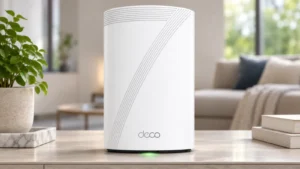
TP-Link Deco 7 Pro BE67

Overall score 4.1 / 5

Based on 19 scored reviews

vs
ASUS ZenWiFi BE5000 Pro

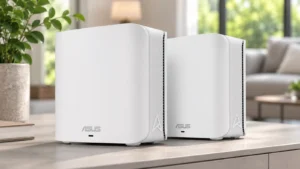
ASUS ZenWiFi BE5000 Pro

Overall score 4.0 / 5

Based on 7 scored reviews

How we score

Scorata scores summarize analyzed review evidence on a 1–5 scale; they are not laboratory measurements or a simple average of customer star ratings. Feature scores summarize the reviews covering that feature. The overall score averages feature scores within each review, then combines review averages. When both expert and customer evidence are available, those two groups receive equal weight. Products can have different review coverage, so small score gaps do not establish a winner.

Recommendations prioritize important features for the category, with a score of at least 3.5, a gap of at least 0.25 points and at least two supporting reviews per product. Features with widely varying scores or broad connectivity contexts are excluded from recommendations. These safeguards do not establish statistical significance.

Quick verdict

What each product is best for

The review evidence points to a tradeoff: 6 GHz performance and backhaul performance versus subscription requirements and security features. Choose according to which strengths matter more to you; the overall score alone does not settle that choice.

Choose TP-Link Deco 7 Pro BE67 for 6 GHz performance and backhaul performance.

Choose ASUS ZenWiFi BE5000 Pro for subscription requirements and security features.

Why these recommendations?

TP-Link Deco 7 Pro BE67

Where It Has the Edge

  • 6 GHz performance is 4.6 vs 2.1. 6 GHz is a major strength, with exceptional nearby throughput and less interference; walls and distance reduce its...
  • backhaul performance is 4.5 vs 3.0. Backhaul performance is strong, with wireless links capable of high throughput and only modest losses in some installations.
  • mesh performance is 5.0 vs 4.0. The mesh delivers excellent overall speed and coverage without demanding elaborate networking knowledge.

ASUS ZenWiFi BE5000 Pro

Where It Has the Edge

  • subscription requirements is 5.0 vs 2.3. Advanced network settings, security and parental controls do not require an ongoing subscription, a notable advantage against subscription-heavy...
  • security features is 4.8 vs 2.8. Built-in online protection and advanced security features are notable strengths.
  • range is 5.0 vs 3.8. Excellent indoor range is one of the system’s biggest strengths, including in larger homes.
TP-Link Deco 7 Pro BE67 4.1 overall score
ASUS ZenWiFi BE5000 Pro 4.0 overall score

Compare features

Scores are out of 5. Missing scores mean missing review evidence, not a missing feature.

Scored on both products

Other features

Ease of use
TP-Link Deco 7 Pro BE67
5.0

The system is approachable for nontechnical users, with clear app controls and straightforward everyday operation.

ASUS ZenWiFi BE5000 Pro
4.5

Setup and everyday operation are both regarded as straightforward.

Network migration ease
TP-Link Deco 7 Pro BE67
4.8

Reusing existing network credentials and guided upgrade options makes migration relatively painless, apart from occasional satellite pairing problems.

ASUS ZenWiFi BE5000 Pro
2.0

Upgrading from another ASUS router can require recreating settings from scratch instead of importing a configuration backup.

Subscription requirements
TP-Link Deco 7 Pro BE67
2.3

Advanced parental controls and security subscriptions are a recurring frustration, although basic tools may be sufficient for some homes.

ASUS ZenWiFi BE5000 Pro
5.0

Advanced network settings, security and parental controls do not require an ongoing subscription, a notable advantage against subscription-heavy competitors.

Usage schedules
TP-Link Deco 7 Pro BE67
2.0

Free scheduling is limited, including a lack of separate weekend schedules in one account.

ASUS ZenWiFi BE5000 Pro
4.5

Internet-access schedules let parents control when devices go online, although daily usage allowances are unavailable.

Security features
TP-Link Deco 7 Pro BE67
2.8

Security tools are useful, but advanced protections behind a paywall reduce their appeal.

ASUS ZenWiFi BE5000 Pro
4.8

Built-in online protection and advanced security features are notable strengths.

Range
TP-Link Deco 7 Pro BE67
3.8

Range is strong across a multi-node installation, but some competing mesh systems reach farther and node placement matters.

ASUS ZenWiFi BE5000 Pro
5.0

Excellent indoor range is one of the system’s biggest strengths, including in larger homes.

Latency
TP-Link Deco 7 Pro BE67
4.4

Latency is generally low enough for everyday gaming and streaming, with a wireless satellite adding some delay.

ASUS ZenWiFi BE5000 Pro
3.3

Main-router latency works well for everyday activities, but wireless satellites can introduce noticeable additional delay. Gaming results depend on the connection path.

Ethernet port count
TP-Link Deco 7 Pro BE67
3.1

Three ports per node are sufficient for modest wired setups, but can feel restrictive in a home office or media room.

ASUS ZenWiFi BE5000 Pro
2.0

Two Ethernet ports per node can be restrictive, especially if several devices need wired connections.

Wireless backhaul
TP-Link Deco 7 Pro BE67
4.0

Wireless backhaul can cover difficult locations at useful speeds, but satellite links can lose throughput or add latency.

ASUS ZenWiFi BE5000 Pro
3.0

Wireless backhaul delivered close to 1.5 Gbps in a line-of-sight test, but additional wireless nodes can reduce available bandwidth and raise latency.

Multi-Link Operation
TP-Link Deco 7 Pro BE67
3.6

MLO can improve throughput and latency, but its implementation has limitations and some users experience stuttering or device-specific connection trouble.

ASUS ZenWiFi BE5000 Pro
2.6

MLO can be useful for wireless backhaul, but client operation alternates between bands rather than guaranteeing simultaneous aggregation, and backhaul topology can limit it.

Latency consistency
TP-Link Deco 7 Pro BE67
3.5

Latency can be consistent with compatible clients and MLO, but satellite connections may introduce jitter.

ASUS ZenWiFi BE5000 Pro
2.7

Latency is generally consistent at the main router, while wireless satellites can make responsiveness less predictable.

Mesh scalability
TP-Link Deco 7 Pro BE67
4.8

Adding more Deco nodes is straightforward, allowing coverage to grow with the property's needs.

ASUS ZenWiFi BE5000 Pro
4.2

Compatible nodes are easy to add, including an outdoor option, but extra wireless nodes should be placed where they actually improve coverage.

Long-range speed
TP-Link Deco 7 Pro BE67
4.4

Remote rooms can retain useful or even full broadband speeds, but throughput falls with distance and obstacles, especially at 6 GHz.

ASUS ZenWiFi BE5000 Pro
5.0

Speeds hold up particularly well at longer indoor distances, making distant rooms less of a bottleneck.

Automatic configuration
TP-Link Deco 7 Pro BE67
5.0

Additional units can be detected automatically as soon as they are plugged in.

ASUS ZenWiFi BE5000 Pro
4.5

The remaining pre-synced units automatically join once the main router is configured and they are powered on.

Network stability
TP-Link Deco 7 Pro BE67
4.5

Stress tests and weeks of household use generally went smoothly, though one owner experienced persistent Wi-Fi stutters.

ASUS ZenWiFi BE5000 Pro
5.0

A multi-day stress test ran without disconnections, and normally weak corners stayed connected in another home test.

Outdoor coverage
TP-Link Deco 7 Pro BE67
5.0

Usable signal extends into yards, decks and garden offices, with tested coverage reaching well beyond the house.

ASUS ZenWiFi BE5000 Pro
4.5

An optional outdoor PoE node offers a useful way to extend coverage into a large yard.

Quality of service
TP-Link Deco 7 Pro BE67
4.0

App-based QoS makes prioritizing latency-sensitive devices straightforward.

ASUS ZenWiFi BE5000 Pro
4.5

Advanced QoS is part of a comprehensive suite of networking controls.

Expandability
TP-Link Deco 7 Pro BE67
5.0

Compatibility with other Deco models provides flexible expansion without replacing the entire network.

ASUS ZenWiFi BE5000 Pro
4.6

AiMesh support makes expanding a compatible ASUS network flexible, including the option of an outdoor node.

Overall satisfaction
TP-Link Deco 7 Pro BE67
4.4

Overall satisfaction is high thanks to speed and coverage, although one long-term user found intermittent stuttering disappointing.

ASUS ZenWiFi BE5000 Pro
4.8

The mesh is a compelling overall choice for most households, particularly those that need broad coverage and reliable speeds.

Floor-to-floor coverage
TP-Link Deco 7 Pro BE67
5.0

Strategically placed nodes extend signal across multiple floors, including basements and lofts.

ASUS ZenWiFi BE5000 Pro
4.7

Strong indoor reach makes this mesh a good choice for homes spanning multiple floors.

Whole-home coverage
TP-Link Deco 7 Pro BE67
5.0

Multiple units provide strong coverage throughout homes, including distant rooms that previously had weak connections.

ASUS ZenWiFi BE5000 Pro
4.7

The mesh delivers broad coverage for everyday household use, though actual reach depends on the layout and node placement.

IoT network
TP-Link Deco 7 Pro BE67
4.8

A separate IoT network is easy to create and helps keep smart devices apart from other equipment.

ASUS ZenWiFi BE5000 Pro
4.5

Smart Home Master makes setting up an IoT network convenient.

Auto-sensing Ethernet ports
TP-Link Deco 7 Pro BE67
4.7

Flexible WAN/LAN port selection and interchangeable nodes make installation easier.

ASUS ZenWiFi BE5000 Pro
4.5

Auto-sensing Ethernet ports provide flexibility for multi-gig WAN, LAN and backhaul connections.

Configuration flexibility
TP-Link Deco 7 Pro BE67
4.6

The app balances simple everyday management with deeper controls, although some band and desktop configuration options are restricted.

ASUS ZenWiFi BE5000 Pro
4.5

Extensive settings, VPN options and flexible management give users considerably more control over the network.

Close-range speed
TP-Link Deco 7 Pro BE67
4.5

Close-range 6 GHz transfers can exceed 3 Gbps, although some competing routers are faster in particular tests.

ASUS ZenWiFi BE5000 Pro
4.5

Near a node, speeds are good enough to make effective use of a gigabit internet connection.

Heat management
TP-Link Deco 7 Pro BE67
4.5

The hardware runs only mildly warm or within normal operating temperatures during sustained use.

ASUS ZenWiFi BE5000 Pro
4.5

The hardware remained cool during stress testing, and the cooling design is a welcome addition.

Mesh coverage
TP-Link Deco 7 Pro BE67
5.0

Adding satellites improves coverage and can recover much of the speed lost in distant rooms.

ASUS ZenWiFi BE5000 Pro
5.0

The mesh has ample reach, with the option to add more compatible access points for troublesome areas.

Node synchronization
TP-Link Deco 7 Pro BE67
5.0

Pre-synced units make forming a mesh particularly convenient.

ASUS ZenWiFi BE5000 Pro
5.0

The pre-synced BD5 units simplify initial setup by arriving ready to join the network.

Controls and connectivity

Web interface quality
TP-Link Deco 7 Pro BE67
2.0

Browser administration is limited compared with the mobile app, frustrating users who prefer desktop configuration.

ASUS ZenWiFi BE5000 Pro
4.5

The browser interface offers extensive settings for users who want more control over their network.

Parental controls
TP-Link Deco 7 Pro BE67
2.6

Basic parental controls are useful, but advanced filtering and scheduling require payment and frustrate some buyers.

ASUS ZenWiFi BE5000 Pro
4.8

Parental controls are extensive and useful, including website and app-category filters, device blocking and schedules, but no daily usage limits.

Wi-Fi 7 support
TP-Link Deco 7 Pro BE67
5.0

Wi-Fi 7 delivers impressive speed throughout a mesh installation when paired with capable clients.

ASUS ZenWiFi BE5000 Pro
3.8

Wi-Fi 7 can improve gaming responsiveness, but this dual-band implementation leaves out the 6 GHz advantages of higher-tier systems.

Node pairing ease
TP-Link Deco 7 Pro BE67
3.9

Satellite pairing is often automatic, but some users needed to reset or restart nodes before they would connect.

ASUS ZenWiFi BE5000 Pro
5.0

Pre-paired units join the mesh when plugged in, simplifying the process of adding the included nodes.

App setup quality
TP-Link Deco 7 Pro BE67
4.7

The guided app setup is clear and approachable, including when upgrading from an older Deco system.

ASUS ZenWiFi BE5000 Pro
4.0

The flexibility to set up the system with or without the mobile app is welcome.

Mobile app quality
TP-Link Deco 7 Pro BE67
4.6

The Deco app is polished, approachable and offers useful network controls, though it is required for most administration.

ASUS ZenWiFi BE5000 Pro
4.0

The optional ASUS Router app provides a convenient alternative to web management without mandatory login or subscription.

Smart home compatibility
TP-Link Deco 7 Pro BE67
5.0

Smart-home integration works well in tested setups, including Apple Home and controls for compatible TP-Link devices.

ASUS ZenWiFi BE5000 Pro
4.5

Smart Home Master SSIDs make integration with smart-home devices more convenient.

Wi-Fi speed
TP-Link Deco 7 Pro BE67
4.9

Peak speeds are a standout, with multi-gigabit wireless throughput in favorable conditions and full broadband speeds in previously slow rooms.

ASUS ZenWiFi BE5000 Pro
4.6

Fast wireless speeds hold up well against similarly positioned mesh systems, though premium tri-band systems reach higher peaks.

Performance

6 GHz performance
TP-Link Deco 7 Pro BE67
4.6

6 GHz is a major strength, with exceptional nearby throughput and less interference; walls and distance reduce its advantage.

ASUS ZenWiFi BE5000 Pro
2.1

There is no 6 GHz band, so compatible devices cannot benefit from its faster speeds and lower interference.

Backhaul performance
TP-Link Deco 7 Pro BE67
4.5

Backhaul performance is strong, with wireless links capable of high throughput and only modest losses in some installations.

ASUS ZenWiFi BE5000 Pro
3.0

Wireless backhaul can achieve good throughput in favorable conditions, although inter-node traffic consumes bandwidth and adding nodes can slow clients down.

Mesh performance
TP-Link Deco 7 Pro BE67
5.0

The mesh delivers excellent overall speed and coverage without demanding elaborate networking knowledge.

ASUS ZenWiFi BE5000 Pro
4.0

Mesh performance is strong for its hardware class, but using three wireless nodes can lower speeds versus two.

Satellite performance
TP-Link Deco 7 Pro BE67
3.5

Satellite nodes retain useful throughput, but wireless connections introduce some speed loss and latency compared with the main router.

ASUS ZenWiFi BE5000 Pro
2.5

Wireless satellite nodes are less responsive than the main router and can introduce variable latency.

5 GHz performance
TP-Link Deco 7 Pro BE67
4.3

5 GHz throughput is solid and frequently exceeds gigabit speeds nearby, although it drops with distance.

ASUS ZenWiFi BE5000 Pro
5.0

The 5 GHz band delivers particularly strong speed and range.

Content filtering
TP-Link Deco 7 Pro BE67
4.0

Basic content filtering is sufficient for some parents without a subscription.

ASUS ZenWiFi BE5000 Pro
4.5

Website and app-category filtering provide useful options for restricting inappropriate content.

Multi-device performance
TP-Link Deco 7 Pro BE67
5.0

Dozens of connected devices can browse, stream and game concurrently without a noticeable loss of performance.

ASUS ZenWiFi BE5000 Pro
4.6

Several people can stream video, make calls and use the network at once without the system struggling in typical household scenarios.

Download performance
TP-Link Deco 7 Pro BE67
4.8

Downloads are markedly faster in hard-to-reach rooms, with a 600 Mbps connection reaching its full speed throughout one tested home.

ASUS ZenWiFi BE5000 Pro
4.5

Fast indoor connections are well suited to downloading large files in different rooms.

Wired device performance
TP-Link Deco 7 Pro BE67
4.7

Wired devices can deliver excellent throughput and avoid the occasional stutters experienced over Wi-Fi.

ASUS ZenWiFi BE5000 Pro
5.0

Wired connectivity is fast and stable, with real-world Ethernet throughput exceeding 2.3 Gbps in testing.

Wireless performance
TP-Link Deco 7 Pro BE67
4.8

Wireless throughput is excellent for a mesh system, particularly with compatible Wi-Fi 7 clients; some users still encounter intermittent stuttering.

ASUS ZenWiFi BE5000 Pro
4.8

Wireless performance is strong for a dual-band mesh, particularly for everyday household traffic and longer indoor distances.

Operating noise
TP-Link Deco 7 Pro BE67
5.0

The nodes run silently or nearly silently, making them unobtrusive in living areas.

ASUS ZenWiFi BE5000 Pro
5.0

The units operated completely silently during testing.

Performance under load
TP-Link Deco 7 Pro BE67
5.0

Multiple 4K streams and other simultaneous activity rarely cause major slowdowns, and congested benchmarks are competitive.

ASUS ZenWiFi BE5000 Pro
5.0

Simultaneous high-definition streaming stayed smooth even under heavy traffic.

Ownership and support

10 GbE support
TP-Link Deco 7 Pro BE67
4.1

A 10 Gbps socket on every node is valuable for fast internet and local equipment, but only one per node limits simultaneous 10 Gbps links.

ASUS ZenWiFi BE5000 Pro
2.0

There are no 10 Gbps ports, so networks needing that speed must look at higher-tier alternatives.

Wired backhaul support
TP-Link Deco 7 Pro BE67
3.6

Ethernet backhaul is valuable for stable, fast connections, but the single 10 Gbps socket constrains fully wired multi-gigabit layouts.

ASUS ZenWiFi BE5000 Pro
4.8

Ethernet backhaul is a major strength, particularly for latency-sensitive devices and homes already wired with network cables. Daisy-chaining can simplify installation.

VPN client support
TP-Link Deco 7 Pro BE67
5.0

VPN client setup is straightforward and can route selected devices or the whole network through a VPN.

ASUS ZenWiFi BE5000 Pro
4.2

Advanced VPN options, including VPN Fusion and Instant Guard, give users more flexibility than many simpler mesh systems.

Connection reliability
TP-Link Deco 7 Pro BE67
4.3

Most installations deliver dependable connections, with occasional phone reconnection issues and more serious stuttering on certain devices in one setup.

ASUS ZenWiFi BE5000 Pro
5.0

Connections held reliably during stress testing and in areas that usually have weak reception.

Value for money
TP-Link Deco 7 Pro BE67
4.0

Performance is competitive with significantly more expensive systems, but households with modest needs may find cheaper models equally effective.

ASUS ZenWiFi BE5000 Pro
4.5

Strong coverage, speed and subscription-free features offer good value, particularly for larger homes. Simpler homes may not need to spend as much.

Setup ease
TP-Link Deco 7 Pro BE67
4.6

Setup is usually quick and intuitive, though a few installations required resetting or rebooting additional nodes.

ASUS ZenWiFi BE5000 Pro
4.5

Initial setup is generally straightforward, with pre-synced nodes and the option of using either an app or a browser.

Installation process
TP-Link Deco 7 Pro BE67
5.0

Installation can take only minutes, with the app guiding the process from unboxing to a working mesh.

ASUS ZenWiFi BE5000 Pro
5.0

Installation is straightforward, with AiMesh making it easy to get the system running and extend it.

Comfort and build

Size and footprint
TP-Link Deco 7 Pro BE67
4.2

The units are relatively compact for high-end mesh hardware, although they still occupy noticeable shelf space.

ASUS ZenWiFi BE5000 Pro
3.5

Opinions on size vary: the units are compact for their capabilities but bulkier than some competing mesh systems.

Design and appearance
TP-Link Deco 7 Pro BE67
4.0

The understated white cylinders look cleaner than many gaming routers, though some find them bulky or visually plain.

ASUS ZenWiFi BE5000 Pro
4.0

The nodes look sleek and practical, though their bulk may not suit a minimalist room.

Evidence available for one product

Performance

2.4 GHz performance
TP-Link Deco 7 Pro BE67
4.3

The 2.4 GHz band holds up well at distance and through obstacles, and remains competitive under load.

ASUS ZenWiFi BE5000 ProNo score yet
Advertised speed accuracy
TP-Link Deco 7 Pro BE67
3.0

The advertised aggregate link rate is not a realistic single-device download speed; achievable throughput depends on equipment and placement.

ASUS ZenWiFi BE5000 ProNo score yet
Long-term performance
TP-Link Deco 7 Pro BE67
5.0

A month of demanding household use produced consistent speeds and reliable coverage.

ASUS ZenWiFi BE5000 ProNo score yet
Node-to-node performance
TP-Link Deco 7 Pro BE67
4.0

A well-positioned wireless inter-node link can sustain impressive multi-gigabit throughput.

ASUS ZenWiFi BE5000 ProNo score yet
Processor performance
TP-Link Deco 7 Pro BE67No score yet
ASUS ZenWiFi BE5000 Pro
4.0

The quad-core processor is designed to support smooth continuous operation.

Roaming performance
TP-Link Deco 7 Pro BE67
5.0

Roaming between units is generally smooth, with devices automatically switching to a stronger node.

ASUS ZenWiFi BE5000 ProNo score yet
Upload performance
TP-Link Deco 7 Pro BE67
5.0

Upload speeds improved substantially in distant rooms and outdoor work areas; gigabit service can approach its practical ceiling.

ASUS ZenWiFi BE5000 ProNo score yet

Ownership and support

2.5 GbE support
TP-Link Deco 7 Pro BE67No score yet
ASUS ZenWiFi BE5000 Pro
4.5

Dual 2.5G ports offer useful connectivity and delivered more than 2.3 Gbps in testing, but faster alternatives are available for higher-speed plans.

320 MHz support
TP-Link Deco 7 Pro BE67
4.5

Wide 320 MHz channels provide additional bandwidth for compatible devices and busy networks.

ASUS ZenWiFi BE5000 ProNo score yet
Channel width support
TP-Link Deco 7 Pro BE67No score yet
ASUS ZenWiFi BE5000 Pro
4.5

The wider 240 MHz channel on 5 GHz gives the hardware an advantage over the lower-tier BD4.

Customer support
TP-Link Deco 7 Pro BE67
1.0

One reviewer reported an unsatisfactory response when seeking help for persistent Wi-Fi stuttering.

ASUS ZenWiFi BE5000 ProNo score yet
Dual-band support
TP-Link Deco 7 Pro BE67No score yet
ASUS ZenWiFi BE5000 Pro
2.8

The two-band design works well for many households, especially with wired backhaul, but leaves less wireless bandwidth for mesh links and newer clients.

Hardware reliability
TP-Link Deco 7 Pro BE67No score yet
ASUS ZenWiFi BE5000 Pro
5.0

Hardware reliability was encouraging in a three-day stress test without disconnections.

MIMO support
TP-Link Deco 7 Pro BE67No score yet
ASUS ZenWiFi BE5000 Pro
2.5

The modest 2×2 radio configuration offers less bandwidth than a 4×4 design.

Multi-gig Ethernet support
TP-Link Deco 7 Pro BE67No score yet
ASUS ZenWiFi BE5000 Pro
4.2

Multi-gig Ethernet is useful for wired devices and backhaul, although two 2.5G ports per unit cannot match higher-tier hardware.

Setup guidance
TP-Link Deco 7 Pro BE67
5.0

Clear app instructions make installation and network configuration easier.

ASUS ZenWiFi BE5000 ProNo score yet
Tri-band support
TP-Link Deco 7 Pro BE67
5.0

The three-band design provides useful additional capacity and speed headroom, especially for newer devices.

ASUS ZenWiFi BE5000 ProNo score yet
Upgrade value
TP-Link Deco 7 Pro BE67
3.8

The upgrade is worthwhile for faster wired equipment, newer clients or greater capacity, but often incremental for ordinary broadband use.

ASUS ZenWiFi BE5000 ProNo score yet
USB port support
TP-Link Deco 7 Pro BE67
4.0

The USB port is useful for basic shared storage and media streaming.

ASUS ZenWiFi BE5000 ProNo score yet
VPN server support
TP-Link Deco 7 Pro BE67
4.5

The built-in VPN server offers a convenient way to access home devices remotely.

ASUS ZenWiFi BE5000 ProNo score yet

Controls and connectivity

Access controls
TP-Link Deco 7 Pro BE67No score yet
ASUS ZenWiFi BE5000 Pro
4.5

Device blocking is a useful part of the parental-control toolkit.

Companion software dependence
TP-Link Deco 7 Pro BE67
2.0

Dependence on the Deco mobile app and online account is a drawback for users who prefer local desktop administration.

ASUS ZenWiFi BE5000 ProNo score yet
In-app promotional interruptions
TP-Link Deco 7 Pro BE67
3.0

App promotions range from occasional unobtrusive ads to intrusive subscription prompts and warnings.

ASUS ZenWiFi BE5000 ProNo score yet
Privacy controls
TP-Link Deco 7 Pro BE67
2.5

Vendor account dependence and optional third-party identification raise privacy concerns for some users.

ASUS ZenWiFi BE5000 ProNo score yet
Web interface setup
TP-Link Deco 7 Pro BE67No score yet
ASUS ZenWiFi BE5000 Pro
4.5

Browser-based setup provides a useful alternative for people who prefer configuring the network on their main computer.

Other features

Activity reports
TP-Link Deco 7 Pro BE67
2.0

Basic reporting offers limited insight into detailed network activity.

ASUS ZenWiFi BE5000 ProNo score yet
Automatic channel optimization
TP-Link Deco 7 Pro BE67
3.7

Automatic channel optimization is convenient in congested areas, although one user noticed no clear speed improvement.

ASUS ZenWiFi BE5000 ProNo score yet
Band steering
TP-Link Deco 7 Pro BE67
5.0

Per-device band preferences are handy for equipment that struggles when switching frequencies.

ASUS ZenWiFi BE5000 ProNo score yet
Channel selection
TP-Link Deco 7 Pro BE67
5.0

Manual channel selection helps manage interference and gives demanding users more control.

ASUS ZenWiFi BE5000 ProNo score yet
Client steering
TP-Link Deco 7 Pro BE67
5.0

Automatic node selection and manual client preferences help keep devices connected to suitable access points.

ASUS ZenWiFi BE5000 ProNo score yet
Color options
TP-Link Deco 7 Pro BE67
3.0

The white-only finish limits options for matching different interiors.

ASUS ZenWiFi BE5000 ProNo score yet
Congestion handling
TP-Link Deco 7 Pro BE67
5.0

Throughput remains impressive under competing traffic, including particularly strong congested 6 GHz and 2.4 GHz results.

ASUS ZenWiFi BE5000 ProNo score yet
Connected-device management
TP-Link Deco 7 Pro BE67
4.5

Device management is useful for assigning clients to specific nodes and checking connected equipment.

ASUS ZenWiFi BE5000 ProNo score yet
Daily internet time limits
TP-Link Deco 7 Pro BE67No score yet
ASUS ZenWiFi BE5000 Pro
2.0

The parental controls offer schedules, but cannot enforce a daily internet usage allowance.

Dead-zone elimination
TP-Link Deco 7 Pro BE67No score yet
ASUS ZenWiFi BE5000 Pro
4.8

Additional compatible nodes can help cover weak-signal areas, and normally troublesome corners stayed connected in home testing.

Device capacity
TP-Link Deco 7 Pro BE67
5.0

The system has ample capacity for a large household with numerous simultaneous connections.

ASUS ZenWiFi BE5000 ProNo score yet
Device compatibility
TP-Link Deco 7 Pro BE67
3.0

Most equipment connects easily, although particular clients such as a Mac Mini or Tesla charger can encounter problems.

ASUS ZenWiFi BE5000 ProNo score yet
Device identification
TP-Link Deco 7 Pro BE67
4.0

Optional client identification makes connected devices easier to recognize, with a third-party data-sharing tradeoff.

ASUS ZenWiFi BE5000 ProNo score yet
Firmware stability
TP-Link Deco 7 Pro BE67
3.0

A newer firmware update improved some MLO-related stuttering, but did not fully resolve every complaint.

ASUS ZenWiFi BE5000 ProNo score yet
Future upgrade readiness
TP-Link Deco 7 Pro BE67
4.6

Multi-gigabit ports and the 6 GHz band offer useful headroom for future equipment upgrades.

ASUS ZenWiFi BE5000 ProNo score yet
Instruction readability
TP-Link Deco 7 Pro BE67
4.0

The quick-start documentation provides useful information for getting started.

ASUS ZenWiFi BE5000 ProNo score yet
IoT device compatibility
TP-Link Deco 7 Pro BE67
4.0

Most existing smart devices reconnect smoothly, although a Tesla charging connector proved troublesome in one installation.

ASUS ZenWiFi BE5000 ProNo score yet
LAN port speed
TP-Link Deco 7 Pro BE67No score yet
ASUS ZenWiFi BE5000 Pro
3.8

The 2.5 Gbps ports deliver strong real-world rates, but their ceiling limits very demanding wired networks.

Mac integration
TP-Link Deco 7 Pro BE67
3.0

Mac users can benefit from storage features, but one Mac Mini experienced Wi-Fi stuttering and worked better wired.

ASUS ZenWiFi BE5000 ProNo score yet
Mid-range speed
TP-Link Deco 7 Pro BE67
4.0

At around 25 feet, throughput remains competitive, though the fastest rivals can pull ahead.

ASUS ZenWiFi BE5000 ProNo score yet
Network monitoring
TP-Link Deco 7 Pro BE67
5.0

The app provides a useful overview of network topology, activity, device connections and node signal status.

ASUS ZenWiFi BE5000 ProNo score yet
Network segmentation
TP-Link Deco 7 Pro BE67
5.0

Device isolation is handy for allowing internet access without exposing the rest of the local network.

ASUS ZenWiFi BE5000 ProNo score yet
Node placement guidance
TP-Link Deco 7 Pro BE67
5.0

The app's placement guide makes finding suitable locations for satellite nodes easier.

ASUS ZenWiFi BE5000 ProNo score yet
Per-device speed limits
TP-Link Deco 7 Pro BE67
4.0

Per-device speed limits offer useful control over individual clients.

ASUS ZenWiFi BE5000 ProNo score yet
Retail availability
TP-Link Deco 7 Pro BE67
2.0

Availability varies by market, and one account found the model difficult to obtain outside the US.

ASUS ZenWiFi BE5000 ProNo score yet
Seamless handoff
TP-Link Deco 7 Pro BE67
5.0

Video streams and calls can continue while moving between nodes without noticeable interruptions.

ASUS ZenWiFi BE5000 ProNo score yet
Settings organization
TP-Link Deco 7 Pro BE67
5.0

Settings are logically arranged, making common controls easy to find.

ASUS ZenWiFi BE5000 ProNo score yet
Status light control
TP-Link Deco 7 Pro BE67
5.0

Individually adjustable LED settings keep bedroom units from disturbing users at night.

ASUS ZenWiFi BE5000 ProNo score yet
Status light usefulness
TP-Link Deco 7 Pro BE67
4.0

The status lights are neatly implemented and fit the clean hardware design.

ASUS ZenWiFi BE5000 ProNo score yet
Threat protection
TP-Link Deco 7 Pro BE67No score yet
ASUS ZenWiFi BE5000 Pro
4.5

AiProtection provides a useful layer of online protection for the network and connected devices.

Troubleshooting assistance
TP-Link Deco 7 Pro BE67No score yet
ASUS ZenWiFi BE5000 Pro
4.0

Online troubleshooting guides and FAQs provide useful resources for resolving problems.

USB storage sharing
TP-Link Deco 7 Pro BE67
4.0

USB storage sharing is capable enough for basic file sharing and media streaming, although it is not the fastest solution.

ASUS ZenWiFi BE5000 ProNo score yet
Wall penetration
TP-Link Deco 7 Pro BE67
3.5

Thick walls can sharply reduce high-frequency throughput, though the lower-frequency band can remain useful through brick walls.

ASUS ZenWiFi BE5000 ProNo score yet

Comfort and build

Build quality
TP-Link Deco 7 Pro BE67No score yet
ASUS ZenWiFi BE5000 Pro
5.0

The materials feel premium and the construction is practical for home use.

Other Top Routers to Consider

#1 D-Link Aquila Pro AI R95
4.8

Choose the R95 for a busy home that needs fast Wi-Fi 7, strong range, multi-gig ports, and low-lag gaming. Skip it for a small, lightly connected space or if advanced...

Pros: Wi-Fi 7 support, Wi-Fi speed

#2 GL.iNet GL-BE3600 Slate 7
4.5

Best for frequent travel, fast VPNs, dual 2.5GbE and resilient multi-WAN. Skip it if you need full 6GHz/320MHz Wi‑Fi 7, mesh, or desktop-class USB storage and long-range indoor coverage.

Pros: VPN client support, value for money

Cons: 6 GHz performance, USB storage sharing

#3 GL.iNet Flint 2 (GL-MT6000)
4.4

Exceptional VPN speeds, strong Wi-Fi 6 coverage and extensive OpenWrt controls make the Flint 2 a compelling value. Its advanced setup, missing 6GHz band and firmware-specific caveats matter if you...

Pros: setup ease, configuration flexibility

Cons: Wi-Fi 7 support, USB storage sharing

#4 GL.iNet Beryl AX (GL-MT3000)
4.4

The Beryl AX packs exceptionally flexible VPN and networking tools into a pocket-sized router. It is a great travel companion, but hotel login issues, limited whole-home range and a single...

Pros: Overall satisfaction, size and footprint

Cons: Captive portal handling, Ethernet port count