Compare TP-Link Archer BE900 vs ASUS ROG Strix GS-BE18000

TP-Link Archer BE900

TP-Link Archer BE900

Overall score 4.1 / 5

Based on 12 scored reviews

vs
ASUS ROG Strix GS-BE18000

ASUS ROG Strix GS-BE18000

Overall score 4.3 / 5

Based on 19 scored reviews

How we score

Scorata scores summarize analyzed review evidence on a 1–5 scale; they are not laboratory measurements or a simple average of customer star ratings. Feature scores summarize the reviews covering that feature. The overall score averages feature scores within each review, then combines review averages. When both expert and customer evidence are available, those two groups receive equal weight. Products can have different review coverage, so small score gaps do not establish a winner.

Recommendations prioritize important features for the category, with a score of at least 3.5, a gap of at least 0.25 points and at least two supporting reviews per product. Features with widely varying scores or broad connectivity contexts are excluded from recommendations. These safeguards do not establish statistical significance.

Quick verdict

What each product is best for

The review evidence points to a tradeoff: 10 GbE support and WAN port speed versus subscription requirements and Weight and handling. Choose according to which strengths matter more to you; the overall score alone does not settle that choice.

Choose TP-Link Archer BE900 for 10 GbE support and WAN port speed.

Choose ASUS ROG Strix GS-BE18000 for subscription requirements and Weight and handling.

Why these recommendations?

TP-Link Archer BE900

Where It Has the Edge

  • 10 GbE support is 5.0 vs 1.7. Dual 10Gbps ports are a major selling point, allowing a fast WAN connection without sacrificing a 10Gbps wired...
  • WAN port speed is 5.0 vs 2.5. The 10Gbps WAN option provides headroom for fast broadband connections.
  • upload performance is 4.3 vs 3.3. Upload speeds are often fast, although some tests show a greater drop at distance than downloads.

ASUS ROG Strix GS-BE18000

Where It Has the Edge

  • subscription requirements is 4.9 vs 2.3. Security tools, parental controls and advanced network management are available without a recurring subscription in the reviewed configurations.
  • Weight and handling is 4.5 vs 3.3. Despite its substantial networking capabilities, the chassis is surprisingly light and easy to handle.
  • whole-home coverage is 4.8 vs 4.0. A single unit can cover many homes well, but attics, basements and other awkward spaces may still require...
TP-Link Archer BE900 4.1 overall score
ASUS ROG Strix GS-BE18000 4.3 overall score

Compare features

Scores are out of 5. Missing scores mean missing review evidence, not a missing feature.

Scored on both products

Other features

Ease of use
TP-Link Archer BE900
4.5

Simple device connection options make everyday use approachable.

ASUS ROG Strix GS-BE18000
5.0

The familiar ASUS controls are largely self-explanatory, particularly for existing ASUS owners.

Subscription requirements
TP-Link Archer BE900
2.3

HomeShield charges extra for more advanced parental controls, scheduling and security functions.

ASUS ROG Strix GS-BE18000
4.9

Security tools, parental controls and advanced network management are available without a recurring subscription in the reviewed configurations.

Client steering
TP-Link Archer BE900
2.5

Some phones do not switch bands smoothly as they move between rooms.

ASUS ROG Strix GS-BE18000
5.0

AiMesh monitors client signal and can steer devices toward a stronger source.

ISP compatibility
TP-Link Archer BE900
4.5

A tested 2Gbps fiber connection reached its full speed over Ethernet.

ASUS ROG Strix GS-BE18000
2.0

One tester encountered difficulty connecting to an Australian ISP whose authentication requirements did not match the default setup.

Link aggregation
TP-Link Archer BE900
5.0

Combining two 2.5Gbps links for NAS connectivity helped increase local transfer performance.

ASUS ROG Strix GS-BE18000
2.5

The lack of link aggregation limits wired scalability, although not every household will need bonded ports.

WAN port speed
TP-Link Archer BE900
5.0

The 10Gbps WAN option provides headroom for fast broadband connections.

ASUS ROG Strix GS-BE18000
2.5

The 2.5Gbps WAN port is ample for many plans but cannot fully exploit faster single-link broadband services.

Heat management
TP-Link Archer BE900
2.5

The housing can become quite warm under testing, even with active cooling.

ASUS ROG Strix GS-BE18000
4.7

Passive cooling keeps the device quiet and reasonably cool during use and sustained workloads.

Security features
TP-Link Archer BE900
3.0

VPN support is useful, while advanced HomeShield security tools are behind a subscription.

ASUS ROG Strix GS-BE18000
4.8

AiProtection offers a comprehensive security suite and useful device-level visibility without a recurring fee.

IoT device compatibility
TP-Link Archer BE900
4.8

A separate IoT network and stable operation with many smart devices make it useful for connected homes.

ASUS ROG Strix GS-BE18000
3.0

Distant 2.4GHz IoT clients can struggle, and early connectivity issues improved after firmware updates.

LAN port speed
TP-Link Archer BE900
5.0

Fast LAN connections can keep up with multi-gigabit internet service.

ASUS ROG Strix GS-BE18000
3.3

The 2.5Gbps LAN connections are useful for many devices but limit individual high-speed wired transfers.

Included accessories
TP-Link Archer BE900
2.5

The included flat Ethernet cable was disliked by one user who preferred to use a different cable.

ASUS ROG Strix GS-BE18000
4.0

The supplied braided Ethernet cable is a welcome inclusion.

Power consumption
TP-Link Archer BE900
2.5

Power consumption is higher than typical routers, especially during downloads and heavier activity.

ASUS ROG Strix GS-BE18000
4.0

Power consumption compared favorably with a more power-hungry competitor in one test.

Weight and handling
TP-Link Archer BE900
3.3

The unit is heavy compared with some alternatives, although one buyer found much of the unboxing weight came from the packaging.

ASUS ROG Strix GS-BE18000
4.5

Despite its substantial networking capabilities, the chassis is surprisingly light and easy to handle.

Dead-zone elimination
TP-Link Archer BE900
4.5

Strong wireless reach helps reduce weak spots, and compatible extenders can fill remaining gaps.

ASUS ROG Strix GS-BE18000
3.4

Many former weak spots improve considerably, but some difficult rooms, attics and basements remain problematic.

Latency consistency
TP-Link Archer BE900
4.0

Jitter is decent for ordinary wireless gaming and communication; Ethernet is preferable for greater stability.

ASUS ROG Strix GS-BE18000
5.0

Low jitter and consistent ping are strengths in several gaming tests, even when average latency is not exceptional.

Usage schedules
TP-Link Archer BE900
3.0

Basic scheduling is available for free, but more detailed schedules and usage restrictions require a subscription.

ASUS ROG Strix GS-BE18000
4.0

Internet access schedules can be adjusted independently for individual devices.

Multi-Link Operation
TP-Link Archer BE900
2.6

MLO results depend on revision and client: some tests found little benefit or failed to connect, while another reported fast, stable operation. Alternating MLO is more limited than simultaneous links.

ASUS ROG Strix GS-BE18000
3.4

MLO adds flexibility for compatible hardware, but alternating operation, limited practical gains and reported compatibility issues temper its appeal.

Whole-home coverage
TP-Link Archer BE900
4.0

A single unit can deliver strong speeds throughout a home, but some distant rooms or balconies may still benefit from mesh expansion.

ASUS ROG Strix GS-BE18000
4.8

A single unit can cover many homes well, but attics, basements and other awkward spaces may still require additional access points.

Floor-to-floor coverage
TP-Link Archer BE900
4.0

A single unit can serve multiple floors, but reinforced floors and basements may weaken certain bands considerably.

ASUS ROG Strix GS-BE18000
4.7

Several upstairs and downstairs tests showed substantial improvements, especially when AFC was active.

Network monitoring
TP-Link Archer BE900
5.0

The touchscreen makes live client counts and CPU and memory usage easy to monitor without opening a separate interface.

ASUS ROG Strix GS-BE18000
4.4

At-a-glance traffic and connected-client information makes it easy to monitor network activity.

Network stability
TP-Link Archer BE900
5.0

A busy network with dozens of devices ran without connection drops in one test.

ASUS ROG Strix GS-BE18000
4.5

Most extended tests found stable operation, though early firmware and some Apple-device configurations produced serious instability.

Congestion handling
TP-Link Archer BE900
4.5

The second 5GHz band is useful for distributing traffic and reducing congestion, although this benefit depends on the network.

ASUS ROG Strix GS-BE18000
5.0

Congested traffic produced minimal throughput degradation in testing.

IoT network
TP-Link Archer BE900
4.5

Dedicated IoT Wi-Fi helps keep smart devices organized and separate from other household traffic.

ASUS ROG Strix GS-BE18000
5.0

A dedicated compatibility or IoT network makes it easier to retain older devices during an upgrade.

Mid-range speed
TP-Link Archer BE900
4.5

Midrange wireless speeds remain strong in testing, although throughput depends on the device and band.

ASUS ROG Strix GS-BE18000
5.0

At intermediate distances the router maintained over a gigabit in one benchmark, outperforming several peers.

Outdoor coverage
TP-Link Archer BE900
4.0

Some tests maintained excellent speeds outdoors, while a balcony in another layout had weak coverage.

ASUS ROG Strix GS-BE18000
4.5

Outdoor range tests showed useful throughput even across a street, with some drop-off as distance increased.

Settings organization
TP-Link Archer BE900
4.0

The app's settings are arranged in a relatively clear, intuitive interface.

ASUS ROG Strix GS-BE18000
4.5

Settings are generally well organized and the interface makes configuration accessible.

Wireless backhaul
TP-Link Archer BE900
2.0

A dedicated wired backhaul is preferable when mesh bandwidth demands are high; the split 5GHz band is not necessarily a strong wireless backhaul solution.

ASUS ROG Strix GS-BE18000
2.5

Wireless mesh is workable but may sacrifice the 6GHz client band; compatible hardware and wired backhaul are preferable.

Configuration flexibility
TP-Link Archer BE900
4.6

There is considerable flexibility to separate bands and fine-tune settings, with advanced controls available in the browser.

ASUS ROG Strix GS-BE18000
5.0

The software offers extensive control over SSIDs, traffic priorities, VPNs and other network settings.

Device capacity
TP-Link Archer BE900
4.7

The router is designed for demanding households, and one test with around 80 connected devices ran without drops.

ASUS ROG Strix GS-BE18000
5.0

One household reported reliable operation with roughly 33 to 60 connected devices.

Device compatibility
TP-Link Archer BE900
3.8

Broad device support is useful, but MLO compatibility and wireless speeds on particular phones can vary.

ASUS ROG Strix GS-BE18000
3.5

Older devices can migrate without changing credentials, but an Apple-device crash report highlights a possible firmware compatibility problem.

Future upgrade readiness
TP-Link Archer BE900
4.0

The fast ports and Wi-Fi 7 capabilities offer headroom for future upgrades, but the early implementation drew criticism for immaturity.

ASUS ROG Strix GS-BE18000
4.3

Wi-Fi 7 offers substantial room for future client upgrades, but the absence of 10GbE reduces wired upgrade headroom.

USB storage sharing
TP-Link Archer BE900
3.0

USB storage sharing is useful, though configuration requires the browser and transfer speeds should not be expected to rival dedicated fast storage.

ASUS ROG Strix GS-BE18000
3.3

USB storage sharing is convenient, but speed assessments range from modest to fast enough for casual NAS-style use.

Wall penetration
TP-Link Archer BE900
4.0

Performance through walls can be impressive, but 6GHz and basement coverage vary considerably with construction and layout.

ASUS ROG Strix GS-BE18000
4.3

AFC helps 6GHz signals remain useful through several walls, though a particularly obstructed room can still see very low speeds.

Range
TP-Link Archer BE900
4.4

Range is often excellent, with strong reception far from the router, though building layout and band choice can change results considerably.

ASUS ROG Strix GS-BE18000
4.6

Range is impressive in many environments, particularly with AFC, although difficult walls and extreme distances can still limit reach.

Guest network
TP-Link Archer BE900
4.8

Guest networks are easy to share using an on-screen QR code and keep visitors separate from the main network.

ASUS ROG Strix GS-BE18000
5.0

Separate guest networks can restrict visitors to internet access while keeping local resources private.

Network segmentation
TP-Link Archer BE900
4.5

Guest network separation helps keep visitors away from the main home network.

ASUS ROG Strix GS-BE18000
4.7

Separate SSIDs for gaming, guests, children, IoT and VPN use offer extensive flexibility.

Status light control
TP-Link Archer BE900
4.8

Both front screens can be dimmed or disabled, and can be scheduled to turn off overnight.

ASUS ROG Strix GS-BE18000
4.6

The bright logo can be customized, dimmed with night mode or switched off entirely.

Long-range speed
TP-Link Archer BE900
4.0

High-band downloads can remain impressively fast at 80–100 feet, but distant bedrooms and lower floors sometimes see much slower speeds.

ASUS ROG Strix GS-BE18000
3.9

Long-distance downloads can be excellent with AFC, but speeds fall sharply through severe obstructions and at the edge of coverage.

Latency
TP-Link Archer BE900
4.2

Latency is adequate to very good for ordinary tasks, although measured wireless latency is not exceptional among routers.

ASUS ROG Strix GS-BE18000
4.2

Several users experienced low gaming latency, but controlled testing found median wireless latency fairly ordinary.

Close-range speed
TP-Link Archer BE900
4.7

Nearby throughput is frequently outstanding, although older client devices may fall well short of a fast internet plan's full speed.

ASUS ROG Strix GS-BE18000
4.7

Nearby clients generally achieve excellent speeds, with several tests approaching the 2.5Gbps wired ceiling.

Ethernet port count
TP-Link Archer BE900
5.0

The extensive Ethernet selection accommodates many wired devices and may eliminate the need for a separate switch.

ASUS ROG Strix GS-BE18000
5.0

The unusually generous seven LAN ports plus a WAN port are one of the router's biggest selling points.

Packaging quality and presentation
TP-Link Archer BE900
5.0

The substantial packaging makes for a pleasing unboxing experience and presents the router neatly.

ASUS ROG Strix GS-BE18000
5.0

The packaging is sturdy and has a premium gaming presentation.

Ownership and support

Product support lifespan
TP-Link Archer BE900
1.5

The original V1 revision's reported end-of-life status is disappointing for early adopters; check the hardware revision before buying.

ASUS ROG Strix GS-BE18000
5.0

Lifetime product support is a welcome advantage alongside the three-year warranty.

10 GbE support
TP-Link Archer BE900
5.0

Dual 10Gbps ports are a major selling point, allowing a fast WAN connection without sacrificing a 10Gbps wired LAN.

ASUS ROG Strix GS-BE18000
1.7

The absence of 10GbE is a recurring complaint, especially at this price and for ultra-fast internet or local networks.

Security update support
TP-Link Archer BE900
2.0

The V1 revision was reported to have reached the end of firmware support, a concern for ongoing security maintenance.

ASUS ROG Strix GS-BE18000
5.0

Continual firmware and security updates are a welcome part of the package.

Upgrade value
TP-Link Archer BE900
2.8

A move from an older router can improve throughput, but the extra cost over less expensive Wi-Fi 7 models is difficult to justify for many homes.

ASUS ROG Strix GS-BE18000
5.0

Replacing older networking hardware can dramatically improve both coverage and throughput.

Quad-band support
TP-Link Archer BE900
3.6

The four-band layout adds capacity, but its split 5GHz design can be less flexible than a second 6GHz band.

ASUS ROG Strix GS-BE18000
2.0

A fourth band would be useful for mesh backhaul without sacrificing the fast 6GHz client band.

Value for money
TP-Link Archer BE900
3.1

The high price is easier to justify for dual 10Gbps connectivity or the interactive screens; cheaper routers and mesh alternatives offer better value for many households.

ASUS ROG Strix GS-BE18000
3.9

The plentiful ports, high speeds and free software make the price attractive to many buyers, although others find it expensive given the 10GbE omission.

Connection reliability
TP-Link Archer BE900
4.8

Stable operation is a strength, including a week with roughly 80 connected devices and no reported drops.

ASUS ROG Strix GS-BE18000
4.3

Connections generally remain reliable during gaming and streaming, but some users encountered crashes and dropouts.

USB port support
TP-Link Archer BE900
4.5

Extra USB connectivity is handy for households with external devices and wired network needs.

ASUS ROG Strix GS-BE18000
5.0

The USB port supports a particularly versatile range of storage, printer and backup-connectivity functions.

Installation process
TP-Link Archer BE900
4.8

Getting the router running is quick, particularly through Tether's step-by-step setup.

ASUS ROG Strix GS-BE18000
5.0

Initial installation can be completed in about five minutes, including optimization and rebooting.

Setup ease
TP-Link Archer BE900
4.6

Initial setup is consistently described as quick and straightforward.

ASUS ROG Strix GS-BE18000
4.8

Setup is generally straightforward and often takes around five minutes, though one ISP configuration caused difficulty.

Multi-gig Ethernet support
TP-Link Archer BE900
4.9

A pair of 10Gbps connections alongside four 2.5Gbps ports provides unusually flexible multi-gig networking.

ASUS ROG Strix GS-BE18000
4.8

All eight Ethernet connections are multi-gigabit, allowing multiple fast wired devices without a separate switch.

2.5 GbE support
TP-Link Archer BE900
5.0

Four 2.5Gbps ports give fast wired devices more room to connect without an extra switch.

ASUS ROG Strix GS-BE18000
5.0

The abundance of 2.5GbE ports is especially useful for wired gaming PCs, storage and access points.

Setup guidance
TP-Link Archer BE900
4.5

Step-by-step prompts and QR codes help guide users through the initial setup.

ASUS ROG Strix GS-BE18000
4.5

The app's prompts and QR-code workflow make installation easy to follow, although the model selection was unclear for one tester.

Controls and connectivity

Wi-Fi 7 support
TP-Link Archer BE900
3.3

Wi-Fi 7 delivers excellent speeds with compatible clients; early implementations were less mature and MLO is not always reliable.

ASUS ROG Strix GS-BE18000
4.9

Wi-Fi 7 offers substantial gains for compatible clients and a useful upgrade path as more devices adopt the standard.

Web interface quality
TP-Link Archer BE900
4.3

The browser interface offers a broad selection of advanced network controls beyond what is accessible in Tether.

ASUS ROG Strix GS-BE18000
4.6

The browser interface provides comprehensive administration controls, though its dense dashboard may feel busy.

Mobile app quality
TP-Link Archer BE900
4.5

The Tether app is clear, convenient and covers most common adjustments, with deeper settings available elsewhere.

ASUS ROG Strix GS-BE18000
4.7

The mobile app is convenient and feature-rich, though deeper settings can become complicated.

Parental controls
TP-Link Archer BE900
3.8

Free parental controls are useful for basic filtering and schedules; more advanced controls require HomeShield.

ASUS ROG Strix GS-BE18000
4.0

Parental controls are included and provide granular device scheduling, but content filtering is not foolproof.

Wi-Fi speed
TP-Link Archer BE900
4.7

Peak and local Wi-Fi speeds are consistently impressive, including multi-gigabit transfers with suitable hardware.

ASUS ROG Strix GS-BE18000
4.7

High real-world Wi-Fi speeds are a consistent strength, often exceeding 2Gbps with capable clients and conditions.

App setup quality
TP-Link Archer BE900
4.8

Tether makes initial configuration straightforward, with guided steps and QR-assisted onboarding.

ASUS ROG Strix GS-BE18000
4.8

The mobile app guides users through a quick QR-code-based setup process.

Performance

Content filtering
TP-Link Archer BE900
3.5

Basic website filtering is available, but more advanced app filtering requires a paid plan.

ASUS ROG Strix GS-BE18000
2.0

Adult content filtering missed some websites during testing.

2.4 GHz performance
TP-Link Archer BE900
3.8

The 2.4GHz band can provide excellent speeds throughout an apartment, but basement and outdoor results vary considerably.

ASUS ROG Strix GS-BE18000
2.4

The 2.4GHz band is a recurring weakness, especially at longer distances, despite acceptable coverage in some installations.

Advertised speed accuracy
TP-Link Archer BE900
2.0

The aggregate bandwidth figure is ambitious; splitting a band can inflate the headline number without a comparable practical benefit.

ASUS ROG Strix GS-BE18000
3.0

The advertised 18Gbps wireless and 20Gbps wired totals are aggregate capacities, not speeds attainable by one client.

Upload performance
TP-Link Archer BE900
4.3

Upload speeds are often fast, although some tests show a greater drop at distance than downloads.

ASUS ROG Strix GS-BE18000
3.3

Upload results vary; local transfers can be fast, but AFC did not consistently improve uploads and sometimes reduced them.

Multi-device performance
TP-Link Archer BE900
4.5

Substantial wireless capacity makes simultaneous household activity a promising strength.

ASUS ROG Strix GS-BE18000
4.9

The router handles numerous active devices well, including demanding mixes of streaming, gaming and file transfers.

5 GHz performance
TP-Link Archer BE900
4.1

5GHz throughput is often exceptional, although dividing the spectrum can restrict channel options and distance reduces speeds.

ASUS ROG Strix GS-BE18000
4.3

5GHz performance is generally strong, outperforming some pricier ASUS hardware in testing.

Download performance
TP-Link Archer BE900
4.5

Downloads are often extremely fast even at distance, though one fiber test found inconsistent wireless download results across devices and test services.

ASUS ROG Strix GS-BE18000
4.6

Download speeds are a major strength, with substantial improvements over older routers and notable AFC gains at distance.

6 GHz performance
TP-Link Archer BE900
4.5

6GHz can deliver multi-gigabit local transfers and impressive nearby speeds, but some floor layouts sharply reduce reception.

ASUS ROG Strix GS-BE18000
4.6

The 6GHz band delivers excellent nearby speeds and much greater usable reach with AFC, although some competitors reach higher peaks.

Wireless performance
TP-Link Archer BE900
4.8

Wireless throughput is a standout strength, with excellent results in many tests and some variation across devices, distance and building layouts.

ASUS ROG Strix GS-BE18000
4.8

Wireless performance is generally fast and capable under load, although some competing routers reach higher peak speeds.

Mesh performance
TP-Link Archer BE900
4.0

EasyMesh worked with another TP-Link router, while a tested third-party node failed to connect clients.

ASUS ROG Strix GS-BE18000
4.0

AiMesh can work reliably and improve coverage, but wireless backhaul and mixed hardware can complicate performance and stability.

Operating noise
TP-Link Archer BE900
5.0

The active cooling fan was inaudible in use.

ASUS ROG Strix GS-BE18000
5.0

The passively cooled router runs silently in use.

Wired device performance
TP-Link Archer BE900
5.0

Wired testing reached full 2Gbps and 5Gbps internet speeds, and Ethernet offers greater gaming stability.

ASUS ROG Strix GS-BE18000
5.0

Wired networking performs strongly within the 2.5Gbps port limit, with substantial gains over older hardware.

Comfort and build

Design and appearance
TP-Link Archer BE900
4.8

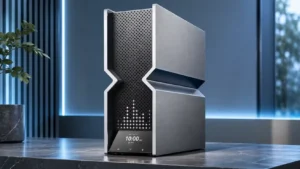
The vertical hourglass housing and hidden antennas look distinctive and modern rather than like a conventional antenna-covered router.

ASUS ROG Strix GS-BE18000
3.8

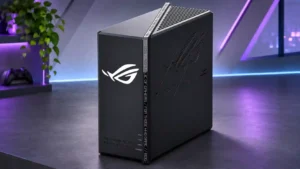
The angular, antenna-free enclosure is more understated than many gaming routers, but the gamer styling still divides opinion.

Size and footprint
TP-Link Archer BE900
3.2

Hidden antennas make the tower less sprawling than some rivals, but it is still a large, tall router that needs dedicated space.

ASUS ROG Strix GS-BE18000
4.0

Many find the vertical chassis compact for its capabilities, while others regard it as somewhat bulky for home placement.

Power adapter size
TP-Link Archer BE900
2.0

The external power brick can be awkward to position around the router.

ASUS ROG Strix GS-BE18000
2.0

The large power adapter can be awkward around crowded outlets or power strips.

Evidence available for one product

Ownership and support

160 MHz support
TP-Link Archer BE900
2.0

Splitting 5GHz into two bands restricts the room available for wide 160MHz channels, particularly when DFS channels are involved.

ASUS ROG Strix GS-BE18000No score yet
320 MHz support
TP-Link Archer BE900
4.5

Ultra-wide 320MHz channels contribute to its high-speed appeal for compatible clients.

ASUS ROG Strix GS-BE18000No score yet
Channel width support
TP-Link Archer BE900
2.0

The two 5GHz radios divide the available spectrum, making wide channels harder to accommodate.

ASUS ROG Strix GS-BE18000No score yet
Customer support
TP-Link Archer BE900
4.5

Free expert setup assistance is a welcome option for buyers who need extra help.

ASUS ROG Strix GS-BE18000No score yet
Dual-WAN support
TP-Link Archer BE900No score yet
ASUS ROG Strix GS-BE18000
5.0

Flexible dual-WAN options allow a LAN or USB connection to serve as an additional internet source.

Dynamic DNS support
TP-Link Archer BE900No score yet
ASUS ROG Strix GS-BE18000
5.0

The dynamic DNS options include numerous services and a free ASUS offering.

Tri-band support
TP-Link Archer BE900No score yet
ASUS ROG Strix GS-BE18000
4.3

The third band adds fast 6GHz connectivity and offers flexibility with compatible mesh equipment.

VPN client support
TP-Link Archer BE900No score yet
ASUS ROG Strix GS-BE18000
5.0

VPN Fusion makes per-device VPN routing particularly useful for remote workers and creators.

Warranty
TP-Link Archer BE900No score yet
ASUS ROG Strix GS-BE18000
5.0

The three-year warranty stands out positively among competing routers.

Wired backhaul support
TP-Link Archer BE900No score yet
ASUS ROG Strix GS-BE18000
5.0

Ethernet backhaul is the preferred mesh configuration because it preserves wireless capacity for clients.

Other features

Antenna adjustability
TP-Link Archer BE900No score yet
ASUS ROG Strix GS-BE18000
2.0

The internal antennas keep the exterior clean but cannot be manually aimed to compensate for poor placement.

Auto-sensing Ethernet ports
TP-Link Archer BE900
4.5

Automatic detection of the connected Ethernet cable simplifies initial setup.

ASUS ROG Strix GS-BE18000No score yet
Automated Frequency Coordination (AFC)
TP-Link Archer BE900No score yet
ASUS ROG Strix GS-BE18000
3.9

Automated Frequency Coordination can dramatically extend usable 6GHz download speeds, but requires regional approval, location reporting and suitable firmware; upload gains are not guaranteed.

Automatic configuration
TP-Link Archer BE900No score yet
ASUS ROG Strix GS-BE18000
4.0

The app automates much of initial network configuration.

Band steering
TP-Link Archer BE900
2.0

Phones sometimes struggle to change bands when moving around the house.

ASUS ROG Strix GS-BE18000No score yet
Built-in RGB lighting
TP-Link Archer BE900No score yet
ASUS ROG Strix GS-BE18000
4.6

The customizable ROG logo provides plenty of lighting effects, although its brightness and styling are not to everyone's taste.

Channel selection
TP-Link Archer BE900
2.0

The split 5GHz spectrum reduces the number of usable channel choices.

ASUS ROG Strix GS-BE18000No score yet
Connected-device management
TP-Link Archer BE900No score yet
ASUS ROG Strix GS-BE18000
4.0

The interface makes it easy to see connected devices and related traffic.

Cross-brand mesh compatibility
TP-Link Archer BE900
1.5

A tested D-Link EasyMesh node could be added but failed to serve clients; matching TP-Link equipment worked instead.

ASUS ROG Strix GS-BE18000No score yet
Device identification
TP-Link Archer BE900No score yet
ASUS ROG Strix GS-BE18000
4.0

Identifying the devices involved in blocked connections helps pinpoint weak links in the home network.

Device prioritization
TP-Link Archer BE900No score yet
ASUS ROG Strix GS-BE18000
5.0

Dedicated gaming ports make prioritizing connected devices simple and largely automatic.

Firmware stability
TP-Link Archer BE900No score yet
ASUS ROG Strix GS-BE18000
3.3

Later firmware improved AFC and IoT connectivity substantially, but reports of crashes and dropouts warrant caution.

Firmware update process
TP-Link Archer BE900No score yet
ASUS ROG Strix GS-BE18000
3.3

Firmware updates can resolve important issues, but a factory reset may be advisable after major upgrades.

Gaming optimization
TP-Link Archer BE900No score yet
ASUS ROG Strix GS-BE18000
4.3

Gaming modes, dedicated ports and Open NAT offer useful tools, although some premium acceleration features are absent and wireless latency gains vary.

Instruction readability
TP-Link Archer BE900No score yet
ASUS ROG Strix GS-BE18000
2.0

The printed manual is rather rudimentary; its linked online version is more useful.

Launch quality control
TP-Link Archer BE900
2.0

The original early-release Wi-Fi 7 implementation was criticized as unfinished.

ASUS ROG Strix GS-BE18000No score yet
Malicious-site blocking
TP-Link Archer BE900No score yet
ASUS ROG Strix GS-BE18000
4.0

AiProtection shows blocked malicious websites and identifies the affected devices.

Mesh coverage
TP-Link Archer BE900No score yet
ASUS ROG Strix GS-BE18000
4.5

Adding compatible AiMesh nodes is a practical way to extend coverage in larger homes and apartments.

Mesh scalability
TP-Link Archer BE900No score yet
ASUS ROG Strix GS-BE18000
4.0

Compatibility with other ASUS routers, including older models, makes later mesh expansion practical.

Network migration ease
TP-Link Archer BE900No score yet
ASUS ROG Strix GS-BE18000
5.0

Backup restoration and reuse of existing network names make migration from older ASUS setups relatively painless.

Quality of service
TP-Link Archer BE900No score yet
ASUS ROG Strix GS-BE18000
4.0

Adaptive QoS is useful for prioritizing traffic, but it can trade peak throughput for responsiveness under heavy load.

Reboot frequency
TP-Link Archer BE900No score yet
ASUS ROG Strix GS-BE18000
2.0

Some reported firmware-related crashes involve multi-minute reboots, though many other installations remain stable.

Remote management
TP-Link Archer BE900
4.5

Tether makes remote monitoring and management convenient after account setup.

ASUS ROG Strix GS-BE18000No score yet
Retail availability
TP-Link Archer BE900No score yet
ASUS ROG Strix GS-BE18000
2.0

Singapore availability was delayed pending local certification at the time of testing.

Seamless handoff
TP-Link Archer BE900No score yet
ASUS ROG Strix GS-BE18000
5.0

Compatible mesh nodes can hand devices off seamlessly without requiring manual network switching.

SFP+ connectivity
TP-Link Archer BE900
4.8

The SFP+ combo port adds flexibility for compatible fiber connections.

ASUS ROG Strix GS-BE18000No score yet
Status light usefulness
TP-Link Archer BE900
5.0

The display-based approach avoids the annoyance of conventional blinking status lights.

ASUS ROG Strix GS-BE18000No score yet
Threat protection
TP-Link Archer BE900No score yet
ASUS ROG Strix GS-BE18000
5.0

AiProtection offers capable threat protection, with one comparative test ranking it above competing security features.

Traffic prioritization
TP-Link Archer BE900No score yet
ASUS ROG Strix GS-BE18000
4.7

Traffic controls and dedicated gaming ports help prioritize latency-sensitive tasks when the network is busy.

Performance

Backhaul performance
TP-Link Archer BE900No score yet
ASUS ROG Strix GS-BE18000
2.0

Using 6GHz as wireless backhaul can create a bottleneck for connected clients.

Long-term performance
TP-Link Archer BE900No score yet
ASUS ROG Strix GS-BE18000
5.0

Extended testing over several months yielded positive reliability results, particularly with updated firmware.

On-router display usefulness
TP-Link Archer BE900
4.4

Dual front screens provide useful status information, easy touch controls and guest QR codes, although some buyers view them as expensive extras.

ASUS ROG Strix GS-BE18000No score yet
Performance under load
TP-Link Archer BE900No score yet
ASUS ROG Strix GS-BE18000
5.0

Simultaneous streams, gaming and downloads generally cause little performance degradation.

Roaming performance
TP-Link Archer BE900No score yet
ASUS ROG Strix GS-BE18000
5.0

AiMesh can automatically move devices between sources as signal strength changes.

Comfort and build

Build quality
TP-Link Archer BE900No score yet
ASUS ROG Strix GS-BE18000
5.0

The lightweight enclosure feels solid and carefully assembled.

Controls and connectivity

Interface responsiveness
TP-Link Archer BE900No score yet
ASUS ROG Strix GS-BE18000
5.0

The app feels responsive when navigating its numerous controls.

Node pairing ease
TP-Link Archer BE900No score yet
ASUS ROG Strix GS-BE18000
5.0

Pairing an additional compatible AiMesh router was straightforward and improved coverage.

On-router display customization
TP-Link Archer BE900
4.2

Custom messages, animations and graphics are fun to personalize, but may not justify the extra cost on their own.

ASUS ROG Strix GS-BE18000No score yet
Privacy controls
TP-Link Archer BE900No score yet
ASUS ROG Strix GS-BE18000
3.5

Local administration offers an alternative to cloud management, but AFC requires sharing precise location information.

Software update frequency
TP-Link Archer BE900No score yet
ASUS ROG Strix GS-BE18000
5.0

Frequent firmware releases improve functionality and security.

Touchscreen responsiveness
TP-Link Archer BE900
4.0

The touchscreen is easy to interact with, but its scrolling is not as fluid as a smartphone's.

ASUS ROG Strix GS-BE18000No score yet
Web interface setup
TP-Link Archer BE900No score yet
ASUS ROG Strix GS-BE18000
4.0

A desktop browser provides a useful alternative to mobile-app setup and maintenance.

Wi-Fi 6E support
TP-Link Archer BE900
4.0

Wi-Fi 6E clients can achieve fast speeds, though results vary across devices and may not match newer Wi-Fi 7 hardware.

ASUS ROG Strix GS-BE18000No score yet
Wi-Fi standard support
TP-Link Archer BE900
4.5

Support for modern and older wireless standards makes the router versatile for a mix of client devices.

ASUS ROG Strix GS-BE18000No score yet

Other Top Routers to Consider

#1 D-Link Aquila Pro AI R95
4.8

Choose the R95 for a busy home that needs fast Wi-Fi 7, strong range, multi-gig ports, and low-lag gaming. Skip it for a small, lightly connected space or if advanced...

Pros: Wi-Fi 7 support, Wi-Fi speed

#2 GL.iNet GL-BE3600 Slate 7
4.5

Best for frequent travel, fast VPNs, dual 2.5GbE and resilient multi-WAN. Skip it if you need full 6GHz/320MHz Wi‑Fi 7, mesh, or desktop-class USB storage and long-range indoor coverage.

Pros: VPN client support, value for money

Cons: 6 GHz performance, USB storage sharing

#3 GL.iNet Flint 2 (GL-MT6000)
4.4

Exceptional VPN speeds, strong Wi-Fi 6 coverage and extensive OpenWrt controls make the Flint 2 a compelling value. Its advanced setup, missing 6GHz band and firmware-specific caveats matter if you...

Pros: setup ease, configuration flexibility

Cons: Wi-Fi 7 support, USB storage sharing

#4 MSI Roamii BE Pro
4.3

Best for affordable tri-band Wi-Fi 7, abundant 2.5GbE ports, and deep free controls. Skip it if you need consistently strong garden coverage, foolproof app setup, or proven top-tier speeds across...

Pros: value for money, design and appearance

Cons: node pairing ease, outdoor coverage