If you want better Gaming performance
Choose KEF XIO. It scores 5.0 vs 1.9 for Gaming performance, with a 4.4 overall score.

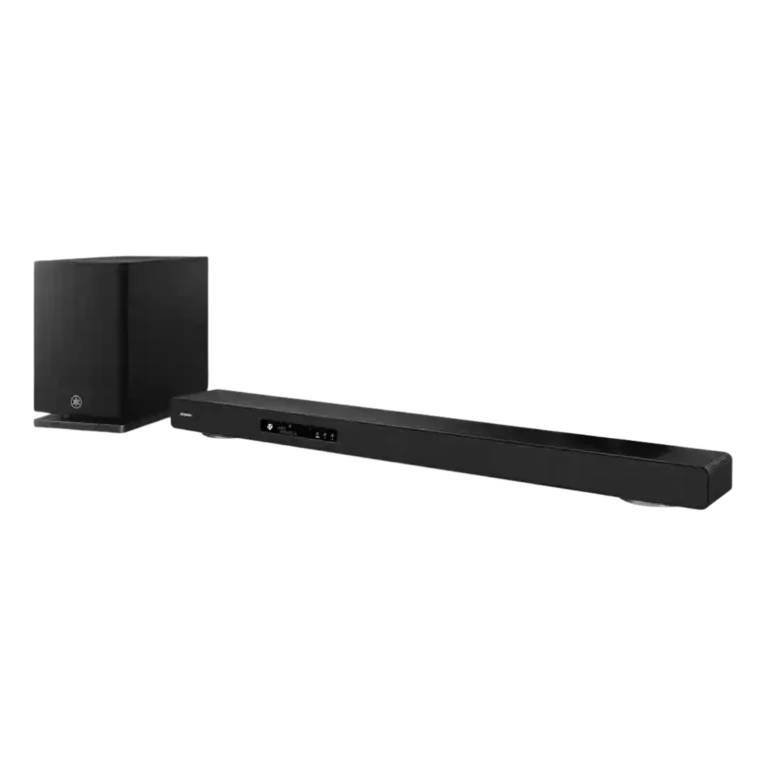
Choose it for elite Atmos placement, powerful controlled bass, strong music playback, and cable-free rear flexibility. Skip it if value, effortless room calibration, 4K/120 gaming passthrough, or consistently clear dialogue matters more.
Best for buyers with a generous budget who prioritize precise Atmos placement, powerful controlled bass, strong music playback, and flexible wireless rear speakers without building a traditional AVR system.
Not ideal for value-focused shoppers, 4K/120 gamers, people who want automatic room correction, or anyone who needs consistently effortless dialogue clarity and a compact footprint.
The True X Surround 90A is a technically ambitious flagship whose best qualities are easy to hear: precise surround placement, convincing height, strong dynamics, tightly controlled bass, and unusually capable music playback. Its metal build and battery-powered rear speakers also feel distinctive, especially if portable Bluetooth use matters. The tradeoff is that the system asks an extraordinary price while leaving obvious flagship conveniences on the table. There is no automatic room correction, gaming passthrough stops short of 4K/120 and VRR, and setup can range from simple to frustrating depending on the reviewer and room. Dialogue is another variable, staying clear in some material but getting buried in dense action mixes. The rear speakers are equally polarizing: flexible and immersive for some, underpowered or tonally mismatched for others.
Compared with other Soundbars, this product is above average in Reliability, Packaging quality, Audio format support, near average in Overall product quality, Overall sound quality, below average in Included HDMI cable, Gaming performance, Room calibration and correction.
| Attribute | This product | Category average | Difference |
|---|---|---|---|
| Included HDMI cable | 1.0 | 3.6 | -2.6 |
| Gaming performance | 1.9 | 4.4 | -2.5 |
| Room calibration and correction | 1.6 | 3.8 | -2.2 |
| Reliability | 4.8 | 2.6 | +2.2 |
| HDMI ARC | 2.0 | 4.2 | -2.2 |
| Weight convenience | 1.8 | 3.8 | -2.0 |
| Packaging quality | 5.0 | 2.9 | +2.1 |
| Value for money | 2.4 | 3.9 | -1.5 |
Choose KEF XIO. It scores 5.0 vs 1.9 for Gaming performance, with a 4.4 overall score.
Choose JBL Bar 1300MK2. It scores 4.6 vs 1.6 for Room calibration and correction, with a 4.4 overall score.
Choose Klipsch Flexus Core 100. It scores 5.0 vs 1.0 for Included HDMI cable, with a 3.9 overall score.
Choose Bose Lifestyle Ultra Soundbar. It scores 5.0 vs 2.0 for HDMI ARC, with a 4.1 overall score.
Products reviewers directly compared with this model, grouped into quick takeaways.
It is one of the system’s strongest areas, with precise overhead placement, broad height, and strong surround movement. High or irregular ceilings can reduce the effect, and the rear speakers have no up-firing drivers.
No. Several tests found dialogue could be buried in dense action scenes even with Clear Voice, while other setups reported consistently clear speech, especially with simpler TV mixes or after tuning.
No. The HDMI input handles 4K/60 video and major HDR formats, but 4K/120 and VRR are missing, so console users should route video through the TV when possible.
No. Beam angle, ceiling height, speaker levels, and tone can be adjusted manually, but there is no microphone-assisted automatic room correction.
Yes. The battery-powered surrounds can work as portable Bluetooth speakers, and this flexibility is widely liked. Switching back to surround mode was seamless for some testers but required re-pairing for others.
Yes, generally very good for a soundbar. Reviewers praised its wide stage, clean detail, tight bass, and especially Auro-3D music upmixing, though one critical test found ordinary stereo playback inconsistent.
The sound quality is excellent, but most value-focused assessments say the premium is difficult to justify against cheaper flagship rivals, especially with room calibration and gaming features missing.
These are a few of the reviews included in our analysis.



The Yamaha True X Surround 90A review: Premium soundbar with Dolby Atmos, Auro-3D, beam technology, and powerful home theater sound...
De Yamaha True X Surround 90A biedt een volwaardige surroundervaring in een draadloze en modulaire set-up. Lees hier onze review.
The Yamaha True X Surround 90A is an impressive flagship Dolby Atmos soundbar system, but it comes at a big price.
Explore how the Yamaha True X Surround 90A delivers immersive Dolby Atmos sound that challenges traditional home theaters.
Learn when Yamaha's premium Atmos immersion justifies the cost, and when dialogue trade-offs, setup friction, and better-value rivals make it...

Choose it if you want unusually hi-fi music, deep standalone bass, clear dialogue, and convincing Atmos from one premium bar. Skip it if you need multiple HDMI inputs, a mature...
Pros: Overall product quality, Overall sound quality
Cons: Value for money, Video passthrough support
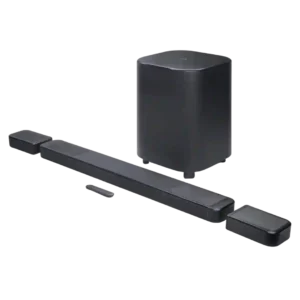
Best for room-filling Atmos, hard-hitting bass and genuinely useful detachable rears. Skip it if 4K/120 passthrough, a compact footprint or consistently polished app control matters more.
Pros: Rear speaker versatility, Overall product quality
Cons: Size and TV fit, Gaming HDMI passthrough
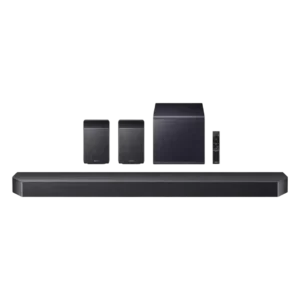
Choose the Samsung HW-Q990F if you want a premium, easy Atmos system with huge surround, strong bass, and Samsung TV perks. Skip it if price, a four-piece setup, music purity,...
Pros: Value for money, Surround sound simulation
Cons: Status indicators, Wi-Fi streaming reliability

Best for class-leading Atmos immersion, clear dialogue, compact but forceful bass, and a complete rear-speaker package. Skip it if you own the Q990F, need a compact one-bar setup, or cannot...
Pros: Home theater integration, Bass performance
Cons: Value for money, Design and aesthetics