If you want better battery life
Choose Ticwatch Atlas. It scores 4.6 vs 3.2 for battery life, with a 3.8 overall score.

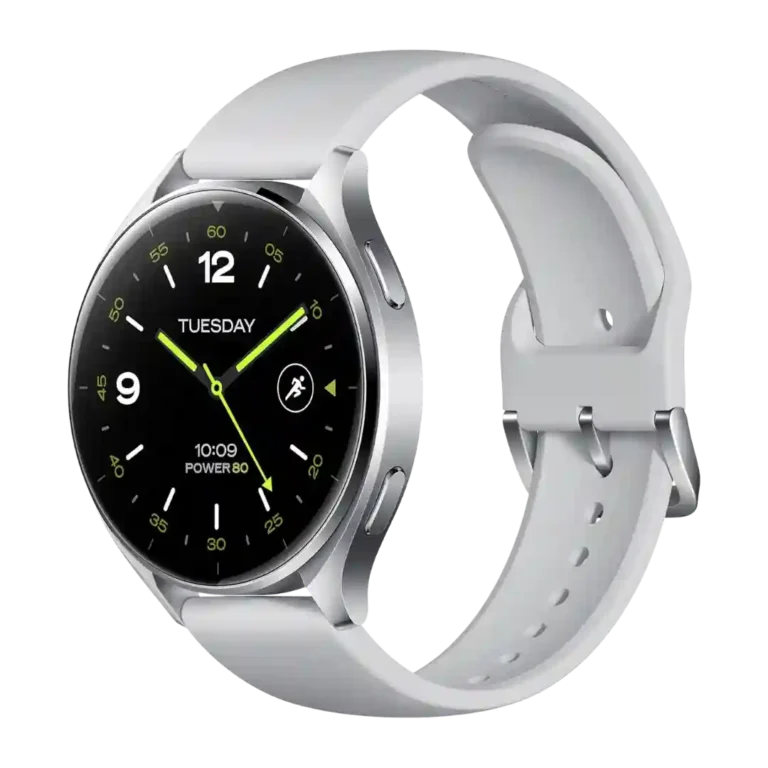
Choose the Xiaomi Watch 2 if you want an affordable Wear OS watch with a strong display, app support, and comfort. Skip it if daily charging, inconsistent heart-rate data, or missing LTE and advanced health features are dealbreakers.
Best for Android users who want an affordable Wear OS smartwatch with Google apps, third-party apps, strong display quality, and comfortable everyday wear. It also suits casual fitness users who value GPS, sleep tracking, and broad workout modes more than medical-grade precision.
Not for users who need LTE, advanced health features such as ECG or temperature tracking, reliable heart-rate precision, or multi-day battery life with everything enabled. It is also a weaker fit for iPhone users or anyone who dislikes proprietary chargers.
Reviewers frame the Xiaomi Watch 2 as a budget Wear OS watch that gets the big everyday pieces right: a bright AMOLED display, comfortable lightweight body, broad Google and third-party app access, fast charging, and unusually strong value. The tradeoff is consistency. Battery life ranges from decent two-day use in lighter setups to daily charging with fuller tracking enabled, and health/fitness accuracy is uneven: GPS and sleep often impress, while heart-rate and calorie/recovery data draw notable complaints. The older Wear OS version, missing LTE, limited size options, and proprietary charger keep it from feeling fully polished, but the feature set remains compelling for the price.
Compared with other Smartwatches, this product is above average in onboard music storage, third-party app support, voice assistant quality, near average in sleep tracking accuracy, comfort, below average in recovery insights, calorie tracking usefulness, activity auto-detection.
| Attribute | This product | Category average | Difference |
|---|---|---|---|
| recovery insights | 1.5 | 3.9 | -2.4 |
| calorie tracking usefulness | 1.5 | 3.3 | -1.8 |
| activity auto-detection | 2.0 | 3.7 | -1.7 |
| onboard music storage | 4.5 | 2.9 | +1.6 |
| wellness insights | 2.5 | 4.0 | -1.5 |
| cross-platform compatibility | 2.1 | 3.5 | -1.4 |
| third-party app support | 4.6 | 3.2 | +1.4 |
| charging convenience | 1.9 | 3.3 | -1.4 |
Choose Ticwatch Atlas. It scores 4.6 vs 3.2 for battery life, with a 3.8 overall score.
Choose Ticwatch Pro 5 Enduro. It scores 4.6 vs 4.0 for smartphone notifications, with a 3.9 overall score.
Choose Apple Watch Ultra 2. It scores 4.8 vs 2.7 for heart rate accuracy, with a 3.9 overall score.
Choose Google Pixel Watch 4. It scores 4.6 vs 1.9 for charging convenience, with a 4.2 overall score.
Products reviewers directly compared with this model, grouped into quick takeaways.
Yes. Reviewers repeatedly called it affordable, good value, or a bargain for a Wear OS watch with Google apps and third-party support.
Battery life depends heavily on settings. Some reviewers reached around two days, but others found it closer to one day with fuller tracking, always-on display, or heavier use.
No. Reviewers repeatedly treated LTE as a missing feature and pointed users who want phone-free connectivity toward other models.
The evidence is mixed. GPS and sleep tracking were often praised, but heart-rate accuracy, calorie figures, recovery suggestions, and some workout data drew complaints.
Yes. Multiple reviewers praised the AMOLED screen for clarity, brightness, and visibility in sunny or outdoor conditions.
Reviewers treated it as primarily Android-focused. One review said iPhone use limits its full potential, while others described Android-only compatibility.
Charging is fast, but reviewers disliked the proprietary magnetic puck and orientation-sensitive pin design.
These are a few of the reviews included in our analysis.

Best for long battery life, accurate GPS and useful offline maps at a strong price. Skip it if you need payments, richer apps, a built-in LED flashlight or polished smartwatch...
Pros: mapping and navigation, value for money
Cons: smartwatch features, contactless payments

Best for accurate run tracking, deep Garmin coaching and phone-free Spotify in a light package. Skip it if you need full maps, triathlon mode, Apple Music support or the strongest...
Pros: value for money, GPS accuracy
Cons: mapping and navigation, third-party app support

Good if you want premium running features, long battery life, and maps for under $200. Skip it if you need flawless heart-rate data, multiband GPS, LTE, or richer app support.
Pros: value for money, battery life
Cons: heart rate accuracy, third-party app support

Best for accurate running metrics, excellent coaching tools, a bright AMOLED display, and dependable battery life. Skip it if you need offline maps, music storage, contactless payments, multi-band GPS, or...
Pros: battery life, value for money
Cons: mapping and navigation, smartwatch features