
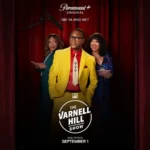
The Varnell Hill Show Feature Scores
Explore all 47 feature scores for The Varnell Hill Show, organized into pros and cons.
Scores by Feature
Summary
47 reviewed features-
Very positive 4.5-5.03 (6%)
-
Positive 3.5-4.43 (6%)
-
Neutral 2.5-3.47 (15%)
-
Negative 1.5-2.420 (43%)
-
Very negative below 1.514 (30%)
Pros
Sort
-
The supporting players often add warmth and laughs, particularly Whitley and Williams, despite uneven material.
-
Celebrity guests and the roast are frequent highlights, though some cameos feel like brief novelty rather than a cure for weak writing.
-
The veteran cast often looks comfortable in the sitcom format, and physical reactions sometimes rescue weak lines. Uneven material and a muted lead performance limit other scenes.
-
The ensemble brings considerable comic talent, though scripts often leave that talent underused.
-
The anniversary roast has the loose, happy energy of friends making each other laugh.
-
Kirk Franklin and Omarion’s musical appearances are singled out as solid performances.
Cons
Sort
-
Several viewers question why a two-episode Martin character needed a series three decades later, even while others see room for a better second season.
-
Some see Davidson sliding right back into Varnell, while others find the once flamboyant antagonist unusually muted and hard to recognize.
-
Stale jokes and thinly drawn staff members waste a capable cast, despite occasional successful bits.
-
Repeated laughter cues bother several viewers, especially when they interrupt dialogue or accompany jokes that do not land.
-
Varnell and younger rival Marshay can feel thinly explored; the writers’ room and Jonah also need clearer motives and identities.
-
Corny exchanges, repetitive catchphrases, and clunky lines keep strong performers from landing more jokes.
-
Longtime Martin fans say the spinoff loses both the original show’s comic feel and the sharper personality that made Varnell memorable.
-
The direct-address device divides opinion: some enjoy Varnell and Rachel’s asides, while others find them intrusive, lazy, or rarely funny.
-
For skeptical viewers, Varnell’s ego is off putting and his earlier role as a Martin antagonist makes him difficult to root for.
-
Several viewers feel the abundant profanity is gratuitous and does little to improve the jokes.
-
Two critics call the scripts fundamentally weak and too dependent on clichés.
-
The series rarely explores what decades of change in comedy and late-night television mean for its aging star.
-
Some find an easy nostalgic watch, while others find the episodes tedious; even a mixed admirer calls the series lively but dispensable.
-
The show can veer between workplace sitcom, mockumentary aside, and sincere talk show without a settled comic voice.
-
The comedy is sharply divisive: a few viewers laugh often or enjoy isolated bits, while many find the punchlines dated, forced, and rarely funny.
-
A crowded staff and many peripheral players pull attention away from Varnell and Rachel.
-
Repetitive attempts to modernize Varnell and a backstage-heavy format leave some viewers wanting more of the actual talk show.
-
Some find the central workplace conflict shallow, with joke density taking precedence over a stronger story.
-
The traditional multi-camera sitcom feels cozy and competently made to one critic, but stale and stilted to others.
-
One viewer objects to turning an alleged abuser into a passing punchline because it revives painful associations for a cheap laugh.
-
One critic found finishing the opening episode a relief after its weak jokes and presentation.
-
A viewer calls the opening titles cheap and low effort.
-
Topical references can be satisfying, but jokes about pronouns and contemporary politics are often called stale.
-
The old-school style could find a niche, but some Martin fans and broader-audience viewers say it does not connect.
-
A weekly release frustrates a viewer who would rather have the season available at once.
-
The bright, even lighting misses a chance to sharpen the visual conflict between Varnell and the network.
-
The direct-to-camera moments could use clearer visual shifts to make their rhythm and purpose work.
-
Direct-to-camera asides can stall the momentum when they replace a stronger joke.
-
The series tries to channel a 1990s sitcom, yet its references sometimes feel accidentally old rather than purposefully nostalgic.
-
The setup is easy to follow, but one enthusiastic viewer doubts the save-the-show premise can sustain a full season.
-
The old-host-versus-young-audience conflict strikes one critic as a familiar television trope.
-
The weekly rollout seems unlikely to draw one dissatisfied viewer back regularly.
-
Eight half-hour episodes give the ensemble too little room to settle and develop.
-
Jonah’s reasons for targeting Varnell remain too vague to make him a convincing long-term adversary.
-
The show gives Black entertainers room to appear as themselves, yet some jokes and code-switching scenes feel reductive or insulting.
-
The Martin link brings warm nostalgia and remains accessible to newcomers, but Lawrence’s new character and the altered Varnell disappoint some fans.
-
The sitcom look has affectionate retro fluency, but the very bright sets flatten the visual experience for another viewer.
-
The short first season tries many ideas without having time to discover which ones work.
-
Some praise Davidson’s charisma and seamless return, while others find his energy, delivery, or presence unexpectedly muted.
-
Some intend to keep watching or hope a revised second season can improve the show; another viewer has already stopped.
-
The return can be charming and nostalgic, but the early episodes are uneven and the spinoff falls short for many longtime fans.
Cast & Creators
-
KymWhitley earns praise for natural comic timing and warmth, although one critic finds her stuck with loud, thin material.
-
RachelRobinson looks at home in the sitcom and makes Rachel’s ambition and code switching lively; viewers repeatedly name her a highlight.
-
MusicianOmarion’s musical guest spot is praised, and his cameo brings laughs and nostalgia.
-
TreyWilliams makes Trey believable and draws laughs even from a viewer who dislikes the show’s writing.
-
GuestWayans’s guest appearance adds nostalgic appeal and a few welcome laughs.
-
MusicianFranklin’s musical appearance is called solid, and his exchange with Varnell is a rare relaxed highlight.
-
GuestCole is part of a roast ensemble praised for its loose, joyous chemistry.
-
MusicianFresh’s appearance adds to the comic lift of the celebrity guests.
-
GuestCrawford contributes to a roast with lively, unforced chemistry.
-
GuestEpps helps make the anniversary roast feel like friends riffing naturally.
-
GuestPat joins a roast segment praised for its joyous chemistry.
-
Mr. DupreeLawrence’s new gangster role amuses some viewers and delights another as a clever surprise. One fan finds his energy diminished.
-
AJ HillHudson is enjoyed as part of the comedy ensemble, though one critic says his visible effort does not quite land.
-
Varnell HillDavidson’s charisma and physical comedy win praise, and some think he resumes Varnell effortlessly. Others find his energy muted or his timing uncertain, with scripts doing him few favors.