
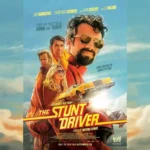
The Stunt Driver Feature Scores
Explore all 42 feature scores for The Stunt Driver, organized into pros and cons.
Scores by Feature
Summary
42 reviewed features-
Very positive 4.5-5.015 (36%)
-
Positive 3.5-4.412 (29%)
-
Neutral 2.5-3.410 (24%)
-
Negative 1.5-2.45 (12%)
Pros
Sort
-
Jay Baruchel is the strongest point of agreement across the coverage. His Carter is repeatedly described as career-best, pitch-perfect, heartfelt, funny, vulnerable, and capable of carrying weaker stretches of the movie.
-
Many reviews find surprising tenderness beneath the comedy, particularly in Carter’s fear, his marriage, and his relationship with Keller. Even some mixed notices acknowledge a potent final or late-film emotional punch.
-
Sara Mishara’s photography is one of the clearest consensus strengths, with multiple formats, grain, and period lighting used to evoke the 1970s. Several reviews call the images distinctive, handsome, or outright bravura.
-
The shifting aspect ratios, film stocks, archival textures, smoke-hazed interiors, and faded palette create one of the movie’s most distinctive strengths. A minority view sees the same formal devices as stylish distractions from a shallow core.
-
The ensemble is generally well regarded, with especially strong notices for Ben Foster, Ed Helms, Joe Cobden, and Laurence Leboeuf. A recurring frustration is that several of those performers are working with thin or underused characters.
-
The real and recreated stunt material repeatedly earns praise for communicating speed, danger, and the sheer absurdity of Carter’s ambitions. Several sources call the jump footage spectacular or jaw-dropping.
-
The strongest chemistry comes from Carter’s interactions with Dick Keller and Evel Knievel. Their affection, sparring, and competing ideas about risk give the film some of its liveliest scenes.
-
Carter’s bond with Dick Keller is repeatedly singled out as one of the film’s warmest and most convincing relationships. Keller’s shift from skeptical engineer to protective friend gives the story an emotional anchor.
-
The period wardrobe helps sell the 1970s setting and Carter’s outsized personality. Reviewers repeatedly note that the costumes contribute materially to the film’s authenticity and visual character.
-
The first half and Baruchel’s performance draw frequent praise for absurd, character-driven comedy. The main reservation is that the laughs thin out as the story darkens, and a few critics find it less funny than expected.
-
As a biopic, the film benefits from a stranger-than-fiction subject and a more gonzo presentation than the genre usually gets. Viewers who enjoy offbeat sports or true-story movies are the clearest fit.
-
The ramp, period spaces, and 1970s detail are repeatedly praised for making the modestly scaled production feel convincing. The design work helps ground the more outrageous stunt material.
-
The transitions between documentary footage, recreations, and different aspect ratios are widely admired. Reginald Harkema’s work helps old and new material feel unusually cohesive.
-
The consensus is mixed but tilted positive: admirers call it funny, gonzo, theatrical, and engaging, while detractors find the film slow, underpowered, or less entertaining than its documentary source.
-
The performances are strongest when they turn the broad stunt-world personalities into vulnerable, physically specific people. Baruchel in particular draws praise for finding fear and softness beneath the bravado.
-
Festival and interview coverage points to a warm crowd response, especially to the film’s Canadian identity and emotional turns. The subject’s eccentricity appears to travel well beyond viewers already familiar with Carter.
-
The movie’s unapologetically Canadian identity is treated as a strength, not a limitation. Its local specificity, national humor, and Carter’s place in Canadian culture give the story a distinct personality.
-
The film’s most successful message is about ambition, legacy, and the cost of needing to prove oneself. Supportive reviews find that idea moving and inspirational without reducing Carter to a simple hero.
-
The archival stunt footage is a major visual asset, especially when it is woven into newly shot material without obvious seams. Its documentary texture also strengthens the period feel.
-
The strongest readings focus on legacy, masculinity, fear, identity, obsession, and the cost of spectacle. Detractors see those same ideas as underexplored, leaving the film more sentimental than probing.
-
The movie closely draws from The Devil at Your Heels, re-creating scenes and incorporating original footage while making selective fictional changes. Some appreciate that fidelity; others question whether the dramatization adds enough.
-
The uncertainty over whether Carter will actually attempt the jump gives the film effective will-he-or-won’t-he tension. Not every critic buys the suspense, especially when the historical outcome or dramatic misdirection is obvious.
-
The drama works best when Carter’s confidence gives way to fear and the life-or-death stakes become unavoidable. Some reviewers find those moments genuinely affecting, while harsher notices call the dramatic construction blunt or rudimentary.
-
The recreations of Carter’s world, stunt preparations, and documentary material are praised for close attention to the real events. The film also openly fictionalizes or consolidates some details for dramatic purposes.
-
The film’s period recreation feels convincing thanks to authentic design, costumes, formats, and archival integration. That tactile authenticity is one of the main reasons the hybrid approach works for its admirers.
-
Period rock selections help establish the film’s 1970s atmosphere and add energy to the overall presentation.
-
The synth-leaning score is praised for having personality and supplying enough emotion without overwhelming the period atmosphere.
Cons
Sort
-
The script produces strong character moments and, for some, an excellent emotional framework, but repeated criticism targets tonal indecision, thin supporting roles, and stretches that feel padded or overly conventional.
-
Pacing is the most persistent structural complaint. Several reviews praise an energetic opening or strong build, then note stalls, repetitive delays, or a third act that feels longer than the 99-minute runtime.
-
Michael Dowse earns praise for the film’s warmth, hybrid form, and human touch, but the response is divided. Critics who are less convinced point to uneven momentum, a muddled final act, and missed opportunities to probe Carter more deeply.
-
The interview-heavy structure is a notable weakness for at least one critic, who finds the repeated talking-head material aimless and obstructive rather than revealing.
-
Most of the central stunt setup is easy to follow, but one review finds the final moments confusing enough to obscure exactly what happened and why the emotional turn matters.
-
The subject is unusual, but the dramatic treatment sometimes falls back on familiar biopic beats. The harshest review of this aspect calls the screenplay safe and clichéd.
-
The dialogue can be colorful and characterful, but repeated speeches that spell out feelings or inspiration eventually wear thin. The weakest moments are criticized for sacrificing subtlety.
-
Profanity is part of Carter’s coarse public persona, and one review specifically criticizes his speeches as both dumb and frequently profane. The language is therefore a notable content consideration even though most reviews focus elsewhere.
-
The comedy-to-tragedy balance is one of the film’s biggest dividing lines. Some find the shift tender and controlled, while others feel the movie lurches between broad comedy and bruised drama without fully reconciling the two.
-
The ending is one of the most divisive elements: some find it fitting, perilous, or gut-punching, while others see the final stretch as confused, overextended, or emotionally unearned.
-
At 99 minutes, the film is objectively concise, but reactions differ sharply: one critic praises the tight length while another says the movie still feels longer because of its stops and starts.
-
The mixture of documentary footage, recreations, shifting formats, and fiction gives the movie a distinctive formal hook. Some critics admire the experiment, while others think the approach cannot justify retelling the documentary.
-
Carter and Gloria’s relationship receives mixed treatment. Some reviews find genuine affection and emotional grounding, while others criticize Gloria as underwritten or inconsistent and the marriage as less convincing than Carter’s friendships.
-
The true story is inherently unusual and, for many, engaging or heartfelt. The split comes over depth: supporters see a compelling underdog portrait, while critics argue the film never finds enough meaning beyond the stunt and Carter’s need for recognition.
-
Opinions split sharply on how deeply the film gets inside Carter. Some find a compelling portrait of fear, insecurity, and showmanship, while others see a one-note or shallow character study.
Cast & Creators
-
Ken CarterBaruchel is the clearest critical standout, praised for making Carter funny, frightened, vain, vulnerable, and recognizably human. Even several negative reviews describe the performance as among his best work.
-
Evel KnievelFoster’s Evel Knievel is repeatedly called scene-stealing, terrific, or ideally cast. His swagger and sparring with Carter energize the movie, while some reviews also appreciate the quieter respect beneath the rivalry.
-
Dick KellerHelms brings a restrained, practical counterweight to Carter’s bravado as Dick Keller. His best notices emphasize the warmth, reason, and protective concern he gives the role.
-
GloriaLeboeuf earns warm notices for giving Gloria affection, restraint, and emotional grounding even when the screenplay underuses her. Several critics distinguish the quality of her performance from their complaints about the character’s writing.
-
CinematographerMishara’s cinematography is repeatedly praised for juggling formats while preserving a convincing 1970s texture. Her work gives the low-budget production a handsome, tactile, period-authentic look.
-
Bob FortierCobden’s Bob Fortier is singled out as a highlight and, in one review, arguably the movie’s most notable performance. His understated documentarian presence supports the film-within-a-film structure.
-
EditorHarkema’s editing is praised for making archival footage, recreations, and changing aspect ratios flow together with unusual smoothness. The seamless intercutting is a recurring technical strength.
-
Bill WilkinsBakkedahl is part of a well-regarded ensemble and is praised for an effectively sleazy, antagonistic take on Bill Wilkins. His pressure on Carter gives the later conflict extra friction.
-
Production DesignerCarrière’s production design earns praise for the treacherous ramp recreation and detailed period environments. The design helps make Carter’s fear and the scale of the stunt feel tangible.
-
Danny LafortuneBeaupré adds playful bravado as Daniel Lafortune and contributes to the film’s colorful stunt-world ensemble. His performance is mainly praised as an energetic supporting accent.
-
DirectorDowse draws praise for warmth, visual experimentation, and the blend of comedy with human vulnerability, but his direction is also a major source of disagreement. Critics split over whether he sustains momentum and digs deeply enough into Carter.
-
Costume DesignerMarchessault’s costume design is praised for strengthening the 1970s setting and helping Carter’s showman persona register visually.
-
ComposerThe supplied video review praises the composer’s synth-flavored score for having personality and delivering enough emotion to support the story.