
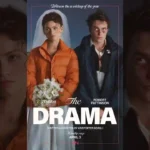
The Drama Feature Scores
Explore all 37 feature scores for The Drama, organized into pros and cons.
Scores by Feature
Summary
37 reviewed features-
Very positive 4.5-5.08 (22%)
-
Positive 3.5-4.416 (43%)
-
Neutral 2.5-3.49 (24%)
-
Negative 1.5-2.43 (8%)
-
Very negative below 1.51 (3%)
Pros
Sort
-
Zendaya and Robert Pattinson receive consistently strong marks, with Pattinson’s anxious unraveling and Zendaya’s quieter emotional control repeatedly singled out as reasons the film works.
-
Editing is among the film’s strongest consensus positives. Rapid cuts, flashbacks, fantasies, and time shifts are often praised for creating tension and comedy, though a few find the technique overused.
-
The ensemble is one of the movie’s safest strengths. Even skeptical viewers often credit the cast with elevating thin or difficult material through committed, expressive performances.
-
Daniel Pemberton’s score is a standout technical element, frequently praised for its anxious, prickly, off-kilter quality and its ability to intensify otherwise ordinary scenes.
-
Zendaya and Pattinson’s chemistry is frequently praised as believable, easy, and essential to selling the relationship before it fractures. A minority feel the script gives the romance too little substance for that chemistry to fully pay off.
-
The dark comedy lands very well for many viewers, especially the wedding-photo, speech, and social-discomfort sequences. Others barely laugh at all or feel the subject matter makes the humor abrasive or tasteless.
-
Originality is a strong point. Even mixed or negative reactions often acknowledge that the film takes unusual risks, combines genres in an uncommon way, and feels unlike safer mainstream releases.
-
Cinematography is a clear strength, praised for attractive compositions, increasingly dark imagery, and visual control that mirrors the relationship’s deterioration.
-
Entertainment value is highly audience-dependent but often strong: many find the movie engrossing, funny, and impossible to ignore, while others are bored, frustrated, or eager for it to end.
-
Sound design repeatedly heightens the film’s anxiety, from muffled perspective shifts to intrusive cues that make ordinary moments feel threatening. It is one of the more consistently praised technical elements.
-
The themes of empathy, judgment, forgiveness, love, and moral hypocrisy generate substantial discussion. The main divide is whether the film explores those ideas deeply enough or merely raises them and moves on.
-
Borgli’s direction is often praised for precision, discomfort, visual control, and escalating anxiety. The strongest criticism is that the filmmaking can become self-conscious or more interested in provocation than insight.
-
Suspense is a notable strength when the wedding preparations turn psychologically tense. Editing, sound, and performance make ordinary situations feel increasingly ominous and unstable.
-
When judged as drama, the film’s relationship crisis and psychological pressure are often compelling. The stronger dramatic passages are credited with giving weight to an otherwise heightened dark-comedy premise.
-
The film leaves a strong emotional impression on many viewers through anxiety, discomfort, sadness, and empathy. Even positive reactions often describe the experience as draining rather than comforting.
-
The supporting cast is generally strong, with Alana Haim and several smaller roles frequently landing laughs or tension. A few viewers find some supporting characters irritating or one-note even when the performances work.
-
The tonal blend of romance, anxiety, tragedy, and dark comedy impresses many viewers for its daring balance. Others find the shifts jarring, baffling, or unable to sustain a consistent emotional register.
-
The visual style is polished and often striking, using clean compositions, flashbacks, fantasies, and heightened imagery to externalize anxiety. Some find that slickness sterile or overly mannered.
-
The dialogue earns clear praise where it is directly discussed, especially for sharp comedy and high-quality exchanges that help social situations unravel.
-
As a genre piece, the film works best for viewers receptive to pitch-black rom-com and squirm-comedy territory. Some reject the dark-comedy label entirely, but others see the genre collision as one of its biggest strengths.
-
The ending is one of the sharper dividing points. Several viewers praise the final scene or bittersweet landing, while others call the reconciliation predictable, unearned, or emotionally weak.
-
The soundtrack is praised for helping the opening draw viewers into the story and for working alongside voice-over and structure to establish the film’s uneasy mood.
-
The younger Emma’s edgy styling and makeup are viewed as effectively supporting the depiction of her teenage spiral, even when the look is intentionally exaggerated.
-
One viewer specifically found the film worth revisiting and owning, suggesting its provocative construction and performances can reward another watch.
Cons
Sort
-
The film’s racial and gender context is a major criticism. Multiple reviewers argue that making Emma a Black woman heightens the premise while the screenplay fails to meaningfully examine what that identity changes.
-
The handling of school-shooting trauma is especially troubling for some younger viewers, who describe the film’s comic treatment as careless rather than provocative.
-
Character depth is a recurring weakness, especially for Emma and the couple’s inner life. Strong performances often make the characters feel fuller than the screenplay actually writes them.
-
The central story draws some viewers in with its provocative setup, but others find the narrative thin, confused, or unable to support the weight of its premise.
-
The fractured chronology and imagined scenes can muddy what is actually happening. Some viewers found the flashbacks and jumps more confusing than clarifying.
-
Runtime and length draw mixed-to-negative reactions. Some find the 106-minute film becomes exhausting or elongated despite its modest length, especially once the central conflict starts repeating.
-
The screenplay is sharply divisive: some admire its nerve, structure, and dark-comedy setup, while others find the writing shallow, underdeveloped, or unable to interrogate its charged ideas.
-
Realism is mixed: some find the emotional reactions recognizable and grounded, while others think the characters, premise, or escalating behavior strain credibility too far.
-
The premise is widely seen as bold and unusual, yet reactions split on whether that provocation feels genuinely fresh or more like a thin conceit stretched too far.
-
The message about empathy, forgiveness, and accepting a partner’s past resonates with some viewers. Others find the moral argument muddled, underdeveloped, or compromised by the film’s handling of its central subject.
-
Audience appeal is intentionally narrow and polarizing. Viewers who enjoy discomfort, ambiguity, and provocative dark comedy may be energized, while others are likely to feel repelled or alienated.
-
Pacing is uneven across the film: some find the escalating wedding-week spiral tightly calibrated, while others feel the middle drags or the movie becomes overextended.
-
The romance works best when the leads’ chemistry and small moments of affection stay in focus. Some viewers buy the messy love story and final reconciliation, while others never believe the relationship has enough depth.
Cast & Creators
-
CharlieRobert Pattinson earns some of the strongest notices for turning Charlie’s panic, cowardice, and spiraling anxiety into expressive dark comedy. Even reviews that dislike the character often credit Pattinson with giving the role energy and depth.
-
EmmaZendaya is widely praised for making Emma emotionally legible despite limited characterization, using restrained facial and physical acting to convey regret, fear, and vulnerability. A few detractors find the performance too aloof or unable to fill the screenplay’s gaps.
-
RachelAlana Haim is repeatedly singled out as a supporting standout, turning Rachel’s self-righteousness, venom, and social aggression into some of the film’s biggest laughs and most memorable tension.
-
ComposerDaniel Pemberton’s score is a consistent strength, using prickly, uneasy motifs to intensify anxiety and make ordinary wedding-week moments feel destabilized.
-
ActorZoë Winters is repeatedly described as a scene-stealer in her small wedding-photographer role, turning cheerful photographic language into one of the film’s funniest and most uncomfortable running bits.
-
young EmmaJordyn Curet’s younger Emma is praised for convincingly conveying isolation and trauma while mirroring the older character. Her heightened styling and behavior also help sell the disturbing teenage spiral.
-
EditorJoshua Raymond Lee’s co-editing work is praised for weaving memory, imagination, and present action into the film’s anxious rhythm, especially in the opening and the more psychologically unstable passages.
-
MishaHailey Benton Gates makes a strong impression in a small role, with reviewers praising her comic precision and calling her contribution sharply tuned to the film’s uncomfortable tone.
-
IvanJeremy Levick’s brief turn as replacement DJ Ivan is repeatedly treated as a comic highlight, with his awkward, overly chatty energy earning especially strong praise.
-
Writer/DirectorKristoffer Borgli’s contribution divides sharply: admirers praise his control of discomfort, editing rhythms, and provocative comedy, while critics argue that his direction and writing raise charged ideas without exploring them deeply enough.
-
MikeMamoudou Athie is praised as a welcome, relaxed supporting presence who makes the most of Mike’s comparatively restrained role and brings compassion to the group dynamic.
-
CinematographerArseni Khachaturan’s cinematography is praised for reinforcing the film’s agitated atmosphere and helping its polished romantic surfaces darken with the relationship crisis.