
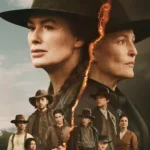
The Abandons Feature Scores
Explore all 61 feature scores for The Abandons, organized into pros and cons.
Scores by Feature
Summary
61 reviewed features-
Very positive 4.5-5.05 (8%)
-
Positive 3.5-4.48 (13%)
-
Neutral 2.5-3.412 (20%)
-
Negative 1.5-2.421 (34%)
-
Very negative below 1.515 (25%)
Pros
Sort
-
Anderson and Headey are the most consistent strength across reviews. Even negative critics often say their presence, rivalry, and commitment keep the show watchable.
-
Production design is among the strongest technical areas, with frequent praise for sets, locations, scenery, and period scale. Some critics still find parts too polished or visibly constructed.
-
The clearest chemistry comes from the central matriarchs. Reviewers repeatedly say the series heats up when Anderson and Headey finally share scenes.
-
Costume work is generally a strength, from Anderson’s tailored wardrobe to broader period clothing. A few reviewers note that some outfits look too clean or curated for the frontier.
-
The short seven-episode run can go down quickly, and a few reviewers call it an easy or engrossing binge. Confusing plotting and weak middle episodes reduce that pull for others.
-
The central feud can generate strong tension, especially near the end and when the leads confront one another. Predictability and weak character investment blunt suspense for several critics.
-
The family melodrama works for viewers who embrace the soapiness and mythic conflict. Others find the drama dull, self-important, or unable to sustain its premise.
-
The finale is stronger than much of the middle for some reviewers, with one calling it the season’s best episode and another praising its ruthless violence. Its abrupt cliffhanger still undercuts that momentum.
-
Visual photography receives both praise and criticism. Stronger reviews admire the landscapes, close-ups, and cinematic framing, while others dislike murky night scenes or glossy lighting.
-
Renewal enthusiasm is limited but not absent. One positive reviewer wants more, while many others say the cliffhanger does little to create genuine interest in a continuation.
-
One strongly positive review explicitly says the series delivers its money’s worth, largely through its cast, production values, and familiar Western pleasures.
-
Constance works best as a clear, hiss-worthy antagonist, with Anderson’s controlled menace earning praise. Some critics still find the character too flat or cartoonishly evil.
-
Individual episodes sometimes lurch, drag, or rush through material. A few later installments gain momentum, but the pacing seldom feels consistently controlled.
Cons
Sort
-
The cliffhanger is one of the most consistent complaints. Reviewers call it abrupt, perfunctory, clumsy, frustrating, or simply not compelling enough to justify the lack of resolution.
-
Familiarity is a dominant criticism. Reviewers repeatedly point to Western clichés, Romeo-and-Juliet plotting, obvious influences, and predictable beats despite the female-led twist.
-
Season pacing is one of the broadest concerns: reviewers describe stretches as rushed, plodding, glacial, slow-moving, or lacking momentum, often with a stronger beginning or ending than middle.
-
Dialogue is one of the most criticized elements. Reviews repeatedly call it expository, stilted, clumsy, overly solemn, unnatural, or awkwardly old-timey.
-
Character depth is a major weakness across the coverage. Reviewers frequently describe thin backstories, shallow arcs, neglected adoptees, and underwritten supporting players.
-
The ensemble is widely seen as overcrowded and unevenly served. Several supporting characters disappear for stretches or receive far less development than the central pair and romance.
-
The released season often feels visibly reworked. Choppy storytelling, abrupt gaps, missing backstory, and a cobbled-together structure are recurring complaints.
-
Multiple reviews complain that motivations and characterization shift without enough connective tissue, a problem often linked to the troubled production and compressed edit.
-
The core land feud and family conflict are compelling on paper, but many reviewers find the finished story thin, overcomplicated, shallow, or poorly assembled. Positive takes still see a sturdy melodramatic engine.
-
The show’s many subplots and characters can become difficult to follow. Reviews describe the narrative as jumbled, convoluted, disorganized, or insufficiently explained.
-
The final episode can be tense and, for one reviewer, the season’s best hour, but the lack of a true resolution leaves most commentary dissatisfied.
-
CGI is a notable weak point in the negative coverage, with the pilot cattle stampede repeatedly singled out as cheap or laughable.
-
The edit is widely blamed for the season’s fragmented feel. Critics point to carved-up structure, missing connective tissue, and characters disappearing from important stretches.
-
The soundtrack draws criticism where it is discussed, especially for modern or alt-country choices that some reviewers find jarring against the period setting.
-
Critical reaction is portrayed as poor to mixed across aggregator-style pieces, with low scores and predominantly negative quotations outweighing the scattered positive notices.
-
The relentlessly serious tone is a frequent complaint. Some viewers appreciate the gritty, grounded mood, while others feel the show becomes humorless, heavy, or accidentally soap-operatic.
-
The action has a few well-liked shootouts and set pieces, but several reviewers find the staging muddy, incoherent, sparse, or less exciting than a Western this violent should be.
-
The frontier world does not always feel lived-in. Clean clothes, glossy lighting, artificial sets, and modern-seeming behavior undermine immersion for several reviewers.
-
Writing is one of the most persistent weaknesses. Critics repeatedly cite shallow characterization, awkward dialogue, weak connective tissue, and familiar plotting, though a few reviews find the scripts improve or remain functional.
-
Family, power, class, faith, and motherhood give the show thematic potential, but many reviewers think those ideas remain shallow or inconsistently developed. A few still find the mythic family framing effective.
-
Effects are a weak spot in the negative reviews, with the CGI cattle stampede and a later large action sequence singled out as cheap or unconvincing.
-
Supporting performances are less consistent than the leads. Some reviews praise the ensemble or individual standouts, but others call the younger cast bland, wasted, or unable to lift thin subplots.
-
The content-focused review strongly warns younger or sensitive viewers away because of sexual assault, graphic violence, nudity, and heavy language.
-
Some viewers struggle to care about either family, with one reviewer explicitly saying no real attachment formed. Others find individual figures, especially Fiona, easier to invest in.
-
Emotional response is uneven. A few reviews find a real family-centered core, while others say the underdeveloped characters prevent tragedy and relationships from landing.
-
Abrupt endings and the visibly split opening material make some episodes feel awkwardly assembled rather than naturally shaped.
-
Graphic violence, sexual assault, nudity, sex, and heavy profanity make this a poor choice for family viewing according to the content-focused review.
-
The content review criticizes the amount of crude language and heavy profanity, treating it as another factor that limits suitability.
-
The content-focused review strongly objects to sex, nudity, and sexual assault. Other reviews also note that sexual violence is used as a major plot catalyst.
-
As a Western, the series divides viewers. Supporters enjoy its female-led feud and familiar genre pleasures, while detractors see a derivative, inauthentic imitation of stronger modern Westerns.
-
The premiere is divisive: one reviewer finds it pretty good, but others call it a slog or one of the worst recent pilots, reflecting the troubled restructuring.
-
The diverse found family earns some praise, but representation is also criticized as shallow. Indigenous storylines in particular are repeatedly described as underused, tokenistic, or backgrounded.
-
The frontier setting has attractive physical detail, but many critics say the town, social context, Indigenous presence, and family histories need more depth to feel fully alive.
-
The irregular runtimes are repeatedly tied to the show’s production problems. Shorter episodes can make it easy to finish, but several critics say the uneven lengths hurt development and pacing.
-
The show is widely described as extremely serious, with little room for levity. Some reviewers see that humorlessness as a major tonal liability.
-
The series gestures toward concentrated economic and political power, but reviewers say it barely develops that reading into a sustained idea.
-
Direct screenplay commentary is limited but negative where it appears, with the script described as wobbly and the dialogue often carrying too much exposition.
-
The reduction from ten episodes to seven is repeatedly associated with missing depth and a hollowed-out feel, even though the shorter run keeps the commitment manageable.
-
Music receives little discussion overall. One YouTube review likes the score, while another critic includes the music among the production’s major mistakes.
-
Violence is central and often graphic. Some reviewers appreciate moments of restraint or effective brutality, while the content-focused review finds it bloody, torturous, and excessive for many viewers.
-
Accent work draws mixed reactions. Anderson’s voice is described as drifting between registers, while Headey’s Irish accent is repeatedly called uneven or inconsistent.
-
Direction gets mixed marks. Some reviews praise the visual handling and shootouts, while others fault flat staging, an uncertain dramatic mode, and badly handled action.
-
The look ranges from striking landscapes and appealing color work to glossy, washed-out, or generic Netflix imagery. Visual consistency is not a point of consensus.
-
Period atmosphere is sharply contested. Some reviewers praise the scenery, grime, sets, and 1850s recreation, while others find the world too polished, artificial, or historically thin.
-
Appeal is mixed. Some writers still find the series worth trying for the cast or genre, while others describe weak audience response or recommend skipping it.
-
The show does deliver at least one striking twist, but reviewers generally see the plotting around those surprises as conventional rather than imaginative.
-
Overall enjoyment ranges from engrossing and fun to dull and disposable. Even positive reviews tend to acknowledge substantial pacing, writing, or structural problems.
-
Acting is one of the most divided areas: many reviewers praise the leads, while harsher takes call the broader ensemble bland, shallow, or poorly served by the material.
Cast & Creators
-
ActorAnderson is one of the season’s most reliable draws, praised for poise, menace, restraint, and commanding presence. A minority of reviewers find her stiff or one-note, but even negative coverage often sees her as elevating thin material.
-
ActorFranciosi is repeatedly singled out from the younger cast, with reviewers calling her a highlight, fantastic, captivating, or the top main-cast performance. Her work often rises above criticism of the surrounding subplot.
-
ActorHeadey earns frequent praise for Fiona’s ferocity, warmth, passion, and emotional force, and several critics call her the show’s biggest asset. A few reviews criticize her accent or find the performance one-note, creating a smaller but clear dissenting strand.
-
ActorHurst earns positive notices for a warmer, more grounded supporting presence, with one review calling the role a welcome change and another finding him more lifelike than many central players.
-
ActorJohnson receives standout praise where his performance is discussed, including being called one of the show’s most intriguing performers. Critics generally wish Albert had been given more material to match that promise.
-
ActorSilvers receives limited direct performance commentary, but one review specifically praises her as fiercely expressive. Criticism around Dahlia focuses more on underwritten material than on Silvers herself.
-
ActorGreyeyes is often appreciated as a steadying or lifelike supporting presence, though some reviews argue the series underuses him. One especially negative review sweeps him into broader criticism of the cast.
-
ActorHuisman is praised in some reviews as one of the more lifelike supporting players, but other critics see his character as unnecessary or underused. His reception depends heavily on how much value reviewers find in the subplot.
-
ActorRobinson gets a mixed response: some reviewers find him charming or one of the few bright spots, while others say he cannot lift a stock romance or include him in broader criticism of the cast.
-
ActorOswalt’s brief appearance attracts mostly negative performance commentary, including being called hilariously miscast. His role is often discussed more as an odd casting choice than as a meaningful part of the drama.
-
ActorTill’s reception is mixed to negative in the direct performance comments. Some critics include him among younger actors unable to elevate stock material, while others note that his character improves as the season progresses.
-
CreatorReviews are sharply divided on Sutter’s contribution. Some appreciate his instinct for family conflict and ruthless melodrama, while harsher critics blame the framing, derivative choices, and underdeveloped characters for much of the show’s failure.