
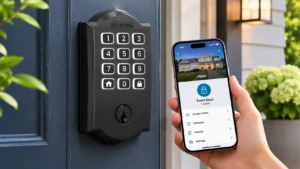
Schlage Arrive Smart Lock Feature Scores
Overall Scorata score: 4.2/5
Based on 11 analyzed reviews · View source samples
Explore all 47 feature scores for Schlage Arrive Smart Lock, organized into pros and cons.
Scores by Feature
Summary
47 reviewed features-
Very positive 4.5-5.022 (47%)
-
Positive 3.5-4.411 (23%)
-
Neutral 2.5-3.48 (17%)
-
Negative 1.5-2.46 (13%)
Pros
Sort
-
Tactile keys, quick code entry and minimal day-to-day fuss make the lock unusually easy to operate.
-
Raised, backlit rubber buttons are a standout: they provide tactile confirmation and are preferred to glass touchscreens.
-
Installation is consistently straightforward, usually taking about 10–30 minutes with a screwdriver. Doors with unusual recesses or alignment may need extra work.
-
Testers consistently praise dependable keypad entry and trouble-free everyday locking.
-
The grippy exterior assembly and guided pairing keep setup simple; most testers had little difficulty getting it running.
-
Solid hardware and high security and durability certifications inspire confidence in its construction.
-
Commercial-grade certification, reinforced strike hardware and long screws are strong reasons to trust its physical security.
-
Built-in Wi-Fi avoids the expense and clutter of a separate bridge or hub.
-
Direct Wi-Fi makes remote operation convenient without a hub, at the cost of additional battery drain and occasional integration issues.
-
Up to 250 individual codes are generous for busy properties, even if most households will never need that many.
-
Temporary and recurring codes simplify visitor access without hiding a key or sharing a permanent PIN.
-
An accessible mechanical backup key provides reassurance if electronics or batteries fail.
-
Raised buttons can be felt without looking closely, including in darkness or with gloves on.
-
Remote locking and visitor access are valuable for managing a property away from home, although Google Home failures and nearby-only settings can limit the experience.
-
A practical selection of core features avoids unnecessary complexity, but buyers seeking alarms, sensors or advanced ecosystem support give up useful options.
-
The compact, practical design looks polished on many doors, though some prefer the more refined touchscreen aesthetic.
-
Multiple scheduled and temporary codes make access management flexible, but some testers found that changing users required being near the lock.
-
The lower price than premium Schlage models is appealing if basic access is all you need, although it remains pricey for a relatively modest feature set.
-
The top finish rating suggests good resistance to everyday wear, though extended finish testing is limited.
-
Customizable notifications and confirmation of guest activity help owners stay informed remotely.
-
Strong security is central to the appeal, with dependable access and confidence in the lock’s hardware.
-
Individual access codes make activity history more informative, helping identify when different users enter.
-
The visible conventional keyway is easy to access, rather than hidden behind a panel.
-
A handy printed setup code makes onboarding easier.
-
Code entry is quick, although app control has a slight delay and a competing lock was faster.
-
Rubber buttons retain fewer fingerprint smudges than a touchscreen, reducing visible residue.
-
The deadbolt engages with a satisfying mechanical clunk.
-
One household reported weeks of operation with no fine-tuning or upkeep.
-
Three trim styles and two finishes give owners choices to coordinate with their doors.
-
App impressions are divided: some find setup and control straightforward, while others criticize slow performance, hidden settings and limited remote administration.
-
Battery operation preserves local access during network interruptions and was considered dependable.
-
An existing strike plate could be retained during a straightforward replacement, reducing installation effort.
-
The uncomplicated package is approachable even for first-time installers.
Cons
Sort
-
There is no integrated door-position sensor, so the lock cannot tell whether the door is actually closed.
-
Apple Home Key tap entry is not available, so buyers wanting to use an iPhone or watch this way should consider alternatives.
-
The missing built-in alarm is a drawback for those seeking impact alerts, although some owners prefer the lower price.
-
Wi-Fi increases power consumption, and the six-month estimate is not guaranteed. Some reported runtimes are as short as three months.
-
App updates have not resolved every usability concern; one tester still found the interface tedious.
-
Direct Airbnb integration is missing; guest codes must be managed manually.
-
Adjustable automatic relocking is useful, but without a door sensor it can extend the bolt while the door is open.
-
Bluetooth provides local access during Wi-Fi outages, but its proximity requirement can restrict code administration.
-
Standard doors are the easiest fit; recess depth, unusual drilling and alignment can require additional adjustment.
-
Fingerprint entry is absent, but fast code and phone access soften the tradeoff for buyers who do not need biometrics.
-
Alexa and Google Home compatibility can fit existing routines, but one tester experienced incorrect status and failed Google Home commands.
-
A competing Aqara model was noticeably quieter; the Arrive is not the quietest tested option.
-
Alexa and Google support cover common platforms, but Apple Home and Matter are absent and Google Home was unreliable in one test.
-
A mechanical backup is reassuring, but only one key is supplied, so extra copies may be worth making.
Use Cases
Best for
Sort
-
A common screwdriver and a short installation process make this an approachable DIY upgrade, although some beginners may need help or minor door modifications.
-
Backlit, raised rubber keys are easy to locate and read after dark.
-
Temporary or recurring access codes give guests, cleaners and dog walkers access only when needed.
-
Up to 250 individual codes make guest and tenant access flexible, although automated booking integration is missing.
-
Simple installation and intuitive physical buttons make this a friendly introduction to smart locks.
-
Stored PINs and local entry remain available during Wi-Fi outages, though remote functions require connectivity.
-
Remote control and temporary codes are especially helpful when traveling or allowing someone into an unoccupied property.
-
Numerous codes and phone-based access control make managing multiple occupants straightforward.
-
Raised buttons are easy for even a young child to use, reducing reliance on keys or phones.
-
Multiple trim designs and finishes make it an appealing fit for many front doors.
-
The raised buttons provide tactile feedback even while wearing gloves.
-
High durability certification supports confidence in the lock for frequent household entry.
-
Remote administration and unique tenant codes make this a compelling option for landlords managing longer tenancies.
-
A dependable keypad and basic remote access suit garage-side and secondary doors.
-
Remote lock control and guest codes are useful for managing access from another location.
-
A gift guide recommends the polished, approachable smart lock as a practical home upgrade.
Conditional or not ideal for
Sort
-
Apple Home householdsApple Home and Home Key are unavailable, making this a poor fit for buyers committed to those integrations.
-
Matter-based smart homesA Wi-Fi-based lock without Matter or Thread support is unsuitable for buyers specifically building around those standards.
-
Retaining an existing deadboltThis is a full replacement rather than a retrofit adapter, so it is not intended for retaining the existing deadbolt mechanism.
-
Short-term rental automationManually scheduled guest codes can work, but hosts wanting reservation-driven automation should look elsewhere.