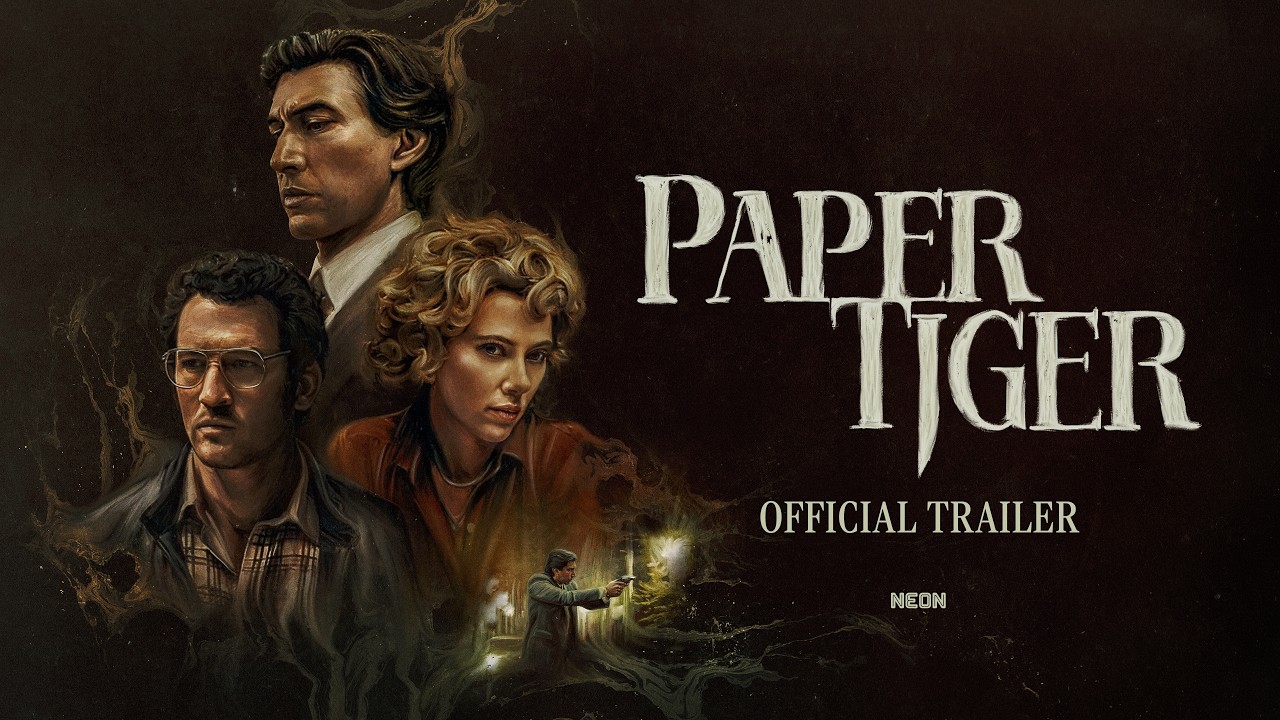
Adam Driver’s mesmerizing performance and the gritty, beautifully photographed Queens setting make this a tense, affecting crime drama. The uneven medical subplot and divisive ending keep it from landing for everyone.
Fans of actor-led, slow-burning crime thrillers, intimate family tragedies and lovingly recreated 1980s New York will find the most to admire, particularly on a big screen.
Viewers seeking nonstop action, a fast-moving conventional gangster thriller or a neatly resolved family subplot may find it frustrating.
Verdict
Paper Tiger turns an apparently straightforward Russian-mob thriller into a bruising portrait of two brothers whose hopes of giving their family a better life put everything they love at risk. Adam Driver’s swaggering, increasingly desperate Gary attracts the most consistent praise, while Miles Teller gives the quieter Irwin a convincing mixture of decency and fear. Scarlett Johansson has affecting scenes, though her isolated illness storyline is the film’s largest sticking point. James Gray’s careful pacing and grainy 35mm photography make 1980s Queens feel real, and the home invasion and climactic shootout are standout exercises in suspense. Yet viewers disagree over the slow buildup, questionable decisions, familiar gangster mechanics and abrupt conclusion. For audiences who value human-scale tragedy, rich atmosphere and performance over nonstop action, its strengths are substantial.
Content guidance
Scorata recommended age16+
Violent mob intimidation includes children threatened with knives and guns, assaults, a frightening home invasion, a deadly shootout, and strong language. A terminal-illness storyline adds distressing adult themes.
A terrifying intrusion into the family home and a tense field confrontation are repeatedly celebrated. A few feel the suspense fades between those peaks.
Affection, competition and withheld fears give the Pearl household a convincing sense of history. The family bond is often the story’s greatest source of heartbreak, although some wish the sibling relationship were explored further.
character development: 3.7, 20 reviews, low consensus
The brothers’ competing loyalties and collapsing confidence are often richly developed. Other viewers feel key motives and past wounds remain underexplored, especially around Hester.
Medical subplot integration: 2.5, 22 reviews, low consensus
Hester’s illness provides some of the film’s most devastating acting and a parallel fear of loss, but many find it poorly connected to the mob storyline.
The old-school New York gangster atmosphere is appealing, but recurring comparisons with earlier crime dramas underscore how familiar the plot can feel.
A simple mob entanglement becomes a moving family tragedy for admirers of the film. Detractors find the crime plot familiar, its motivations shaky and its ending too convenient or unresolved.
The conclusion is highly divisive: its bleak emotional force and final showdown linger for some, while others see a rushed, familiar or unsatisfyingly open end.
Sharp family exchanges and a strong sense of place distinguish the script, but predictable turns and an underdeveloped medical storyline frustrate a sizable minority.
Its deliberate buildup allows dread to seep into everyday life, but viewers disagree sharply on whether that patience is gripping or slow and repetitive.
Thriller fan viewing: 3.9, 23 reviews, low consensus
Old-school crime-thriller fans get a pair of remarkably tense sequences and a richly textured setting, but the slower domestic focus may disappoint anyone expecting nonstop danger.
Gray’s patient direction makes family routines and confined spaces simmer with menace, particularly in the home invasion and final showdown. His formal control is admired more consistently than his plotting.
Johansson gives Hester sharp instincts and affecting moments of terror and grief. Her acting inspires divided reactions, partly because her accent, styling and isolated medical storyline leave some viewers unconvinced.
Driver’s charismatic Gary is frequently singled out as the film’s standout, moving from effortless swagger to panic and despair without losing his complicated humanity. A few find the character less convincing than the performance.
Teller makes Irwin’s ordinary, well-intentioned father feel vulnerable and painfully out of his depth. His quieter turn earns frequent praise, though some find the part bland or implausibly written.
Compared with other Movies, this product is above average in dialogue quality, Environmental commentary, drama quality, near average in ending satisfaction, originality, below average in realism, value for money, plot clarity.
Comparison summary
54 compared features
Above average0.4+ pts higher
32(59%)
Same as averagewithin 0.3 pts
16(30%)
Below average0.4+ pts lower
6(11%)
Largest category differences
Attribute
This product
Category average
Difference
realism
1.0
3.3
-2.3
dialogue quality
5.0
3.0
+2.0
value for money
1.5
3.4
-1.9
Environmental commentary
5.0
3.2
+1.8
drama quality
5.0
3.4
+1.6
memorability
5.0
3.5
+1.5
plot clarity
1.3
2.7
-1.5
character appeal
5.0
3.6
+1.4
Consider This Instead
If you want better genre satisfaction
Choose Anthropoid. It scores 5.0 vs 4.0 for genre satisfaction, with a 3.9 overall score.
SimilarPaper Tiger is compared with Armageddon Time for its Gray’s use of family life for social themes.
SimilarPaper Tiger is compared with Armageddon Time for its domestic story lineage.
WorsePaper Tiger is praised over Armageddon Time for its overall quality versus previous feature.
We Own the Night (2007)
BetterPaper Tiger is judged less successful than We Own the Night for its criminal danger and dramatic excitement.
SimilarPaper Tiger is compared with We Own the Night for its familiar crime and family material.
SimilarPaper Tiger is compared with We Own the Night for its crime and family tensions.
The Yards (2000)
SimilarPaper Tiger is compared with The Yards for its Gray’s thematic return to 1980s crime.
SimilarPaper Tiger is compared with The Yards for its gritty Queens crime storytelling.
BetterPaper Tiger is judged less successful than The Yards for its overall execution compared with prior crime films.
FAQ
Is Paper Tiger worth watching?
Yes if you enjoy character-driven crime dramas. Strong performances, especially Adam Driver’s, and an extraordinary pair of suspense sequences carry the film even when the script falters.
Is it more a crime thriller or a family drama?
Both, but the relationship between the brothers and the vulnerability of their household often matter more than the mob plot. Some find that balance moving, while others want a tighter thriller.
How is Adam Driver in Paper Tiger?
His charismatic yet increasingly frightened Gary is one of the most consistently praised parts of the movie. Several critics describe it as among his best performances.
Is the movie scary or violent?
It contains menacing mob threats, an assault, children threatened with guns and knives, a frightening home invasion and a deadly shootout. It is tense rather than an action spectacle.
What are the main complaints?
The subplot about Hester’s illness often feels separate from the crime story, and some viewers dislike the characters’ choices, predictable turns or unresolved ending.
Does it recreate 1980s New York convincingly?
Very convincingly for most critics. Grainy 35mm cinematography, lived-in family interiors and specific Queens locations are among its standout qualities.
Should I watch it in theaters?
Its shadowy photography and carefully staged suspense benefit from a big screen, though its patient pace and dramatic focus are more important than spectacle.
Sample Expert Reviews We Analyzed
These are a few of the reviews included in our analysis.
Choose this inventive, unsettling documentary for fearless questioning, dark humor, and unpredictable storytelling. Skip it if you want a short, straightforward exposé with definitive answers.
Extraordinary performances and richly observed relationships make this a rewarding, emotionally forceful drama. Its nearly three-hour length and slow opening demand patience and undivided attention.
Best for a hypnotic, bookish mystery with tactile visuals and cerebral chills. Skip it if reading-heavy, attention-demanding storytelling sounds more exhausting than exciting.
Best for an intimate, searching documentary that rewards focused attention and invites discussion. Skip it when devastating grief, addiction footage, and unresolved family tensions would be too much.