
If you want better faithfulness to franchise
Choose Donkey Kong Bananza. It scores 4.9 vs 2.0 for faithfulness to franchise, with a 4.5 overall score.

Choose it for colorful, precise platforming, local co-op, and rewarding secrets. Skip it if forced collecting, repeated stages, or a short main campaign outweigh the strong level design.
Platforming fans, families, and completionists who want colorful stages, accessible local co-op, responsive movement, and plenty of secrets or challenge modes.
Players seeking a long or story-driven campaign, highly original mechanics, or progression without backtracking may be frustrated by the short runtime and collection gates.
Marsupilami 2: Salsa Palombia succeeds most when it is moving: the controls are usually snappy, the three-character swapping system gives familiar 2D platforming a useful twist, and the colorful stages keep introducing new hazards and secrets. Local co-op, Salsa runs, Dojos, and completion goals add meaningful replay value, while adjustable difficulty makes it easy to share with younger players. The tradeoffs are just as consistent. The main campaign is brief, progression gates can force repeated collecting, and boss quality varies sharply from fun set pieces to frustrating or overly simple encounters. Its Donkey Kong and Rayman influences are obvious, so originality is not the selling point; polished execution, family-friendly energy, and strong level design are.
Compared with other Video Games, this product is above average in monetization fairness, family friendliness, age appropriateness, near average in fun factor, soundtrack quality, below average in faithfulness to franchise, world-building, enemy variety.
| Attribute | This product | Category average | Difference |
|---|---|---|---|
| faithfulness to franchise | 2.0 | 4.3 | -2.3 |
| world-building | 2.3 | 4.2 | -1.9 |
| monetization fairness | 5.0 | 3.1 | +1.9 |
| family friendliness | 4.9 | 3.4 | +1.5 |
| age appropriateness | 4.8 | 3.2 | +1.6 |
| platforming precision | 4.7 | 3.2 | +1.5 |
| enemy variety | 2.0 | 3.5 | -1.5 |
| progression system | 2.4 | 3.8 | -1.4 |
Choose Donkey Kong Bananza. It scores 4.9 vs 2.0 for faithfulness to franchise, with a 4.5 overall score.
Choose Tales of Berseria Remastered. It scores 5.0 vs 2.5 for originality, with a 3.7 overall score.
Choose Clair Obscur: Expedition 33. It scores 4.9 vs 2.5 for narrative quality, with a 4.5 overall score.
Choose Digimon Story Time Stranger. It scores 4.9 vs 2.3 for world-building, with a 3.9 overall score.
Products reviewers directly compared with this model, grouped into quick takeaways.
Yes. Reviewers repeatedly praise its family-friendly tone, simple controls, local co-op, and adjustable difficulty, including easy options with unlimited health.
The main campaign is generally described as short, roughly three to six hours depending on pace. Completionist goals, Salsa mode, Dojos, and hidden content can extend play substantially.
Generally yes. Co-op is often described as one of the most fun ways to play, though some stages feel built around solo play and bosses can become much easier with two players.
Regular stages are usually fair and approachable, with adjustable difficulty for younger players. Bosses and 100% challenges are less consistent, ranging from too easy to unexpectedly punishing.
No. Multiple reviewers enjoyed the sequel without prior experience, and the simple story works as a standalone setup.
The most repeated concerns are the short main campaign, collection gates that can force replaying stages, uneven boss design, limited enemy variety, and heavy borrowing from familiar platformers.
These are a few of the reviews included in our analysis.

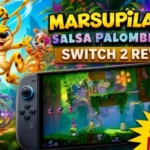

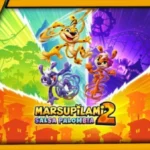
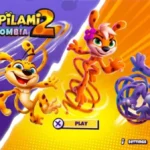
HPP reviews Marsupilami 2: Salsa Palombia, a classically-styled platformer that's a lot of fun on Switch, but definitely reminiscent of...
Marsupilami 2 - Salsa Palombia is a colorful, entertaining 2.5D platformer that takes its cues from great names before it.
Marsupilami 2 - Salsa Palombia is a delightful 2D platformer that follows in the footsteps of Donkey Kong while having plenty of its own ideas.
With Marsupilami – Hoobadventure, Microids and Ocellus Studio gave us a very good platformer back in 2021. Good news: the sequel is even better.
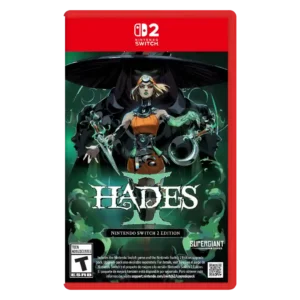
Good if you want fast, tactical roguelite combat with huge progression depth, striking art, and standout music. Skip it if repetition, resource micromanagement, or a less emotionally satisfying sequel story...
Pros: skill tree depth, dialogue quality
Cons: emotional impact, economy and resource balance
Good if you want a beautiful, demanding survival sandbox built around exploration, building, progression, and memorable co-op. Skip it if long resource runs, harsh death recovery, and deliberate pacing sound...
Pros: core gameplay loop, movement feel
Cons: economy and resource balance, map and navigation design
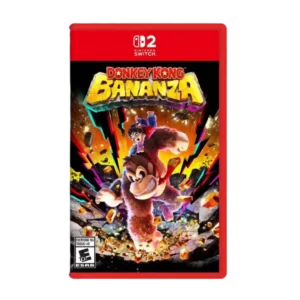
Best for joyful destruction, dense exploration, and a charming DK-Pauline adventure. Skip it if camera quirks, frame-rate dips, easy bosses, or premium Switch 2 pricing are dealbreakers.
Pros: gameplay mechanics, world interactivity
Cons: economy and resource balance, enemy variety
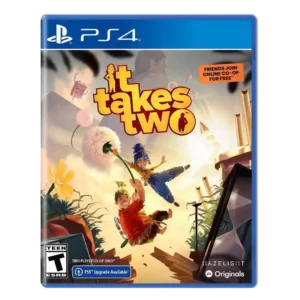
Best for joyful, inventive co-op with a partner, especially on couch. Skip it if divorce themes, uneven story tone, or Switch visual compromises would distract you.
Pros: core gameplay loop, movement feel
Cons: character development, dialogue quality